One-Way Road
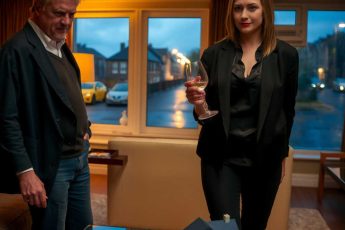
“Maybe you should do his laundry while you’re at it? Socks too, eh? He’s a grown man, for heaven’s sake! Let him sort himself out,” Vadim muttered as his wife, Laura, tugged on her coat.
His words weren’t outright accusations, but the ice in his voice made her freeze for a heartbeat. She lowered her head, buried her hands in her pockets, then zipped up her jacket without turning around.
“Maybe you could just be quiet?” she said softly.
Footsteps echoed. Vadim sighed and retreated into the living room. Another evening alone. Meanwhile, she was rushing to her father’s flat…
Outside, snow clung to the pavement—not the festive, powdery kind, but the grimy slush of a March thaw, clinging stubbornly underfoot. Laura slumped into her car, pressing her forehead to the steering wheel for a long moment. The urge to sob clawed at her throat, but there was no one to hear her. She glanced at the grocery bag beside her.
Baked apples. Her father used to love them. Once, he’d made them himself. Now, she doubted he even remembered how to use the oven.
Vadim hadn’t always been like this. When they married, he’d been warm, attentive—the kind of man who fussed over her and the kids with such earnestness it made her smile.
But after their second child, something shifted. To him, the world was divided into *his* and *theirs*. He’d move mountains for his own, but anyone outside that circle? An intruder. A weakness. He sneered at kindness to strangers, called it a flaw.
At first, Laura found it almost endearing. Later, she told herself it was just his way of loving. But now that “theirs” included her father… She didn’t know what to do.
“I moved out. Got a flat near the tube. Filed for divorce,” her mother announced one day, casual as if discussing a new set of curtains.
The news stunned Laura, though she should’ve seen it coming.
“He’s a decent man, really. But we just… don’t fit,” her mother confessed to a friend over tea.
“You’re nitpicking. Doesn’t drink, doesn’t hit you—what more d’you want?”
“Is that all happiness is? No, love. There’s supposed to be something *more*. But with him? Evenings sat in silence—him glued to his screen, me knitting beside him just to be near. Can’t get a word out of him, let alone a night out.”
After the divorce, her mother blossomed. She took up dancing, embraced social media, even befriended a woman named Emma—now her travel companion, hopping between cities on weekend trips.
Sometimes, Laura caught herself envying her. Not for any real reason. Just… her mother had a new life. One with no room for Laura. Or for her father.
His life, meanwhile, had crumbled. He’d moved to a dingy one-bed flat on the outskirts—bleak, barely lived-in. The very air felt heavier with him in it.
Laura visited weekly. Cleaned, cooked, lingered beside him. At first, he bristled at her care. Then, he started drinking. Not binges, just enough to blur his words and glaze his eyes.
“Tossed me aside like rubbish,” he’d mutter. “And you expect me to grin about it.”
“Dad, stop. No one tossed you. You just… grew apart.”
“Aye, *she* grew, alright. Filling her feed with snapshots of her grand new life. Me? I’ve got nothing left.”
It broke her heart. She didn’t know how to fix him. But she couldn’t leave him either.
“You’ve got a saviour complex,” Vadim said one night when she returned late, drained. “Always someone to drag along. First Nan, then your mates. Kids finally off your hands? Now it’s *him*.”
“He’s got no one else.”
“He’s fifty-four! Not the first man to go through a divorce. Fit as a fiddle. Let him sort himself.”
“He’s drowning, Vadim.”
“And you’re his life raft? You’ll both sink. And I won’t go down with you. Stop seeing him.”
Her glare sharpened, but she said nothing. She’d keep visiting. Openly or in secret—it didn’t matter.
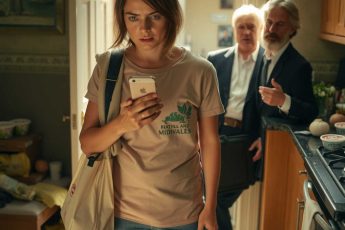
Her father’s flat reeked of tobacco, stale beer, and something sour. He stood in the doorway, paunch peeking under a yellowed vest, stubble shadowing his jaw. A crooked smile, two bin bags by the door.
“Well? Come in, since you’re here,” he rasped.
The kitchen was grim—dishes crusted in the sink, a phone blaring news on the table. He lit a cigarette, hands shaking.
“You’ve been drinking again,” she said, though she already knew.
“Got a better reason not to?” He exhaled smoke. “Why d’you even come? To lecture me?”
She swallowed the lump in her throat. The bitterness, the ingratitude—she’d grown used to it. But watching him waste away? Never.
“I come because I care. I’m your daughter.”
“Bollocks. You’re just ticking a box. Think scrubbing my floors’ll turn back time?”
“I just don’t want to lose what’s left.”
His eyes—clouded, bloodshot—flickered. Lips parted like he might speak. Then, nothing.
A memory flashed: summer, she was eight, skidding off her bike onto gravel. Knees torn, sobs hiccuping in her chest. Her father scooping her up without a word, carrying her home.
Hands now trembling from whisky had once steadied her, dabbing antiseptic on her scrapes. *”S’alright, love. It’ll pass.”*
Where was that man now? Why couldn’t *this* pain pass?
She sat beside him. He only grunted.
“Fancy some soup? Brought chicken, potatoes, carrots. We could make it together.”
“No pans left. All burnt out.”
“Burnt? *All* of them?”
“Dunno. Just… time, I reckon. Old things go like that.”
He was slipping further away. Press him, and he’d vanish entirely. So she unpacked the groceries in silence and turned to leave.
“I’ll be back next week. Or sooner, if I can. Just… be here. Yeah?”
“Where else would I go?”
At home, Laura scrolled Gumtree for a kid’s bike. Then, an ad flashed: *”Vintage Zenit camera. Still works. No use for it now.”*
Her heart stalled. *His* camera. The one he’d used at her graduation. Kept for decades. Now tossed aside.
She wanted to disappear…
…A year passed. Nothing changed—only worsened. Her father hunched on a bench, wrapped in a frayed jacket, a half-empty bottle beside him. Bread and pasta in a plastic bag.
Laura visited less. Maybe she’d given up. Maybe she was just tired.
…A scrawny mutt limped past, ears drooping. It sniffed, then sat. He shooed it—then tore off some bread and tossed it.
“Here, stray. Alone too, eh?”
The dog ate, then stayed. Curled up, sighing, resting its head on its paws.
He remembered Red. His childhood dog, vanished one winter. His mum said it’d found a new home. He’d starved himself two days, waiting.
Soon, the mutt waited by his door. He named her Tess.
“Tess, you daft thing—where d’you think you’re going?” he’d grumble when she darted into the stairwell.
He never let her inside. But he fed her.
Then, one freezing night, he stumbled. Fell. Lay there—how long?—until Tess barked, tugged his sleeve. Then footsteps. A neighbour’s voice.
“Oi! You alright?”
Later, he’d only recall the man’s grip hauling him up, the muttered *”bloody hell”* as he was steered home.
“You had a heart attack?”
“Dunno. Just… blood pressure, maybe.”
Neither spoke the truth.
That night, Tess slept indoors.
Meanwhile, Vadim writhed in pain across town. A screwdriver twisting his side. Laura woke to his stifled groans.
“We’re going to A&E. Now.”
“It’ll pass.”
“D’you want *‘It’ll pass’* on your gravestone? Get dressed.”
No arguments. An ambulance. Surgery. Gallstones. *”Few more hours, and it’d’ve been sepsis.”*
She kept vigil all night. Vadim never spoke—until dawn.
“Ta,” he mumbled.
“Welcome. You men—too proud to ask for help.”
He scowled but squeezed her hand.
…A week later, Laura visited her father for his birthday. Found him walking Tess—She watched them walk toward her, the dog’s tail wagging and her father’s face softer than she’d seen in years, and for the first time in a long while, she let herself hope.