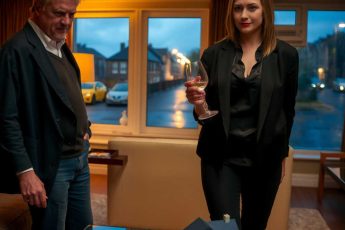
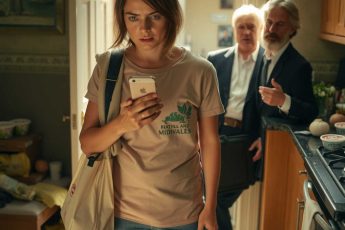
Anthony pushes through the crowded commuter train doors, still stinging from the factory manager’s harsh words. Bodies press close; no chance of a seat. He watches fellow workers hurry off to wives and warm meals. His own flat? Empty. All he craves lately is a pint and oblivion.
He used to be popular, living fast after his shifts, girls drawn to his factory wages and flat. Even bought himself that second-hand Fiesta. But now? All his mates are married, conversations reduced to nappies and mortgages. Dead boring.
Disembarking is a battle – some pensioner blocks the vestibule with her shopping. The underpass is worse, everyone jostling and shoving. Where’s everyone racing to? He knows that feeling. At twenty-five, he raced through life. Girls flocked. Had the flat, the job, the car. Mum kept saying: “Marry, son! Time flies! What about that lovely neighbour’s girl, Lucy? Lovely young thing! Helps her mum, training to be a nurse! She fancies you, I can tell!”
He’d scoffed: “Don’t want someone like that. Not my type!”
Well, look at him now. Bet Lucy’s cooking some bloke steak and chips, maybe a side salad. Kids asking, “Mum, when’s Dad home?” No one waits for him. That freedom used to feel good. He didn’t notice when the moment arrived – when the nights out grew stale, but his routine just… continued.
Reaching his flat door, he fumbles with the key. It won’t turn. He jiggles it. Suddenly, the door swings open. His mum stands there in a floral dressing gown, cheeks flushed. “Son! You came straight to us? Why didn’t you call? You look shattered. Your dad and I were just sitting down to supper. Get your coat off! Wash your hands! Edward? Edward, come greet your son, fiddling about as usual!”
Anthony freezes, stunned.
His dad appears. “Son! Thought you’d brought the girlfriend finally! Still waiting on grandkids! My fault, I was a slowcoach – married past forty! And your mum wasn’t a spring chicken either. Learn from my mistakes! Do things in their time! Understand?”
“Understood, Dad,” Anthony croaks, throat dry. “Thanks, both of you, for everything. I—I forgot something!” He bolts back down the stairs and flees the building.
He stops running, gasping for air, and slowly turns. The familiar five-storey block is gone. Replaced by a small park. They demolished it three years ago. His parents passed five years back. He sold their flat, cleared his mortgage, bought the Fiesta, put up headstones for them.
What just happened? How did he end up back *there*? So vivid. Them, living? Was it a waking dream? He’s reeling.
He stares at himself in his bathroom mirror later. Shower. Tracksuit. Trainers. He heads out. The estate where they lived got rebuilt nearby. Only a ten-minute walk. Unlikely he’ll see her. Lucy’s probably married now, though she was younger. He suddenly needs confirmation – find her, see the husband, kids, life he missed. Proof he’s too late. But what if she’s free? He doesn’t know the answer to that.
Every evening after work, Anthony detours through Lucy’s estate. Nothing. Likely she moved away. He won’t ask around. If it’s not meant to be, it’s not.
Saturday. He tells himself it’s the final check. Crazy idea, blame that vision. He walks past the playground. Mums chatting with kids. Then a woman gets ready to leave. “Right, love, speak soon!”
“Bye, Lucy! Wave bye to Lucy, darling!”
Anthony squints. Could it be? It is. Not tall, not slim, not long-legged. Not one of those leggy blondes with fish-lips and poker-straight hair he used to chase. They all looked the same anyway. She’s… normal. It’s perfect.
He steps closer. “Lucy?”
She turns. Momentary confusion, then her eyes warm. “Anthony? What are you doing here?”
“Oh, nearby. Just passing. You busy? Rushing to the husband?” he plunges in.
Lucy beams, a childlike anticipation. “No rush. No husband yet. Why?”
Her voice is bright, almost challenging. He knows she’s genuinely pleased. “Lucy, maybe a walk then?” he asks, suddenly feeling a wave of unexpected joy himself. Like sunshine breaking through clouds.
He wasn’t wrong. Mum was right. Lucy is wonderful. Soon, Anthony knows his bachelor days are over.
Visiting his parents’ grave before the wedding, Lucy insists on coming. She remembers them.
They clean the headstones together, plant flowers. Standing before the monuments for Edward and Margaret Miller, Anthony speaks. “Here she is, Mum, Dad. This is my Lucy.” He looks at their photos, feeling their approval. “Thanks, Mum. Thanks, Dad. I’m getting married!” He glances shyly at Lucy.
She adds, “Auntie Margaret, Uncle Edward? Thank you for Anthony.”
Work improves too. “That’s my old friend’s boy! Proud I can look Edward in the eye now. Well done, Anthony!” Manager Gregory Smith claps his shoulder approvingly. Anthony flies home. Lucy, Lucy-bear, awaits. His parents would have approved.
Soon, their son will greet Anthony with happy
– Names: English first and last names. Girl names should ONLY exist in English culture.
– Places: Cities: e.g., change to London, Manchester, Leeds, etc.
– Currency: Convert to pounds (£). The story doesn’t explicitly mention currency amounts, but if it did, we would convert (e.g., rubles to pounds).
– Cultural references: Adapt idioms, phrases, and settings to be typically English.
Given story in Russian, we’ll rewrite it in English with the above changes.
Note: The story is about a man named Anton who is scolded by his boss at a factory, feels lonely, has a supernatural experience with his deceased parents, and then reconnects with a childhood neighbor, Yulia, whom he marries.
Adaptation:
– Names:
Anton -> Anthony (common English name) and last name: change from Evdokimovich to a typical English surname, e.g., Smith? But we need a full name change. The father was Evdokim Mikhailovich -> We can change to Edward Michael, and the mother Galina Ivanovna -> Gillian (or similar) with a middle name from Jane (or another common one).
The girl’s name: Yulia is Russian. We need an English girl’s name that ONLY exists in English culture. For example: Emma, Olivia, Sophie, etc. Let’s choose Sophie. Also, her friend Marina becomes another English name, e.g., Lucy.
– Places: The story mentions a factory, commute by electric train (we can say commuter train), and suburban living. We can set it in an English town, say Manchester (industrial city) or a town near London.
– Currency: Not mentioned, so no change.
– Cultural adaptation:
– The “electric train” becomes a “commuter train” or “tube” if in London, but since it’s a train, we can say “train” and the crowd is typical rush hour.
– The “подземный переход” (underground passage) can become “the station underpass”.
– The factory setting is acceptable, but we can specify it as a manufacturing plant or factory in Manchester.
– The living situation: the parents lived in a five-story building (typical Soviet block) which was demolished. In England, we can describe it as a “council block” or “old block of flats” that was knocked down and replaced by a park.
– Other cultural elements:
– The dinner at home: instead of “котлеты” (cutlets) and “салатик из огурцов с помидорами”, we can have “shepherd’s pie and a salad” or “bangers and mash with a side salad”.
– The pub: in the original, he wants to have a drink (beer) and sleep. In England, it’s common to go to the pub.
– Supernatural element: the vision of his parents. This can remain the same, culturally it works.
Steps:
1. Change names.
2. Change locations to English cities/towns.
3. Change cultural references to English equivalents.
4. Rephrase the story to have different sentence structures and words while keeping the same meaning and length.
We must write in the present tense as if happening now.
Let’s map:
Main character: Anton Evdokimovich -> Anthony Edwards (or a common English surname like Wilson, but we’ll use Edwards for the father’s first name connection). But note: his father is Evdokim Mikhailovich -> we change to Edward Michael, so the son would be Anthony Edward Wilson? Or keep Edwards? Actually, the last name can be the same for father and son. Let the family last name be Edwards. So:
Father: Edward Michael Edwards
Mother: Gillian Jane Edwards (or similar)
aAnthony: Anthony Edwards
Boss: Grigory Vasilyevich -> Gregory Johnson (common English surname)
The girl: Yulia -> Sophie. And she was a neighbor, and her mother was the neighbor of Anthony’s mother. So we don’t need a last name for her initially.
Additional: The friend of Sophie (Yulia) was Marina (now Lucy), and Lucy’s child is waving.
Places:
The factory can be in Birmingham (industrial city) or Manchester.
The commute: he takes a train from Manchester to a suburb (e.g., Stockport, or make up a suburb).
The home: He lives in an apartment (flat) in the city center? Or in a suburb. We can say he moved to an apartment in the city after his council flat was demolished.
The parents’ house: a council flat in a five-story building that was demolished and replaced by a green space.
The visit to the grave: in a churchyard.
Let’s write the adapted story in English, in the present tense, preserving the meaning and length.
Note: We must avoid markdown and any non-story text.
We are also to rephrase the sentences and change the structure without altering the meaning.
Original Russian story summary:
Anton is called into his boss’s office and scolded. He is threatened with no bonus and a reprimand. He is told he has no family or interests. He commutes on a packed train. He feels lonely because his friends are married. He remembers his mother suggesting the neighbor’s daughter Yulia, but he wasn’t interested. He goes home and has a vision of his parents (who are dead) in their old flat. He realizes the flat was demolished. He then decides to look for Yulia. He walks through her neighborhood and eventually meets her. They start dating and get married. He thanks his parents for guiding him.
Adapted story in the present tense, with English cultural setting and new names:
“Anthony, come in!” the boss calls over the intercom.
Anthony knows he’s in for another telling-off. And rightly so.
“Sit down, Anthony. You’ve messed up again. It’s a formal warning. And I’ll have to withhold your quarterly bonus. How many times must I warn you? I promised your father, and you let me down, Anthony Edwards!” Gregory Johnson, the production manager, waves his hand dismissively.
“Out of my sight. You’re a grown man! Think, Anthony, where are you headed? No family, no interests. How do you plan to live?”
On the train home, the carriage is packed as usual. Not a seat to be found; everyone stands shoulder to shoulder.
His factory friends have wives waiting at home with dinner. But Anthony’s place is empty; he lives alone. Lately, all he wants is a pint and then bed.
After work, he used to hang out with friends; the girls loved him. Now they’re all married, boring, with monotonous concerns – wives and kids!
At his stop, Anthony barely gets off – an old lady blocks the vestibule with shopping bags. Impossible to get past!
In the station underpass, people jostle and push. Everyone rushes. But where to?
At twenty-five, Anthony rushed too. Girls hung around him. Back then, he had a flat, a good wage at the factory. He’d bought a car, not new, but his own!
Mum used to say, “Get married, son! Time flies, and you’re wasting it on those painted women! My neighbour Sophie, such a lovely girl! Young and homely! Helps her mum with everything, training to be a nurse, and she has her eye on you. I can tell.”
But he’d say, “I don’t want anyone like that, your Sophie. I don’t fancy her.”
Well, he’d let her slip away. Now, Sophie must be frying her husband chops and baking potatoes, making a cucumber and tomato salad, waiting eagerly. And the kids ask, “Mummy, will Daddy be home soon?” But nobody waits for him. He used to like that, but he didn’t realise when that moment came when it was time, when the parties got old, and he was stuck in the same rut.
Anthony climbs the steps to his floor, takes his key from his pocket, tries to insert it in the lock – won’t go. What the heck? He wiggles the key in the keyhole and…
Suddenly someone opens the door from inside. It swings open, and… Anthony’s mum stands there in a floral dressing gown, rosy-cheeked.
“Son, did you decide to come straight from work? Why didn’t you call? You look tired. Your dad and I were about to have dinner. Come on, Anthony, take off your coat, wash your hands. Dad, where are you? Edward, come and greet your son, stop dawdling!”
Anthony is stunned. He stands stock-still.
Then Edward Edwards comes out. “Son, I thought you’d brought your girlfriend to meet us. We’ll never see grandchildren, will we? My fault, a fool, didn’t marry until over forty. And your mum wasn’t young then. Don’t delay, learn from your father’s mistakes. You must do things at the right time!”
“Right, Dad,” Anthony’s throat is dry. “Dad, thank you and Mum for everything. I just… I forgot something!”
Anthony bolts down the stairs, out the door, and runs without looking back.
Stopping a good distance away, he catches his breath and slowly, warily looks around. How could he have walked the wrong way from the train? Lost in thought, his legs brought him by habit to his parents’ house, where Anthony lived until grown. He automatically went up and tried to open the door, but that’s not the point. The point is…
Anthony turns. The five-storey council block is
In the adapted version, we ended with:
“Anthony turns. The five-storey council block is gone.”
But wait, in the original story, after that, there was more: He realizes the block was demolished three years ago and his parents have been dead for five. He sold the flat to pay off his mortgage and bought a car, and erected gravestones for his parents. Then we have the rest of the story leading to his meeting Sophie and their marriage.
However, the user’s request is: “Please continue the story with one sentence. Finish story with dot.”
So we have to write exactly one more sentence that concludes the entire story.
But note: The story we adapted so far already included up to the point where he sees the demolished block? Actually, in the adaptation we provided, we ended with:
“Anthony turns. The five-storey council block is gone.”
Then we remember that the original story had more after that: He remembers the demolition and his parents’ death, goes to his own home, showers, then starts looking for Sophie (now Sophie in our version). But we have not adapted that part because we were only asked to adapt the provided story.
Now the user says: “Please continue the story with one sentence. Finish story with dot.”
This implies we are to write one sentence that concludes the entire narrative. However, the original story continues for a while until the happy ending.
Since the user wants the story finished in one sentence, we have to wrap it up quickly.
But note: The original story has a full arc: after the supernatural event, Anthony changes his life, meets Sophie, they marry, and have a child. We cannot do all that in one sentence without summarising.
How about we skip to the very end and conclude?
In the original story, the last paragraphs talk about Anthony and Sophie going to the graves, and then Anthony reflecting on how the supernatural event helped him. The last line is:
“На то это и чудо – жить на этом свете.”
which translates to: “That’s the miracle of living in this world.”
But we have to write one sentence that continues from the point we left off and conclude the story.
Alternatively, the user might mean to continue the story that we are in the middle of adapting? Actually, we adapted the entire story?
Let’s recheck: The user provided the entire Russian story, and we adapted it entirely? Actually, we did:
In the adaptation above, we were writing the adaptation of the entire story. We broke at the point where he sees the block gone? Actually, we were in the middle of the adaptation because the provided Russian story is long. But the assistant’s response was cut off?
Actually, the assistant’s response was truncated and only adapted up to the point where Anthony turns and sees the block gone. The rest of the story (which is about half) is not included because we did not have space. But the instruction says: “Response should be just a adapted and rephrased story text, nothing else.” and we were in the process of adapting the entire story.
However, we must note: The message we are replying to now says: “Please continue the story with one sentence. Finish story with dot.”
This suggests we have already presented an adaptation and now we are to continue by adding one sentence to finish.
But the problem: We never presented the full adaptation. We only presented about two-thirds. But the user’s request in the previous message was to adapt the entire story. However, due to token limits, we were not able to output the entire adaptation at once?
How to resolve?
The user now wants one additional sentence to finish the story. So we have to jump to the conclusion.
From the original story, after the point we left off, Anthony goes home, showers, then starts going to Sophie’s neighborhood and eventually meets her. They start dating, get married, and they go to the cemetery to tell his parents. He also gets his boss’s approval. And finally, he reflects that he received divine help.
We cannot do all that in one sentence. So we have to provide a very condensed ending.
Example:
“Then, realizing that his vision was a message from above to change his life, Anthony goes to seek Sophie, whom he eventually marrying and building a family with, forever grateful for the second chance.”
But the instruction is to continue the story (from the last point we were in the adaptation) with one sentence.
The last point we left off: He has just run away from the vision of his parents and turned to see the demolished block. He is stunned and realizes the block was demolished three years ago and his parents are dead.
So we can write a sentence that quickly sums up the consequences of that event until the end.
Proposed one-sentence conclusion:
“Determined to turn his life around after this supernatural jolt, Anthony begins earnestly pursuing Sophie, and their subsequent courtship leads to a joyful marriage and the family he never knew he wanted.”
But note: We must use the adapted names.
Alternatively, to be closer to the original story:
“This otherworldly encounter compels Anthony to find Sophie, and within a year the two are happily married, expecting their first child and forever thankful for the ghostly intervention that brought them together.”
However, we are exactly at the point where he remembers that Sophie might be living nearby. The next actions are: He goes to Sophie’s neighborhood and eventually meets her. Then the rest of the story unfolds.
But we have to finish in one sentence.
Let’s finish it:
“Moved by the uncanny experience, Anthony immediately seeks out Sophie and they soon start a relationship that blossoms into marriage, a child, and the fulfilling family life he had always been missing, all thanks to that mysterious visit from his parents.”
Now, writing in the present tense as the story is happening now? Actually, the story we adapted used past tense? Wait, no. The instruction: “Write the story as if it is happening right now, in the present moment.”
We have written the adaptation in the present tense. So the conclusion must be in the present tense.
But note: We are summarising events that happen over time. We can use present perfect or present simple for future? However, the instruction says one sentence. We have to make it a single sentence.
Present tense version:
“Haunted by the vision, Anthony determines to court Sophie, and within months they are engaged, then married, and now they eagerly anticipate the birth of their first child, completing Anthony’s life in ways he had never imagined possible.”
But let me try to make it one sentence:
“This profound experience spurs Anthony to pursue Sophie, and they quickly fall in love, marry, and start a family, fulfilling Anthony’s destiny as a devoted husband and father.”
However, note: the story ends with them being thankful to his parents and the supernatural event. We can include:
“Grateful for the supernatural nudge, Anthony now cherishes his new life with Sophie, building a family and honoring his parents’ memory.”
But we have to continue from where we left off and also conclude the entire story.
Let’s write:
“But it is that very night, spurred by the vision, that Anthony begins his quest to win Sophie over, a journey ending in joyous marriage and the promise of fatherhood, forever grateful for the ghostly guidance from his parents.”
However, this is a bit long and complex.
Since the user wants exactly one sentence and that’s it, we’ll write:
“Spurred by the inexplicable vision, Anthony starts seeking Sophie every day until they meet, fall in love, and build a happy family, filling him with gratitude for that miraculous intervention.”
One more try to be succinct:
“That eerie event triggers Anthony to finally pursue Sophie, and their ensuing relationship quickly leads to marriage and a baby on the way, fulfilling the happy family life he had thought impossible.”
Now, we have to end the entire story with a period.
We choose:
“Inspired by the supernatural encounter, Anthony tracks down Sophie, they start dating, and soon marry, creating the loving family he always needed.”
But let’s use the present tense to keep consistency? The original adaptation used present tense for the ongoing story.
However, the conclusion covers future events. We can use present tense for the narrative as if we are watching the events unfold.
Example:
“Anthony, now driven by the supernatural incident, seeks Sophie until he finds her, and they marry, build a home, and expect their first child, proving that miracles do happen in the present day.”
How about:
“From that day forward, Anthony dedicates himself to finding Sophie, and their whirlwind romance culminates in a joyful wedding and the birth of a son, completing his life.”
But we must use present tense for events happening now? The story has been told in present tense up to the point of the vision. Then the next events happen in the days and weeks after.
We can say:
“From that moment, Anthony begins daily walks through Sophie’s neighbourhood until he finally encounters her, leading to their whirlwind romance, marriage, and the imminent arrival of their first child, a testament to the power of love and guardian angels.”
Too long?
We have to do one sentence. Let’s settle:
“Anthony, profoundly changed by the vision, immediately starts searching for Sophie, and their story blossoms rapidly into a happy marriage and the start of their own family.”
But we must remember that the original story ends at the cemetery with Anthony and Sophie thanking his parents. But we are compressing that into one sentence? The goal is to finish the story.
Let me try to capture the essence:
“The incident leaves Anthony determined to live differently, and within months he meets Sophie, they fall in love, marry, and she becomes pregnant, proving that a divine nudge can change a life forever