When I think back to those long, cold weeks in the ward, the whisper still rings in my ears. “When will you be gone?” my daughter‑in‑law murmured beside my hospital bed, unaware that I heard every word and that the little recorder tucked beneath my blanket was catching it all.
Her breath was warm, scented with cheap instant coffee, and she assumed I was merely a body full of drugs, unconscious and helpless. I was not asleep. I lay under a thin, hospital‑issued blanket, each nerve in my frame taut as a violin string.
Hidden from prying eyes, a small, cold, rectangular recorder lay under my hand. I had pressed the record button an hour earlier, the moment Samantha Reed entered the room with my son.
“Ian, she’s just a vegetable,” Samantha said, her voice growing louder as she moved toward the window. “The doctor says there’s no hope. What are we waiting for?”
I heard Ian’s heavy sigh – my only son.
“Samantha, that’s… wrong. She’s my mother,” I heard him protest.
“And I’m your wife!” she snapped. “I want a proper flat, not this cramped cupboard. Your mother’s had her share of life – seventy years is enough. It’s time to move on.”
I stayed still, breathing shallowly to mimic a deep sleep. No tears fell; inside, everything had been reduced to ash. Only a crystalline, ice‑cold clarity remained.
“The estate agent says prices are good now,” Samantha continued, slipping into a business tone. “A two‑bedroom in the city centre, freshly renovated… We could pull a tidy sum, buy a house out of town as we always dreamed, get a new car. Ian, wake up! This is our chance!”
He remained silent. His silence was louder than her words, a tacit consent wrapped in feeble resolve.
“Winter‑handed ruby garlic! European variety, discount,” she muttered, repeating the words as if they were a mantra, while rummaging through the cupboard.
“And her things…” she went on. “Half we’ll throw away. It’s junk nobody needs – the china, the books. We’ll keep only antiques, if any, and call in an appraiser.”
A wry smile crossed my mind at the thought of an appraiser. She had no idea I had already set one up a week before I fell ill. All the valuables had long been secured elsewhere, as had the papers.
“Fine,” Ian finally rasped. “Do what you must. It’s hard for me to speak about it.”
“Don’t bother, love,” Samantha hissed. “I’ll handle it all. You won’t have to get your hands dirty.”
She moved to the bedside, her gaze appraising me like a hurdle ready to be removed. I barely clutched the smooth recorder, aware that this was only the beginning – they did not yet know what awaited them.
They tried to erase me from their plans. In vain. The old guard does not surrender; it fights its last battle.
A week passed – a week of drips, bland soup and my own silent theatre. Samantha and Ian visited daily. Ian would sit by the door, staring at his phone as if it could shield him from reality, unable to bear the sight of my still form or his own betrayal.
Samantha, meanwhile, felt at home in the ward. She chatted loudly with friends on the phone, mapping out the future house. “Three bedrooms, a large sitting room, a garden – I’ll even design the landscape. Mother‑in‑law? Poor thing, she’s in the hospital, not a chance she’ll survive,” she bragged, each word recorded by my ever‑present device.
Today she crossed the line. She set up a laptop by my bed and, perched on the chair, flicked through photos of cottages. “Look at this one! And that fireplace! Ian, are you even listening?”
“I’m listening,” he muttered, eyes fixed on the floor. “It’s… odd… being here with her…”
“Where else?” Samantha snapped. “No time to waste. I’ve already called our estate agent; she’ll bring the first buyers tomorrow. We’ll show the flat at its best.”
She turned to me, her eyes devoid of any human warmth, only cold calculation. “About the stuff,” she said. “I started clearing the wardrobes yesterday. So much junk – your dresses are outdated. I’ve bagged them for charity.”
My dresses – the one I wore when I defended my doctoral thesis, the one in which Ian’s father proposed to me. Each piece a fragment of memory, now being discarded like trash, erasing my life.
Ian flinched. “Why are you touching that? Maybe she’d…?”
“What ‘would’?” Samantha cut in. “She wants nothing now. Ian, stop being a child. We’re building our future.”
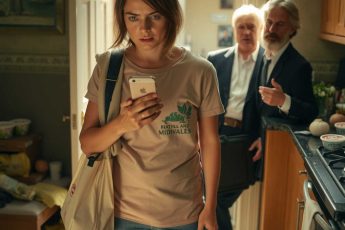
She rose, opened my bedside drawer without ceremony, digging through damp tissues and pill packets. “She doesn’t keep the documents here? Passport, anything? We’ll need them for the deal.”
The pressure shifted from psychological to outright action. She was no longer merely plotting; she was stealing from a woman still breathing.
A nurse popped into the room. “Mrs Parker, it’s time for your injection.”
Samantha’s face softened instantly, a feigned look of concern. “Oh, of course, of course. Ian, let’s go, we won’t disturb the procedure. Mum, we’ll be back tomorrow,” she cooed, smoothing my hand with a touch that had the feel of a crawling worm.
When they left, I kept my eyes shut until the footsteps faded. Then, with great effort, I turned my head, muscles protesting but obeying.
I stopped the recorder, saved the file as “Seven”, and felt beneath the pillow the second device – a button‑cell phone slipped to me by my long‑time friend and solicitor, Samuel Brooks. I dialed the number I knew by heart.
“Hello,” came a calm, businesslike voice.
“Mr Brooks, it’s me,” I croaked, my voice hoarse. “Activate the plan. The time has come.”
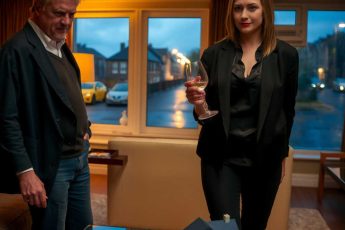
The next day, precisely at three o’clock, the doorbell rang. Samantha opened it with a practiced, charming smile. A respectable couple stood there with an estate agent.
“Please, come in,” the agent chirped. “Sorry for the mess, we’re preparing for the move.”
She led the guests down the corridor, extolling “splendid views from the windows” and “friendly neighbours”. Ian pressed himself against the wall, trying to become invisible. His face was as grey as ash.
“This flat belongs to my mother‑in‑law,” Samantha said, her tone tinged with sorrow. “Unfortunately, her health is grave, the doctors give us little hope.”
We agreed she should be moved to a specialised care home, under supervision. The walls of this room held too many memories for her.
She paused dramatically, as if staging a performance, wanting the buyers to feel the depth of the situation.
At that moment the door opened again, silently. An electric wheelchair rolled in. Inside sat I, not in a hospital gown but in a dark navy silk robe, hair neatly tied, lips barely tinted. My gaze was steady, cold.
Behind me stood Samuel Brooks, tall and silver‑haired in a crisp suit, quietly closing the door behind him.
Samantha froze, her smile erased as if rubbed out with an eraser. Ian’s eyes darted about, searching for an escape. The buyers and the agent exchanged bewildered looks.
“Good day,” I said, my voice low but slicing through the silence. “I think you’ve got the wrong address. This flat is not for sale.”
I turned to the bewilderled couple. “Apologies for the inconvenience. My daughter‑in‑law must have overreacted to my condition and… exaggerated.”
Samantha seemed to snap awake. “Mum? How are you here? You can’t you not…?”
“I can do whatever I deem necessary, dear,” I replied, my stare chilling the air. “Especially when strangers run my house without permission.”
I pressed play on my phone. The speaker hissed the familiar whisper: “When will you be gone?”
Samantha’s face drained to the colour of her sheets. She opened her mouth but no sound emerged. Ian clutched his face, tears streaming.
“I have a large collection of recordings, Samantha,” I said evenly. “About your dreams, the sold items, the appraiser. I think some authorities will find them… interesting.” I hinted at a fraud investigation.
Samuel stepped forward, a folder of papers in hand. “Mrs Parker signed a general power of attorney this morning, and a statement to the police. I’ve also prepared a notice of eviction on grounds of moral damage and threat to life. You have twenty‑four hours to collect your belongings and vacate.”
He placed the documents on the table with a soft, inevitable rustle. That was the end, the line that could not be crossed again. Yet, for the first time in weeks, I felt no pain or anger. I felt a cold, unwavering strength – the strength of a woman who had nothing left‑handed to lose and was finally taking what was hers.
The estate agent and the couple vanished, muttering apologies. In the sitting‑room only the four of us remained, the silence thick as dust in an old cottage.
Samantha was the first to speak, her shock turning to fury. “You have no right!” she shouted, pointing a finger at me. “This is Ian’s flat! He’s registered here! He’s the heir!”
“Former heir,” Samuel corrected, scanning the papers. “According to the new will, drafted and witnessed yesterday, all of Anne Parker’s estate is bequeathed to a charitable fund for young scientists. Your husband, unfortunately, is not included.”
That was my final shot. I saw the last spark of hope die in her eyes. She glared at Ian as if he were the cause of everything.
Ian, my son, finally stepped away from the wall. His face was wet with tears, pitiable. “Mum… I’m sorry. I didn’t mean… she forced me.”
I looked at him, at this forty‑year‑old man who had hidden behind his wife’s shadow. The boundless mother’s love that once filled the ward fell silent, leaving only bitter disappointment.
“No one forced you to stay silent, Ian,” I replied, my voice even, almost detached. “You made your choice. Live with it.”
“Where do we go now?” Samantha interjected, her voice trembling with fear and rage. “Out onto the street?”
“You had a rented flat before you decided my place would be vacated,” I reminded her. “You can go back there, or anywhere else. It’s no longer my concern.”
Samantha lunged at the boxes, shoving them into a bag, muttering curses. Ian stood in the centre, lost.
He glanced at me once more. “Mum, please. I understand now. I’ll change.”
“It’s never too late to change,” I said. “But not here, and not with me. My door is closed to you forever.”
He lowered his head, realizing this was the end – not a performance, not a punishment, but a final decision.
An hour later they were gone. I heard the door shut behind them. Samuel approached.
“Mrs Parker, are you sure about the charity? We could reverse everything.”
I shook my head. “No. Let it be. I want whatever remains of my life to do good, not fuel more feuds of bitterness.”
He nodded and left. I was alone in my flat, my hand trailing along the arm‑rest of my chair, across the spines of books. Nothing had changed here, but I had.
I was no longer just a mother who forgave everything. I had become a woman who set the boundaries of her own universe.
And in that new universe there was no room for the voice that once whispered, “When will you be gone?”.