The whole day Mabel and I were rushing about, getting everything ready for our grandsons arrival. Sevenyearold Max was due to stay with us for a week while his parents were off on business.
Mabel, a woman with soft hands and a perpetual worry in her eyes, bustled through the cottage, tidying and dusting. She changed the sheets in the little bedroom that had once been our daughters, smoothing the blankets corner over and over. Nothing seemed to satisfy her.
She kept thinking that the house, cosy and familiar to us, might look dull and oldfashioned to a boy from the new generation. George, did you pick up the yoghurts he likes? And the mandarins the sweetest ones? she called over her shoulder, peeking into the fridge for the fifth time.
I, a sturdy man whos begun to outgrow any sense of hurry, nodded while hunched over my little notebook. In a careful, lined pad I wrote a list titled Plan of Action in neat block letters: London Zoo (show the bears and the wolf), HydePark (carousels, icecream), BBQ at the cottage (teach him how to light a fire).
I remembered how my own father used to take me on walks in the woods, and I wanted to pass on that sort of rugged, handson upbringing, to teach Max something real, not just virtual. I proudly checked the coal for the grill and tightened a squeaky shelf in the hall, feeling like the chief engineer of the upcoming holidays.
We hardly talked to each other beyond coordinating tasks. Our quiet, shared anxiety formed the background. We were scared scared that we wouldnt find a common language with this swift little creature, who seemed like an alien from another world.
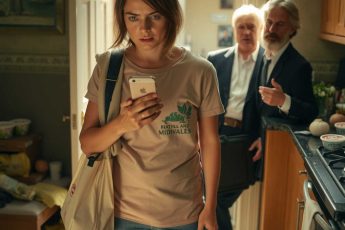
Max was a boy with serious eyes and a phone that was practically an extension of his hand. To Mabel and me, he lived in a mysterious digital dimension endless videos, shooter games, dancing avatars on screen. Wed heard from our daughter that he was clever but withdrawn, that he loved documentaries about dinosaurs and space, yet could sit for hours glued to his tablet.
We watched his fingers flick across the glass and didnt understand what could possibly be interesting in that bright emptiness. The silence he created between himself and our mundane adult world unnerved us. We feared we would spend the whole week without hearing his genuine laugh, without seeing his eyes light up over something real, not digital. So we bustled, prepared, and tried to build the perfect by our standards world for our grandson, unaware that the key lay elsewhere.
When Max finally arrived, he stepped out of the car, let Mabel hug him in a quiet embrace, gave me a dry handshake, and, clutching his tabletfilled backpack like a knight his shield, headed to the room set aside for him. The week we had painstakingly planned began.
Our first outing to the zoo turned out to be a defeat. I, acting as guide, animatedly described the habits of the brown bears, but Max pulled out his phone, filmed the enclosure for five seconds, and sent a voice note to a friend: Look, its like that cartoon bear. That was it. He wandered around, eyes on the ground rather than the cages.
A try at baking a cake with Mabel ended in a polite refusal. I dont like messing with dough, Max said, and Mabel instantly recalled how our own daughter used to be covered in flour at that age, joyfully kneading the batter like playdough.
The climax was a fishing trip. I eagerly laid out the rods, showed how to thread a worm, talked about the quiet of early morning and the thrill of a bite. Max stared at the still bob for about forty minutes, a look of sheer boredom in his eyes. Then he sighed and said, Granddad, can I just sit on my phone? Nothings happening here. He tapped the screen, only to find there was no internet. He sighed louder, and kept sighing until I decided it was time to head home.
That evening Mabel and I sat at the kitchen table, sipping tea in silence, a silence that spoke louder than any words. We both felt like losers, outdated, unnecessary. Our warm, caring world seemed boring to him.
The next morning Mabel decided to make apple pancakes the sort our daughter once adored. Max sat at the table, poking at his plate with a fork. Suddenly his gaze landed on an old guitar propped in the corner. It had been idle for years but still looked sturdy.
Whoses that? he asked, halfinterested.
I, finishing my tea, perked up. Mine. I used to play when I was younger. Havent touched it in ages.
Play something, Max said, his tone more challenge than request.
Mabel froze, ladle in hand. I shook my head, embarrassed. Ive forgotten everything, old chap. My fingers are rusted.
But the boy persisted. A spark ignited in his eyes finally, something that could break the boredom.
Please, just one song, he pleaded.
I sighed, cleared my throat, and reluctantly lifted the guitar. My fingers fumbled to find the first chords, and I crooned an old campfire tune Id sung in my youth.
Max, who had seemed completely indifferent, lifted his head. His eyes widened. He wasnt just listening he was drinking in every note.
When I finished, the room fell quiet. Then Max, in a softer voice, asked, Could you teach me? At least that part He sang a fragment of the chorus.
That night we didnt turn on the television. The three of us gathered in the sittingroom. I showed Max the basic chords, Mabel hummed along, recalling verses from longgone songs. Max, cheeks flushed from concentration, pressed the strings and celebrated each clean tone.
It turned out the silence that had once frightened him was different when it was filled with music. That quiet was a shared creation, a joint endeavour, and it suited him perfectly.
Before bedtime, Max, lying in his bed, said to Mabel, You know, Gran, Granddads a proper rock star.
Mabel smiled, running a hand over his hair. She realised we had been showing him the world from the wrong angle. We didnt need to drag him into our past; we just had to find a piece of it that could spark his present.
The next morning at breakfast the atmosphere was transformed. Instead of retreating to his tablet, Max grabbed the guitar.
Granddad, can you show me more chords? he asked.
I, finishing my tea, tried to keep a businesslike tone, but the corners of my mouth betrayed me. Sure thing. First have a proper breakfast a musician needs his fuel.
Mabel watched us and felt the last of her worry melt away. The evening with the guitar had become a magical key that opened a door to our shared world. Now we were on the same side.
When Maxs parents returned a few days later, they walked into a surprising scene. Their usually withdrawn son, eyes alight, demonstrated an Eminor chord, producing a proud, if imperfect, sound. I stood beside him, like an experienced maestro, gently correcting his finger placement.
Over tea the conversation turned to clubs and lessons.
We were thinking of enrolling him in robotics, said his father. Its a good future.
Mabel and I exchanged glances. I, usually the quieter one, stepped in firmly.
We see how his eyes light up when he holds a guitar, I said, laying my hand on my wifes arm for support. Its not just an interest. Its a passion.
George, my husband, added, voice unusually excited, He has an ear for music and, most importantly, the desire to create. Music teaches you to listen, to hear, to be patient. One wrong finger and the note is off that discipline shapes you.
We didnt push or pressure. We simply shared our discovery. I recounted how Max could spend half an hour trying to press the strings correctly, never giving up, how hed ask me to play something similar to the bands he heard on the radio.
Robotics is fine, Mabel said gently, but look at him. Can you really deny him this enthusiasm?
Maxs parents watched, astonished, as their son, in the next room, practiced a new chord progression under my watchful eye. Their eyes saw not the usual detachment but a fire the very fire they had hoped to spot.
A month later Max enrolled in a local music school for guitar. His teacher, a stern woman in her fifties, after the first lesson declared to his parents, He comes with a solid foundation. At home hes been well prepared. He doesnt just have a good ear he understands music. Thats rare.
The music school became for Max a continuation of that magical evening in our sittingroom, not a chore but a privilege. He tackled scales with gusto, because they led him to richer, more beautiful melodies. He endured the boring exercises, knowing they were the price of one day playing like Granddad with the same inspiration and freedom.
At a family gathering, when guests asked for a song, Max, unflustered, grabbed my old guitar. His voice wavered, the chords still a little uneven, but the rendition of the very tune that started it all was so heartfelt that tears welled in my eyes. I glanced at my husband, caught his proud, beaming look.
Now Max comes to our cottage not because he has to, but because he looks forward to those guitar evenings. He sits on the sofa beside me, showing what hes learned, and I nod, adjusting his fingers: Place it here it sounds clearer.
Mabel settles in her armchair, knitting or reading, simply listening. Those sounds sometimes tidy, sometimes a little offkey have become the best music for her. She no longer rushes about, trying to feed him to the point of overflow or planning extravagant outings.
Often we sit in quiet together while Max works through a new melody. That silence is no longer awkward; its peaceful. Weve discovered a way to be together not by reshaping each other, but by sharing what matters to us all. And that, I think, is the greatest understanding of all.