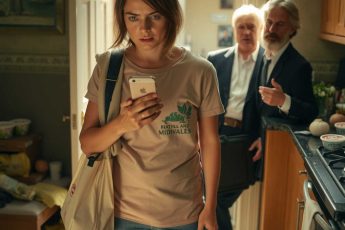
What a granddaughter you have, William Dacre, darkeyed and whitetoothed.
Whose child is that? Not yours?
Of course shes mine, sir, just as she isonce in a generation a child like her appears, and so many years have passed My son, Arthurs child, will soon be my greatgranddaughter.
But all your folk are lighthaired, William. I know the Evans clan, we all worked for my grandfather your ancestors served the Crown faithfully.
We served, sir, generation after generationmy greatgrandfather was a bailiff, then my father, then I
The sons have gone to town. Thomas the coachman serves Lady Eleanor, who is rich and has many children. Samuel the clerk works in a shop and plans his own business. Arthur, a veteran, rose to the rank of captain, earned medals, and was praised by the duke. He runs a solid farm. He married a good woman, Margaret, and they had a daughter, Ellen, whom everyone adored.
In our line few girls are born; when a girl does appear she is always like Ellen
Old Edmund Evans sits mending nets while a blackeyed girl twirls beside him, slender fingers, a beauty unlike any childs. A young squire, Charles Somerset, watches, unable to take his eyes off Ellen.
Ellen, will you marry me?
Im still a child, sir
Of course youre young now; when youre grown, will you?
By the time Im grown youll be old. Ill choose a younger man.
And who will that be? Have you found anyone?
No not yet. Grandmother Dawn told me Ill know when the right one comes
Charles looks puzzled.
Dawn? William, I dont follow. Whos this Dawn? Isnt Arthurs wife from our village?
Ah, sir dont listen to the childs chatter; shes still a babe.
May I play with Scout? the girl asks, suddenly a toddler again, sprinting down the riverbank with the squires hunting spaniel, Scout.
How does she know the dogs name?
Im not sure, sir, perhaps you mentioned it once
Charles sighs, amused, as the girl darts along the riverbank, Scouts ears flopping.
The scene lingers in Charless mind. He, like many youths of his age, is drawn to mysticism, writes verses, and is a restless soul.
In autumn they meet again; Ellen walks with her grandfather for mushrooms while Charles strolls with Scout. He mutters poetry under his breath. Scout, once at his heels, darts ahead, ears pinned.
Scout, Scout, Charles hears the childs voice.
He follows the path, finds the dog lying on its back, wobbling its legs as Ellen leans over.
Good evening, Ellen.
Good evening, Charles
Are you alone?
No, my grandfather is out gathering mushrooms.
They walk together toward the old mans cottage.
So, Ellen, have you changed your mind about marrying me?
No, sir, your destiny lies elsewhere. Youll spend your life longing for home, far from yours
What do you mean?
Well meet again when Im older, but the meeting will be hard, like a parting.
You speak passionately, Ellen.
Its not me, its Grandmother Dawn
Who is this Dawn?
A story, a whisper from long ago.
William Dacre laughs, his eyes softening.
You never told me the family legend, why girls like Ellen are born?
Ah you see, William, youre not of our blood, but
I cant stop thinking, it gnaws at me.
Let me tell you then.
In distant times, on neighboring lands, a travelling troupe of Roma set camp. The local lord adored them, welcomed them, even visited their camp. He fell for a Roma girl, a striking child with otherworldly beautysparkling eyes, bright lips, pearls for teeth, hair piled under a vivid headscarf. When she danced, the wind swirled; when she sang, tears fell from listeners. They called her Dawn, a witch of the camp, though she was born with that fire in her.
The lord begged her father to give her to himsell or give.
How could I give or sell my daughter? the old Roma chieftain replied, astonished. We are a free people; if she wishes, she may go, otherwise
Dawn laughed, her voice ringing like bells.
Sir, I am no granddaughter to you what can you offer?
The lord, frantic, clutched at her skirts, tossed money left and right, promising a life in the palace, gowns, gold carriages.
I am already a queen of the steppe, I need no palace, no silk shoes. My carriage is the wind, my feet run barefoot on dew.
Then youll strip me of my freedom, lock me in a golden cage!
You are everything to me
Go, and youll regret it.
The Roma, seeing his madness, fled that night, leaving the lord delirious. He chased them with soldiers, accused the camp of theft, shouting in the night. A young woman stepped forward, demanding they be freed, singing as she walked away, the lords eyes glinting with fury.
Old tales said the birds followed her, scattering as she vanished from the estate.
I warned you, sir, disaster will follow, youll lose what you cherish most.
The lord, blinded by obsession, threw lavish balls, scattered his fortune, gave alms to the poor, and invited poets to write to Dawn.
When will you become my wife? he asked one night.
Not yet, sir, you amuse me little.
Dawns games drove the lord to madness; he squandered his lands, forced the emperors own servants to leave, yet he kept them out.
Years later his illegitimate son, Victor, returned to set his father right.
My time has come, Dawn, whispered the old lord.
Two weeks later Dawn left for the steppe, with Victor trailing. She awaited her hour, and the man who would be her husband.
Dont go, the lord begged, trembling.
I warned you, Ill take what you value most.
My son let him go, he is all I have left.
I wont call him, sir; he walks his own path.
They vanished into the night, into the glowing gypsy fires, into the tents with children.
When asked later, What became of Dawn? Charles asked, his voice shaking.
She died, they say, but some whisper she found a gypsy lover
A young voice, Ellens, chimed in:
She loved her husband fiercely, bound him, and left early
The old man, William, thought of the legend: once in a generation a girl like Dawn is born, her spirit passing to the next.
Years later, during the war, Charles, now a soldier, discovered old deeds showing lands east of his estate belonged to the Ellis family. The old men died, and Charles pursued new ideas. The country changed, and his plans fell apart. He and his comrades were arrested in the old manor and held under a senior officers orders.
In the dead of night, a whisper floated to his window: a girl, luminous in moonlight, called his name softly.
Charles, follow me, quietly, we have half an hour before the guards awaken.
He and his men slipped out, led by the girl into hidden caves he never knew existed.
My people have hid here for centuries. Fear not, I will help you.
Ellen? What have you become?
Im still here, sir, and I remember the family legend.
She guided them to the port, arranged contacts, and helped them escape abroad.
Ellen, travel with me, youre now more than a stranger.
I cannot, sir my fate lies here, walk your road, farewell.
Back in exile, Charles sketched Ellens face from memory and gave it to an artist, who painted her portrait. He later married, loved his wife, but kept Ellens image in his heart, a pure, untarnished love.
Only when Charles grew old and frail did people learn the truth of the portrait. Ellen lived a long life, married the great officer who arrived the night she helped Charles flee. He was later executed during the purges, then rehabilitated; they raised three sons and a daughter. Ellen died before seeing her greatgrandchild, but when that child, a girl named Angelica, was born, everyone marveled at her resemblance to the old matriarch.
Nicholas, why does Angelica look so different? She isnt of our line. asked a neighbour at the country house.
Shes ours, ours, laughed Nicholas, shes truly ours.
Angelica, why is she called that? Is she a gypsy? Look at the beads around her neck.
Not beads, a pendant, the girl answered, her dark eyes clear, they call her Dawn.