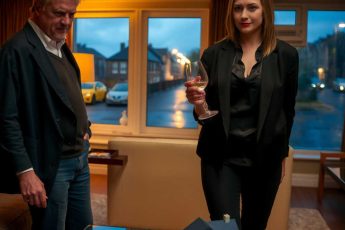
Ive been thinking about you, so heres the whole thing, just like a chat over a cuppa.
Andrew always felt like his life was on a side track, like the main train had already left the station and he was stuck on a slower line. Mornings were a quick bus ride, then a shift loading big rolls of insulation at a construction yard on the edge of his tiny markettown, a tin of soup and some rice for lunch in the mess hall, evenings spent glued to the telly and the occasional catchup at the local pub by the coach station. He was thirtythree, named Andrew, and everyone around him assumed hed got his affairs more or less sorted.
He rented a room in a crumbling brick house opposite the old secondary school hed once attended. The landlady, a thin retired lady, lived in the next room and was always rattling on about her aches and the price of pills at the pharmacy. Andrew would halflisten, nod, and drift off into his own thoughts. Above his bed hung a faded poster of a big city glass towers, a river, bridges, bright lights. Hed bought it after his National Service at a market stall and kept it with him wherever he moved. Sometimes, when he was about to drift off, hed picture himself strolling those streets, a stranger, free as a tourist or a movie hero.
The real life was simpler. At the yard he was just a storekeeper, his pay arrived late, the boss loved to shout, and his mates were increasingly talking about mortgages and loans. One evening the landlady complained again about her blood pressure; Andrew realised he barely heard her. A decision was already bubbling inside him, stubborn as a itch, though he hadnt put it into words yet.
A week later he bought a train ticket to London. He told his boss he was quitting, saying hed found a better gig in logistics. The boss just shrugged and wished him luck. He explained to the landlady that he was heading off to earn some money, and she flapped her hands but didnt argue. He only had a few things: two suitcases, an old laptop, a couple of books, and that city poster, carefully rolled and tucked on top.
On the train he sat by the window, watching fields, lone farms, petrol stations slide by. In his head he was already sketching the new life: a job as a loader or courier at first, then something better, a flat in the centre, cafés, concerts, maybe meeting someone. He figured big cities just made that happen on their own.
When the train pulled into London at dawn, Andrew pressed his forehead to the glass. Grey tower blocks, busy roundabouts, billboard adverts stretched out beneath a low, leaden sky. The platform hit him with a cold, damp breeze and the smell of iron and cheap vendingmachine coffee. People hustled, dragging luggage, chattering on their phones. No one was waiting for him.
He stood on the square outside the station, a bit dazed, as cars, buses, loud announcements swirled around. In his pocket was the printed reservation for a cheap hostel in the city centre, the one hed plan to reach by tube. He fished out the folded tube map hed printed at home; colourful lines tangled together, stations with foreign names forming a maze. He had to find his stop, a long, tricky name.
He descended into the tube, jostled by the rush hour crowd. The carriage was packed, warm, smelling of sweat and perfume, voices merging into a din. Andrew clutched the handrail, eyes scanning the flashing station names on the walls. A thrill rose inside him. This was the feeling hed always dreamed of: a tiny dot in a massive city, and everything just beginning.
The hostel was a narrow alley off the Circle line. A rundown building with peeling plaster, a heavy iron door with a code lock, a cramped corridor carpeted in linoleum and scented with detergent. The receptionist, a skinny bloke with a short ponytail, checked his ID, handed him a key to a locker and showed him a bunk in a shared room for eight. Each bed had a curtain, a bedside lamp perched on a tiny table.
For the first two days Andrew wandered the city, trying to memorise the streets. He scoured job listings on his phone, called back on adverts. People promised to get back to him or asked for a CV by post. By evening his feet ached, his wallet felt thinner, the pile of cash in his pocket dwindling. Hed lie on his bunk at night, hear a neighbours snore, laughter from the room next door, and think, so far, so good. Thats how it should be, he told himself.
On the third day he turned up for an interview at a logistics firm in a sleek office by the Thames. A woman in a sharp blouse greeted him, asked a few questions, glanced at his work history, and said shed get back within a week. After leaving the building, he lingered by the glass doors, watching the water, then walked back to the tube.
A drizzle started, he pulled his collar up and quickened his pace. At a corner, a shop window displayed abstract paintings. He stepped inside. The gallery was bright, white walls, a few people sipping wine. A tall woman in a black dress laughed, head thrown back, caught his eye. Andrew froze, like hed seen a TV screen for the first time. Back home, art was only in the dusty community hall, and even then it was old and faded.
Just then the gallery doors swung open and the woman stepped onto the pavement. She lit a cigarette, shielding the flame with her hand. Her short, lightbrown hair was tied in a loose bun, a thin chain glinted at her throat. She noticed Andrew looking and gave a small smile.
Come in, she said. Weve just opened. Free entry.
Andrew felt a blush but walked through the door.
Im not really dressed for this, he muttered, glancing at his jeans and jacket.
Dont worry, she laughed, flicking ash off. No dress code here. Im Emily. You are?
Andrew.
Pleasure, Andrew. Lets go, the artist will love an extra pair of eyes.
She took his elbow gently, like an old friend, and pulled him inside. The smell of wine mixed with fresh paint hit him. People gathered in small groups, chatting, laughing. Large canvases showed blurred silhouettes of city dwellers, only streetlights and windows were sharp. Andrew stopped before one and felt as if he were looking at himself from the outside.
Like it? Emily asked, standing next to him.
Its strange, he admitted. A bit eerie.
Thats good. Fear is honest, she replied, turning to him. Are you here alone?
Yes, just arrived from the countryside.
Got it. She glanced at him, interest flickering. What brings you to our gritty city?
Im looking for work. I used to be a storekeeper on a construction site.
Adventure, Emily chuckled. Im a curator. I work with artists, projects, galleries my playground.
She waved her hand, sketching the space. Youre lucky you came in today. Its a soft entry into the cultural scene.
A man in a black shirt, sporting a trimmed beard, approached. Emily introduced him as the exhibitions artist. They exchanged a few words, he shook Andrews hand, then moved on. Emily lingered.
Have you always wanted to come here? she asked, pouring herself a glass of white wine from a plastic cup.
Ive dreamed about it for ages, but things never fell into place.
Now they have. She looked him straight in the eye. What are you hoping to find?
He shrugged, cheeks warming. Something different. Not like back home.
Thats what this city offers. The question is, are you ready for that different?
She said it without mockery, just a tired sort of honesty. Then she was called away, laughing with a group of guests. Andrew stayed by the painting, glass in hand, feeling both an outsider and oddly part of something hed only ever seen on screen.
Emily returned moments later. Got any plans for tonight? she asked.
Just back to the hostel.
Boring, she smirked. How about joining us for an afterparty? Therell be people, music, maybe youll meet someone who can help you land a job. Here everything runs on connections.
He hesitated, thinking of the landladys warning about big cities and how people get taken in. But Emily was there, confident, alive, like shed stepped out of another world. He nodded.
Alright.
They hopped in a taxi to an old mansion turned club. Inside it was dark, thumping electronic beats, flashes of light. People drank, danced, smoked on the staircase. Emily led Andrew around, introducing him to folks, names spilling from his mouth like theyd been waiting. He was offered wine, then something stronger. His head felt light, boundaries blurring.
See that guy at the bar? Emily whispered, leaning close. Hes a collector. He buys up young, unknown artists. He likes everything to look convincing.
She talked about artists, grants, sponsors, how everything hinges on contacts, impressions, the story you tell about yourself. Andrew tried to keep up, feeling like hed slipped behind the curtains of a big production.
Later, as dawn edged in, they stepped outside for some air. The night was damp, the pavement cold. Emily smoked a cigarette.
Regret coming? she asked.
No, he said, leaning against a wall. Its odd, but interesting.
Get used to it, she said, exhaling smoke. The city either chews you up and spits you out, or you learn to chew it yourself.
She said it almost flatly, like reciting a phrase shed heard before, then looked at him more closely.
Andrew, I like you. Youre genuine rare around here. Ive got an idea, maybe you could help and itd also benefit you.
He bristled a little.
What kind of idea?
Not now. Youre tired. Lets talk tomorrow. Ill text you. Just dont disappear. In this city, vanishing is effortless.
The next morning, Andrew woke with a heavy head. Fragments of the nightlights, laughter, talk of grantsflashed through. His phone buzzed with a message from Emily: Evening, swing by the gallery. We need to talk.
He spent the day calling about jobs, attending another interview at a warehouse. They offered him night shifts for a modest wage. He said hed think about it. Money was running low, but nothing concrete yet.
That evening he arrived at the gallery. It was almost empty. Emily sat at a high table, glasses perched on her nose, hair pulled back.
Hey, nighthero, she said, taking off her glasses. Hows the head?
Fine.
Sit down. She pointed to a stool. Ive got a slightly unconventional offer.
He sat, shoulders tense.
You said youre broke, no steady work.
He nodded.
Were doing a private sale of a living artists work. Its a bit delicate. We need someone to act as the buyer. On paper youre the purchaser, you sign the contract, everything looks legit. In reality the money comes from other sponsors, the paintings go elsewhere. Youre just the front.
Andrew stared, trying to process.
So I buy, but not with my own money?
Exactly. Its a common workaround. People dont want their names on the paperwork. They need a clean slate. You fit perfectly.
He felt a knot tighten.
Is that legal?
Emily gave a small smile, eyes still serious.
Its not by the book, but its how things get done. The money will flow through your account, then well sort it out. Youll get a feeenough to live on for a few months.
When she named the sum, it was almost three times what hed earned in the last few months. It would cover rent, food, a few comforts.
Why me? he asked.
Because youre new, no ties to the art world, and I trust you. You wont run to the police at the first sign of trouble.
The word police hit him like a punch. He looked at his hands, the callouses on his fingers.
What if something goes wrong?
It wont, she said, voice soft but firm. Weve done this before. Its just a paperwork trick. No risk for you if you follow the script.
He thought of the landladys warning, the grim warehouse, the evenings with the telly, the night of the gallery, the buzz of the party. Two voices battled inside: one urging a chance, the other warning of danger.
I need to think, he said.
I understand. She nodded. You have a day. I need an answer tomorrow morning. If you cant, just be honest. I dont like people disappearing.
He left, clutching the crumpled tube map in his pocket, sitting on a bench outside a block of flats, staring at the ground. The maps lines tangled like his thoughtsdifferent routes, different outcomes.
He imagined two futures: one where he tells his old mates back home about a shady art deal, gets labelled a snitch, ends up back in his small town with a story nobody believes; another where he stays, pockets the money, lands a decent job, upgrades his flat, maybe even finds a girlfriend.
That night in the hostel he lay awake, the ceiling plastered with murmurs of sitcoms on laptops, friends arguing about footie, his mind replaying every word Emily had said. No outright lies, but nothing simple either. Everything felt more complicated.
He recalled his old town, the cold warehouse doors in winter, colleagues who only grumbled about how bad things were. His peelingpaint room with the city poster, the lonely streetlamp outside his window. Here, the city was huge, terrifying, and exhilarating all at once.
By morning hed made a decision, though he didnt fully admit it to himself. His phone buzzed with Emilys text: So?.
He typed back, Yes, Im in.
She replied instantly: Great. Meet me at the gallery at three. Bring your ID.
The day felt hazy, but he made it to the gallery at three. Emily greeted him at the entrance, sharp suit, hair tied back, a focused look.
Lets go. She took his elbow and led him to a small office in the business district. Inside sat a middleaged man in an expensive sweater, sharp eyes. Emily introduced him as David, no extra details.
Alright, Andrew, the man began, leafing through papers. The scheme is simple. Money will be transferred to your account, youll sign a purchase agreement for the artworks. Then, via a power of attorney, youll pass the pieces to our partner. Youll get a fee for handling it.
Andrew had a flood of questions but struggled to articulate them.
What about taxes? he finally asked.
The man smiled, the kind of smile that reassures a child about maths.
Weve sorted that. Itll look like a loan you repay later. No tax issues. I handle that side, trust me.
Andrew nodded, though confidence was thin. Emily sat beside him, calm, filling gaps, confirming details. It all seemed routine to her.
He signed a few sheets. His hands trembled, the wordsloan, repayment, liabilityblurred together. Then they went to a bank, opened a new account, got a card. Within an hour a notification pinged: a large sum had hit his account. The numbers on the screen felt unreal.
Congratulations, David said. Everythings on track. Tomorrow well arrange the handover of the paintings.
Emily walked him to the tube.
You see, its not as scary as it sounds, she said. You handled it well.
He tried to ask, What if something comes up? but she cut him off.
Dont overthink it. In this city everyone does what they can to survive. Just dont be a complete fool.
That night he barely slept. The money sat in his account, untouchable, a weight in his pocket he couldnt yet use. He kept replaying possible scenarios. The next morning his phone rang. An unfamiliar number.
This is the bank. We need you to come in. There are questions about recent transactions.
A chill ran down his spine.
What kind of questions?
Just standard checks. Itd be best if you came today.
He called Emily. No answer. He texted. Silence.
An hour later Emily finally returned the call.
Whats happened? she asked, no greeting.
He explained the call.
Stay calm, she said. Its routine. Just say the money is a loan from a friend for buying a car or a house. Thatll satisfy them. Got it?
…If they ask
Andrew, if you panic, thats when things go wrong. Keep your composure. Youre an adult now.
He nodded, even though she couldnt see him.
At the bank he was led into a small office. A sternlooking woman in a suit and a young man with a laptop sat across from him. They asked where the money came from, how he intended to use it. He repeated the rehearsed line about a loan from acquaintances for a vehicle purchase. The woman probed a bit, then thanked him and said theyd be in touch if anything else was needed.
He left the bank on wobbling legs. The city roared outsidecars honking, people shouting, the usual London hustle. He pulled out the crumpled tube map, unfolded it, tried to make sense of the tangled lines. It felt like a trap; too many routes, too few anchors.
His phone buzzed again: a message from Emily, How are you? All good?
He stared at the screen, fingers trembling. He could be honest, lie, or ignore. He slipped the phone back into his pocket, walked down to the tubeHe stepped onto the train, feeling the city’s pulse guide his uncertain future.