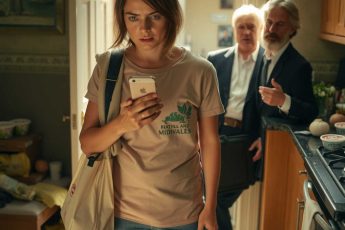
In the school register for March 1993, next to my surname, someone had written: paid. But the initials werent my mothers.
On the March 1993 page, beside my surname, it read: Paid. Next to it were initials that didnt belong to my mum. I was fourteen, standing in the canteen queue with a green plastic tray that held nothing at all.
It was the same every day. The vegetable stew at the counter smelled so rich it made my stomach twist. Fishcakes with mashed potato. Fruit jelly in thick glass tumblers. None of it cost muchjust a few pencebut even those pennies were beyond us. Mum worked from home as a seamstress, altering other peoples old coats, and money came in rarely, trickling in fits and starts, just enough for bread and potatoes.
I became adept at joining the queue and then sneaking away before reaching the till. Pretending Id forgotten my purse. Pretending I wasnt hungry. Pretending I ate lunch at home. No one ever questioned me. Or at least they pretended not to notice.
My classmates gathered around tables, rattling their spoons and chatting. Lucy Barker dunked bread in her gravy and licked her fingers. Emily Harris would cut her fishcake into tiny pieces as if she were dining at a posh restaurant. Id hurry past, squeezing my geography textbook against my chest, making sure not to glance at their plates.
The cloakroom corridor was always quiet then. Id perch on the windowsill and wait for the bell, trying to muffle my growling stomach against my satchel. Occasionally, Id find a boiled sweet in my coat pocketslipped in by Mum, on the days shed managed to find a few spare coins. One sweet for the whole day. Id suck it until all that was left was a jagged crystal of sugar.
But, once or twice a week, something different would happen. Id be poised to slip away from the queue as usual when, suddenly, the dinner lady at the till would murmur, without looking up:
Its paid for you. Go on, take it.
Id take the tray, set it on the canteen rails, and theyd ladle soup, add a hot meal, hand me a glass of juice. Id sit at the table by the window and eat slowly, forcing myself not to rush, because eating quickly would show just how hungry I really was. The first spoonful of steaming soup would sting my palate; then, warmth would flood through me, like a radiator switched on inside.
I never found out who was paying. I was afraid to ask. It seemed to me that if I ever dared make inquiries, the magic would end. Like those stories where you mustnt look back.
Mum never asked, either. She never brought up the school dinners at all, as though the topic itself was a wound she had no words for. In the evenings, shed be at the sewing machine beneath the lamp, her hands and the fabric lit in a circle of golden light while I did my homework at the kitchen table nearby. Wed pass hours in silenceneither angry nor sulking. Just exhausted, with nothing left for words.
Now I realise: Mum knew her daughter was going hungry, and she couldnt do anything to change it. That was her private defeat, which she endured day after day, never complaining.
She passed away in 2019, before I ever managed to ask. I always meant toI just never did. Maybe she knew who it was. Maybe she had her suspicions. But we never talked about it, and that silence remains.
Its been thirty-three years. Im Catherine Barker, a maths teacher at that same school, and Im forty-eight. My eyes are hazel with golden flecksmy dad’s eyes, Mum used to say. I dont remember him; he left before I turned three. And, at last, I discovered who paid for me.
***
In February 2026, our school finally started renovating the canteen. The first thorough overhaul in all the years I could remember. Workmen stripped out the cracked old tiles, replaced the pipes, carried out the ancient equipment. They cleared out the storeroom as wella narrow windowless room behind the kitchen where decades worth of could be useful odds and ends had been dumped.
I helped sort through itnot because I had to, but because it felt natural. Ive been at this school twenty-six years; I started as a young graduate in 2000 and never left. My algebra classroom is on the third floor, exercise books in tall piles on my desk, tests every Thursday. My life fits the timetable, and I like it that way. Not because I never dreamed of morejust because anything else seems unreliable. The school is constant. The walls stand, the bell rings, children arrive. Every September brings new faces; every May, leavers. Ive grown used to the rhythm, like my own pulse.
The storeroom door had to be forced with a crowbar. The door was warped with damp, the hinges rusted. Inside, it smelled of mice and old paper. Boxes of crockery, menus from the 1970s tied in bundles, invoices, rolls of brown wrapping paper. The dust lay thick as a finger. John, the caretaker, sneezed three times and joked, Therell be a mummy in here! and Mrs. Watson, the site manager, shot back, More likely the fire inspectors going to bury us!
I stood in the doorway surveying the mess. There was something about the smellpaper, dust, a sour hint reminiscent of school dinners from years ago.
I stepped inside and tackled the nearest shelf. A box of metal traysgreen, heavy, scratched. I took one, tracing the rim with my finger. It was the same as Id carried in ninety-three.
And among it all was a thick ledger, bound in brown.
I picked it up without thinking. Inside, squared pages, covered in faded writing. The ink had turned a reddish brown, but every word was clear: columns of surnames, dates, amounts. The dinner registerten years worth, from 88 to the late nineties.
I flicked through the entries; months scrolling past like train stations. September, October, November. Childrens names, ticks, dashes. Nothing remarkableunless you were looking.
And, unbeknownst to myself, I had been looking.
March, 93. The column neat and true. Names in alphabetical order: Anderson, Bailey, Barker. By my name: Paid. And, tiny beside it, three letters: M.J.H.
I turned the page. April: Barker paid M.J.H. May, the same. I flicked backYear 2, Year 5, Year 7. My name recurred, not every month but often, always marked with those three initials.
Someone with the initials M.J.H. had paid for my lunches. Not Mumwrong initials. Not a teacherI ran through the staff from those years in my mind, not a single match. Not a charityin our town in 1993, there simply werent any.
John poked his head into the storeroom.
Miss Barker, you all right? Were heading for lunch.
Im coming, I replied.
I didnt go. I stood there, clutching the ledger, feeling the memory of that green, heavy, empty tray in my hands again.
Back home that evening, I laid out the ledger on my kitchen table, pulled out paper and pen, and went through the entries carefully, just as I mark test papersline by line. I tallied about one hundred and twenty entries across ten years. Not every day. Some weeks it was three times, some months nearly every day. As if this person somehow knew when things were especially tough for me. December was always worseMum rushed orders before Christmas, but money only came after, so in December my name was there nearly every day.
M.J.H. Margaret? Mary? Michael? Middle name: Jane? John? Surname H…?
I didnt know anyone with those initials. Or maybe Id just forgotten.
I then noticed others too: children whose entries had paid with those same initials beside them. Four or five names each year. I wasnt alone. Someone had fed several children at once. Year in, year out, a whole decade.
That night, I couldnt sleep. I lay there turning it over and overhow is it possible, to quietly feed other peoples children for years, wanting no reward? No recognition, no plaque at assembly. Just paying, and silence.
***
Our former deputy head, Mrs. Fletcher, lived round the corner, in a high-ceilinged red-brick house on Churchill Avenue. She was well over seventy now, walking with a stick, but she still held her chin high, as though preparing to address a school assembly. On her lapel was the gold swallow brooch I remembered her always wearing. Once Id asked and she told me, A twentieth wedding anniversary gift from my husbandthe last present. She offered no more.
I rang her on a Saturday morning to say Id found an old dinner register in the canteen. There was a pause at her end, then at last: Come by.
She greeted me with tea in porcelain cups adorned with blue flowers, served with a sugar bowl and little spoon. She maintained standards, retired or not. I placed the ledger beside her saucer.
Do you know whose this was?
Mrs. Fletcher slid on her glasses, flipped through the book, running her finger down each row. Her face altered as she read, as if she were pulling up something long buried.
These are Mary Jane Howards notes, she said in a low voice.
Mary Jane?
Yes. Mary Jane Howard. She was our canteen cashier from 1982 all the way to 2003. Over twenty years.
I nodded, and then I rememberednot her face exactly, but the sense of her: a slight woman at the till, clad in a white apron and headscarf, a calm, unreadable face. Shed ring up orders and say, Next, please. But to me, sometimes, shed say something different.
She paid for our meals? I asked.
Mrs. Fletcher took off her glasses and rubbed her nose, hesitating as though weighing what to say.
She put aside part of her wages every month. Sometimes just a little, sometimes more, depending on how many children needed lunch. Paid for those who couldnt manage. Four, maybe five, each year.
Her own wages? From what she was paid at the till? I asked, incredulous.
Exactly, Mrs. Fletcher nodded, rearranging her brooch as if to steady herself. I only found out by accident. In ’91, a mumMrs. Graham, I thinkcame to ask who was helping her boy with meals. She thought it was the school, some official scheme. I investigated, checked the records, asked the kitchen staff. It was the cook, Sharon, who said, Ask Mary Jane, she keeps her own book. So I went to Mary Jane Howard.
She paused, looking out the window, where a hefty, indifferent tabby cat sprawled across the sill.
She didnt deny a thing. Said, Yes, I pay. Its my choice. I asked her why. She said, Because it needs doing. She begged me not to tell anyone.
Why?
Mrs. Fletcher looked at me over her glasses.
She said, and Ill never forget it: A child shouldnt feel indebted. Food isnt charity. Let them believe its just how things work. I tried to talk her roundnot to stop, but to get help, make it official. She refusedsaid official meant committees, lists, checks A kid would know, she said; they’d realise they were on the free list.
I felt a lump rising in my throat and sipped tea to settle it.
Did you agree?
What else could I do? Mrs. Fletcher opened her hands. You cant forbid someone from sharing their pay. She knew what she was doing. Not one child ever twigged. Not one parent, except Mrs. Graham, ever guessed. I promised not to tell, and I kept that promise for thirty-five years.
Is she still alive? I asked.
She is. Must be nearly eighty by now. Lives alone in a cottage near the bypass, on Field Lane. Her husband died ages ago, no children.
I need her address.
Mrs. Fletcher hesitated, twisting the little spoon between her fingers.
Catherine, she doesnt like visitors. I ring at Christmas, just to say hello. She always says dont fuss, dont make a thing of it. Shes one of those who give, but find thanks awkward. She truly doesnt see what there is to thank.
I still need her address.
She drew out a battered address book, copied the details onto a scrap of paper, and handed it over.
Dont mind if she sends you away at first. Dont press. She grew up right after the war. Theyre different, those folk.
I pocketed the note, finished my tea, and stood up.
Mrs. Fletcherdid you ever thank her, yourself?
She leaned against the doorframe, her stick thumping the floor.
Once. In 2003, the day she retired. I said, Mary Jane, thank you for everything. She looked at me and said, What for? I cant even cook soup. I only ever counted money. Then she left. No cake, no speeches. Just as if twenty years was nothing at all.
I stepped out onto the cold stone stairs, the note burning a hole in my pocket.
***
The cottage sat at the far end of Field Lane, beyond which an open field stretched, raw and bare, last years grass lying flat. A modest timber house, the cladding weathered dark, a low fence with an unlatched gate. Three apple trees in the yard, their bare limbs prodding the grey March sky. On the step, a pair of old rubber boots and a broom leaning against the rail.
I arrived on a Sunday afternoon, hovering at the gate, holding a bag of groceries. I hadnt been sure what to bring, so Id bought the basics: a white loaf, some butter, cheese, a jar of honey, a packet of biscuits.
Seven steps from the gate to the doorI counted as I went.
I knocked. Silence. Then, inside, soft slippered shuffles. A voice, low and gravelly, each word precise:
Who is it?
Catherine Barker. From St. Marks. I teach maths.
A pause, drawn out. Something creaked behind the doora loose floorboard, maybe.
I didnt ask you to come, the voice said.
I know. I found the register with your notes, Mary Jane. In the old storeroom, during the refurb.
Another silence. I could hear a clock ticking insidesteadily, unhurried.
Fletcher told you, the voice saidnot a question.
Yes.
Go home. Theres no need to thank me. Thats not why I did it.
I remained on the step. The wind carried scents of damp earth and mouldy leaves, a magpie screeched among the apple trees, making droplets patter from the bark.
I could have left. Shed asked me to. Help given in secret comes with its own rules. But thirty-three years is too long for a gratitude never spoken.
Mary Jane, I said to the flaking doorstep, I queued every day with an empty tray. Youd say, Its paid. Go on, love. I was fourteen. And ten. And twelve. I remember your voice. I recognised it, even through the door, thirty-three years on. I never knew it was you I owed for those days I wasnt faint with hunger in class.
Nothing from behind the door. Even the magpie was quiet now.
Im not here to force my thanks on you, I continued. But I do askplease open the door.
Maybe a minute passed. Perhaps more. I heard only my breathing and the far-off hum of cars.
The latch clicked. The door opened a crack.
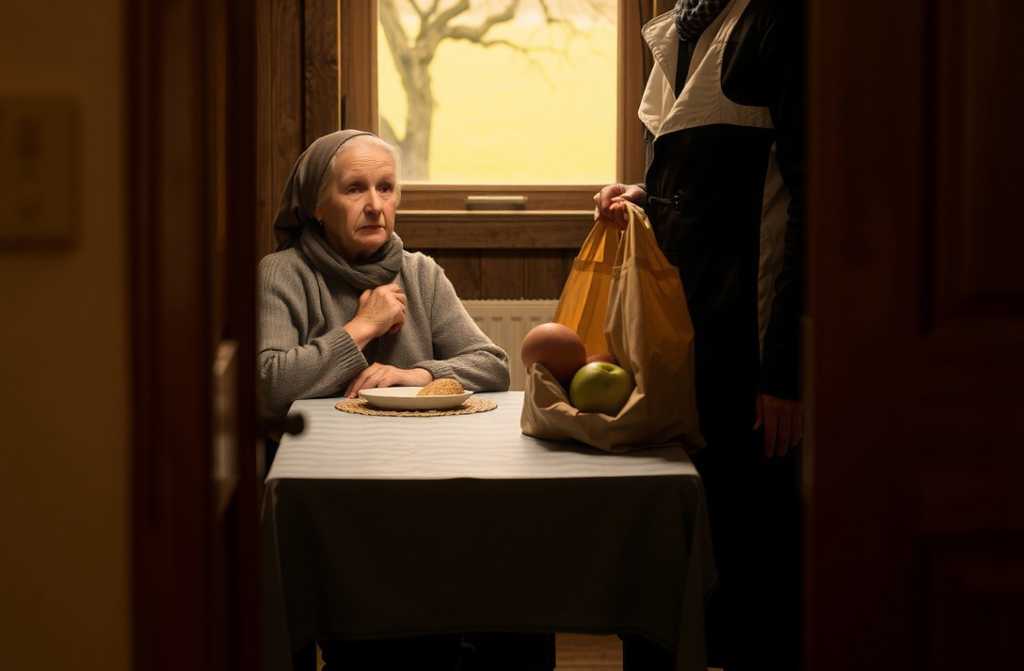
Mary Jane was tinybarely more than five feet, narrow-shouldered. A dark headscarf, house dress sprinkled with small flowers, a wool cardigan on top. Her face, deeply lined, like a baked apple, but her eyes keen, dark, cautious. She regarded me with the resignation people reserve for uninvited guestsnot hostile, just unmoved.
Come in, then. Shoes off.
Inside, the house was neat and almost bare. Kitchen, front room, small hall. Flowery wallpaper, a cuckoo clock, oilcloth on the table. A lone geranium blooming in the window. Floorboards painted blue, no carpet. The air bright with some herbal scentmint? Thyme? I couldnt tell.
I put the bag on the table.
Ive brought you a few bits.
Why? She frowned. Im not short of anything.
Because you fed me, once. Let me cook for you, just this once.
Mary Jane sat on a stool, folding her hands on her lapsmall, knotted. She glanced out at the bare apple trees, not at the food.
Im no hero, she said. Dont make me out to be. I did what I could. I went hungry as a child myself, thats all.
She fell silent. I sat across from her, the register waiting in my bag but not yet brought out.
Did you really have to go without as a child? I asked gently.
Mary Jane noddedeventually, not at once, as if turning the choice over.
Born in 48. Post-war. Dad never came home. Mum worked in the mill, four of usme the eldest. They had a school canteen, but no money for it. I sat there, counting the minutes to home time, because at least thered be a bit of potato waiting. At school, nothing. An empty stomach, and embarrassment because you werent like the others.
Her words were measured, steady, just above a whisper. It was the same quiet voice from all those years ago.
When I started at the school82, it wasI saw that nothing had changed. There were still children standing about, clutching trays with nothing on them, eyes averted, pretending they werent hungry. I watched it every day. And I made up my mind: as long as I could, not one child would go without lunch if I could prevent it.
You paid for them all?
For those I noticed. The ones who lied about having already eaten. Four or five a yearthat was my limit. The pay was small. But it was enough to cover a few lunches. I kept a registerdidnt want to muddle up who Id paid for, which months were done. Otherwise, Id lose track.
How did you decide? I asked. Who to help?
Mary Jane fixed me with a steady gaze.
I didnt decide. I just knew. A child who waits in the queue and leaves with an empty trayno choice about it. You make sure they eat.
It dawned on me: thirty years at the till, quietly setting aside part of her pay for strangers children. Every month, every year. No one knew, no one praised her. She kept the register out of orderliness, not for memorial. It was accounting of the heart, not a record of glory.
Your notebook turned up in the storeroomduring the renovation. Did you forget about it?
Left it behind when I retired, 2003. Id just turned fifty-five. Meant to clear all my things, but mustve left it in a drawer. I figured, well, no harm done. Whod go looking?
I would, I told her. I needed to.
Mary Janes eyes flickeredmore surprise than anything, as if shed never expected one of those fed children to come back grown.
Youre a teacher now, she said, I heard. Mrs. Fletcher saidBarker came back, teaching maths. I was glad. Means I did something right.
We worked together for three years, you and I. 2000 to 2003. Every day, I saw you at the till, sitting down to lunch. But I never knew you were the one.
Why would you need to know? she shrugged. You grew up. Learned. Youre teaching now. Thats enough. I dont want anything else.
I stood, unpacked bread, buttered it, sliced cheese, laid it out on a plate.
Mary Jane, you fed me for ten years. Please, let me feed you once.
She stared at the plate, then at me. There was no softening, no sentimentality. She wasnt one for tears.
Im not hungry.
Neither was Ievery time you said for you, its paid, I acted like I wasnt desperate. But you knew, didnt you?
Mary Jane looked away. She said nothing for a while, then inspected the plate again. At last, she repliedin that same low, steady voice, each word separate:
All right.
And she took the sandwich.
We sat in her kitchen, the cuckoo clock ticking away, early dusk gathering outside the window. I told her about schoolwhat it was like now, how the children were, the building works. Mary Jane listened, occasionally nodding or asking, Is Mrs. Rogers still there? Is the gym fixed? Do they still charge for lunches?
I said that now, at least, infants had free lunches, while older kids still paid, though some had help.
There you are, then, she said, wagging a finger. Infants get theirs free. What about the rest? Some are still standing without anything.
And I understood: for her, this wasnt in the past. Even now, in her mind, there were children queuing, going without.
Before I left, I drew the ledger from my bag, set it next to her empty plate.
Its yours.
Mary Jane took it, thumbed gently through the pages. I watched as she traced the namesAnderson, Bailey, Barker, Graham, Evans, Winters.
I remember every one, she mused. Anderson became a nurseI heard. Bailey moved up north. Wintersdid she stay local?
I dont know, I admitted, but I could find out.
She closed the book, clutching it to her chest as you might cradle something alive.
No need, she said. I only kept it to stay organised. Nothing more.
But she didnt give it up.
By then it was dark. The lamp by the bypass shone a yellow circle at the far end of the street. The apple trees stood as three silhouettes in the gloom, old women waiting for someone.
I glanced back. She stood in the doorway, small, in her cardigan and headscarf, holding the brown ledger. Light from the hall caught her shoulders.
Catherine, she called. Come again, if you like.
I will, I replied. Next Sunday.
***
Every Sunday I returned. At first, she waited behind the door before opening it. But soon, shed answer straight away.
Id bring a real lunchsomething hot. Soup in a flask, shepherds pie, pudding. Id set the table, place a plate, spoon, glass of squash. Just like the school canteen, only in reverse: now I stood the other side of the counter.
When April came and the apple trees outside budded, Mary Jane smiled at me for the first time. I told her how my Year 7s had written bisector with one s on their test, and she chuckleda short, rusty sound, unaccustomed.
You’ve a knack for teaching, she said. Proper knack.
So did you, I replied. For caring.
She waved dismissively. But her eyes said it matteredthat someone remembered, that someone visited, that ten years quiet kindness hadnt vanished into nothing.
In May, I brought Mrs. Fletcher. The three of us sat drinking tea from the old blue-flowered cups while Mrs. Fletcher told how all the children now did their homework on tablets. Mary Jane shook her head.
Why do they need all this? Books and exercise books are plenty.
Mrs. Fletcher exchanged a look with me, and we both laughed, while Mary Jane scowled good-naturedly and retorted, Well, youre the clever ones.
She called anyone with a degree clever. Mary Jane herself had left school after the Lower Sixth and taken night classes in bookkeeping. Shed fed the clever ones for twenty years.
That June, when the apple trees held tight new fruit, I brought lunch and laid the table as always: soup, a main course, pudding. Mary Jane took her seat, then looked at me, her voice softer than Id ever heard.
You know, Catherine, she began, I always thought a kindness should never be returned. The moment its repaid, it stops being kindness and turns into a transaction. Thats what I believed for forty years. But nowwell, now I see. Youre not paying me back. Youre carrying it on. Thats different.
I struggled to answer. I tidied the napkins into a neat pilemy old habit, as at school: books squared to the edge. I cant think with a crooked stack.
Eat, please, I said. Or itll go cold.
She smiled and raised her spoon, sayingnot quite facing me, in that old soft voice, a borrowed ritual from the school canteen long ago:
Its paid for you. Go on, take it.
But now, those words meant something entirely new. Now, they meant: I accept. I notice. I welcome.
I sat down opposite her as she supped her soup. Outside, the apple trees shimmered with leaves and sunlight dappled the oilcloth, while the brown ledger sat on the shelf beside the jam.
Every name still legible. Every mark preserved. Every child grown up.
And, finally, I was no longer standing in the queue with an empty tray.