
The Fated Meeting
Emily married William right after university. Their love was so intense it felt like the entire world existed just for them. Her parents, delighted by their happiness, helped the young couple buy a cosy two-bedroom flat in Manchester.
One room was lovingly prepared as a nursery. They bought two tiny cots, already picturing their future little one sleeping soundly in one of them. They’d even picked a name—Benjamin. For some reason, Emily and William were certain their firstborn would be a boy. Just in case, they’d reserved the name Charlotte, but to friends, they only ever gushed about Benjamin, as though a girl was merely a distant afterthought.
When Emily’s grandmother, Margaret, heard this, she scolded her sharply:
“Emily, dear, you mustn’t do that! Giving a name before the child is born is terribly bad luck! You only name a child once they’re in your arms!”
“Oh, Gran, don’t be silly!” Emily waved her off, laughing.
But three years passed, and the nursery remained untouched, as if under some dark spell. Emily couldn’t conceive. Medicines, doctors, endless tests—nothing worked. Hope melted away like April snow, leaving only a hollow chill.
Seeing her granddaughter’s despair, Margaret persuaded her to visit a local wise woman, old Marjorie. Emily didn’t believe in such things, but desperation nudged her to agree. *What if?* flickered through her thoughts.
Marjorie listened, then fixed Emily with dark, unnerving eyes. “You and your husband dreamed of a son. You named him Benjamin—but the name came before the child. Someone else took that name. Now, both you and the one who bears it are unhappy. Make that child happy, and happiness will find you.”
Emily’s heart clenched. Somehow, the old woman’s words rang true.
“Marjorie, what do I do?” Her voice trembled.
“You’ll know when the time comes,” Marjorie murmured cryptically. “Know—and joy will fill your home.”
Another year passed. Still no children. Emily nearly forgot the wise woman’s words, though a stubborn ember of hope glowed in her chest. William kept faith too, though sadness lingered more often in his gaze.
One day, Emily was across town on errands when she passed the old puppet theatre. A bus pulled up with “Children’s Home” on the side. Out spilled a flock of chattering three- and four-year-olds, giggling like sparrows. Emily paused, enchanted—until a shout cut through the air:
“Ben-jam-in!”
A little boy darted into the road after his runaway cap. Emily, the closest, lunged forward, grabbing his wrist and yanking him back, her heart pounding wildly.
“Benjamin!” she gasped, not even realising she’d used his name.
“Mummy,” he whispered, wrapping his arms around her neck.
A carer rushed over. “Oh, goodness, thank you!” She reached for the boy, but he clung to Emily like a limpet.
“Benjamin, let’s go see the show,” Emily said softly, still shaky. Then, to the carer: “Why did he call me that?” She couldn’t look away from his wide, trusting eyes.
“Oh, they call everyone they like ‘Mummy’,” the woman replied, then added gently, “You don’t have children of your own?”
“No,” Emily’s voice cracked. “We’ve—we’ve been trying.”
The carer smiled warmly. “Benjamin’s a lovely little lad. You should visit us sometime.”
That evening, William found Emily in tears. “Love, what’s wrong?” He pulled her close.
“Outside the puppet theatre today,” she quavered, “a boy ran into the road. I caught him. He held me and called me *Mummy*. And his name—it’s *Benjamin*.”
She sobbed into his shoulder. “William, let’s bring him home. Let him be ours.”
William hesitated—then nodded. “How old is he?”
“Three, maybe four. He’s so sweet, so bright. When I held him, something just… *clicked*.”
“Alright,” he soothed. “Tomorrow, we’ll go.”
The next day, armed with toys and biscuits, Emily and William visited the children’s home. The director, Mrs. Thompson, welcomed them warmly.
“Benjamin’s been waiting,” she said. Moments later, the boy barrelled into Emily’s arms. “Mummy!”
William pulled out a toy lorry—Benjamin’s eyes lit up. By the time Emily returned from signing paperwork, the two were laughing over a plastic dinosaur.
“What if he stays with us tonight?” William whispered.
Benjamin’s joy at the word “home” was palpable. At their flat, he marvelled at the nursery—*his* room now. The next morning, Emily took him shopping for new clothes, then to meet the grandparents. Returning him that Sunday was agony, but they promised: *Soon.*
Finally, the day came. William handed Benjamin a bag of sweets. “Give these to your friends. Today’s your last day here.”
The other children watched, wistful but smiling—knowing their friend was off to a world of bedtime stories and cuddles.
A year later, Benjamin was settled in nursery, collected every afternoon by Emily or Margaret—until one day, an ambulance took her away. Benjamin stayed quiet, as William asked, but fear gnawed at him.
Then, three days later, the door burst open. William stepped in, cradling a tiny bundle—and there was Emily, glowing.
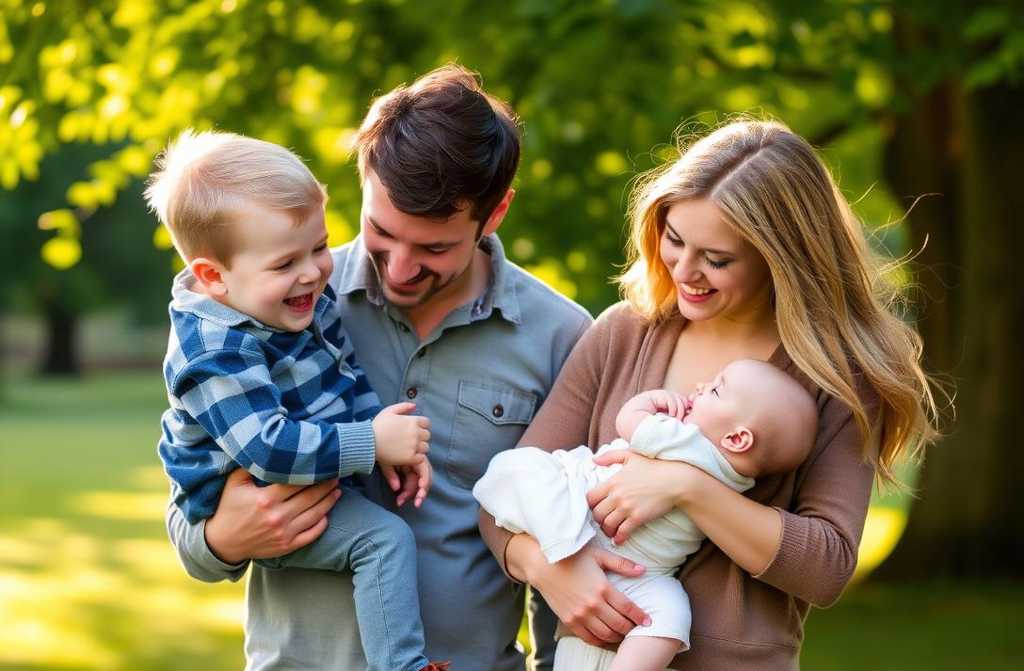
“Look, sweetheart,” Margaret cooed, unfolding the blanket. “Your baby sister!”
“What’s her name?” the other gran teased.
“Charlotte!” Benjamin announced proudly.
“My darling boy.” Emily hugged him, tears sparkling. “I’ve missed you *so much*.”





