
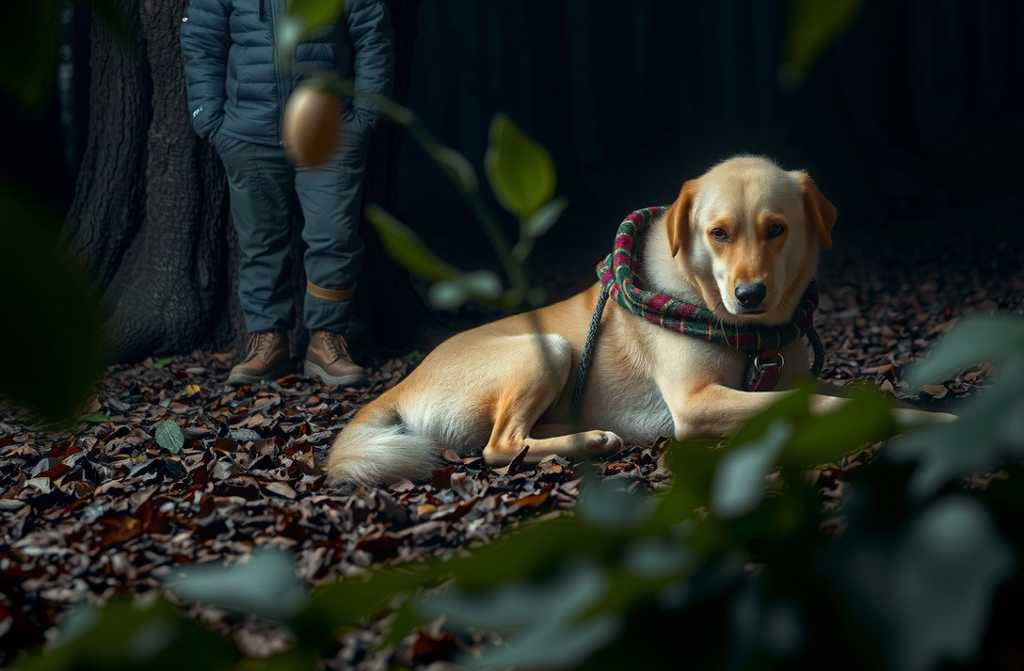
John led his ageing Labrador, Daisy, deep into the ancient woods beyond the sleepy edge of Nottingham. The air was crisp, littered with the scent of autumn leaves beneath their boots and paws. Daisy trotted eagerly at his sideher eyes never left his face, her tail thumping faithfully. She couldnt know this was not just another walk in the cool English dusk.
He slowed where the oaks grew thick and tangled. Without a word, he secured her lead around a rough trunk. She sat, expectant, as if waiting for a treat, her tongue lolling with anticipation. John refused to look back, bitterness souring his mouth as he turned and strode awayboots snapping twigs, fists clenched, heart pounding.
There had been a time when Daisy was everything. As a pup, shed sneaked socks under the sofa, yapped at pigeons on the village green, and bounded through barley fields after John with the sun catching her golden coat. Together they roamed the heaths, returned home, and she always curled up outside his door as night fell. She was his pride.
But life shifted. John came to see profit in Daisys puppies. At first, it seemed harmlessthen came litter after litter, until Daisy wore thin. She panted and slept in corners, ribs showing, eyes heavy with exhaustion. When the vet in the high street warned, She cant go on, John brushed off the words with irritation. Daisy was no longer a blessingshed become a nuisance, and John always solved problems without fuss.
Now she waited, tied to the tree, ears pricked for his footsteps, never doubting hed return. Evening gathered, blue and slow. As the chill crept in, confusion melted into anxiety. She tested the lead, whimpered, then howled into the darkening woods, the sound lost among rustling branches. Cold slithered in with the dusk; the loneliness pressed in with every shadow. Nobody came.
As the last rim of sunlight slipped behind the trees, a wild creature slunk from the glooma large, grey British wolf, silent, muscles taut beneath its pelt. It paused, metres away from Daisy, watching her with solemn, unreadable eyes. Daisy held her breathwaiting for violence, bracing for painbut the wolf only regarded her, still and solemn.
No attack came. The wolf circled, silent and thoughtful, then dropped onto the leaf litter and watched her, unmoving.
The woods sang with night. Far off, the mournful howl of distant wolves rosethen another, closer, a shiver against the cold. Small creatures skittered nearby, drawn by the scent of a dog too frail to fight. Each time some opportunistic fox or badger neared, the wolf stood, silent but firm, placing himself between Daisy and the threat. The simple warning was enough to send them scurrying.
Never coming too close, never threatening, the wolf kept his silent vigil.
Daisy no longer howled. She lay panting, her gaze flickering to her wild protectorchecking, each time, if he was truly still there. All through the cold, brittle hours, he remained.
As dawn broke over the canopy and a chorus of wood pigeons announced the morning, a search partylocal ramblers, boots muddied and jackets zippedpicked their way through the brush. Theyd heard distant barking and were hunting for signs of wildlife. What they found stunned them: a trembling lab tied to an oak, guarded by the lone, unmoving wolf.
The group halted, breath caught in their throats. The wolf met their stares, unafraid and calm, then melted silently into the forest, vanishing as mysteriously as hed arrived.
Daisy was untied, gently, and wrapped in a tartan blanket. She survived that night only because, under an English moon, a beast from the wild chose mercy over hunger.
Sometimes, the wildest among us show more humanity than those who claim to be men.





