
A Winner Without Love
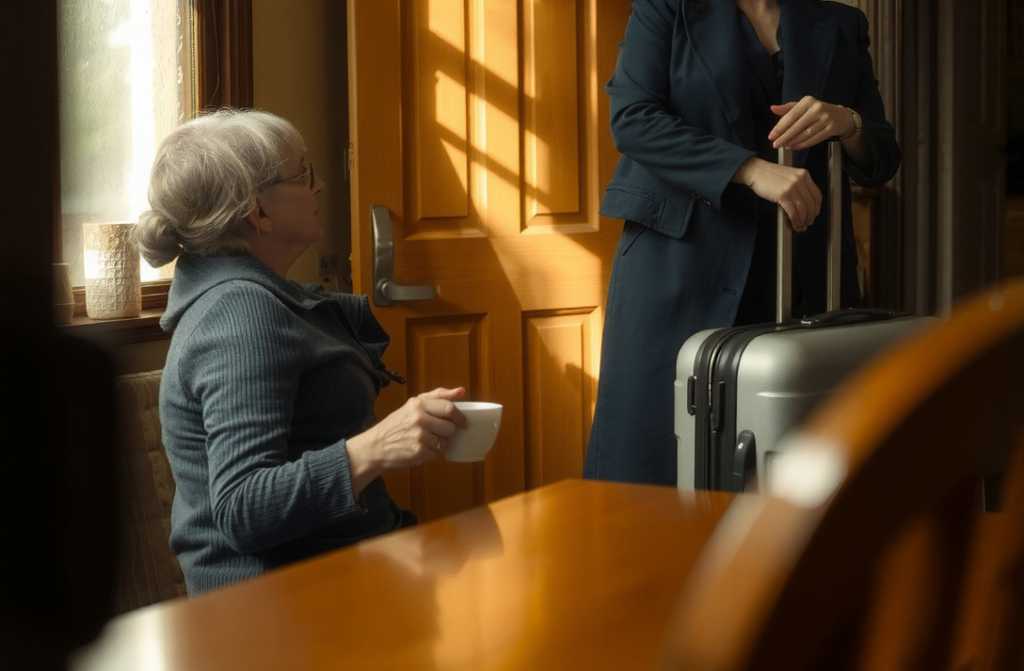
Well, Simon, thats that, said Margaret Parker, placing her teacup onto its saucer with a gentle but resolute clink that she herself found ceremonial. Now, life goes on.
Mum, you talk as if youve just won a chess championship.
Havent I?
Her son, staring out of the window, didnt reply. Outside, March had drenched the streets of Milton Keynes with drab drizzle, the clouds the colour of dishwater. Margaret followed his gaze, saw nothing but a sodden street and budding daffodils.
Im asking you: havent I?
She just left, Mum. With nothing but a suitcase. Whats there to celebrate?
The fact she left. With nothing but a suitcase. Came here empty-handed, left empty-handed. Fairs fair.
At last, he turned from the window. Margaret had anticipated defensiveness, anger, even exhaustionbut the look in her sons eyes was something else, something she would rather not face up to.
Lucy put money into this flat, he said quietly. Her own money.
The flats in my name. I gifted it to you, not to her.
I know how its registered.
Then whats the problem?
He stood up, taking his coat from the peg. Margaret noted he hadnt finished the apple tart shed baked especially for the occasion. Half still sat untouched on the table.
Im off, he said.
Where to?
Anywhere.
The door clicked shut without a slam, careful and quiet, as though all his life Simon had tried never to make a scene, never to break anything, never to raise his voice. Margaret looked at the tart, then took a fork and finished the slice her son had abandoned. The apples were tart, just as they should be. Properly homemade.
She sat in the kitchen of the flat shed lived in for thirty-seven years and thought: now, everything will be all right.
Margaret Parker was in her sixty-third year. A petite, well-kept woman, her greying hair always neat in a bun at the nape of her neck. Her pension was comfortable by Milton Keynes standards. Shed been an accountant for forty years and knew better than most how to count her pennies. When Simon brought Lucy home five years earlier, Margaret had sized Lucy up at first glance.
Lucy was from a small town up North, three hours away by train. Shed come to study, stayed to work, and rented a room in a shared house linked to some design firm. Quiet, unassuming, hair in a plait down her back, always glancing sideways when she spoke. Margaret prided herself on reading people. Shed read Lucy over their very first supper together: the girl was set on getting the flat.
Simon insisted otherwise. He said he loved her. Mostly kept his feelings to himself, and anything he did say Margaret filtered through her own logic, until it made the sense she wanted.
Theyd lived together in the flat Margaret had transferred to Simon when he turned twenty-eight. Her old friend, a solicitor, had suggested: in the case of divorce, this sort of property isnt split if the spouse didnt acquire it. Divorce hadnt really crossed Margarets mind back then. She thought in terms of caution. She always did.
Lucy hung new curtains in the living room, which Margaret found presumptuous. Lucy replaced the crockery, and Margaret judged the old china superior. Lucy cooked dinner twice a week and invited Margaret round. Margaret attended, ate politely, but left each time with a feeling of vague discomfort she couldnt put her finger on.
Later on, Lucy redid the kitchen. Out of her own pocket, as shed made clear in conversations with Simon, if never with Margaret herself. Margaret found out only once the fresh wallpaper was up, the white cupboards fitted. She pursed her lips at the striped pattern.
Dont you like it, Mrs Parker? Lucy asked directly. She was always direct, and Margaret disliked that.
Oh, darling, its lovely, Margaret replied with just the right inflection to make lovely a synonym for awful. Lucy heard it, and so did Margaret, but Lucy said nothing. In fact, Lucy remained silent precisely when Margaret wanted a flare-up, something to righteously rage against.
The divorce happened in their fourth year. Many reasons, all real, but none the whole truth. Simon grew distant. Then grew more distant still. Lucy asked questions, explained things, pleaded. He nodded and retreated to the telly. Margaret, whod taken every despondent phone call from her son, knew it was time. She told him so. She too could be direct when it benefited her.
Simon, you cant go on like this. Not for you. Not for her.
Maybe itll work itself out.
It wont. Itll only get worse.
Then there was paperwork. Then the solicitor. Then this moment in the kitchen, apple tart and March rain sodden against the window. Lucy left with a single grey suitcase on wheels. Margaret watched her from the window as she made for a waiting cab, never glancing back.
Margaret thought: well, there goes the loser. And felt, for the first time in a long while, light, as after a fever finally breaks.
Simon Edward Parker, Margarets son, was thirty-four. He worked as an engineer for a construction company, earned a good salary, never brought up money first. Margarets pride in him was a fierce blend of love, possessiveness, and something more she could not name. Shed brought him up alone after her husband left when Simon was eight. Since then, it had always been the two of them, the world neatly divided.
From the time Simon was nineteen, Margaret had known he could do solitude. Not in a good way. He didnt know how to stand up for himself, never demanded, never shouted. He only agreed, or lapsed into silence. Margaret called it politeness to herself, and felt soothed.
After the divorce, Simon stayed alone a month. Then called to say hed met Helen.
Where did you meet her?
At work, at the Christmas do.
And Helen is?
A lovely woman. Youll come and meet her?
Margaret went. The meeting was at a café, not at home. That was the first sign, although she didnt realise it at the time. Helen was seven years younger than Simon, so just twenty-seven. She worked in advertising, dressed brightly, and always knew exactly what she wanted from the waiter, from the menu, and apparently, from life.
Mrs Parker she said, hand outstretched with an assurance as though she was hosting the meeting. Heard a lot about you.
From Simon?
From Simon.
I hope it was all good, Margaret said, deploying her reserved smile.
A bit of everything, Helen answered frankly and opened the menu.
Margaret felt a sharp pang beneath her ribs, but put it down to a draught. The café was chilly by the door.
Helen was strikingunlike Lucy, whose prettiness was quiet and almost apologetic. Helens beauty was direct, bold; the kind of beauty thats aware of itself. Dark hair, black eyes, lipstick applied with precision. She too could keep a silence, but hers felt like judgment, not patience.
Four months later they were married. Margaret heard the news by phone, a Wednesday evening after the headlines.
Weve got married, Simon said. Today.
Today?
Yes. Mum, please dont be offended. We didnt want any fuss.
Im not. She paused. Congratulations.
She put the phone down and sat in silence for ten minutes before watering the plants on the windowsill and going to bed. Morning made things seem normal.
Helen moved into the flat a week later. She brought more luggage than her small frame would suggest. Boxes clogged the hallway. Next morning, Margaret visited and discovered Lucys decor gonecurtains binned, new, heavy dark green drapes hanging instead, making the living room look like a library.
Helen, where have the old curtains gone?
To the tip, Helen called from the kitchen.
But they were almost new
They werent really my style, Mrs Parker.
That ended the conversation. Margaret said nothing, for the first time truly bit her tonguenot just in voice but in mind.
At first, Margaret visited often. Helen never shooed her away, but had a knack for creating a mood that made Margaret want to leave on her own. Helen remained in the room, didnt offer tea, never shut her laptop. Her answers were short, her interest non-existent, and Margaret soon felt like an interloper in the flat shed once called her own.
It was a new feeling. A very uncomfortable one.
Simon, in her presence, became even quieter. He poured tea, offered biscuits, nodded politely at his mothers stories, but always glanced at Helen with a carefulness Margaret recognised, if never named aloud. The right word for it would have been fear, but she wouldn’t say it.
By October, Helen had changed the locks. Just because. Simon called to say:
Mum, weve changed the locks. If you visit, just let me know, Ill let you in.
Why did you change them?
Oh, Helen says its for security. Just better.
Security from what, exactly?
A long, awkward pause, brimming with implication.
Mum, its how people do these days.
Margaret had held the key to that flat for twenty yearsfirst as homeowner, then mother, always entitled to drop by. It sat on her keyring between her own front door key and the one to her letterbox. That night, she took it off and tucked it into a dresser drawer. Its still there now.
The Christmas table had always been set at Margarets. For twenty years. Salads, roast, the tree in the corner, just as her own mother had done. It was a tradition to be upheld.
That November, Simon said, via Helen: Were spending it with her family. In London.
In London?
Yes, her lot are there
And me?
Oh, Mum, you understand. We cant be everywhere.
Margaret saw in the New Year alone. She laid out a table for one, popped a bottle of prosecco at half-past eleven, watched the royal address, toasted herself, washed up, and went to bed by one.
The call to Simon the next morning went unanswered twice.
Happy New Year, Mum.
Happy New Year, love. Hows it all going?
Great. It was a laugh. Listen, Mum, Ill ring you later, alright? Helens still asleep.
Of course, of course.
Her of course meant never, but hed already hung up.
In February, Helen herself showed up at Margarets, unannounced and midday, dressed smartly, tottering in heels. Margaret opened the door with uncertainty.
Come in, she said at last. Tea?
Dont mind if I do.
Helen sat in the kitchen, frankly taking in every corner as though measuring up for renovations. Margaret laid out teacups, cut some lemon.
Mrs Parker, can I be direct?
Go ahead.
Simon calls you every day.
Well, hes my son.
I know. But every day, for an hour? Its too much. It eats into our evenings, our plans. I think it would be better less often.
Margaret poured boiling water into the cups. Her hands did not shake; she made sure.
Helen, she said slowly, Simons a grown man. He chooses who to call and when.
Of course. But grown men put their own family first.
I am his family, too.
Youre his mother. Thats different.
They stared at one another over the table. The tea cooled. If it had been Lucy, shed have dropped her eyes by now. Helen didnt.
I see your point, said Margaret.
Thank you. Helen finished her tea as though they had merely discussed the weather.
After she left, Margaret stood at the window for ages. A thaw had turned the snow in front of her block to dirty puddles reflecting low, grey skies. Her thoughts drifted to Lucyhow Lucy would never have come round like this. Lucy had sometimes got things wrong, but never by being cold and sharp as a draught through an open window.
Margaret pushed that thought to the back of her mind.
Simons calls tailed off. Every other day, then every third. Margaret noticed, but said nothing. She started dialling herself less ofteneach call made it plain that he was in a rush, speaking briefly, always with Helens voice heard crisply in the background.
Helen, it turned out, excelled at her job in advertising, earning well. Margaret caught the tone Simon used when he told her thisa note of dependence. Helen bought their gadgets, their clothes, travelled up and down the country for work. For all her ambition, Helens sphere closed tighter around Simon, leaving little room for anything else.
That spring, Margaret paid a visit without warning. Simons face when he opened the door told her all she needed before he even spoke.
Mum, you know its best to call.
I was passing by. Just popped in.
Passing?
Simon, I live ten minutes away.
Helens working. At home. She cant be disturbed.
I didnt come for Helen. I came for you.
He let her in. They sat in the kitchen. Helen never emerged. After thirty minutes, Margaret left. On the landing, she lingered before the lift, knowing that was the last time shed visit without a call. Not because Simon had askedbut because she didnt want to see that guarded look as he answered the door.
The summer slipped by quietly. Margaret pottered at her allotment, grew tomatoes and cucumbers, took the neighbours grandchildren to Brighton. No grandchildren herself. Helen said now wasnt the time: careers to think of, so much to do. Margaret no longer argued. Shed learned not to fight battles she couldnt win.
In September, she had what shed call a chance encounter, though theres no such thing in a town as small as Milton Keynes.
She was walking home from the greengrocers along Maypole Avenue, bags heavy, steps slow. Suddenly, she saw Lucy.
Lucy was standing outside a modest office block, chatting into her phone. She wore a navy-blue coat Margaret had never seen before. Her hairnow cropped to her shoulders, no more plaitsuited her. She was laughing, an easy, genuine sound, so different from the subdued giggle Margaret remembered.
Margaret stopped in her tracks. She ought to have walked on by. Instead, she stood there.
Lucy noticed her first, finished her call, tucked away her phone and approached.
Mrs Parker.
Lucy, love, Margaret said, surprised at herself for adding the love. Shed never used it with Lucy before.
You look well, Lucy ventured, the way one does when politeness calls for it but isnt necessarily true. Margaret often did the same.
And you, Lucy, Margaret answeredand meant it.
Lucy was not just well, but different. There was a change in her manner, in how she carried her head, how she faced you. The shy sidelong glances were gone.
You working here? Margaret nodded at the office.
I run the place, Lucy replied. Started my own business six months ago. Interior design.
Your own?
Yep.
Where did you get the money? Margaret asked, regretting it at once. But it was out.
Lucy didnt take offenceor didnt show it. Margaret couldnt tell.
I worked two jobs for three yearsfull-time at a design firm, evenings freelancing. Saved up. Bought my own flat last year. Its small, but its mine.
Margaret felt her bags grow heavier, as if with actual weight.
You bought a flat?
A one-bed, on Buckingham Road. Its enough for me.
Living on your own?
Yes. I quite like it.
They stood quietly for a moment. Cars passed on the avenue. Children laughed around the corner.
Lucy, I Margaret began, unsure where to go from there. She hadnt rehearsed this. Hadnt meant for it to happen.
Mrs Parker, Lucy interrupted gently, Ive got to runa meeting in ten.
Yes, of course.
All the best to you.
And to you, Lucy.
Lucy headed back inside, pausing once at the door to look back. Margaret glimpsed her face: calm, at ease, neither bitter nor angry. Just self-contained, as if shed long ago settled her mind and was done reliving it.
Back home, Margaret unpacked her shopping, made soup, washed up, sat by the window.
She has bought a flat. Her own on Buckingham Road. Her own business. Two years. Not immediately. Gradually.
Margaret sat at her window, thinking about her own win. The flat remained. Her son was still hers, albeit in London. Lucy left empty-handed.
But her son now rang only once a week, sometimes every ten days. And Christmas would again be at Helens parents in London, because Helen had decided.
Lucy, for her part, had bought a one-bed on Buckingham Road.
Margaret went to the living room, lay on the sofa and shut her eyes. Not sleeping, just lying there. Dusk thickened outside, and she didnt bother with the light.
In October, Helen told Simon she wanted to move to London. Milton Keynes was too small, her company had offered her a job in the head office, and it was a step up she couldnt turn down.
On Sunday after lunch, Simon called his mum.
Mum, we need to talk.
Go on.
We might be moving. To London. Helens job.
Margaret stilled. Unusually long silence for her.
When?
Nothings decided yet. Were talking. Wanted you to know before anyone else.
Thanks for the warning.
Mum, dont sound like that.
Like what?
Cold.
Simon, Im not cold. Just listening.
Listen, Mum, we could rent the flat out. While were away. Bit of extra money. You could keep an eye on the tenants. Youre nearby.
Margaret understood: keep an eye meant visitingnot as a mother, but as a property manager to strangers, in a flat she no longer had keys for.
Ill think about it.
Alright. Dont be upset, Mum. Londons not far: only an hour on the train. Well visit.
Of course.
Again, her of course was the language of never, but he didnt hear.
That November turned cold unusually early. Margaret donned her winter coat from the start of the month. She headed to the market for winter preserves and ran into her old friend Eileen at the fishmonger’s. Over a cup of tea from a roadside stall, they caught up.
Eileen spoke of grandchildren, her husbands health, her allotment. Then: And you, hows Simon? Has the new daughter-in-law settled in?
She has, Margaret replied. Theyre planning to move to London.
Are they taking you?
No.
Eileen shook her head. She was a woman whose silences spoke volumes.
Margaret, you dont regret it?
Regret what?
Lucy. That girl was so quiet.
Quiet, yes. Just wanted someone elses flat.
You still think so?
Margaret picked up her teacup.
I saw her last week.
And?
She bought her own flat. Started a business. Shes well.
Eileen just looked at her. No pity, no judgment. Just looked. Margaret had to avert her gaze.
So, it wasnt the flat she was after, Eileen murmured.
Oh, Eileen, drop it.
Im only saying.
You know nothing. You didnt see her back then, the way she looked at things, the way she acted.
Maybe not. But I see whos alone in November shopping for vegetables, and whos off to London.
Margaret walked home. Walking, not riding the bus, made her feel as if she was travelling somewhere, perhaps even going forward.
December arrived with the first heavy snow. Margaret decorated the tree on her own, hauled out the battered boxes, hung the baubles, switched on the fairy lights. The tree looked beautiful as always.
On the twenty-third, Simon rang to say theyd come for New Years Eve morning.
We wont stay long, he added. Got to be with Helens folks after.
I see, Margaret said.
Mum, dont
Im glad youll come. Ill bake apple tart.
They arrived at eleven on the dot. Helen, in an elegant coat, brought a bottle of bubbly and a box of chocolates, set them wordlessly on the table. Simon gave his mother a hug. Tea was poured. Helen flicked through her phone nearly the whole timeapologetically, but businesslike. She was deep into a work exchange.
Helen, some tart?
No, thanks. I dont eat pastry.
Simon?
Of course, Mum.
He ate one slice, then another. Margaret watched him and thought, maybe this is one of the last evenings in this kitchen. London beckoned. Helen dictated. Life slipped away in another direction.
At half-twelve, they left. Helen paused at the door, giving Margaret a long, unreadable look. Maybe there was something in it. Maybe not.
Mrs Parker, Helen said, Youre a great hostess. Apple tarts wonderful.
Thank you.
Helen nodded and was gone. Simon kissed his mother.
Bye, Mum.
Bye, love.
The door closed. Margaret cleared the table, wrapped up the remaining tart, washed the china, switched on the TV without really watching.
She saw in the New Year alone. Again. Popped her prosecco at midnight, raised a glass to the screen. The tree twinkled in the dark, for no reason other than habit.
In January, Simon relayed their plans to move in March. They wouldnt let the flat for now but would occasionally visit. Margaret nodded on the phone, though he couldnt see.
February passed in routineshops, kitchen, television, Eileen now and then. Once to the hairdresser, where she trimmed her hair but kept the bun. She helped the neighbour sort her garden shed. Ordinary things.
At the start of March, with the snow still lingering, she dialled Lucy.
She remembered the number. Numbers stuck in her headaccountancy training.
It rang for ages. She nearly gave up. Then:
Hello?
Lucy. Its Mrs Parker.
A pause. Not hostile, simply a pause.
Good evening, Mrs Parker.
Evening. I wondered Could we meet?
Another pause. Margaret watched the snow melting out her window.
What for? Lucy asked. Not brusque, just straightforward, as she always was.
To talk. Theres something Id like to say. In person.
A long pause. Margaret braced herself for a Noitd be deserved.
Alright, Lucy said at last. Saturdays fine. That café on Maypoleyou know it?
Ill find it.
Twelve oclock.
Twelve, right. Thank you, Lucy.
Yes, Lucy replied. Nothing more.
That Saturday, Margaret arrived a quarter-hour early. She chose a window table, ordered tea, and watched the thaw. People strolled bare-headed, the quickening pace of spring in the air.
Lucy arrived dead on twelve, that same navy coat, the cropped hair gently curling with the weather. She recognised Margaret at once, nodded, sat down, slipped her coat off the chair.
Hello.
Hello, Lucy. Thanks for coming.
What did you want to say?
Margaret picked up her teacup, set it down, picked it up again.
I wanted to tell you I was wrongabout a lot. Not everything. But much.
Lucy met her gaze evenly.
I thought badly of you. Right from the start, before youd done or not done anything. It was unfair.
Lucy remained silent.
I thought you wanted the flat. That you didnt love Simon, but were taking advantage. That youd calculated the whole thing.
And now? Lucy asked.
No, Margaret admitted quietly. No. I saw you, last September, on Maypole. On the phone, laughing, and I suddenly realised you were just someone who wanted a family and a home. Like anyone.
Lucy looked out the window. A pigeon splashed through a puddle by the kerb.
Its good you say that, she said softly. It really is. But Im not sure what Im meant to do with it.
Im not asking you to do anything.
Then why?
Because I needed to say it. Maybe only for myself, not you.
Lucy studied her, not with pity or triumph but an expression Margaret didnt know the name for.
Hows Simon? Lucy asked.
Theyre moving to London. Helens got a job there now.
I see.
Shes different. Margaret paused. Not like you. Just different.
Better or worse?
Margaret set her cup down.
I dont know, she said honestly. And maybe it was the truest thing shed said in years.
Lucy smiled, a small twitch of her lip. Not mocking, just a smile.
Is there anything you want from me? Not in general, but is there something specific. Help, or?
No. Nothing specific. I just needed to say it.
Alright, said Lucy. I should go. Ive got a client at two.
Of course.
Lucy got up, reached for her purse.
Ill get this, said Margaret.
No, you dont have to.
Please, Lucy. Let me.
She held Margarets gaze for a moment, then slipped the purse away.
Alright.
She donned her coat, picked up her bag, and paused by the table.
Mrs Parker, she said, it doesnt hurt, not anymore. Hasnt for a long time. I want you to know that.
Im glad.
Not for you. For myself. I stopped being angry about it, not because you were rightjust because its better for me that way.
Margaret nodded. She had no answer. For the first time in a long while, none at all.
All the best.
To you too, love.
Lucy left. Through the café window, Margaret watched her walk on, unhurried, shoulders still in that blue coat. Lucy paused at the corner, checked her phone, then disappeared around the bend.
Margaret paid, got her own coat and went outside. The air smelled of spring melta scent shed known all her life and always loved. March always used to smell of opportunity. It had seemed that way as a child.
She walked down Maypole and thought about that day, three years ago, when Lucy had left with a grey suitcase on wheels. She remembered standing at her window, watching Lucy leave and feeling triumphant.
Lucy had walked with purpose, not looking back, not in a hurry. Margaret had decided then that was the dignity of the defeateda dignity that changed nothing.
Back home, up to the third floor, she let herself in. Silence always greeted her in the evenings, every Friday night, every Christmas. A familiar, lived-in silence. Her own.
She hung her coat, went to the kitchen, boiled the kettle.
Outside, the last of the snow had melted. In the remains of a dirty pile by the steps, a forgotten broom stuck out, left there since autumn. Margaret watched the broom and thought, wordlessly.
The kettle boiled. She poured herself a mug of tea, cradling the warmth.
This was her prize. The flat still hers. Simon now in London. The new daughter-in-law had changed the locks and bundled up all the old traditions. The first had left with nothing and now lived in her own one-bed on Buckingham Road, ran her own business, laughed into her phone on the street.
Margaret wasnt a foolish woman. She was clever, careful, observantforty years of numbers had taught her to look for the bottom line.
The balance sheet now: she sat alone in her kitchen sipping tea.
Not because there was nobody to call. Eileen was there. The neighbour was there. Her son, far off but still in touch. Alone, though, because the flats quiet was now familiarshe couldnt recall when someone had last dropped by for no reason.
Lucy had. Shed bring cakes from that bakery by the marketthe one that closed two years ago. No one asked her to. She just did. Mrs Parker, these have cabbage, your favourite. Margaret would eat, pondering Lucys supposed calculation.
She finished her tea, rinsed the mug, dried her hands on the tea towel with embroidered cockerels, bought at a craft market five years ago.
Then she picked up the phone and rang Simon. Not for anything urgent. Just because.
Mum? Everything alright?
Alls well, Simon. How are you?
Fine. Packing. So much stuff. What about you?
Im fine, she said. Just thought Id ring.
Alright. Were busy here, but Ill ring you back tonight?
Of course, love. You get on.
You sure youre okay?
All good, darling.
Good. Bye.
Bye.
She set the phone down. March outside. The broom in the melting snow. Quiet.
Margaret returned to the living room, pulled out the old photo album. Randomly opened a page.
Simon, in his eighth year, holding a fishing hook at the allotment, solemn-faced. Next to him, herself, youngerlaughing, laughing as she once could. Later, she forgot how, and had no idea when it happened.
Another page. Simon, twenty-eight, standing beside Lucy, both gazing off-camera. Lucy holding his hand. Margaret remembered taking the snap, thinking, Shes holding on tightso he wont run.
Now, looking, she saw something else: just two people, side by side, holding hands gently. Not tightly. Just holding on.
She closed the album, put it away.
Night had darkened in the room; the sun long since slipped behind the building. She didnt bother with the lamp, settling into the dusk, listening to the deepening quiet.
Lucy had said: It hasnt hurt for a long time. I stopped being angry not because you were right, but because it was better for me.
And maybe that was the point. Lucy lived for herself. Margaret had always lived for her son. The end result: Simon now in London, Margaret sitting in the dark with an album.
Margaret did not cry. She was not the type to cry alone. She very rarely cried. The last time was when her husband left. She cried for three days, then picked up eight-year-old Simon, took him to the cinema, and never wept for it again.
She stood up, flicked on the light. Went to the kitchen. Dug out the remaining apple tart from the fridge. Sliced herself a piece.
Outside, the night had deepened. The street lamp cast an orange glow. In that glow, the March street looked almost inviting. Almost.
She ate tart and stared out the window, thinking maybe this Saturday shed call Eileen. Maybe pop out togetherfor a coffee, or a walk, if weather allowed. No plan needed. Just company.
Then: in spring, she ought to get down to the allotment, clean up after winter. It was a small plot, but the tomatoes did spectacularlyneighbours always asked for seedlings.
Her mind wandered off. She ate her tart by the orange-hazed window.
Her phone lay silent on the table. Simon didnt ring back later. Probably forgot. Packing, the move, the chaos. Margaret glanced at the phone without reaching for it. Not out of spite. Just because.
Next door, the neighbours cat yowled, then fell silent. The pipes clanged. Life as always.
Margaret thought she might buy some seedlings at the market tomorrow. Or it might be a bit early.
She washed her plate, turned out the kitchen light. Headed for the living room.
Before bed, she always read for a while. This time, a detective novel, already halfway through. Marked with a scrap of paper. Margaret turned to her page and tried to concentrate, reading one sentence three times without recall.
She set the book aside, switched off the lamp, lay in the dark.
Lucy walked along the pavement in her navy coat, calmly, unhurried.
Three years ago, Lucy walked off with her suitcase the same way. Calm, unhurried. Margaret had watched from her window, thinking: thats the dignity of the loser.
Now, lying in the dark, Margaret thought differently. Perhaps Lucy had known something she herself never did. Perhaps as she walked, her mind was set on where she was headed, not what shed lost.
Margaret didnt know how to look forward. Always back: what shed managed, what shed salvaged, what she had kept. The sum of the numbers.
The sum now: flat, son, and life ongoing.
Only, so very quiet.
Margaret turned onto her side, closing her eyes.
Outside, March was peacefully turning into night. By morning, a little more snow would melt. Perhaps by April it would be gone entirely. Spring arrived, whether one wished it or not.
She resolved to walk past Lucys office on Maypole one day, not on purpose. Just if she happened by. To see if it was open. Probably it would be. Lucy was not one for abandoning things.
Shed always known how to get things done, to see things through. Margaret had never noticed. Or perhaps she noticed, and called it something else.
She lay awake for a long while, listening to the stillness of a home that had been hers, only hers, for thirty-seven years.
The next-door cat uttered something again, then quieted.
Margaret lay in the dark, letting her thoughts slow and trail off, like the tram gliding to the end of its line. In that slowing was something like peace. Not good or bad. Just what happens when everythings done, and nothing left to change, and you must simply get on with living.
That, at least, was something shed always managed.
In the morning, shed wake at seven, put the kettle on, stare out the window. March still melting.
And somewhere else in town, in her own one-bed on Buckingham Road, Lucy would rise too. Maybe earlier, maybe later. Boil her kettle in her kitchen, look out her window.
Both of them would watch the same March, the same shrinking snow, the same brightening sky.
Just from different windows.
Margaret finally closed her eyes properly.
And outside, a quiet March night settled in.





