
For twenty-three years, I gave my life to my paralysed son. Then a hidden camera unveiled a truth I couldn’t fathom.
I once thought love meant sacrifice. That true devotion wasn’t in grand shows, but in the quiet, daily ache of unwavering duty.
That belief ruled my existence for over two decades.
Each dawn, I rose before the sun, stiff-kneed, hands gnarled with arthritis, shuffling into the living room long turned makeshift ward. I bathed Oliver, turned him every four hours to stop bedsores, fed him warm porridge through a tube, combed his hair, kissed his brow each night. During storms, I whispered tales to soothe any fear that might still linger in the corners of his silent world.
Neighbours called me a saint. Strangers welled up hearing my tale. But I didn’t feel like one. I felt like a father. One who wouldn’t let go.
Oliver was my only child. Twenty-three years back, a slick M25 and a flipped car took him from me – at least, the lad I knew. Doctors offered no hope. “Persistent vegetative state,” they said, making him sound like a wilting pot plant. I wouldn’t accept it.
I brought him home. Sold my wedding ring and my grandfather’s gold watch to afford the kit. I never remarried in Norwich where we lived. Never travelled. Never once put myself first. I watched for every blink, every breath, every twitch. A finger move? I cheered. Eyes shift? Prayed harder. I waited.
But three weeks ago, something changed.
Small things first: a water glass misplaced, a drawer not shut properly, slippers out of position. I blamed age. Confusion. Tiredness. Then, entering his room, I saw his lips… damp. Freshened, not from feeding. Like he’d just spoken. My heart froze.
That night, after the NHS carer left, I did the unthinkable – bought a hidden camera. Disguised as a smoke alarm. I fixed it in the corner, above the bookshelf, trained on Oliver’s bed. I waited.
Three days passed. Routine held. Bathed him, hummed lullabies, told stories. But my hands shook. Kissing his brow each night, I whispered, “If you hear me, son… I’m still here.”
Then came Friday.
I brewed strong tea, locked the door, sat before my laptop. My heart hammered. I opened the footage. Normal at first: just me, tending him, weary and dutiful. I skipped to when I’d dashed out for a GP appointment. Oliver lay still.
Then – movement. Not a spasm. *He raised his arm.* I gasped, hands over my mouth. He rubbed his eye. Turned his head. Sat up—slowly, awkwardly, stiff as stone. Then he stood. And walked. Not smoothly. Nothing like before. But steady, purposeful. My world broke apart.
There, on screen: Oliver walking to the window, stretching, pulling out a flapjack hidden under the mattress, eating it while scrolling a mobile stashed behind the chest of drawers. I couldn’t draw breath. He’d been deceiving me. For *how long?* The clip ended with him slipping back into bed, arranging himself, eyes closed, minutes before I returned. I stared at the black screen, the weight of twenty-three years crushing my chest. Hands trembling, throat parched, I couldn’t move. But I had to.
I stumbled into the room. The room where I’d wept, bargained, poured out my soul for over twenty years. He lay there, vacant stare, as usual. Now I saw it: the control in his breath, the tension in his jaw, the sham. I stood by the bed.
“Oliver,” I said low.
Nothing.
“I know.”
Still unmoving.
“I saw the recording.”
Then—he blinked. Once. Slowly. Another blink, faster. A bead of sweat trailed down his temple.
I stepped nearer. “So it’s true,” I whispered. “You’ve been pretending all this time. Why?”
Silence hung heavy. Then—a deeper breath. A rasping sound.
“I can explain.”
I felt faint. “*Explain?*”
“I didn’t mean… for it to go on.”
“TWENTY-THREE BLOODY YEARS, Oliver!” My voice cracked. “I gave up *everything*! Buried myself alive for you!”
He raised a shaky hand. “It started wrong… became a cage.”
“What kind of mistake lasts decades?”
He looked away. “The crash was real. I *was* paralysed. For three years, trapped. I heard it all, felt it all, inside a coffin of my own bones. Couldn’t move. Couldn’t speak. I wept.”
“Then… a twitch. Then another. Control crept back. Slowly. Quietly. I didn’t know *what* to do. I was scared.”
“Scared of *what?*”
“Of life. Of questions. Of pain. Of letting you down. Out there? I was nobody. Here—with you—I was safe.”
*Safe.*
He stayed in the lie because it felt secure. “So you let me live the lie,” I said. “You let me think you were lost. You watched me destroy myself for you.” He sobbed, ragged and broken. “I loathed myself every single day. But the longer it went on… the worse it got. You built your life around me. I didn’t know how to stop it without shattering you.”
“*I* shattered myself for you,” I breathed.
“I know.”
I turned away, my body trembling.
“I wanted to tell you,” he choked. “So many times. I couldn’t face your eyes knowing the truth.”
“You lied for twenty-three years.”
He nodded. The silence thickened like fog.
Then I spoke. “Know what hurts most?”
No reply.
“I could’ve lived. Travelled maybe Cornwall or the Lakes. Found someone. But I didn’t. I stayed. Thought I was keeping my son alive. But you—you buried me instead.”
Oliver crumpled. “I’m sorry.”
“I don’t want your sorry.”
He looked utterly wrecked. “What… what happens now?”
But I knew.
“You’re going to walk into that police station over on Market Street,” I stated flatly. “You’re going to tell them *everything*. Because if you don’t, I shall.”
His eyes snapped wide. “*What?*”
“You defrauded me. The carers. The whole bloody system. Even if you never claimed a penny in benefits, what you did was theft—of time, of a life.”
“I never applied for disability!” he stammered. “You paid for it all—selling things—”
“That only makes it grievous.”
He fell silent.
“You didn’t just fake being ill, Oliver. You faked being my son.”
I turned for the door. For the first time in twenty-three years, I walked away without a backward glance.
“I’ll be gone a while,” I said.
“Where are you going?” he asked, faint as rustling leaves.
I paused, hand on the cold doorknob.
“To live,” I replied. “For the first time since you supposedly died.”
And I left.
I hadn’t a clue where I was headed. I just walked. The world outside felt alien. The wind nipped my face in Bradford where I found myself. The weak autumn sun needled my eyes
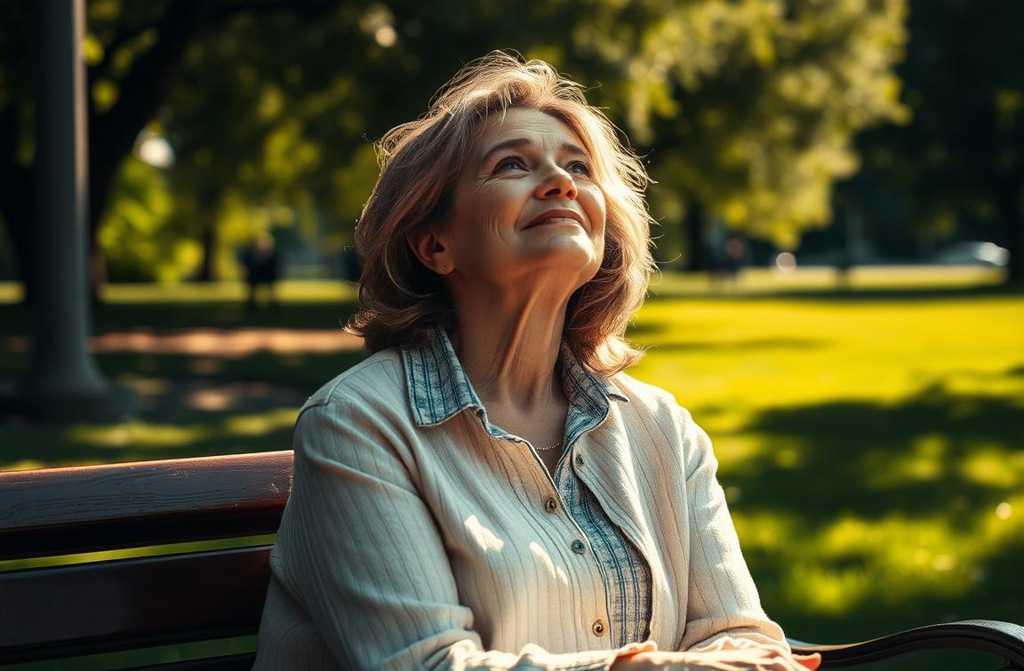
For twenty-three years I poured everything into caring for whom I thought was my helpless son Oliver, only to discover through a hidden lens that he had been deceiving me, conscious and mobile all along. Now, sitting on that weathered bench in Regent’s Park watching the bustle of everyday London life carry on oblivious, the dull ache of betrayal weighed against an unexpected lightness in my chest as the cool breeze lifted loose strands of my grey hair, and the resolve to build something entirely my own, step by solitary step, finally took root.





