
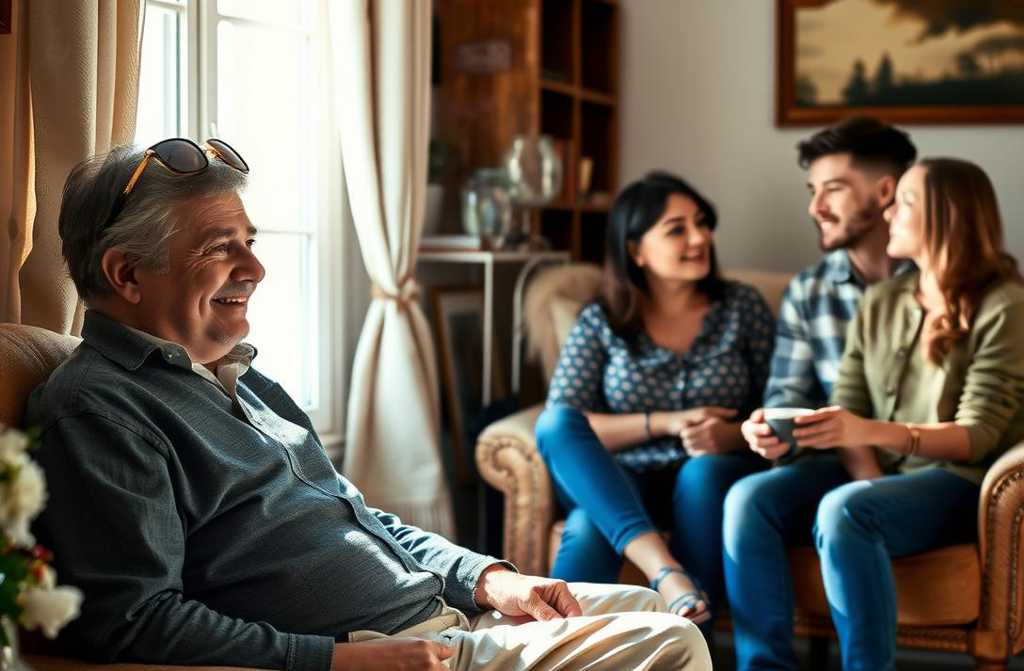
My name is Peter Johnson, and I live in a quaint town in the heart of England, where ancient oaks line the modest streets, casting their long shadows. I’m not poor, nor am I a millionaire, but over the years, I’ve managed to accumulate a bit: a house, a countryside plot, a car, and a modest rainy-day fund. My wife, Mary, and I have always given our children the best we could, even if it meant having little for ourselves. We sacrificed, thinking it was the natural order. Yet, over time, I realized this often breeds dependency rather than gratitude.
We have three children: Steven, Claire, and Matthew. They are all adults now, self-reliant—or so they should be. Steven, the eldest, is nearing forty, yet paradoxically, all three constantly find themselves in some sort of trouble, poised on the brink of disaster. Steven was the first to approach me. Young and ambitious, yet full of the same old complaints: the job’s not right, the boss is a fool, the clients ungrateful. I helped him with his first car, paid the deposit on his flat, covered the costs of repairs, and subsidized his wife’s medical bills. Eventually, I just supported him “for now.” I did it because I am his father, because I love him, because how could I turn my son away?
Claire, our delicate princess with an artistic flair, went through marriages like books and jobs like bookmarks. She would call in tears, her voice trembling: “Dad, I can’t pay the rent…”, “Dad, I’m drowning in debt…”, “Daddy, you won’t abandon me?” And I didn’t—I transferred money, consoled her over the phone, and wiped her tears from afar. Matthew, the youngest, believed the world owed him. He balked at working for someone else, dreaming of his own business. I invested in his ventures: the first failed, then the second, and the third. Then there were loans, and afterwards, simply cash transfers “just to get by.” I kept giving and giving.
When Mary passed away, I found myself alone. The children came to the funeral—they hugged me, cried with me. But within a week, their calls resumed. Claire: “Dad, I know it’s tough for you, but I need a lawyer, can you help?” Steven: “Dad, you’re on your own now, so you have fewer expenses, could you spare some cash?” Matthew: “Dad, Mum wouldn’t have said no.” I sent money, not out of desire but from fear of the silence. Any voice on the line, any “thank you,” any reminder that I was needed. But no “thank you” ever came anymore—just fresh requests echoing like voices in a well.
My account was dwindling visibly. I began counting every penny at the grocer’s, stopped visiting friends, didn’t buy a new jacket—“why bother, the old one’s fine.” And then, I realized: my children don’t ask about my health, or if I sleep well, or invite me over. Just more messages: “Dad, can you help just once more?”, “Dad, I’ll pay you back later”—none ever repaid. “Dad, you’re tough, you’ll manage.” One evening, I sat in the kitchen nursing a cold cup of tea and realized: I was exhausted. Not with age or physical fatigue but from being their talking cash dispenser.
That night, I wrote three letters—to Steven, Claire, and Matthew. Brief, yet firm: “I love you. I’ve given you all I could. Now it’s time for you to stand tall. Not a penny more, no excuses. You are strong; I believe in you. But I am now just your father, not your wallet. I hope you’ll one day call, just to talk.” I didn’t expect replies, yet they came. Steven was silent—no words, no sound. Claire sent a furious: “Thanks, Dad, for ditching us at the end!” Matthew called. The line was silent for a while, then he simply said: “Sorry. You’re right. I can’t even remember asking how you were.” For the first time, I heard shame in his voice.
Almost half a year has passed. I now eat what I enjoy, not just what’s cheap. I bought myself a warm jacket—the first in years. I joined a club for seniors where I’m learning to paint—the colors have brought life to my gray days. For the first time, I’m not ashamed to live for myself. And on my birthday, Matthew came by. No requests, no hints. He brought a slice of cake and said: “I’ve decided to take a proper job. I want you to be proud of me. Not for what you gave me, but for what I achieved myself.” I cried—not from sorrow as before, but from pride, breaking through the weariness and hurt.
They had grown accustomed to me always being there with my wallet at the ready. I was their life preserver, their perpetual debtor—for love, for their childhood. But I was tired of being an ATM. Steven and Claire are still silent—perhaps angry, perhaps unsure what to say. But I no longer anticipate their calls with outstretched palms. I have my home, my canvases, my paints, and I am learning to breathe freely. Matthew has given me hope that all is not lost, that my children can become independent, not dependents. I am no longer a cash machine—I am a father who wants to be loved for his heart, not his bank account. And for the first time in years, I believe that it’s possible.”





