
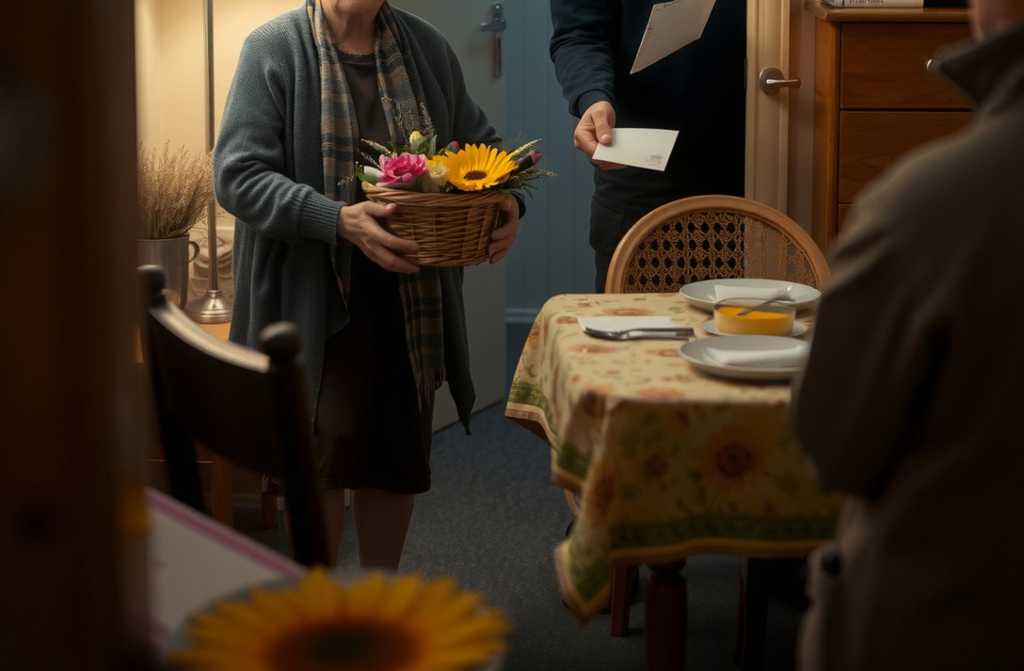
For three decades I worked in a textile mill, all so my children might have a better life. On my seventieth birthday, they pooled together for a basket of flowers, delivered to my door.
I stood in my empty flat with that basket from the post boy and wept. If youd told me forty years ago that I would be standing like that on my seventieth birthdayalone, with a bunch of rosesId have said you were having a cruel laugh. But life is darkly humoured, and never stops to ask whether youre ready for the punchline.
That Thursday morning I woke at six, just as Id done every day for thirty years, despite having nowhere to go. Old habits like stubborn stainsthree decades of setting off for the early shift at the mill before even the sparrows were up.
I sewed uniforms, pinafores, work overalls. Back then, Manchester boasted several textile factories, each one crowded with women bent over their machinespricking fingers daily on needles, threading dreams for their children into every hem and pocket. For whom else did we toil, if not for them?
My dear late husband, God rest himHenryworked on the railway. We pulled our home together between us. I wont complain; we managed. First a bedsit just off Oldham Road, then an exchange for a two-room flat with a kitchen in Didsbury.
Central heating. A tiny balcony with a view of the car park. But our children always had clean clothes, a hot supper, and proper books for school. Michael had extra English tutoring, and Rose took computer classes. Henry did overtime at the station, and I earned a little more in the evenings, sewing curtains and wedding dresses for neighbours.
And you seeit wasnt for nothing. Michaels now a qualified solicitor in London, with an office of his own. Rose has her own company in Birmingham, something in marketingI never quite understood, but people pay her well enough. I am proud, I truly am. Yet lately, that pride tastes a bit like weak tea, unsweetenedfamiliar, but somethings missing.
Eight years back, Henry suddenly left us. Heart trouble. Quiet as you likewent to bed one night, and didnt wake up. Through that first year, the children rang every day. The next, every week or so. Now Michael tries to call on Sundays after his lunch, if he remembers.
Rose sends quick texts, short as telegrams: Mum, hows your health? Hugs. I always reply: Im well, my love. What else should I say? That I talk to the telly each evening? That on Saturday, the only person to speak to me was the woman at Tescos checkout?
I spent a week preparing for this birthday of mine. Silly old womanbaked a cheesecake, my mothers shortcrust recipe, the one I’d always used for special occasions. Bought a cheerful new tableclothyellow sunflowers, I fancied it cheery. Brought out the good china set that Henry and I got as a wedding gift, hardly touched sincefour place settings. Michael had said, Ill try to pop in, and Rose had written, Ill see what my diary says.
That morning, Michael called early, sounding exhausted as if hed been up all night. Mum, I cant make it, Im covering in court, they’ve moved the hearing to today. I couldnt say no. Promise Ill come by Saturday, alright?
An hour later, a text from Rose. Didnt even phone. Mum, conference in Liverpool, wont make it, love you, will make it up at the weekend!!! Three exclamation marks. As if they could fill her place at the table.
I stood in the kitchen, staring at four plates. At the untouched cheesecake. At that ridiculous sunflower tablecloth that was supposed to be jolly. Then I started putting it all away. Plates back in the cupboard, folded the cloth, covered the cake with a tea towel.
At three, the buzzer went. A post lad, no more than twenty, in a navy jacket, arms full with a great basket of flowersroses, lilies, something else I didnt know. And a card. Dearest Mum, wishing you good health and all the very best! Michael and Rose.
The lad smiled at me. Happy birthday, madam! Someone cares for you dearly.
I took the basketso heavyand set it on the little hall table, shutting the door behind. Then I perched on the stool by the coat stand, sitting perhaps five minutes, perhaps twenty. The scent of flowers was almost suffocating in my narrow hallway.
That evening, Joan rangthe only neighbour I still speak with, seventy-five, lives just below. Edith, its your birthday! Come up for a cuppa, Ive baked apple tart. I went. We sat in her little kitchen until ten. She never asked about the children. She already knew.
Saturday came, and Michael showed up at last. Aloneno wife, no grandchildren. Three hours, the first of which he spent on the balcony, phone glued to his ear. He left an envelope of cash for me on the hall table. Rose cancelled againsomethings cropped up, Mum, but Christmas for sure.
Thats when it settled in my mind. Its not that my children dont love methey do, in their way, squeezed between court cases and conferences. They love me as I once loved my sewing: sincerely, but always half-watching the clock, mind on the machine. For thirty years I worked so theyd be free of the grind. I just didnt realise the price of their fine lives would be my empty flat.
Joan and I finished the cheesecake. The flowers lasted a week before wilting. Michaels envelope went into the drawer where Henry kept his old railway papers.
Yesterday, I bought myself a ticket for a short trip to the Lake Districtcoach outing, two days, all senior folk. Joans coming too. When I told Rose on the phone, she sounded surprised. Mum, since when do you go off travelling?
Since my seventieth birthday, darling, I said.
There was a pausethree seconds, maybe longer. Then Rose replied, Thats nice, Mum, and quickly moved on. Yet those three seconds meant more than all the exclamation marks in her texts. Someday shell understandperhaps if she too faces an empty chair at her table at sixty, maybe not. But I wont be waiting around for that.
I am seventy years old. Ive got good legs, a coach ticket, and a neighbour who bakes apple tart. Henry wouldve said, Edith, dont fuss, just go. SoI am going.





