
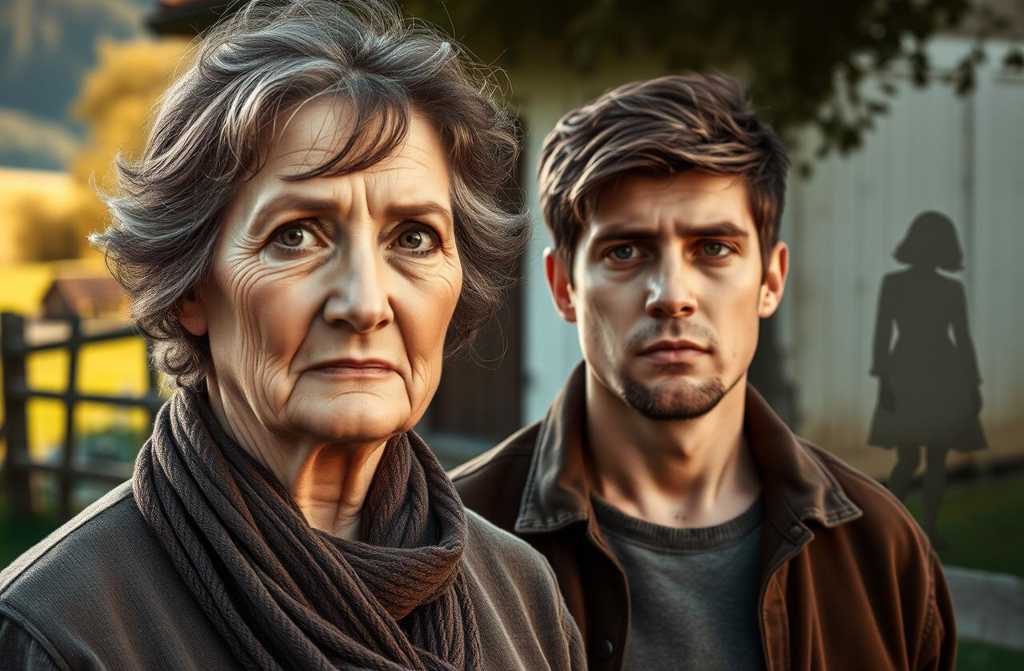
“Mum gave us her only home, and my wife turned my life into hell”—how I saw her true colours after marriage.
I was never well-off—no designer clothes, no fancy cars. I grew up in a working-class family in Liverpool. My dad passed when I was still a teenager, and from then on, Mum raised me alone. She worked shifts at the market by day and cleaned at the local supermarket at night. Every penny went toward food, bills, and—most importantly—my education. She dreamed of a better life for me. Something brighter. Calmer. Successful.
In my second year at uni, I fell madly, recklessly in love. Her name was Gemma. A proper stunner, the most gorgeous girl on campus. Tall, radiant, with a confidence that made blokes weak at the knees. She even won “Miss University” that year.
I never expected her to glance my way. But one day, during an economics exam, she sat next to me. Didn’t know something, asked for help. I helped. Then again. And again. Soon, I was proofreading her essays, even making cheat sheets. Then she invited me to the cinema—said she wanted to thank me. I couldn’t believe my luck.
A year later, I proposed. Gemma said yes. I thought that was the pinnacle of happiness. We felt like the future was ours. But even then, the warning signs started. Her parents were cold toward me. Said outright their daughter could’ve “done better” financially. I bit my tongue. Love isn’t about money, right?
After the wedding, we had no place of our own. So Mum—my sweet, poor Mum—offered us the flat she’d just inherited from her cousin. She moved back to her childhood village, into her crumbling old cottage. “I’m nearly sixty,” she said. “I’ll be happier there. You two start your life here.”
Gemma wasn’t thrilled about the flat but agreed. Her parents gifted her a brand-new BMW for the wedding—just for her, a point she never let me forget. Once, when I asked for a lift to visit Mum (only 20 miles away), she snapped:
“Am I your chauffeur? Take the train if you want. I’m not driving to your middle-of-nowhere.”
From then on, I went alone. Every week, without fail. Brought groceries, medicine, helped with chores. Mum never asked, but I knew she struggled. Her pension barely covered anything.
Meanwhile, Gemma denied herself nothing. Shopping sprees? Absolutely. Nights out with the girls? Always. But if I asked her to visit my cousin or come to Mum’s friend’s birthday? Meltdown. If I pushed it, I’d sleep on a mattress on the floor. No words. No explanation.
Then she started accusing me of “spending too much on your mum.”
“Did you marry me or your mother? Stop throwing money at her! She’s old—she should stay put!” she spat one evening.
I looked at her and didn’t recognise her. Where was the sweet, lively girl I’d spent afternoons with at the cinema, sipping coffee between lectures? Gone. In her place—a cold, calculating woman who saw everything as a transaction.
When I explained Mum was ill, needed medicine, couldn’t manage without my help, Gemma stood and said:
“Choose: me or her. If I leave, I won’t look back.”
I said nothing. Didn’t sleep that night. The next morning, I dropped off groceries, sat on a bench outside Mum’s, and cried for the first time in years. That day, I made my choice. I wouldn’t pick between my wife and my mother. Because if a woman makes a man choose? She’s already lost.
I filed for divorce. No fights. No drama. Just packed my things and left—back to the flat Mum gave us “for happiness.” Gemma moved in with her parents. Kept the car, the friends, the nights out.
And me? I’ve got Mum again. Warmth. Peace. No regrets. I turned a blind eye too long. Stayed quiet too long. Now? Not a single extra minute with someone who resents love for family.
Sometimes you have to lose something to find what’s real.





