
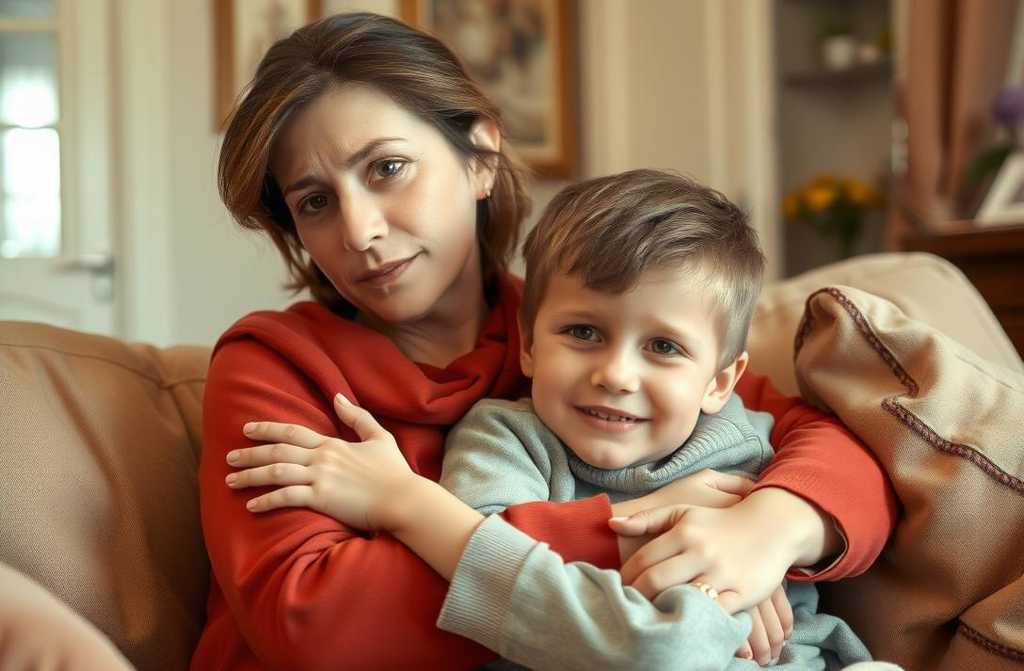
My four-year-old son would always cry when he was left with his grandma. Once I learned why, I was shocked.
I always thought my family was rock-solid. Sure, there were disagreements, but who doesn’t have them? Especially with my mother-in-law, Margaret Anderson. We never really got along. She always looked at me coolly, as if I’d stolen her son from under her wing. Despite our strained relationship, I entrusted her with our most precious treasure—our son, Michael. I believed a grandmother would never harm her own grandson.
As work started to consume both me and my husband, we decided that twice a week, Margaret would pick Michael up from preschool in our town near Bristol. On paper, it seemed ideal: the child spends time with grandma, and we get some breathing space to focus on our work. Everything seemed perfect. But soon, I noticed something was wrong.
Michael began to change. Each time her visit came around, he clung to my skirt, tears streaming down his face, begging not to be left with her. Initially, I dismissed it as childish whims—maybe he didn’t want to leave his friends at preschool or was just tired. But my concern grew. After returning home, he wasn’t himself: quiet, withdrawn, like a shadow of his former self. Sometimes he’d refuse to eat and sit in a corner staring blankly. One day, when the phone rang and I mentioned, “It’s grandma,” he flinched and hid behind the sofa. That’s when I realized it was serious.
I decided to talk to him. At first, he was silent, just clinging to me, trembling like a leaf. I promised him, “If you tell me, I’ll never leave you with her again.” That’s when he burst into tears and blurted out:
“Mum, she doesn’t love me… She says I’m bad.”
My heart wrenched. Tears burned my eyes, but I held them back.
“What does she do, sweetheart?”
“She yells if I don’t sit quietly. She says I’m in her way. Sometimes she locks me in a room and tells me to think about how to behave…”
I felt the blood drain from my face, gripping the armrest until my knuckles turned white.
“Were you alone in there? For long?”
“Yes… And when I cried, she got even angrier.”
I was breathless. I couldn’t believe that this woman, whom I’d entrusted with my son, was capable of this. My little boy, my sunshine, locked in a room, like a prisoner, alone with his tears and fears! Something inside me shattered.
I immediately called my husband, my voice trembling with rage and pain. I told him everything. He was horrified but initially tried to defend his mother: “She wouldn’t… It must be a misunderstanding.” But when he sat down with Michael and saw the same tears and heard the same words, his doubts vanished. His face turned to stone in shock.
We went to Margaret’s house. She greeted us with her usual cold demeanour, but when I directly asked why she locked my son up, her calm facade shattered. She snapped:
“He doesn’t know how to behave! He’s a spoiled child! I was just trying to teach him a lesson!”
I trembled with anger, barely holding back from yelling:
“Teach him? By locking him up? Scaring him to tears? Do you think that’s normal?!”
She stayed silent, her lips pressed into a thin line. My husband looked at her with pain and disappointment I’d never seen before. That day, we decided Michael would never cross her doorstep again. My husband tried to maintain some relationship with his mother, but I couldn’t. Forgive her? That was beyond me. No one has the right to treat my child that way.
Time passed. Michael returned to being himself—laughing, playing, no longer afraid of every small sound. I learned a lesson I’ll never forget: if a child cries for no apparent reason, there is one, hidden but real. It’s our duty to find it, to protect them, even if it means going against those we trusted. I will never again leave my son with someone who doesn’t see him as the treasure he is.





