
My stomach was growling like a stray dog and my fingers felt like they’d been left out in the frost. I was shuffling along the pavement, looking at the bright shop windows of the restaurants, the smell of a freshly cooked meal hitting me harder than the cold. Not a single pound in my pocket.
The city was biting. The sort of chill that a scarf or stuffing your hands in your coat pockets can’t shake off. It seeps into your bones and reminds you that you’re alone, homeless, without food… without anyone.
I was starving.
Not that “I haven’t eaten in a few hours” kind of hunger, but the gnawing emptiness that settles in after days. The kind that makes your stomach drum like a marching band and makes your head spin when you bend too fast. Real, painful hunger.
It had been more than two days since I’d tasted anything. I’d only sipped a little tap water from a public fountain and nibbled a stale slice of bread a lady on the street had given me. My shoes were falling apart, my clothes were grimy, and my hair was tangled like I’d wrestled with the wind.
I was walking down a boulevard lined with upscale eateries. Warm lights, soft music, diners laughing… it was a world that didn’t belong to me. Behind each glass pane, families were toasting, couples were smiling, kids were playing with their cutlery as if nothing could ever hurt them.
And I… I was dying for a bite of bread.
After looping around a few blocks, I slipped into a restaurant that smelled like heaven. Roasted meat, steaming rice, melted butter – my mouth watered immediately. The tables were packed, and at first nobody seemed to notice a ragged girl strolling in. I spotted a table that had just been cleared, still littered with a few crumbs, and my heart leapt.
I moved in quietly, avoiding eye contact. I sat down as if I were a regular customer, as if I had any right to be there. Without thinking, I snatched a hard piece of bread from the basket and shoved it into my mouth. It was cold, but to me it was a feast.
I shoved a couple of chilled chips between my trembling fingers and tried not to cry. A near‑dry slice of meat followed. I chewed slowly, as if it were my last bite on earth. Just as I started to feel a little relief, a deep voice cut through the room:
—Hey. You can’t do that.
I froze, swallowed hard, and dropped my gaze.
In front of me stood a tall man in a crisp dark suit, shoes, polished shoes that shone like mirrors, a perfect tie hugging his white shirt. He wasn’t a waiter, not even a typical customer.
—I… I’m sorry, sir —I stammered, my cheeks burning with shame—. I was just so hungry…
I tried slipping a chip into my pocket, as if that could save me from the humiliation. He said nothing, just stared at me, torn between anger and pity.
—Come with me —he finally ordered.
I took a step back.
—I’m not stealing anything —I pleaded—. Let me finish and I’ll leave. I swear I won’t cause a scene.
I felt tiny, broken, invisible, like I didn’t belong in that place, like a bothersome shadow.
Instead of throwing me out, he raised his hand, signaled to a waiter, and then settled at a table near the back.
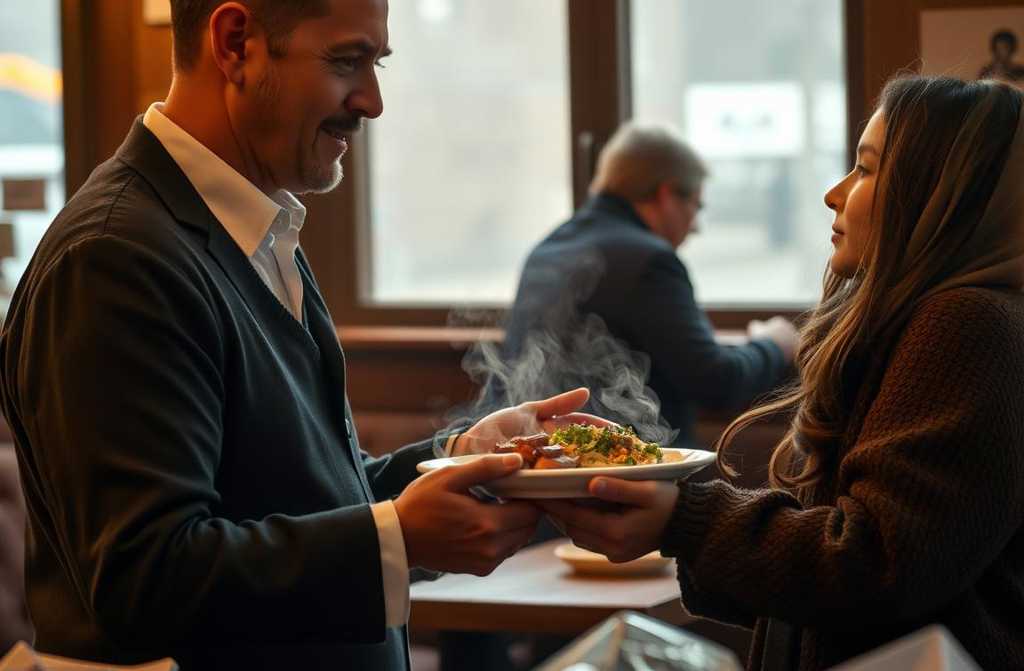
I stood there, bewildered, until the waiter arrived with a steaming plate: fluffy rice, juicy meat, steamed veg, a hot slice of bread, and a big mug of milk.
—Is this for me? —I asked, voice trembling.
—Yes —the waiter replied with a smile.
I looked up and saw the suited man watching me from his table. There was no mockery in his eyes, no pity, just an odd calm.
My legs felt like jelly as I walked over.
—Why did you give me food? —I whispered.
He shrugged off his coat and draped it over the chair, as if shedding an invisible armor.
—Because no one should have to rummage through leftovers to survive —he said firmly—. Eat in peace. I own this place, and from today on there will always be a plate waiting for you here.
I was speechless. Tears burned my eyes. I cried, not just from hunger, but from shame, exhaustion, the sting of feeling less… and from the relief of finally being seen.
—
I came back the next day.
And the day after.
And the day after that, too.
Each time the waiter greeted me with a smile, as if I were a regular. I sat at the same table, ate quietly, and left the napkins neatly folded.
One afternoon the suited man appeared again and invited me to sit with him. I hesitated, but something in his voice made me feel safe.
—Do you have a name‑tag? —he asked.
—Emily —I whispered.
—And age?
—Seventeen.
He nodded slowly, said nothing more.
After a while he looked at me and said:
—You’re hungry, yes. But not just for food.
I stared, confused.
—You’re hungry for respect. For dignity. For someone to ask how you’re doing instead of just seeing you as rubbish on the street.
I didn’t know how to answer, but he was right.
—What happened to your family?
—My mum died of illness. My dad left with someone else and never came back. I was left alone, kicked out of the house I’d known. I had nowhere to go.
—And school?
—I dropped out in Year 10. I was too ashamed to go in dirty clothes. Teachers treated me like a problem, classmates laughed and called me names.
He nodded again.
—You don’t need pity. You need chances.
He slipped a card from his coat pocket into my hand.
—Go to this address tomorrow. It’s a youth training centre. We give food, clothes, and—most of all—skills. I want you know.
—Why are you doing this? —my voice broke.
—Because when I was a kid I ate my fill from leftovers too. Someone reached out to me once. Now it’s my turn to do the same.
—
Years passed. I enrolled at the centre he’d pointed me to. I learned to cook, read fluently, use a computer. They gave me a warm bed, confidence workshops, a therapist who showed me I wasn’t less than anyone else.
Now I’m twenty‑three.
I work as the kitchen manager at that same restaurant where it all began. My hair is clean, my uniform ironed, my shoes sturdy. I make sure there’s always a hot plate for anyone who walks in hungry. Sometimes kids, sometimes pensioners, sometimes pregnant women… all of them come for a slice of bread, but also to be seen.
Every time someone arrives, I smile and say:
—Eat in peace. No judgment here, just nourishment.
The suited man still drops by now and then. He no longer wears that tight tie; he just gives me a wink, and on some evenings we share a coffee after the shift.
—I knew you’d go far —he told me one night.
—You gave me the start —I replied—, the rest I did with my own appetite.
He laughed.
—People underestimate the power of hunger. It can destroy, but it can also drive you forward.
And I knew that was true.
My story began among leftovers, but now I’m cooking up hope.





