
Barbara clenched the damp medical report in her fist, the paper wrinkling under her grip. The crowded clinic corridor made it impossible to breathe.
“Barbara Morrison!” a nurse called out.
Barbara stood, walking into the office where a tired-looking GP with glasses perched on her nose took the folder. She skimmed the pages with practised indifference.
“Everything’s fine on your end,” she said briskly. “Have your husband get checked.”
Barbara froze. *Hugh? But he’s—*
***
At home, her mother-in-law, Margaret, was hacking away at vegetables for Sunday roast, the knife slamming against the chopping board like she was waging war on carrots.
“Well, dear, what’s the news?” Margaret asked without looking up.
“I’m fine,” Barbara muttered, hanging her coat.
Margaret finally glanced up, suspicion flickering in her eyes. “Then why—”
“Hugh needs to be tested.”
The knife stopped mid-chop. Margaret straightened like a rod.
“What nonsense! My son’s perfectly healthy! It’s these doctors—useless, the lot of them. Back in my day, women had babies without all these tests!”
Barbara walked into the living room. Mismatched socks—one navy, one black—were strewn across the sofa. She picked them up mechanically, tossing them into the laundry basket. Three years of marriage, and those socks became a perfect metaphor for their life: messy, never quite fitting together.
Hugh came home late, throwing himself into his armchair with a grunt.
“Cheer up, love. Who died?”
“Hugh… we need to talk.”
She handed him the papers. He glanced, then tossed them onto the coffee table.
“And?”
“You should get checked.”
He stood abruptly. “Why the hell would I? I’m fit as a fiddle—look at me!”
And he did look it—broad-shouldered, thick-haired, the picture of health. But some things don’t show on the surface.
“Hugh, please—”
“Enough!” he snapped. “If you don’t want kids, just say it! Why drag doctors into this?”
From the kitchen came the shuffling of slippers. Margaret was eavesdropping, breathing so loudly it was a wonder she didn’t burst through the door.
“I want children more than anything,” Barbara said quietly.
“Then why haven’t we got any? Hiding something, are you? Had a few little ‘accidents’ before me?”
She recoiled like she’d been slapped.
“How *dare* you—”
“How should I react? Three years—nothing! And now you’re telling *me* I’m the problem?”
The door swung open. Margaret marched in like a battle tank.
“Don’t listen to her, darling! She’s bored, that’s all. Needs a proper job, not all this doctor nonsense.”
Barbara stared at Hugh. He turned away, arms crossed.
“Do you really believe I—”
“I don’t know *what* to believe,” he muttered. “But I know one thing—real men don’t go to doctors.”
Margaret nodded triumphantly. “Exactly. Hospitals are for weaklings.”
Something inside Barbara snapped.
“Right,” she said, voice eerily calm.
War was declared the next day. Margaret nitpicked everything—too much salt, a smudge on the counter, crumbs under the toaster. Barbara clenched her jaw and endured.
“Maybe you shouldn’t be home so much,” Margaret sneered over dinner. “Get a proper job instead of wasting time at clinics.”
Hugh chewed silently.
“I *have* a job,” Barbara reminded her.
“Three days a week? That’s a hobby, dear.”
“What’s that got to do with—”
“Everything! My son’s healthy, and you’re making him out to be weak! When there’s no baby, it’s *always* the woman’s fault!”
Barbara stood, knees shaking.
“Running off already?” Margaret taunted.
“I’m tired.”
“Tired? From *what*? You barely lift a finger!”
Hugh finally glanced up. Something like pity flickered in his eyes—but he stayed silent.
That night, Barbara lay awake listening to his snores. Once, it comforted her—proof he was there. Now, it just grated. How had she never noticed his stubborn pride before?
The next morning, she stuffed a duffel bag—a few dresses, toiletries, not much else.
Margaret blocked the kitchen doorway, tea in hand. “Where do you think you’re going?”
“To Nan’s.”
“For how long?”
“I don’t know.”
Hugh wandered in, wet-haired from the shower. “Babs… what’s this?”
“That obvious, isn’t it?”
“You’re serious?”
“Why stay? You won’t get tested, your mother blames me for everything—what’s the point?”
He stepped closer, voice dropping. “Don’t be daft. Where’ll you go?”
“Nan’s.”
“That shoebox?”
“It’s cosy.”
Margaret scoffed. “Good riddance! Let her see how good she had it here.”
Hugh shot her a glare but said nothing.
Barbara slung the bag over her shoulder.
“Babs!” He stood helpless in the hallway, hair dripping. “When are you coming back?”
“When you see a doctor.”
The door slammed.
Nan gasped when she saw the bag. “Barbara love! What’s happened?”
“Fight with Hugh. Can I stay?”
“’Course, duck. But it’s tiny—”
“That’s fine.”
The flat *was* tiny—a bed, a table, a telly older than Barbara. But it smelled of vanilla from Nan’s baking.
“Tell me everything,” Nan said, putting the kettle on.
Barbara did. Nan listened, shaking her head.
“Oh, pet… Men and their pride. Admitting they’re wrong? Like pulling teeth.”
“And I’m just supposed to wait forever?”
“No. You did right, leaving. Let him stew.”
The first days were quiet. Barbara slept on the pull-out, helped Nan with errands. Hugh called, but she ignored it.
Then Nan started complaining of chest pains. The paramedic insisted on hospital.
“Don’t fret, duck,” Nan whispered as they wheeled her out. “Old bones, that’s all.”
At the hospital, the cardiologist—a lanky, kind-eyed man named Dr. Daniel Whitmore—became a fixture in Barbara’s visits.
He lingered to chat. She started arriving earlier, hoping to catch him.
“Barbara, that doctor keeps asking if you’re coming today,” Nan said slyly one afternoon.
“He does?”
“Oh yes. ‘How’s your granddaughter?’ Lovely lad. Single, too.”
Barbara flushed. “Nan!”
“Well? You’re practically free. That Hugh—”
“I’m married.”
“Pfft!”
When Daniel was transferred to another ward, he stopped her in the hallway.
“I’ll miss our talks,” he said.
“Me too.”
He handed her a card. “If you ever need anything. Or just want to talk.”
Their fingers brushed.
“Thank you.”
He hesitated. “You’re beautiful. And so sad. I hope that changes someday.”
Nan recovered. Back home, Barbara barely left her side.
Hugh kept calling. Sometimes she answered; sometimes she didn’t. The last time, he yelled that she was “acting like a spoiled brat.” She hung up and stopped picking up altogether.
A month later, an unknown number flashed.
“Barbara? Daniel’s mother. He’d love you to come to his birthday—”
She hesitated.
“Go, duck!” Nan hissed. “When was the last time you had fun?”
The party was lovely. Daniel introduced her to everyone, attentive but never pushy. Walking her home, he asked:
“Can I see you again?”
“Yes.”
They started seeing each other. Slowly. Gently. No pressure, no questions.
Then—unexpectedly, wonderfully—Barbara got pregnant.
“Marry me?” Daniel asked when she told him.
“Yes,” she laughed.
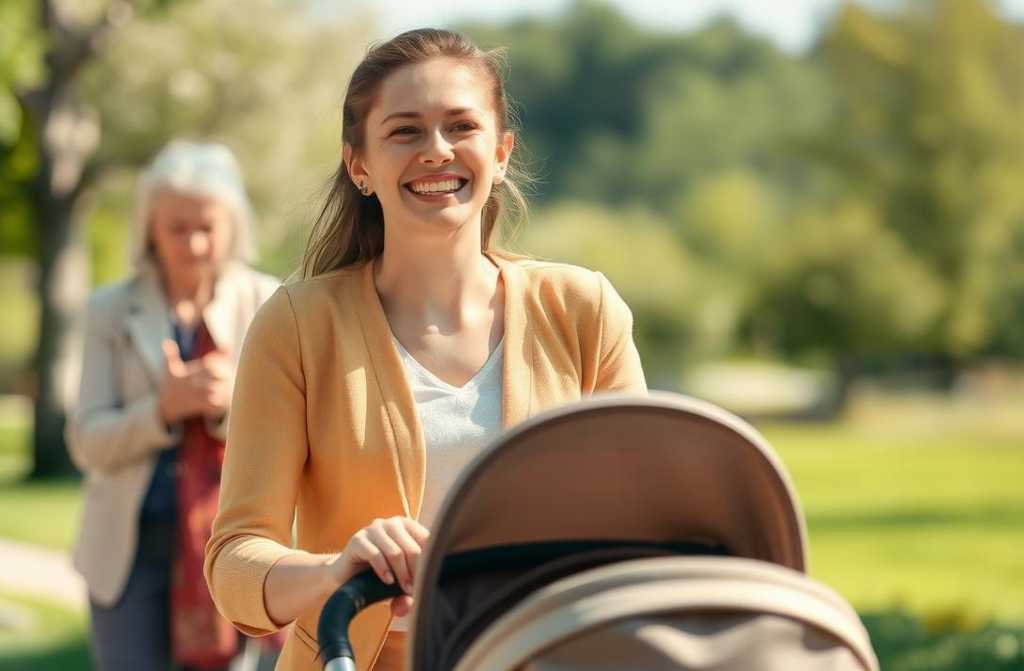
A year later, Barbara pushed a pram down the park path, Daniel beside her, making her laugh. Their son—Oliver—slept peacefully.
Then she saw them: Hugh and Margaret, frozen mid-step.
Barbara didn’t speed up or slow down. She walked past, chin high. In Hugh’s eyes, she saw it all—regret, pain, understanding.
Margaret tugged his sleeve. “Come on, love.”
But he didn’t move. He stared at the pram, at Barbara’s smile, at Daniel.
And he knew.
Too late.





