
Father for an Hour
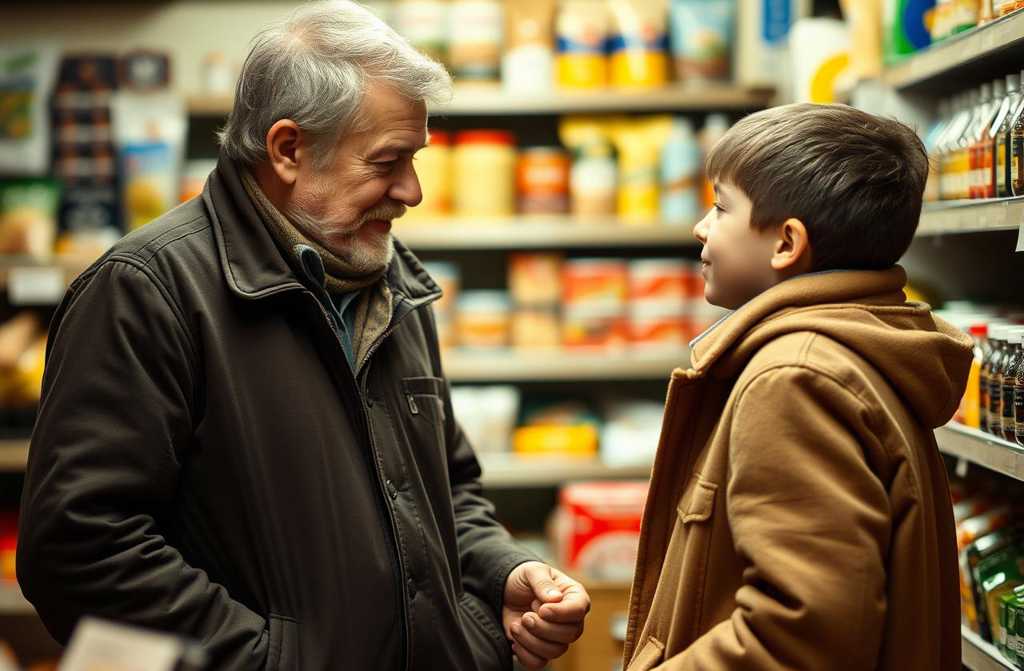
James first noticed the boy by the bread aisle in a small shop on the outskirts of Bristol. He wasn’t looking at the loaves or rolls but staring deep into the shelves, as if waiting for someone important to emerge—someone who hadn’t come in a long time. Or maybe never existed at all. The boy was slim, wearing a worn, tattered parka with a torn sleeve. His grey socks peeked out from scuffed trainers, and his beanie had slipped to one side. His gloves were stretched thin, as if passed down through generations. His cheeks were flushed from the cold, his lips chapped.
His gaze wasn’t that of a child—not pleading, not hopeful. It was the look of an adult who had seen too much—steady, heavy, guarded. As if he’d long since understood the way the world worked and now simply observed, without expectation.
James grabbed a loaf and walked past. But after a few steps, he glanced back. The boy hadn’t moved. He stood rooted to the tiled floor, as if believing that if he didn’t leave, someone would come. Something would change.
He reminded James of someone—the boy from the children’s home where he’d once volunteered. That boy had looked at him the same way, as if his soul were speaking without words, neither asking nor trusting.
Ten minutes later, they met at the checkout. The boy held two sweets—no bag, no trolley. The cashier said something—likely that he was short. Without protest, he placed one sweet back and paid for the other. Calm, precise, resigned. As if he already knew: you can’t have everything. You choose between what you need and what you can have.
That was when James stepped forward.
“Listen, let me get you something. Bread, yogurt, maybe some milk? Don’t worry—no strings attached.”
The boy looked at him directly, unfazed. The gaze of someone who’d been let down too many times.
“Why?”
No suspicion. Just fact—nothing comes for free.
James hesitated. Not because he didn’t have an answer, but because he knew the truth was too complicated.
“Just because. Because I can. Because… once, someone helped me too.”
The boy was silent. Then, slowly, he nodded.
“Alright. Some potatoes, then. Boiled. And a sausage. Just one. No mustard. It tastes too grown-up.”
After paying, they stepped outside. James handed him the bag, trying to make it seem casual.
“Where do you live?”
“Not far. But I don’t want to go home yet. Mum’s asleep. She’s tired. Sometimes she sleeps a long time. I’d rather sit on the bench. You can see people there. It’s quieter.”
They sat on the cold bus stop bench. The boy ate slowly, cradling the sausage in both hands. He took small bites, chewing carefully, as if making it last. He didn’t eat like a child—but like someone who knew the value of what he’d been given.
“I’m Oliver. What’s your name?”
“James.”
“Could you… just be my dad for an hour? Not forever. No promises. Just sit here like everything’s alright. Like I’ve got someone.”
James nodded. Something tightened in his chest. He hadn’t expected it, but he couldn’t say no.
“Alright.”
“Then tell me to put my hat on. And scold me about school. Mum used to do that. When she wasn’t sleeping.”
James smiled, a little stiff at first—then genuine.
“Oliver, where’s your hat? Trying to catch a cold? And your jacket’s not even zipped. How’s school?”
“Got a C in maths. But behaviour’s an A. Helped an old lady cross the road. Dropped her bag, but I picked everything up. She said trying matters most.”
“Good lad. But put your hat on. You’re the only you there is. Gotta take care of yourself.”
Oliver smiled—calm, grown-up. Finished the sausage, wiped his hands neatly with a napkin, and tossed it in the bin. Then he looked at James.
“Thanks. You’re… not like the others. You don’t pity me. Don’t give advice. Just act like it’s normal.”
“If I’m here tomorrow—will you come?”
“Dunno. Maybe Mum will have a bad day. Maybe I will. I’ll remember you, though. Your eyes don’t lie.”
He stood, said goodbye, and walked away. Didn’t look back. Like someone who knew no one would follow. His steps were light, but there was a tightness in the way he carried himself—as if holding onto warmth inside, afraid it would vanish in the open air.
James stayed. Stood for a while. Tossed his coffee cup in the bin, then stared down the road. Thought about calling out—but didn’t.
The next day, he came back. And the day after. And the week after that. Even when it snowed. Even when the wind bit through his coat. Not because he was waiting—because he’d made a promise. Even without words.
Oliver didn’t come every time. Sometimes he did. Sometimes he didn’t. James sat on that same bench, pretending to read. But each time the boy appeared—his thin frame, his unhurried walk, the familiar way he looked at the ground—something loosened in his chest. As if something frozen for years had begun to thaw.
One day, Oliver arrived with two plastic cups of tea, wrapped in napkins.
“Today, you were my dad. Now I’m your son. Deal?”
James just nodded. Couldn’t speak past the lump in his throat.
Sometimes, an hour is enough. Enough to believe you matter to someone. Enough to know not everything is lost.





