
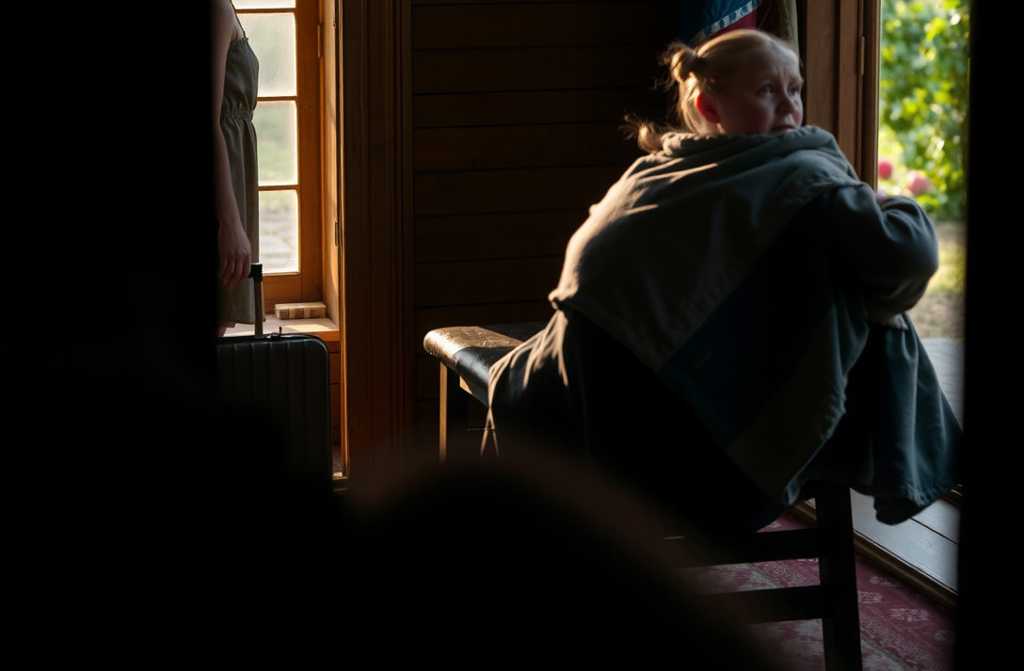
She took home another woman’s child from the hospital to save her, but eighteen years later, a figure from the depths of the past knocked on her door and turned her world upside down.
November 1941 in Yorkshire arrived with a cold bite, the wind rattling through the leafless oaks along the muddy lane. The rutted road was knee-deep in thick slush, nearly swallowing the wheels of our clattering old cart, each jolt sending chill straight to the bone.
We’ll never make it to the infirmary in this state, sobbed my mother-in-law, Martha Thompson, tears streaking her red cheeks as she wiped her eyes with the edge of her faded shawl.
We’ll get there, Maisie. Hold tight, I replied, trying to reassure her as I flicked the reins at our exhausted mare. My fingers were numb from gripping the cold, but there was no giving in. My wife, Maisie, was huddled in the hay, groaning in pain. She longed only for her torment to end. Fortune had turned: the midwife had broken her leg, and the village doctor had gone to tend a poorly child in the next parish.
Think of the baby, think of Walter, Martha whispered, patting her daughters hand.
I do, every moment, Mum.
What will you call the little one? Martha tried to distract her.
Walter said if its a girl, shell be Lillian, and if a boy, Henry.
Lovely, darling, lovely. Your father will get you there, I promise. Look, theres the old mill chimneywere nearly at the towns edge
We finally reached the hospital gates just as Maisies pains sharpened, and soon a tiny girls wail filled the drafty ward. Holding her, Maisies tears turned to joy and all the suffering melted away, replaced by a love that left her breathless.
Lillian. That was your fathers wish. Hell come home to us when all this mess is over. Youre our hope
Almost immediately, Maisie asked for pen and paper to write to Walter at the front. The matron grumbled and stomped through the ward, but returned a scrap of paper and a stubby pencil. Maisie thanked her, hands trembling.
Our neighbour, a young woman named Daisy, was packing her bag at the far end.
Are you being discharged already? Maisie asked in surprise.
Yes Im leaving, Daisy whispered, her gaze so empty I couldnt bear to meet it. She shuffled out, each step heavy as if parting with her soul.
A nurse later muttered, She left her baby. Couldnt take her home. Happens more than youd care to think. The words stung me. How could anyone abandon their own child?
That little mite in there, the nurse went on, no one to feed her but us, and were stretched thin as it is.
That night, Maisie lay awake, listening to the cries echo down the corridor. She asked if she could help feed the motherless infant, but the nurse was abrupt. Then itll be worse, sending her on to the home, she snapped.
Is she really to go to an orphanage? Maisie choked.
Where else?
Steadfast, Maisie went to the senior doctor while I waited outside the ward. Dr Cartwright, please, let us take her, she asked. Theres enough warmth and care in our house for two.
He peered over his glasses, gruff but not unkind. Maisie, you mean to raise her as your own? Even with a little one at home already?
Well manage. I can feed them both. Please.
After a deliberating pause, he nodded. Youve convinced me. Shes yours.
Maisie hurried back to the nursery and scooped the fragile babe from her cot. The whimpering stopped as Maisie pressed the child close, promising her a family. Ill call you Grace, she whispered, Lillian and Grace just what we need in this world.
Decision made, we bundled the two girls up and returned home to our farmhouse near Harrowgate. Martha stared wide-eyed. Twins, are they?
Two daughters: Lillian and Grace, Maisie replied. She lied, for Marthas sake, Not quite twins, Mumtheyll be easier to tell apart than the Wilkinson boys. No two alike.
Martha fussed and scolded as usual, but I cradled Grace in my arms, enchanted.
The first five years passed quickly. The girls flourishedhealthy and cheerful, both the apples of our eyes. Wed never spoken of real or adopted. Maisie cherished them equally, never regretting her choice. I worked in the parish office, Maisie at the village store, and we all waited for Walters safe return from the war.
It was a sweltering August when Walters boots finally crunched up the lane. Skinny, older, but alive and whole. Villagers gathered as young Timmy, the village radio, sprinted shouting, Soldier on the way! My Maisies tears rivalled the rain as Walter swept her into his arms.
Where are my girls? he demanded between embraces.
In the orchard with your father, Martha answered, gesturing to the glowing rowan tree garden, a sea of crimson berries.
Walter at last took both girls in his arms, their arms around his neck, and everything felt right again.
Fifteen years passed. My parents moved on, and the girls grew into young women, both eighteen, staying local to tend the beloved orchard left by their grandfather.
Maisie often said, Its time for them to wed, but Walter resistedhis little girls still, no matter their age. Lillian caught the gentle eye of a local lad, Michael Turner; Graces suitor was a jovial tractor driver named George Collins.
One breezy afternoon, the girls giggled off through the orchard, Were looking after the trees, Dad, now Grandads not here.
Maisie winked at me, not fooledtheyd arranged walks with the boys well away from my stern glance.
But not an hour later, Lillian hurtled into the yard, panic etched on her face.
Mum! Dad! You must comenow!
As we hurried out, a well-dressed woman of about thirty-five stepped into the garden. Her appearance was city-sharp: a fine hat, tailored coat, heels that would never survive the muddy lanes.
Good afternoon, she said, with a stiff smile. Are you Maisie and Henry Thompson?
We hesitated. Yes?
Im Emma Sinclair.
The name meant nothing to us, but her posture was resolute.
Id like to speak in private, if I may.
Once inside, Emma blurted, You remember me, dont you? The same Daisy, from the hospital, November 1941?
Maisies face drained of colour. I remember. But why are you here?
Ive come for my daughter.
The words struck hard. I rose, fists clenching. Maisies told me everything. You abandoned your child. What right do you have?
Emmas voice trembled. I was young, alone, just seventeen and desperate. I fled to escape shame, stayed in London, tried to start over. I always regretted leaving my baby. It took me years to admit my mistake. My husband later left me. I’ve had no children since. After everything, I decided to find heryour Grace. I learned who adopted her
And you think you can walk in now and claim her? Maisie cried. I nursed her, stayed up with her fevers, sang her to sleep, loved her with all my heart. And you want her after all this time?
Lillian, ghost-pale, stood in the door. Who which of us?
Maisie wept. Grace, my darling.
Emma pleaded to speak with Grace, but the storm had come. Grace ran from the house, sobbing, Lillian distraught, and Emma slunk away, leaving the air thick with hurt.
Grace vanished the next morning, her note simple and broken: I cant stay. I need time. I love you.
Maisie lingered each day on that weathered orchard bench, holding hope that Grace would return. I cant bear it, she whispered.
Shell come home, I reassured, even as doubt weighed on my heart. George Collins wilted with worry, and I swore, if Grace returned, Id give their love my blessing.
After a month, Grace wandered back through the rowan trees. Mum, Dad, Im home. Forgive me. Tears flowed, and in the embrace, all the hurt melted away.
She spoke softly, I tried to be with her. I tried, but shes not my Mum. I missed you, Missed Lillian, missed George and even the orchard. Granddad was righta soul can find peace here, if only she listens. I wont stray again.
Epilogue
The next week, under ruby rowan branches, we held two weddings: Lillian to Michael, and Grace to George. Their bridal whites glowed against the scarlet berries, the air full of hope. Emma never returned, and Grace let the memory fade, knowing that a mother is not just the one who gives birth, but the one who sits through fevers, scolds scraped knees, sacrifices and loves. That was the lesson I learnedit is loves steadfastness, not blood, that makes a family, and that devotion stays in the heart, warm and true, long after the years have faded.





