
A REMARKABLE LIFE
At my friend Janes wedding, we celebrated for two whole daysmerrily, with plenty to eat and drink, laughter and joy all around. The groom was as charming as a young Paul Newman and possessed a humility rare for a man so striking in appearance. All the ladies at the table secretly admired William: the clear blue eyes reminiscent of summer skies over the Downs, lashes so long and dark they seemed wasted on a man (honestly, why must nature bestow such gifts where they’re least needed?), a strong chin, a stately Roman nose, and such flawless, olive-tinged skin that could rival a velvet cushion. And, as a finishing touch, he stood nearly six foot six with broad shoulders like a sturdy oak. Had we not been such loyal friends to Jane, there might have been a scuffle right at the wedding breakfast for this rare specimen. William truly was something to behold.
Honestly, Jane, wherever did you find such a handsome chap? we teased her, every face in the group attempting a look of absolute loneliness in case William had similarly stunningand unattachedrelations.
Oh ladies, dont be so silly! Jane replied with a giggle. I love William for his simplicity. He comes from a small village, grew up with his gran, runs her smallholdinghes as capable as they come. We met because Mum and Dad bought a cottage in his village. Hes so attentive, kind, and absolutely dependable. The way he keeps a homemy word. A proper man, girls! He only agreed to move to the city after many nights of me pleading and promising, I assure you.
William adapted quickly to life in town and with Janes family. In only a couple of years, he learned the ways of good whisky, cologne, small talk about politics and art, travel, the FTSE 100, sports, and even shed his Dorset brogue. He got behind the wheel of the comfortable car Janes father lent the young couple, and took a respectable position at his father-in-laws firm. Who gifted them the flat, I shall keep to myself, but Im sure you can guess.
In the second year of married life, Jane discovered Williams peculiar habit of wearing only brilliant white socks. Hed stride around the house and into other peoples homes in them, refusing slippers, even pulled those socks on under wellies and stood boldly in the filthiest of hallways. Jane didnt exactly share his love for the white socks but quietly doubled her mopping and invested in stronger bleach. Thus, William came to be known as Sock.
Jane was eight months along when she found out William had another woman. The mistress, as fate would have it, was pregnant as well, the babies due at nearly the same time.
Socks was banished, fired, cursed, and lamentedall in one day. Then came the sticky, heavy afternoons of gloomy autumn. Jane hardly left the bed, lying stretched in its immense emptiness, staring up at the ceiling, her eyes dry as stones.
“Ill cry later,” she said stiffly. “The baby’s too precious for that now.”
Jane, pale as marble, reclined silently on that ridiculous bed as we, like sentries, kept watch by turnsoffering our presence, if not our words.
We longed for the dramatictears, the ripping of fates cruel pages. But all we could do was be silent and wait.
On the day she left the hospital, we were all chattering, waving balloons, practically begging the nurses to let us slip them a glass of sherry and gallop out into the evening with us, wishing everyone nothing but health and joy. Janes father was the most earneston the eve before, growing sentimental, hed chalked a massive, wobbly Thank you for our grandson! on the pavement beneath Janes window, and later tried to serenade the night until politely escorted away by the porter, who agreed to toast his happiness in his cubby with a dash of brandy, far from unamused matrons.
On the day of discharge, her father was radiant and, as I recall, almost gleamed with pride. He cried properly, and with feeling. We all shed tearsthe entire ensembleembracing Jane, peering shyly into the blue bundle, all the while silent about the baby’s newly inherited Roman nose. Yet Jane, even in her joy, did not cry:
“Later. Who knows, it might sour the milk.”
She didnt speak much for another two months, and thenone blustery afternoonoff she went to confront William. No matches, no vitriol, but full of a fierce desire to shout, to rage, to lay bare all that hurt which had fastened her to the bed; to unleash it upon the betrayer, the one who had shattered her hopes and the home shed dreamed ofher little son, George, whom she had pictured laughing, holding both his parents hands in the park, where William would be both needed and beloved.
She also very much wanted to spit, if not claw, the face of that shameless woman who had lain with her husband. Surely such eyes would be brazenprobably beautiful. Jane planned to spit right into them. If needed, shed scratch too.
She had almost decided not to go, but on one walk with the pram some kindly old ladies happened to fill her in on the address. They pitied her, reminded her that Socks was an absolute scoundrel, outlined in detail the route to the love nestand the proper ways to exact revenge. Jane was frozen, sobbing inside, ready to turn aroundbut something kept her feet moving forward.
So there Jane stood, before the weathered entrance of a block of flats, with only five flights of stairs between her and her confrontation.
On the first landing, she figured, in her luck, no one would be in and this was a fools errand. On the second, she decided itd be for the best if no one was home after all. On the third, she could hear a desperate child cry from the top floor.
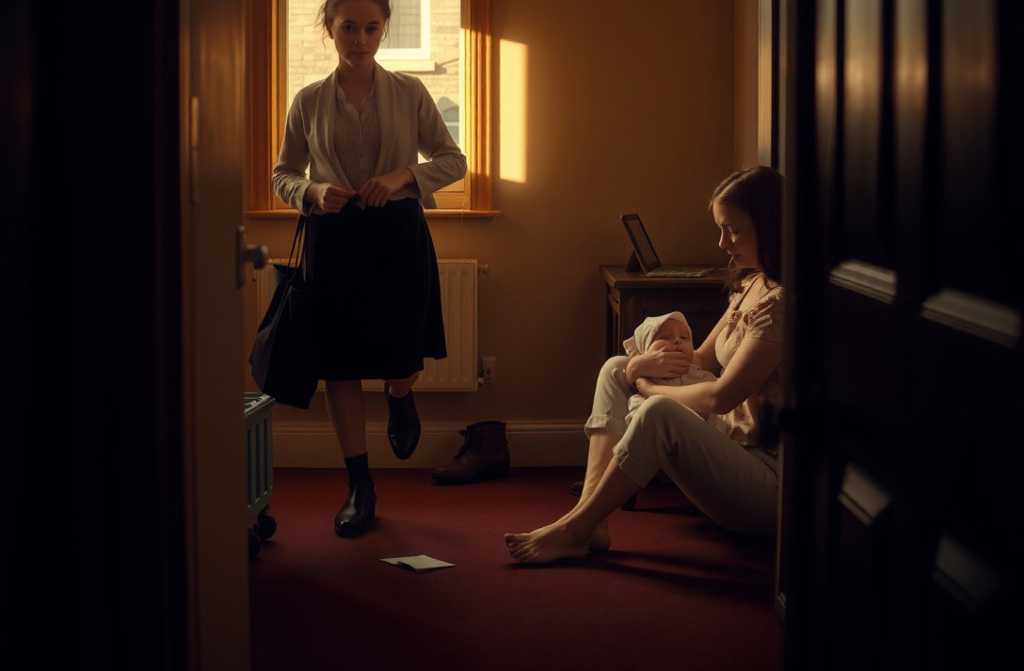
A thin, tearful girl opened the doornot at all what Jane expected of a temptress carrying off a husband. While Jane gaped, weighing her rival at about six stone and sniffling, the baby wailed somewhere within.
HelloJane, is it? William left us two weeks ago. I havent a clue where hes gone, the girl said quietly, slumping to the floor in tears.
Jane suddenly lost all desire for a scene. She just wanted to go in, soothe the neglected baby, and perhaps jab, You play, you pay, you silly goose! Yes, shed say itshe had the right, after all, as the wronged party.
The baby was dry but exhausted from hunger. His tiny voice hoarse, veins standing out on his facehe screamed for food he wasnt getting, while his strangely hapless mother huddled on the floor.
Jane remembered with difficulty how she rummaged through empty cupboards for formula, how she found a hastily scrawled, unfinished note on the tablejust: “Please, in my mo…”and shuddered.
The girl sobbed, telling Jane as if confiding in a friend that she had nowhere to go once her tenancy ended in days, no milk, no William, and never any money to begin with. She was terribly sorry, ashamed, but it was too late. She asked for forgiveness, even said Jane could hit her if she wished. The babys name was Charlie, and he was older than George by only nine days.
Jane raced home because, in twenty minutes, George would want feeding. It wasnt easy to runshe carried two heavy bags belonging to Emily (the girl’s name), and Emily herself trotted behind, clutching well-fed Charlie. All the while, Jane thought about where shed fit two new beds.
Three years later, we celebrated Emilys wedding, and a year after that, Janes own. Janes new husband despised white sockslife, he said, should be brighter than laundryand doted on his wife, his son, and two little daughters. Emily became the mother of four boys, and her husband never gave up hope for a little girl.
Ah, what a remarkable life its all been.





