
He had always felt that something was off, as if his life were travelling on a side road while the main train had long since pulled ahead. Mornings began with a crowded bus, a trip to the timber yard on the edge of his sleepy town, heavy rolls of insulation, invoices, a lunch of soup and buckwheat in the canteen, evenings in front of the telly and the occasional catchup with mates in the little bar by the coach station. He was thirtythree, his name was Andrew, and everyone around him assumed his life was more or less put together.
He rented a room in an ageing brick house opposite the old secondary school hed once attended. The landlady, a thin retired lady named Mrs. Jenkins, lived in the next room and loved to chat about her ailments and the price of pills at the chemist. Andrew would nod halfheartedly, his thoughts drifting elsewhere. Above his bed hung a faded poster of a sprawling cityscapeglass towers, a river, bridges, twinkling lights. Hed bought it after his national service at a market stall and had taken it with him to every rented flat since. Sometimes, as he drifted off, he imagined strolling those streets, a stranger, free as a tourist or a film hero.
Reality was simpler. At the yard he was logged as a storekeeper, his wages arriving late, the foreman constantly raising his voice, and his friends increasingly talking about loans and mortgages. One evening, as Mrs. Jenkins complained again about her blood pressure, Andrew realised he barely heard her. A decision, unnamed but insistent like a itch, was already taking shape inside him.
A week later he bought a train ticket to the capital. He told his boss he was quitting, claiming hed found a better chance in logistics. The boss snorted, shrugged, and wished him luck. He explained to Mrs. Jenkins that he was heading for work, and she waved her hands, not arguing. Andrews belongings were few: two suitcases, an old laptop, a handful of books. He folded the city poster carefully and tucked it on top.
On the train he sat by the window, watching fields and occasional hamlets slip past. In his head he sketched a future: a jobperhaps first as a loader or courier, then something better. A flat in the centre, cafés, concerts, maybe even a romance. In big cities, he believed, everything seemed to fall into place on its own.
When the train pulled into London at dawn, Andrew pressed his forehead to the glass. Outside stretched rows of grey blocks, bustling junctions, advertising hoardings. The sky was low and leaden. On the platform a damp chill and the smell of rail oil and cheap coffee from the vending machines hit him. People hurried, dragging suitcases, talking on their phones. No one was waiting for him.
He stepped onto the square outside the station and paused, overwhelmed by the roar of traffic, the blare of announcements, strangers moving past like obstacles. In his pocket lay a printed reservation for a cheap hostel in the centre, the place he intended to reach by tube. He fished out a folded map of the Underground lines hed printed at home. Colourful lines tangled, stations with unfamiliar names merging into a maze. He needed to find his stop, a long, tricky name.
In the tube he pushed his way through the crowd. The carriage was warm, smelling of body heat and perfume. Voices blended into a hum. Andrew clutched the handrail, eyes scanning the scrolling station names on the walls. A thrill rose inside him. This was the feeling hed dreamed of: a tiny speck in a massive city, and everything just beginning.
The hostel turned out to be a narrow alley off the Ring Road. A weathered building with peeling plaster, a steel door with a keypad, a cramped corridor carpeted in linoleum and scented with laundry detergent. The receptionist, a lanky young man with a bun, checked his ID, handed him a key to a locker and showed him a bunk in a shared dorm for eight occupants. Each bed had a curtain, a bedside lamp.
The first two days Andrew roamed the city, trying to memorise the streets. He searched for vacancies on his phone, called on adverts. Well get back to you, they said, or asked him to email his CV. By evening his feet ached, the few pounds hed brought were dwindling. At night in the hostel he lay on his bunk, listening to a neighbours snore, laughter from the room next door, and thought everything was okayfor now. That was how it should be.
On the third day he attended an interview at a logistics firm housed in a business centre by the Thames. A woman in a crisp blouse asked a few questions, glanced at his work history, and promised a decision within a week. Andrew left the building, lingered by the glass doors, watching the water, and decided to walk back to the tube.
Rain began to drizzle; he pulled his collar up and quickened his pace. At a corner, in front of a shop window displaying abstract paintings, he paused. Inside was a gallerywhite walls, bright light, patrons with glasses of wine. Through the glass a tall woman in a black dress laughed, tilting her head back. Andrew lingered, as if before a television. In his hometown such places were rare; art hung only in the dusty community hall.
He was about to move on when the gallery doors flung open and the woman stepped onto the pavement. She flicked ash from a cigarette, her short blonde hair gathered in a casual bun, a delicate chain glinting at her throat. She noticed him staring and smiled at the corner of her mouth.
Come in, she said. We have a soft opening. Free entry.
Andrew blushed but stepped towards the door.
Im not dressed for this, he muttered, eyeing his jeans and jacket.
Relax, she replied, shaking off the ash. No dress code here. Im Emily. And you are?
Andrew.
Pleasure, Andrew. Come along, the artist will love another pair of eyes.
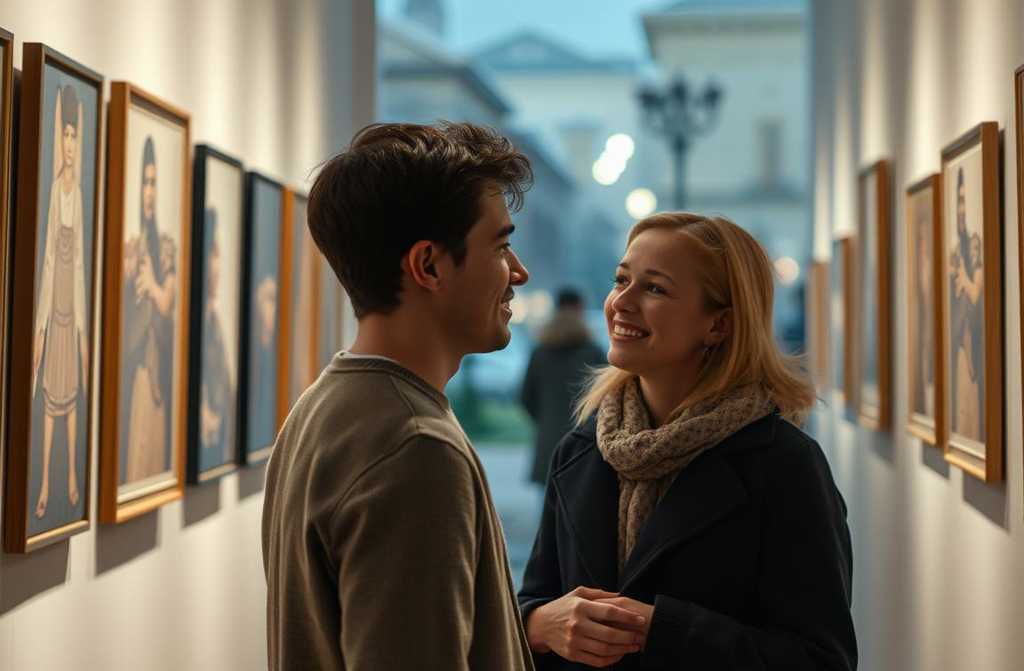
She took his elbow lightly, as if greeting an old friend, and pulled him inside. The scent of wine mingled with something spicy and fresh paint. People clustered in groups, discussing the works, laughing. Large canvases hung, depicting blurred silhouettes of city dwellersfaces indistinct, only streetlights, windows, and figures. Andrew stood before one and felt as though he were looking at himself from the outside.
You like it? Emily asked, standing beside him.
Its strange, he admitted. A little unsettling.
Thats good. Fear is an honest reaction, she said, turning to him. Are you here alone?
Yes. I just arrived, from the countryside.
I see. Her eyes flickered with interest. What brings you to our rough city?
Im looking for work. I was a storekeeper before.
Romantic, Emily chuckled. Im a curator. I work with artists, projects, galleries. This is my playground.
She swept her hand through the air, outlining the space.
Youre lucky you came in. Today its a gentle immersion into the art world.
A man in a black shirt with a peppered beard approached, introduced as the exhibitions creator. They exchanged a few words, the artist shook Andrews hand, then moved on to other guests. Emily lingered.
Did you always dream of coming here? she asked, pouring herself a glass of white wine from a plastic cup and handing it to Andrew.
Ive wanted this for ages, but things never fell into place, he said, trailing off.
Now they have, she replied, eyes steady. What do you hope to find?
He shrugged, cheeks flushing. I dont know. Something different. Not like back home.
Different is here, if youre ready for this different, Emily said, a faint smile playing on her lips. No mockery, just a little weariness.
She was called away, vanished into a group of guests, laughing, hugging. Andrew stayed by the painting, glass in hand, feeling both alien and oddly part of something hed only ever seen on screen.
She returned a moment later. Got any plans for the evening? she asked.
No. Just back to the hostel.
Sounds dull, she mused, curling her lips. How about joining us for an afterparty? Therell be people, music. You might meet someone, maybe even a job. Here everything runs on connections.
Andrew hesitated. The landladys warning about big cities where people get cheated replayed in his mind, but Emily stood there, confident, alive, as if from another world. He nodded.
Alright.
They took a taxi to an old manor turned club. Inside, darkness pulsed with electronic music, strobe lights flashing. People drank, danced, smoked on the stairs. Emily guided Andrew through rooms, introducing him to faces, names tumbling from his tongue. He was offered wine, then something stronger. His head lightened, boundaries blurred.
See that guy at the bar? Emily whispered, leaning close. Hes a collector. He buys young, unknown artists. He wants everything to look convincing.
She talked about artists, grants, sponsors, how everything hinges on contacts, impressions, the story you tell about yourself. Andrew listened, trying not to get lost in the torrent of words. It felt like being behind the scenes of a grand production.
Near dawn he stepped outside for air. The night was damp, the pavement cold. Emily followed, lighting a cigarette.
Regret coming? she asked.
No, he leaned against the wall. Its strange, but intriguing.
Get used to it, she exhaled smoke. The city either chews you up and spits you out, or you learn to chew it yourself.
She said it almost dispassionately, as if quoting someone else. Then she looked at him more closely.
Listen, Andrew. I like you. Youre genuine. Thats rare. I have an idea. Maybe you can help, and itll help you too.
He tensed.
What idea?
Not now. Youre tired. Tomorrow. Ill text you. Just give me your number. She wrote it down. Dont disappear. In this city you can vanish very easily.
The next morning Andrew woke in the hostel with a heavy head. Fragments of the night floated backlights, faces, laughter, talk of grants. His bedside table buzzed with a message from Emily: Come to the gallery this evening. We need to talk.
During the day he called more vacancies, attended another interview at a warehouse firm. They offered night shifts for a modest wage. He said hed think about it. Money was dwindling, and a solid job was still missing.
That evening he arrived at the gallery. It was quiet, almost empty. Emily sat at a high table with a laptop, glasses perched on her nose, hair in a ponytail.
Hey, nighthero, she said, removing her glasses. Hows the head?
Fine.
Sit down. She pointed to a tall stool. I have a proposal. Something unconventional.
He sat, shoulders tense.
You said youre not working right now, moneys tight.
He nodded.
Theres a project. Were arranging a private sale of a single artists works. Its a delicate setup. We need someone to act as the buyer, on paper. Sign a contract, make it look clean. In reality, the money comes from other sources, the paintings go elsewhere. Youd just be the front.
Andrew stared, confusion mixing with curiosity.
So Im buying, but not with my own money?
Exactly. Emily shrugged. Its a common practice. People dont want to be linked to the market. They need a clean slate. You fit perfectly.
He felt something tighten inside.
Is this legal?
Emily smiled faintly, but her eyes stayed serious.
Its not by the book, but everyone does it. Money will flow through your account, then well sort it out. Youll get paid. A good sumabout three times what you earned before. Enough to live comfortably for a few months.
How much?
She named an amount that, in pounds, would be a small fortune to someone like him.
Why me?
Because youre new. No ties to galleries or artists. And I trust you, instinctively. I need someone who wont panic or run to the police at the first whisper.
The word police hit him like a punch. He looked at his hands, nails ragged.
What if something goes wrong?
Nothing will go wrong. Her tone was soft but edged with steel. Weve done this before. Its just a way to bypass paperwork. Clean money, serious people, no scandal. Thats all.
He thought of the landladys warning, the grey warehouse, the bus rides, the evenings with the TV. And of the night when he felt part of something bright. Two voices battled inside himone urging him to seize the chance, the other whispering danger.
I need to think, he said.
I understand. Emily nodded. You have a day. I need an answer by tomorrow morning. If not, just be honest. I dont like people disappearing.
He left, clutching the tube map in his pocket. He sat on a bench outside a nearby flat, staring at the ground. Images flashed: him in a police station, explaining to a uniformed officer, Emily turning away as if she didnt know him. Or the opposite: everything smooth, cash in hand, a decent job, his own flat, no longer a hostel dweller.
That night in the hostel he lay awake, head pressed into the pillow. Neighbours laughed at a sitcom on their laptops, argued about football. He replayed his conversation with Emily. Her tone wasnt outright false, but it lacked the plainspoken honesty he was used to. Everything was more complex, layered.
He remembered his life back home the warehouse where cold wind blew through the doors in winter, colleagues who only talked about how bad things were, his room with peeling paint and the poster. He recalled evenings walking down a quiet street where a lone lamp flickered. Safe, but cramped. Here it was terrifying, yet vast.
By morning he made a decision, though he didnt fully admit it to himself. When his phone buzzed with Emilys So? All good? he already knew what to type.
Yes. Im in. He hit send.
Emily replied instantly: Great. Meet me at the gallery at three. Bring your ID.
All day he moved in a fog. At three he stood at the gallery entrance. Emily met him, dressed in a smart suit, hair pulled back. Her face was focused.
Lets go. She took his arm. Ill explain everything.
They travelled to a small office in the financial district. A middleaged man in an expensive sweater, eyes sharp, waited. Emily introduced him as Dmitri, without detail.
So, Andrew, he began, leafing through papers. The scheme is simple. Money will be transferred to your account, youll sign a purchase agreement for the artworks. Then, via a power of attorney, youll pass the pieces to our partner. Youll be paid a fee. Any questions?
Andrew had many, but couldnt form them.
What about taxes?
The man smiled, like a teacher explaining basics.
Weve covered that. The amount will be split. Officially its a loan youll repay later. No issues. I handle this stuff, trust me.
Andrew nodded, though confidence was thin. Emily interjected with clarifications, her tone casual as if this was routine.
He signed several pages. His hands trembled. Words like loan, repayment, responsibility blurred together. After signing, they went to a bank. He opened an account, got a card. Within an hour a notification popped on his phone: a large sum had landed. The numbers looked unreal.
Congratulations, Dmitri said. Everything is on track. Tomorrow well transfer the paintings.
Emily walked him to the tube.
See? Not as scary as you thought, she said. You did it.
What if he began, faltering. If something blows up?
Dont overthink it, she replied, meeting his gaze. In this city everyone does what they can to survive. The key is not to be a complete fool.
He wanted to ask who she meant, but stayed silent.
That night he barely slept. The money sat in his account, untouchable, while his mind spun through possible outcomes. In the morning his phone rang. An unknown number.
This is Andrew? a man asked.
Yes.
This is the financial crimes unit. We need you to come in for clarification about recent transactions.
His stomach tightened.
When?
Tomorrow, ten a.m. Ill text the address.
He wrote down the details, hand shaking. He tried to call Emily. She didnt answer. He texted her; the message sat unopened.
He spent the night on his hostel bed, phone clenched, the flat above playing music, a neighbour arguing in the hallway. The weight of the city pressed in.
Hours later Emily finally called.
Whats happening? she asked, not even greeting him.
He explained the call.
Stay calm, she said. Its routine. Just say its a loan from a friend for a car or house. Nothing else. Understand?
And if they?
Andrew, if you panic, thats when everything falls apart. Keep yourself together. Youre an adult.
She sounded irritated, then hurried away to a group of guests, laughing, hugging. Andrew left the room, walked to the window, looked at the map of the Underground hed crumpled in his pocket. Lines now seemed like traps. Too many routes, too few anchors.
His phone buzzed again: Hows it goingHe boarded the train, letting the rhythm of the tracks guide him toward whatever future he would craft on his own.





