
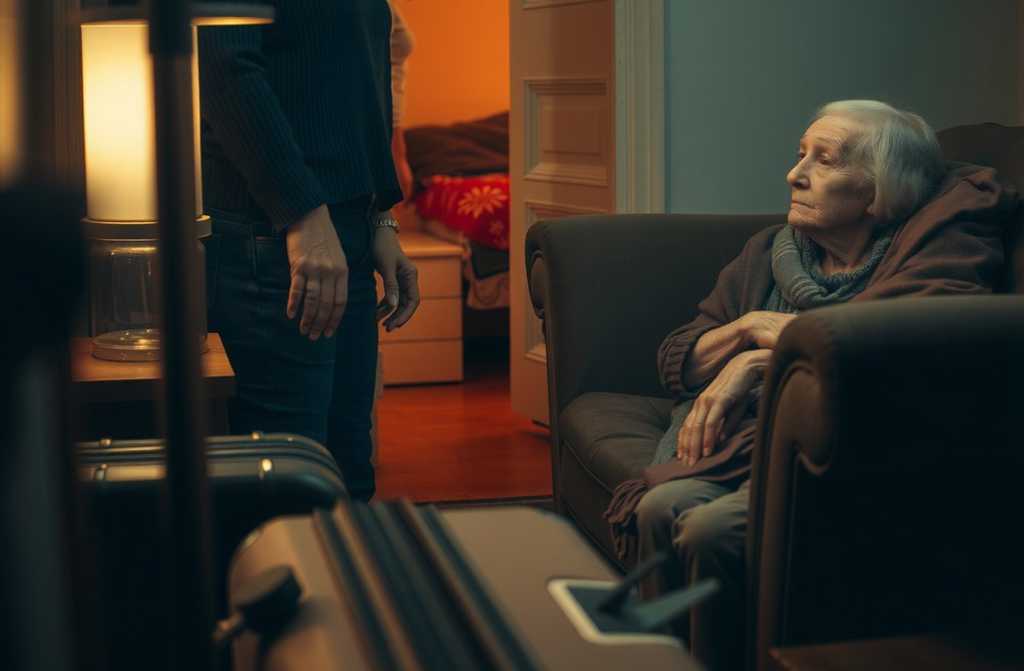
The day after my husbands funeral, my mother-in-law threw me out of her house with my two young children, even though it was the middle of winter and we had nowhere to go. Fifteen years later, this woman has suddenly reappeared in my life.
Even now, I sometimes wake up at night to the echo of a phrase. It rings in my ears so clearly, it feels as if someone is leaning over my bed, whispering.
Take your children and leave. I dont want anyone elses children here.
I am forty-three now. I work as an accountant at a construction company. I have two childrenmy daughter Emily and my son Oliver. The three of us share a modest flat on the edge of town.
Fifteen years ago, it felt as though my life simply froze. My husband, William, was killed in a car crash. It happened in winter.
That night, Oliver had a raging fever. All the local chemists were shut, so I asked William to drive to the all-night pharmacy in the city centre. He left in the car and never came back. His car skidded off the road and hit a lamppost. The doctors said it was instant.
The funeral passed in a blur. I remember almost nothing, except for the day after.
Wed been living in his mothers house, with Margaret. She had never been particularly fond of me, but tolerated me for her sons sake. That evening, she came into the kitchen, where I sat alone. Her face was red from crying, but her eyes were icy.
She looked right at me and told me it was my fault her son was gone. She kept repeating that Id sent him out on dangerous roads late at night, just because our son needed medicine.
I tried to say how sick Oliver was, but she wouldnt hear any of it. And then she spoke the words I still hear in my sleep.
She ordered me to pack up and leave, taking the children with me. Emily was five at the time. Oliver was three. I didnt argue or beg her to reconsider. I simply packed our things, bundled up the children and left.
It was December, bitterly cold, with darkness settling early. Emily held my hand and said nothing. I carried Oliver in my arms.
That night was when I noticed my first grey hair. I never imagined, as I left Margarets house, that fifteen years later I would see her again. Or that it would happen as it did
I shared the next part of my story in a comment.
Fifteen years pass.
One day, I receive a call from an old neighbour of Margarets. She tells me Margaret is in hospital after a stroke and needs someone to look after her. Her other son has long since moved abroad and isnt answering her calls.
That evening, I tell the children.
Emily immediately says I shouldnt even consider it. She reminds me how we were thrown out onto the street in winter, how we were forced to sleep at the station because there was nowhere else to go.
Oliver listens quietly, then says that whatever I decide, hell support me.
I cant sleep that night, turning it over and over in my mind. The next day, I go to the hospital.
Margaret is in a ward with several others. The once-powerful, commanding woman is now small and frail. She can barely move the right side of her body.
Her eyes open and she recognises me. We sit together in silence for a long time.
I tell her that I know about her illness and want to know whether, once shes discharged, she wants to go home or into a care home. Quietly, she says she would rather go home.
A few days later, I visit her again and tell her I forgave her a long time ago.
Margaret stares at me for ages, then murmurs that perhaps I have, but she cannot forgive herself. She tells me that she knows what she did, and understands that my childrenher grandchildrenhave every right to hate her.
She says she has lived with the guilt every single day for fifteen years, haunted by the memory of that night.
I listen in silence.
Youll come and stay with us, I say gently. With your grandchildren.
Margaret can hardly believe it, asking why I would do that after everything.
I dont want to live with hatred for the rest of my life the way youve lived with your guilt, I tell her quietly.
When Margaret moves in, things are tense. Emily barely speaks to her for weeks; Oliver remains distant and cold.
Old wounds dont vanish overnight. But, little by little, the household grows quieter. Margaret starts speaking to the children now and then, sometimes asking for forgiveness, always thanking them for their help.
I cant say if they will ever completely forget the past. But one evening, I notice Emily making tea for Margaret and sitting quietly with her longer than before.
In that moment, it dawns on me: maybe, just maybe, we are giving ourselves the chance to begin again.





