
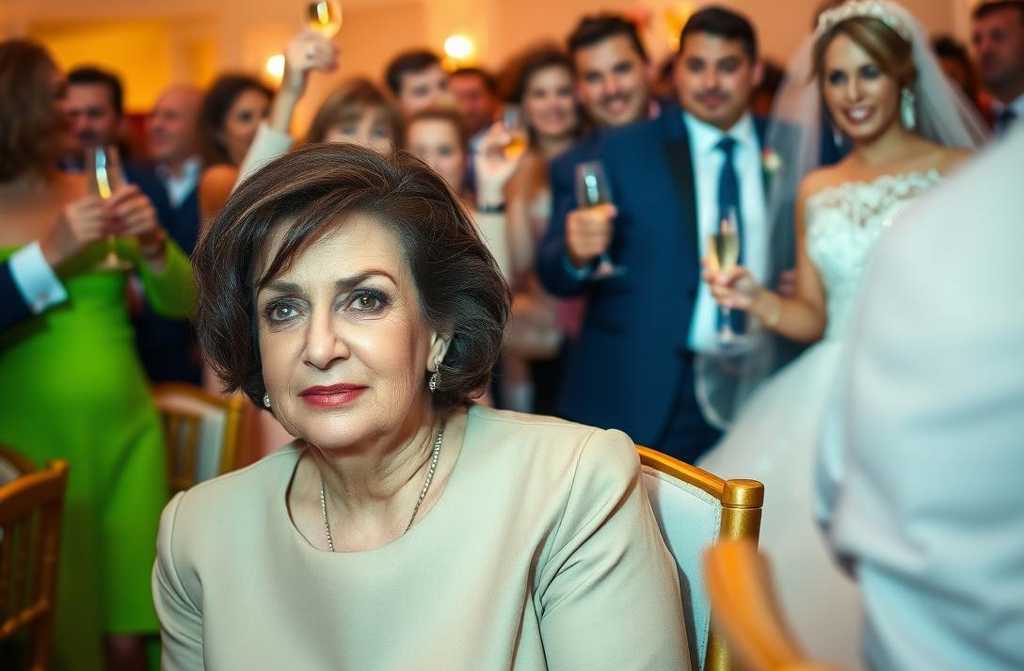
The mother-in-law was sobbing uncontrollably right there at the wedding. Only she knew why.
The crowd of guests cheered “Kiss!” while clapping their hands, champagne fizzing in their glasses, as the groom shyly pecked the bride’s cheek. Then, as if following a script, they ducked under her veil for the obligatory passionate kiss—overacted, awkward, almost theatrical. I saw it all. There was no spark between them, the kind that blooms into real intimacy. They giggled, whispered—like actors in someone else’s wedding.
My best friend, Margaret, was marrying off her only daughter, Harriet. She fussed, fretted, and wiped her palms on her dress every other minute. When the guests settled at their tables, she tugged my sleeve with a frown.
“Look at the mother of the groom. Acting like it’s a funeral, not a wedding.”
I glanced around. I’d never met the groom’s mother before and didn’t even know which guest she was—until Margaret pointed out the woman in a grey dress with silver embroidery. She sat alone at the far table, face grim, as if she’d just been betrayed. Head bowed, she dabbed her eyes with a handkerchief. Her lips trembled, each breath heavy with pain, and even I felt a pang in my chest.
“Maybe she’s unwell?” I suggested, trying to be diplomatic.
“Unwell? Nonsense!” Margaret scoffed. “She’s worried about her flat! Thinks Harriet will move in and never leave. Her son inherited his gran’s three-bed in Surrey—now she’s convinced Harriet’s after it.”
“You’re jumping the gun. They’re not even married yet, and you’re already divvying up property,” I joked, but the tension didn’t lift.
I kept watching the woman. While guests laughed, ate, toasted—she didn’t touch the canapés or the champagne. She kept her head down. Didn’t even glance at her son, the man who should have been her pride that night.
When the room erupted with another “Kiss!”, she turned sharply to the window, lips pressed so tight they lost color. I couldn’t take it anymore and quietly approached her.
“Pardon me—you seem upset. Is everything all right?”
She looked up. Tears welled in her eyes—not from weakness, but deep, worn pain.
“I can’t pretend,” she whispered. “Forgive me, but this—all of it—is a sham. My son… he doesn’t love this girl. Harriet’s sweet, kind. She’s happy—blind to the truth. But him? He’s marrying to spite his ex.”
I froze. I hadn’t expected such raw honesty.
“That can’t be… Are you sure?”
“He told me himself. Wanted to show his ex how ‘happy’ he is. I begged him, shouted—he wouldn’t listen. Thinks hurting others will heal his own pain. And that girl… she’s glowing, believes in love with all her heart. But him? He’s vengeful. And it sickens me.”
“Maybe things will change? People grow into love…”
“I wish I could believe that,” she said softly. “But my conscience won’t let me. I pity her. So much. And my son… he’s a stranger now.”
I returned to my table in silence. Said nothing to Margaret. But two days later, she called.
“Harriet’s come home. Packed her things, won’t say a word. No tears, no shouting—just silence. I don’t understand. Everything was perfect!”
“I’m on my way,” I said shortly and hung up.
I gripped the steering wheel until my knuckles whitened. My heart ached for Harriet—but more for that mother-in-law. For the woman who knew her son was breaking someone’s life and couldn’t stop it. Margaret and Harriet would heal. Move on. Find love again.
But her? She’d remember. The day her son treated love like a prop. The day he married—not for love, but revenge. The day she alone didn’t clap. Because she couldn’t. Because she knew.





