
**The Song That Never Made the Airwaves**
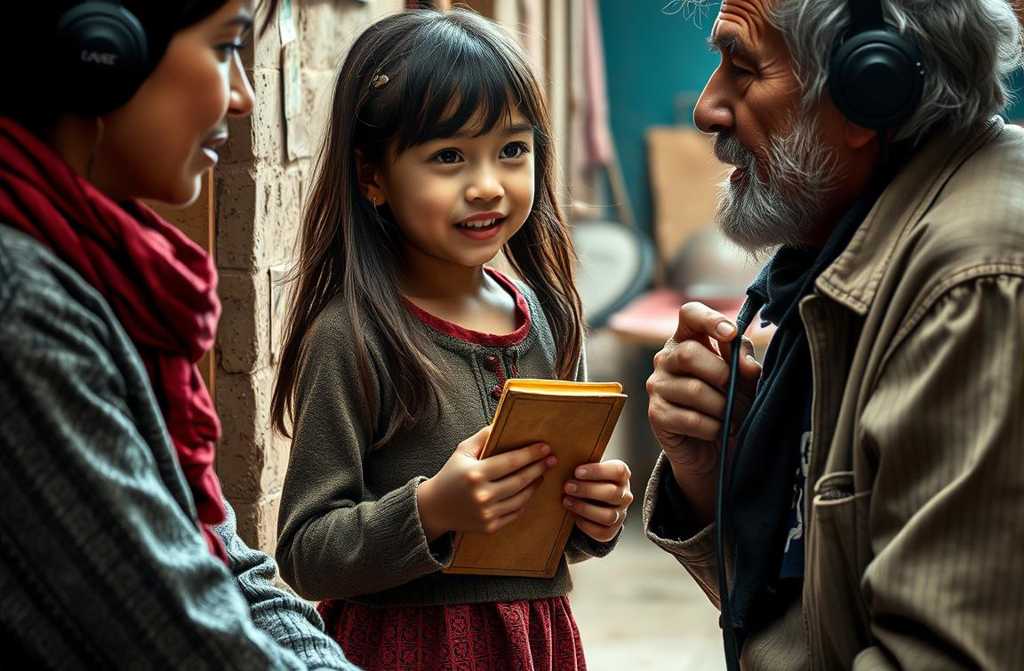
When Matilda first stepped through the door of the local community radio station, she carried a frayed backpack, a notebook stuffed with crumpled pages, and a dream that seemed to weigh more than all her seventeen years put together. Her voice carried the weariness and strength of generations of women before herwomen whod loved, worked, wept, and laughed in silence, unnoticed by the world.
Id like to record a song, she said firmly, dropping her bag and finally letting her shoulders relax after days of hauling around hope and heartache.
The presentera grey-moustached man who looked like hed been broadcasting since the invention of the wirelesseyed her sceptically. His office was cluttered with yellowing posters, stacks of paper, and an ancient radio humming quietly in the background.
This isnt a proper recording studio, love, he said. We just do local news, community chats, and the odd traffic update.
Thats fine, Matilda replied, her voice steady. I dont want fame. I just want my village to hear me.
Matilda came from a rural corner of England where women didnt sing in publicnot because they couldnt, but because tradition had quietly decided it wasnt their place. Her mother had passed young, her father had vanished into the sprawl of London, and shed grown up between her grandfathers crackly old radio and the birdsong in the fields. Thats where she learned to turn sadness into melody and silence into words. Her fingers knew how to write before they knew much else, and her voice was an instrument no one had bothered to listen tountil now.
Whats your song about? the presenter asked, curiosity creeping into his tone.
Its about a woman who doesnt shout but doesnt stay quiet either, she said, glancing down as if confessing a secret.
He led her to a corner where they recorded community notices, adjusted the microphone, and nodded for her to begin. Matilda closed her eyes and, for the first time in front of a mic, sang with her whole heart.
She sang for the girls whod left school too soon, for the mothers whose hands were rough from dawn-till-dusk work, for the grandmothers who knew the names of every healing herb but had never owned a book, for her little sister whod already started asking why the boys got bigger portions and better chances.
The song had no catchy chorus, no flashy beats, none of the polish demanded by commercial radio. But it had truthand truth, like rain seeping into stone, slipped into every crack, touching everyone who heard it.
The presenter sat in silence long after she finished, stunned by the power that had come from a girl who looked so small, so ordinary.
I cant put this online, he said finally. But Ill play it tomorrow at eight.
Matilda smiled, feeling lighter than she had in years.
Thats enough, she said. And for the first time, she felt her voice had found a home.
The next morning, in village kitchens, corner shops, and muddy farm lanes, her voice rang out. No one knew who she was, but they felt she was theirsas if shed reached inside and stirred memories theyd forgotten they had. A baker wiping flour from her hands cried silently into her dough. A mechanics boy froze mid-wipe, rag dangling from his fingers. An old schoolteacher scribbled the lyrics into his notebook like hed been handed a message from the universe.
A few grumbled: Since when do lasses preach at us through songs?
But no one could unhear what had already been sung with soul. Matildas song never made it to Spotify, never had a music video, never won awards. Yet it shifted conversations, opened doors, planted questionsand kindness.
When the station played it a third time, a caller from the next village asked: Theres a girl here who sings too. Can she come?
And so, quietly, without fanfare, an invisible chorus grew. An army of gentle voicesgirls who finally felt they could sing, not for fame, not for competition, but because they deserved to be heard.
Matilda began receiving letterscrayon flowers, clumsily written notes, scraps of paper filled with dreams. Each one reminded her that her voice had crossed lines she hadnt known existed.
Even the presenter, once so doubtful, became her ally. Whenever she visited, hed switch off the radio, listen intently, and offer advicenot to make her famous, but to make her message clearer.
Years passed. Those village girls started gathering in schoolyards and village halls, singing together, weaving new verses from their own stories. Laughter tangled with tears, strength rose where silence had been.
The village changedslowly. People talked more about fairness, about chances, about respect. Girls didnt bite their tongues anymore; mothers sang at bake sales; grandmothers taught reading with pride. Boys learned to listen.
Matilda kept singing, but now she had a chorus behind herinvisible at first, then too loud to ignore. What began as a song that never made the airwaves became a quiet revolution, unnamed but undeniable.
Decades later, when Matilda returned to the station, the presenterolder, greyergreeted her with a grin.
Never thought your song would do all this, he said. Now the whole place is full of voices. Girls, mums, grandmas all singing, all listening.
Matilda smiled. She looked at the microphone shed used all those years ago and thought of the lives it had touched. Her song hadnt needed social media, cameras, or applause. It just needed one heart willing to singand another willing to hear.
Because sometimes, what never makes the radio is exactly what we need to hear.
And in every corner of the villagein every pub, every school, every rain-dappled fieldthe song lived on. Children grew up humming it. Women sang it while kneading bread or pulling weeds. And if a stranger ever asked about it, theyd be told:
Listen close. This is the song that reminds us who we are.
A song that never needed the airwaves to be heard by everyone. A song that began with one girls courage and became the echo of a thousand voices.





