
The Window Where No One Waits Anymore
He didn’t notice it straight away, but something deep down told him—this wasn’t quite right. Like a room ever so slightly tilted, a chair uneven, and any moment you might lose your balance. Nothing obvious, just a tiny crack in reality. He noticed it in spring—in the window across the way. A small fifth-floor kitchen where the light flicked on at exactly eight every evening. She’d step out barefoot, in a loose jumper, holding a mug like the cold didn’t touch her, like the ground beneath her was all she’d ever known. She’d sit at the table, knees hugged to her chest, staring at her laptop screen for ages. Sometimes she’d laugh, tipping her head back, other times she’d wipe tears with her sleeve—never looking away, as if pain was just another habit, like breathing. Nothing in her movements was for show—just life. Quiet, real.
She wasn’t beautiful by glossy magazine standards, but there was something about her—something that made him wait for those evenings. Like waiting for the weather report, not for the forecast, but just to hear the voice. He lived alone. Two years since the divorce, and the silence in his flat had become almost solid—creeping into his bed, his tea, the keys no one else ever tapped. Food came delivered. Conversations happened in texts, never face-to-face. His mum called on Sundays, saying, “You’re forty-three now, love—you can’t go on like this.” And he’d nod, smile into the phone, tap the screen just to end the call.
In spring, she watched the screen. In summer, she read. In autumn, she wrote. Always at that same table. In that same jumper. And the cat—curled on the windowsill like another ritual, like the curtains, the mug, the soft yellow light. For nine months, she never once looked his way. Not a single glance. As if she knew he was watching—but offered no sign. He waited. Every evening, hoping maybe she’d turn. Not to say hello. Just to show—that she saw him too.
Then, in January, the light never came on.
He waited. One evening. Two. A week. Nothing. Curtains drawn. No cat. Gone, like a book ripped mid-sentence. He didn’t know what to do. Had no right—but couldn’t just accept it. On the thirteenth day, he went over. Crossed the courtyard. Climbed the stairs. Knocked.
A different woman answered. Young. Startled. Earphones dangling.
“Sorry… there was a woman who lived here… late thirties… had a cat… blonde?”
“Oh. Emily?” She pulled out an earbud. “She passed. Last December. Was ill for a while. Hospital. Think someone took the cat. I’ve been here since then.”
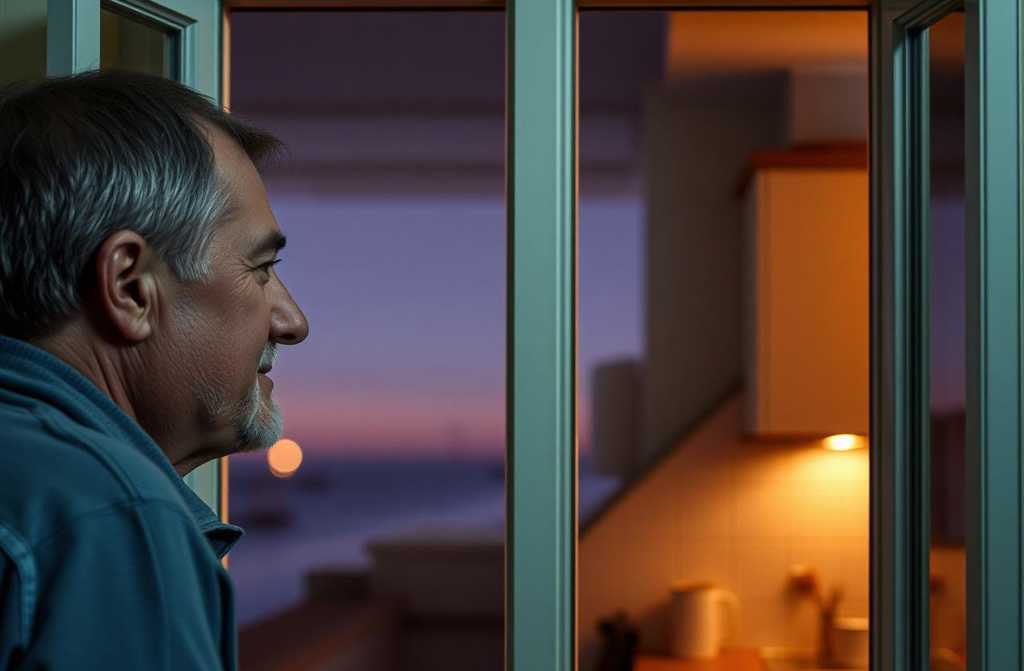
He thanked her. Left. Slowly. Like the silence thickened with every step. The courtyard felt hollow, like the trees knew. He went back home. Sat by the window. Only then did he realise—his hands were shaking. Because there was nothing left to wait for.
Now, in the evenings, fairy lights glowed over there. Warm. Cheerful. Patterns dancing on the walls. A different woman, different mugs, a different life. Guitar. Laughter. A voice unfamiliar. And still, he waited—maybe she’d appear. Sit down. Pull her knees up. And maybe, just once… look his way.
She never did.
Come spring, he turned on his desk lamp for the first time. Not because it was dark. Just in case—maybe someone was watching from the other side now. So he sat there. With a book. With a mug. In an old jumper that smelled of time and silence.
Just—so there’d be light.





