
Three Threads. Three Fates
What did she say? Vera, I didnt quite catch that, what? Irene Victoria leans forward and a little to the side, edging closer to her friend, Vera Pauline, as they walk together.
Vera starts explaining in detail what the mother and the little girl, about seven years old, who had just passed by, were talking about.
Theres some troublemaker in her school, and she told him off
Vera speaks loudly, across the whole street. Irene listens closely, not interrupting, then, glancing over her shoulder, spots the little girl and nods kindly after her.
A sweet, tidy lass, isnt she? Though a bit too clever for her own good, she concludes.
Why? Irene Victoria is surprised. She links arms with her friend and nudges her along, because the traffic lights been showing green for ages and the cars are lined up, waiting for the two elderly women to cross.
Whats that? I cant hear you, Irene, what? Vera asks again, glancing around, clutching her handbag close as she shuffles quickly onto the far pavement.
I said, why do you think shes so complicated? Irene repeats, raising her voice.
Oh, just because.
Irene Victoria sometimes cant be bothered to explain her conclusionseither from laziness or because she thinks its obvious.
The girls taken it upon herself to reform the local rascal? Tells him off and tries to put him right? No, love, it doesnt work like that Thats not the way.
Irene shakes her head to the rhythm of her thoughts, while Vera sighs. Sometimes her friends mysterious half-answers are just too much to bear. But life without Irene, in this world so changed, strange and loud, would be a puzzle too difficult to solve.
Irene Victoria and Vera Pauline are neighbours. Their homes, unusually, have doors straight onto the streetno stairs, no lifts. The women live in what once were outbuildings of an old manor, long ago owned by a dashing Dragoon, then handed down to a prominent figure in the arts. Following her husbands advice, his wife turned the main house into a grammar school, with the wings and stables given to creative folk as studios. Time chopped and churned that quiet, measured life of the manors halls. Now, the little arc-shaped rowonce the stables, funnily enoughhas been made into flats. Most residents have since moved on to sunnier, airier places, but Vera, Irene, and their friend Tanya still cling to their homes, shredding every offer to buy them out, swap with or without top-up, all with grand promises of support.
Law firms, small business owners, security companiesall consider this bit of London a prize, right by Chelsea, in the historic heart of town. Youve got the Royal Court Theatre not far off, let alone the great Chelsea Old Church, whose spire you can spot just over there! Sure, the main manors now an arts school, but theres still the old mews and cottagesyet to be handed over to reliable hands.
But these women, a little frail now, yet fiercely independent despite their years, are standing their ground. Their whole lives are herehere is where they intend to see it through.
Lets drop in on Tanya, Vera says confidently, carrying a box of cake. Well wish her happy birthday.
What? What are you saying? Vera, do look at me so I can read your lips! Irene tugs her friends sleeve. Shes embarrassed, worried, almost frightened that Vera will finally snap, shout, and leave. Of course, deafness is a frustration; Vera can only take so much.
But no, Vera calmly stops, leans closer, carefully enunciating so Irene can catch every word.
Oh yes, Tanya invited us round I remember! Vera nods. The air has cleared and on they go.
At Tanya Francess placethe poor old dear is housebound nowits her daughters birthday. Lydias not young herself and works somewhere in the city. She rarely has time to visit. The birthday do was meant for the weekend, later rescheduled. Tanya doesnt resent it.
Its my own fault, she says when the women finally sit down at the modestly laid table. And dont go saying anything about my girl, you hear me! she wags a finger, although no one would. Lydia is one of usonly good things to say about her!
Vera Pauline gives Tanyas trembling hand a gentle squeeze. Tanyas hand is dry and thin, the same hand she once used to pull weeds from the little back garden, when, after the war, they decided to grow veg behind the house. That tiny hand wielded a heavy spade in the tough soil, and later sprinkled seeds as tenderly as if stroking a chick. It was a tough time: hungry, difficult. All three girls mothersTanyas, Veras, Irenesworked in the London hospitals; the girls fended for themselves. They ate what they could find or cook. Mothers came home, bringing bread and sometimes butter, though it always tasted odd, almost like sawdust. The girls didnt grumbleeveryone was in the same boat, everywhere. But at least, they had a garden, and by some stroke of luck, managed to get seeds from a retired horticulturalist, Uncle Percy, who lived next door. Percy, cantankerous with neighbours, smoked so much the hallway stank, but he was fond of the girls in the mews. They were brimming with life and curious about everything.
Come here, Vera! he called over. These are for you girlsplant them, youll be glad. Ill show you how.
The girls doubted theyd grow anything, but Uncle Percy was true to his word. They ended up with two cabbages, some trailing cucumbers with delicate yellow blossoms, andalthough the parsley wilted outmost things came up well. Percy did raise the roof over the parsley loss, scolding about ruined crop, all down the drain! But then hed calm, hand them a bit of bread, and tell them to wipe their noses.
When this is all over, the wars over, your dads will come home, well make a garden people will envy, he promised.
But Percy didnt live to see the end. With horror, the girls watched as they took him away for burial. Loss and death were everywhere back then, but when someone dear goes, its different. And their dads never returned. Their garden they made alone.
Now, as Tanya sits creased with years in her wheelchair, Vera strokes her hand and Irene slices up some cucumber, setting out a roast for lunch. A few sherry glasses twinkle among the dishes. Tanya loves cranberry punch and takes special pride in serving ittoday, theyll toast Lydias health, Tanyas legs (which stopped working five years back), and hope winter will be kind.
Tanyas mobility was lost to a stupid accident. She went for a walk one winter, slipped, fell. It didnt seem serious; just a sore back. But next morningshe couldnt move her legs. Panic took hershe couldnt reach the phone, couldnt call a doctor or her daughter, with the receiver too far. Maybe she could have crawled to the bedside table, but lacked the strength. Age brought weight, despite once being slim. The doctors blamed hormones, prescribed pills; Tanya knew it was simply old age. Time to call things by their name, not put off the inevitable.
Tanya used to listen as Vera headed outside to feed the pigeons she had practically tamed, the rustle of her silhouette slipping past the low windowstheir little flats were barely above ground level. Which meant chilly floors in winter, almost calling for wellingtons. Everyone passing by could be seen, just like faces in a TV screen.
There goes Vera now off to the shops, she smiles to herself. Irene will emerge soon enoughshe does love a lie-in
Tanya hesitated a long time to call for help. She lay there, growing colder as October whisked away the last warmth through the cracked-open kitchen window. She was hungry and needed to use the loo.
But the friends grew worried themselves. Tanya never skipped switching on her radio or a record while having breakfast. Overslept? Not Tanya! She rose with the dawn as if wound by an inner timer.
First, Vera and Irene knocked, then the street sweeper, who, mangling his words, asked if she needed help, and then declared the ladies insisted he break the door down.
The flimsy old wooden door soon gave way to well-aimed shoulder barges, the street sweeper tumbling in like a bowling ball, followed by slightly deaf Irene and then Vera.
Tanya! Where are you! Come on, out with it, whats happened! Irene Victoria shouted, anxiety and fear making her almost deaf.
They found Tanya on the floor and quickly sent the street sweeper away.
Oh, what shame! Dont look at me, girls, go on, leave me be! Tanya moaned, but Veras nimble hands were already changing the sheets, washing, dressing her. Vera was used to itshed nursed a paralysed husband, a restorer whod fallen from scaffolding, and had buried him eight years ago, with a mix of grief and relief.
He suffered greatly, she said at the grave. Now at last, hes at peace. Up there, shed nod upwards, hell be right as rain again.
Why should Veras generally prickly, small-minded husband be the one to get heaven, the friends never quite understood, but didnt argue. Let her hope
Tanya was taken to hospital where the news was grim. She cried all night, telling the ladies on the ward she deserved it.
But for what? they wondered.
Oh, there were reasons. At 19, Tanya had a daughter, a lovely ginger-haired girl, from a grand romance with a boy in the parallel class. They courted, went walking, did homework together, and nature took its course. After leaving school, Tanya realised she was pregnant. Her mother was furious, sent her to the surgeryperhaps they can fix it. But there was nothing to be done. Youll just have to have the baby, said the doctors. Tanyas mum tried to bribe them to take on that grievous business, but she was too late. Tanya ran off to her aunts in the country, where she brought Lydia into the world and worked on a farm for two years. Her mother visited, getting used to her granddaughter, suspicious at first.
And the father? He washed his hands of the entire situation. Why ruin a promising futureuniversity, career, even diplomatic postings? Tanya and Lydia were inconvenient. Please dont involve our respectable family in your mishaps!
When Lydia turned two and a half, her grandmother brought her and Tanya back to the London flat. Vera and Irene were the most wonderful aunties. Lydia bounced between flats, always watched over by three pairs of eyesgrannys, Veras (still sharp back then), and Ireneswho was impossibly kind.
It bemused the women that, only yesterday, Tanya was just a girl, and suddenly she was a mother, privy to mysteries unknown to othersa kind of grown-up status. But soon enough, they saw, no, she was still just Tanya, only a bit wearier.
Tanya graduated by correspondence, raised Lydia, mourned her mother when Lydia was nine.
Once, a foreign delegation visited the printworks, bringing alonga dashing Frenchman. No busybody from the Foreign Office, no warning, could stop him nor Tanya, though the authorities tried. But love is headstrong.
Vera and Irene could only gape when Pierre would descend upon Tanya with gifts, dresses, dolls for Lydia, plates and teacups. And then, he proposed she come with him.
Hes got a real manor house outside Paris, rooms and everythingfor me too! Tanya would gush.
And Lydia? Vera immediately asked.
Shell stay here for now. Ill get settled and send for her, Tanya made excuses, her head spinning with imagined wedding marches, unable to hear her friends warnings.
She wont forgive you, Vera pronounced, setting down her cup and walking out. Irene lingered, then left too. Tanya only shook her head: the girls were jealous, thats all. Lydia would understandshed join her mother soon enough, all in good time!
Mum, wheres my ticket? Lydia asked seriously when she came home from school. And dont I need to explain something to my teacher?
Youre staying, Lydia. Itd be too much for you right now. Ill come back for you, Tanyas voice faltered as a vasePierres giftshattered against the floor. Lydia hurled it, then crockery followed.
Later, Lydia told Aunt Vera that day felt like shed been suffocated, like someone had pressed her throat tight until she couldnt breathe. Clawing at the air, all blackness and choking.
Your mum will be back. Youll seeshe cant live without you. Then youll have to choose: forgive her or not, Vera said, once the first sobs had passed. No ones judging. Just remember, weve all been tempted by the promise of a bright life after too much grey. Its just a weakness.
Vera herself once learned that lesson the hard waya woman had offered her a genuine fur hat at a bargain on the street. Vera tried it on, paid, ran home, only to find scraps of fabric in the bag and no hat at alla longing for luxury, dashed again.
Tanya left. Lydia didnt see her off at the station, never replied to letters. Tanya learned about her daughter through brief updates from friends.
A half-year lateran eternity to a teenagerTanya returned. Lydia hated her, tossed every gift in the bin.
Well, did you at least get married? Irene asked quietly.
No, Tanya shook her head. Pierres family said a single mother was out of the question; suggested leaving Lydia behinda trifle, they called it. When I realised Pierre agreed, I honestly just spat on their polished floor and came home. Do you think Lydia will ever forgive me?
Irene shrugged, fell silent, then said, Perhaps, when shes older; when shes suffered herself, and loved. Maybe then shell understand. But Tanya, I wont excuse you. It was foolish and cruel.
By then, Vera and Irene were married, both had sons, neither would have dreamed of leaving even for a weekend.
Thats the sin Tanya believes shes been punished forthe reason her body remains half paralysed.
Lydia hired a carer for her mother, but it was all business and no warmth. Tanya kept quiet; she needed help. Once, the carer spilled boiling water on her by accident; Tanya screamed in pain. Blistering, she was left alone in the bath. The paper-thin walls let every sound carry; Vera came runningby now, both friends had keys to Tanyas flat. They saved her, nursed her better, and Vera became her regular helper.
No, really! I cant accept this! Its shameful! protested Tanya. At least let me pay you!
Dont be daft! Vera hissed. Spend your money on something sensible! Youve gone odd, Tanya!
After all theyd been through togetherqueueing at the GPs, sharing the local baths, dodging bombs and covering one anotherhow could money come between them?
The matter closed. Vera helped Tanya, then would take Irene out for walks. Irene could have wandered under a car or tripped over a scooter; she wasnt safe alone since her hearing diminished. Vera linked arms and led her along Chelseas streets, past the embankment, or around the back lanesnever the shortest but always the most charming way, stopping in quiet gardens, watching kids play, remembering their own sons tearing their trousers climbing the lime trees, which filled the air with scent each summer. Irene, especially, liked to gather linden flowers, drying and storing them with care. The trio held their annual linden tea evening at Irenes, sitting round her tiny kitchen table, polishing off homemade delicacies inspired (or derailed) by trendy cookbooks, while their boys sabotaged the recipes into something homegrownbut always delicious.
Theyd talk, sip tea, and reminisce, watching the garden below the window, the linden flowers like ballerinas spinning and infusing the air with magic.
Tanya would share tales of Paris, Vera her encounters with artists through her work at the museum, and Ireneworking at the old rubber workswas increasingly quiet. She was already losing her hearing, worried her friends would notice.
Shed suffered during the Blitz, once almost concussed by a bomb blast. The pain had lingeredher ears, her head like a balloon, taut and close to bursting. As a child, shed press her head down on the floor at home, frightened that if she didnt, her head would split. Her mother was never home, so she had to save herself.
At the factory, Irene met her future husband; he was twelve years her senior.
Why would you want me, a battered old man? hed turn away, ashamed of his burn marks. Youll soon find yourself a young handsome lad and Ill only be hurt. I couldnt bear it, Irene
When they married and spent their first night togetherIrene was strict, not letting anyone near her beforeIvan kept checking she was real, not just a dream. He lay awake until dawn, listening to every sound: the clock on the kitchen wall, a mouse under the floorboards, summer rain on the roof, Irene breathing. He could distinguish a hundred notes in her breath. Only then did he fall asleep, while Irene smiled, thinking her turn had come to watch over him. She wasnt bothered by the burn on his face, and the grey at his temples rather suited himbesides, his eyes still twinkled like a schoolboys.
Ivan was Irenes one and only love. The heavens took him earlyonly fifty-five. He lay down at night and never woke up. He left quietly and peacefully. Irene stood over him, tears falling on his cheek as she wiped them away, fearing they might sting.
Their son, George, brought in the neighbours; they stayed with Irene, comforting both mother and boy. It was through that storm of grief that Lydia, terrified by such overwhelming sorrow so close at hand, for the first time realised how dear her own mother was to her. Slowly, a drop at a time, she started to forgive, to move closerback to her Tanya, her failed Parisian.
Veras husband was never a favourite among the friends. As Tanya put it, smooth talker, rough sleeper. Always scheming, always making promises and excuses: We really need new curtainsthese ones are in tatters. Yes, but later, were saving for a fridge.
Then when it was Veras turn for the fridge, it was too dear for him, so he threw away his ticket, moaned about the cost. Vera waited at home, the gap cleared, socket ready. But Andrew came back, rattled and raging, banging the table, I wont allow I know all about it I dont agree
Why did you marry him? asked Irene quietly, after hed also refused her a wardrobe.
I was afraid no one else would look at me. You and Tanya are beautiful, but me? Im like a mouse. Whod want me? Vera sobbed, clever, sweet Verapretty, but painfully shy.
Divorce him! the friends chorused. You cant keep putting up with this!
I cant. We have a son. You dont break a family just because I was wrong about the man. Michael likes his dad, they get on. He wouldnt understand. No, girls, no.
Irene and Tanya rolled their eyes, tsked and scolded Andrew, sticking to their guns. But suddenly, Vera changedshe blossomed, smiling, walking along the street like a swan on a lake.
Whats happened? demanded Irene. How can you be so cheerful, with a husband like that?
Blushing, Vera waved a hand, then quietly confessed.
Ive fallen in love. Theres a wonderful man looking after me. Now I know what a real man is
She wept, and Irene simply shook her head. Vera, with her principles, would never leave Andrew, but would torture herself, and the new man too.
The romance lasted a long timewell into Michaels university days. When Andrew, her husband, had a stroke at work and never rose again, Vera became his carer, blaming herself for his state, asking his forgiveness as he only muttered in reply.
When he finally passed, Veras other proposed to hershe refused.
Michael wouldnt understand. Itd feel like betrayal. I already owe Andrew too much.
The man left London for goodnot saying where, never writing or calling. He couldnt coax Vera from her cocoon of guilt and regretshame, as he was a good man. He even managed to get her the fridge, furniture, and things for Michael via his contacts, but never became master of her home. A pity.
Years passed. The neighbours grew older, as did the curved row of homes embracing the courtyard, lined with towering limes. At the arts school, talents flourished; future musicians and actors rehearsed. Their first steps and uncertain performances were cheered by the three old ladies, who never missed open concerts.
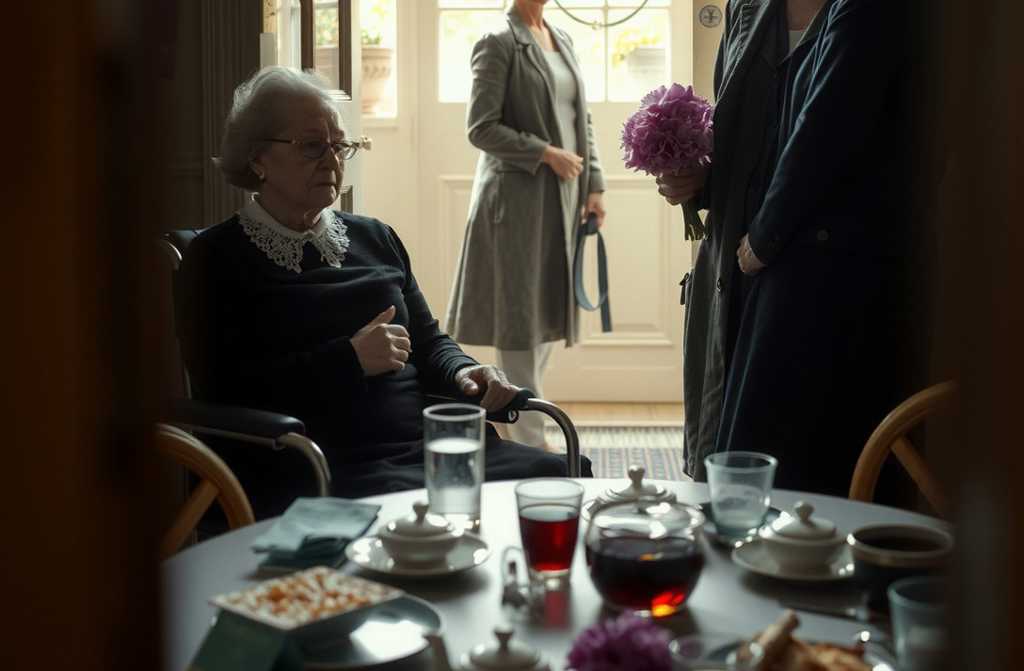
Tanya, wheelchair-bound in a velvet dress with a lacy white collar, Vera upright and elegant in her chocolate brown embroidered gown and matching shoes, and Irenemore for company, barely hearing, but delighted by the sight of youthmodestly dressed in a grey (sometimes black) suit and sensible (not stylish) boots, holding a faded handbag and an expression of deep contentment that often had her mistaken for some incognito piano diva. And all three, lacy glovesa nod to Tanyas Parisian days.
Its time to stop blaming yourself, Tanya! Vera said, slicing the cake and serving it. Lydias grown nowa mother, a wife herself. She knows what love is. She may hate your Pierre, and rightly so, but she loves you.
Yes! Absolutely! Irene nodded. Youth is cruel, all black-and-white. Later, you see shades of grey. Lydia was hurt, but shes grown, re-evaluated. Though Pierrehes a right rotter
They filled the kettle again. It wasnt an old-fashioned copper, with smoke and resin and woodscent; just an electric one, but it had its own charm, its own warmth. It reflected the faces of mothers now old. It was part of the familys heritage, polished to a shine.
Outside, rain swept the yellow leaves. The first frosts threatened: marigolds in the beds would blacken, calendula leaves curl. Autumn had arrived, but it still clung to its warmth.
A car rolled into the courtyard, tyres whispering on wet tarmac. Headlamps flashed then faded. Quick footsteps clipped along the path to the door. Tanya froze, listening.
The bell rang. Vera opened up, letting Lydia in. She kissed her, nodding toward the kitchen.
Shes been waiting. Go on, girl, go! Happy birthday, you sweetheart!
Lydia brought her mum a bouquet of dahliasdeep purple with yellow centres. The flowers hid the birthday girl, who sat weepingstill not believing shes been forgiven, or perhaps unable to forgive herself but also overjoyed. Her own daughter is born today, a tiny ginger kitten swaddled in pink. Happinesseldest to youngest in one day.
If you peep into the little arc house behind the old manor on Chelsea right now, youll see three lovely old ladies laughing, drinking tea, reminiscing and waitingfor children, grandchildren, great-grandchildrenall those who make life full and vibrant. Soon theyll slip away, but for now, nothing is more precious than time spent with family, holding them close. Its priceless.





