
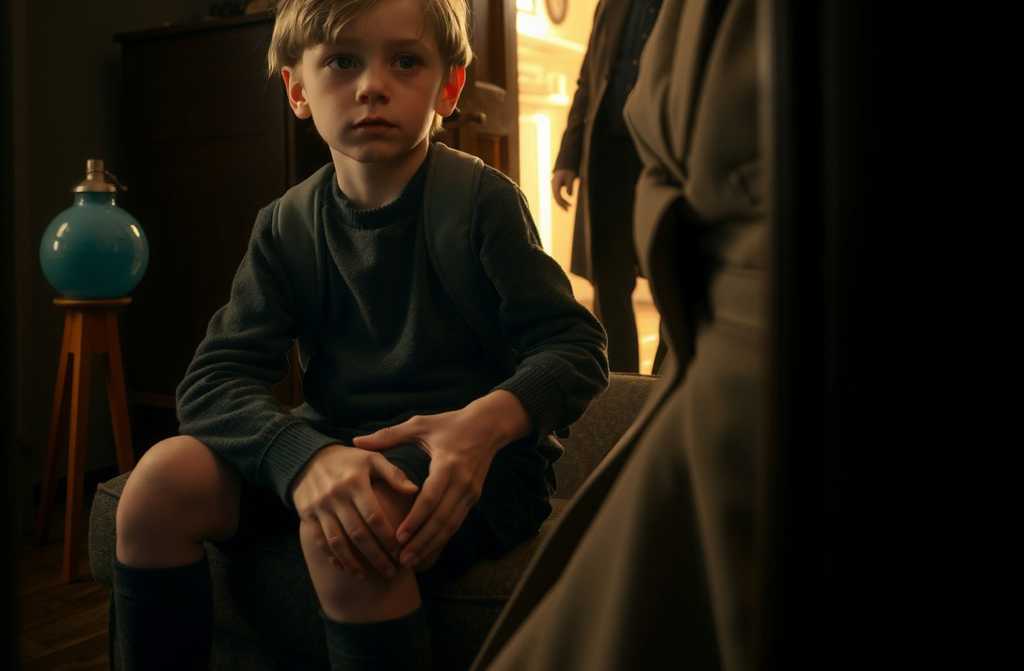
We adopted a little boy whod already been sent back to the foster system by three different families for being, as they delicately put it, far too much trouble.
Most people thought wed well and truly lost the plot.
But years later, after we lost everything, he was the only one who stayed behind.
They warned us he wouldnt last with us.
The social worker, Ms. Barnes, spoke in that soft, apologetic manner mastered by those who regularly deliver bad news with a smile. She adjusted a hefty file that looked as though it had done several circuits around London.
Outside, the sun was shining over the childrens home in Nottingham. You could hear the whirr of the Number 45 bus outside and a distant Mind how you go! from a street sweeper.
Three families have already tried, she said, glancing down at her notes. All of them sent him back, Im afraid.
My husband, Ian, frowned.
Whys that, then?
Ms. Barnes took a moment, the kind of pause you hear in terrible phone interviews on Radio 4.
They say hes difficult. He doesnt talk much. Doesnt listen straight away. Doesnt like being hugged. And he doesnt cry, even when youd expect it.
She paused, as though she was hoping wed decide this was all too much bother.
Its as if hes just always expecting to be sent away again.
I looked at the boy perched on a small plastic chair in the corner of the room. His hands were pressed to his knees, his whole frame hunched up like he was trying to take up as little space as humanly possible.
He wasnt playing.
He wasnt asking anything.
He wasnt even gawping at the pictures on the wall.
He was just waiting.
When he caught my eye, he didnt smile.
But he didnt flinch or look away, either.
Something inside me wobbled.
We were told to really think things through.
There were plenty of other, less complicated children.
Why make life harder for ourselves?
Even my ever-emotional sister, Penelope, rang me that evening.
Alice, do think about it youre not exactly twenty-five anymore. Why take all this on? Sometimes these kids just grow up resenting everyone.
While she was nattering, I glanced around our little kitchen in Leicester.
The tiles were cracked.
We had a table for four, though it was rarely ever crowded.
The whole place felt too tidy.
Too silent.
Too empty.
Precisely, I said. Because nobody else wants to choose him.
Ian didnt say a word that night.
He just sat beside me in bed, squeezed my hand, then sighed.
Are we sure?
No, I admitted. But I know if we leave him, someone else will just send him back again.
And that was that.
That became Henrys first day with us.
The first few months? Well, it felt like wed adopted a guest, not a son.
Henry never touched anything without permission.
There were no tantrums.
No broken ornaments.
No cheeky pleas for biscuits.
He never asked for a bedtime story.
Or a piggyback.
And that was the worst bit.
One afternoon, while I fussed over a bubbling pot of baked beans, I tried to draw him out.
Do you want a hand?
He shook his head.
Would you like to watch Blue Peter? (This was a litmus test in our house.)
Another head shake.
What do you want to do?
He stared at me for ages before quietly replying, Whatever you think.
And then, heartbreakingly, Miss.
Not Mum.
Just another adult passing through, like all the rest.
One morning, just after dawn, I finally realised how much he was dreading the next move.
I woke up to a noise in the lounge. I panicked, thinking someone had broken in. Ian leapt out of bed, wielding the broom as a makeshift cricket bat.
There was Henry, sitting bolt upright on the sofa.
Fully dressed.
Shoes on.
Backpack in his lap, gripped so tight his knuckles were white.
What are you doing, love? I whispered.
He didnt answer.
Why are you awake?
He just stared, wide-eyed and warylike a tiny hedgehog whod learned life was best spent rolled in a ball.
Im ready, he said.
Ready for what?
In case you want me to go.
I felt my heart snap.
Youre not going anywhere.
But he didnt look convinced.
And who could blame him? No one had kept that promise before.
Years trickled by.
Slowly, slowly things began to shift.
Tiny things at first. One afternoon as I stood washing up, Henry sidled in and left a piece of paper on the table.
Three stick figures.
A woman, a man, and a boy between them.
On top, shaky letters spelled one word: Family.
I held it for ages.
Long enough for salty tears to blot the ink.
Ian saw it later and just nodded, quietly.
Sometimes love tiptoes in.
Like a little bit of drizzle after months of drought.
Henry never became a rowdy troublemaker.
He was never the sort of boy to drum on the walls or treat every room like a football pitch.
But he started sitting closer, sometimes while Ian fiddled about with broken kettles in the shed.
He helped me bake scones.
He started leaving little notes on the fridge.
Morning.
Ta.
Gnight.
The first time he called me Mum, it slipped out as he dashed through the door, clutching a spelling certificate.
Mum
He froze, horrified, as if hed just dropped the Queens best china.
But I just hugged him, properly.
And at last, Henry hugged back.
Not that everything was smooth. There were nightmares and odd questions:
Do people leave when you get old?
Do parents stop loving their children?
Can you return me if Im bad?
Every time, we answered, No.
And then lived it out, over and over.
Turns out, love isnt a single grand gesture.
Its built across thousands of boring, ordinary days.
Henry grew into a thoughtful teen. His teachers said he had an old soul. He didnt say much, but when he did, people listened.
By eighteen, he was the sort of young man neighbours would trust with a spare key.
Hed mend old fences for Mrs. Patel next door.
Hed walk Mr. Evans home from the pub.
He volunteered at the Nottingham childrens homethe very place wed met him.
Sometimes hed simply sit with the new, silent kids.
He understood that sometimes, not leaving is the greatest kindness.
But life, as it does, gave us a comprehensive drubbing.
When Henry turned twenty-three, Ians building firm hit the skids.
His business partner legged it. Debts amassed.
Within a year, we were turfed out of our house.
Garage, gone.
Savings, vanished.
We ended up in a cramped rented flat with a dubious heater.
Our friends melted away.
Relatives avoided us at Tesco.
Failure makes everyone awkwardits catching.
One night, Ian sat at the wobbly kitchen table, buried under bills.
His shoulders looked weighed down with the history of English defeat.
Maybe we should send Henry away for a bit, he muttered. He deserves better than this.
Before I could rant at him, Henry walked in, just home from the Co-op night shift.
He clocked the papers instantly.
Ian forced a smile. Worry about your own future, lad.
Henry said nothing.
He just sat down and said, How much?
Ian frowned, Pardon?
How much do we owe?
Far too much, Ian sighed.
Henry nodded. Then he disappeared into his room and returned with a battered envelope.
He handed over savings. Scholarship money.
Every penny of his part-time wages.
For when you needed me, he muttered.
Same phrase. Same quiet voice.
But this time, it didnt mean escape.
Ian hid his face.
Hed only cried once beforethe day we brought Henry home.
After that things didnt miraculously improve.
We still struggled.
We worked too hard.
Henry took three jobs.
He helped Ian rebuild a tiny fix-it business.
Slowlypainfullylife got less precarious.
Years later, when all was settled and Henry was asked in a local paper why he put up with us, he paused, then gave a rare, proper grin.
Because when everyone else thought I was too much trouble they chose me anyway.
And when they lost everything? pressed the reporter.
He shrugged: Well, then it was my turn to choose them.
Now Henrys thirty-two.
He runs an engineering business.
He still volunteers at the childrens home.
But the best part of his life is simple.
Every Sunday, he comes round for roast and pudding.
The table, once mournfully empty, is loud and crowded.
Ian recycles stories.
I make too much trifle.
And Henry sits between us, just like in that decades-old drawing.
Three people.
One family.
Every so often, long after everyones gone, I remember that early morning:
A little boy, shoes on, bag packed, ready to be sent away. Again.
If I could step back in time, Id kneel down and tell him, You dont have to be ready to leave anymore.
Youre finally home.And on nights when the wind howls through the streets and all the doors feel thin against the world, I tiptoe past Henrys old roomnow filled with board games for the grandchildren, and crayon masterpieces tacked haphazardly to the wall. Sometimes, I find him there, sitting cross-legged on the worn carpet, gently helping little hands build wobbly towers or mend a lopsided Lego roof. The children dont see what I dothat beneath his gentle patience is a boy who once waited to be chosen, and who, in choosing to stay, built us all a place we could never lose.
If anyone ever asks about miracles, or luck, or the quiet triumphs of ordinary love, I think of himour son who taught us the rarest gift: that real family is not about who leaves, but about who lingers, stays, and keeps the light on, no matter how many times the world tells them its easier to walk away.
In the golden hush after Sunday dinner, when the laughter fades and everyones coat is claimed, Henry always lingers a few moments longer. Before he heads home, he hugs us bothproperly, warmlyand says, as if its the most ordinary thing in the world, Love you.
And I know, in the deepest part of myself, that we were never his rescue.
He was ours.





