
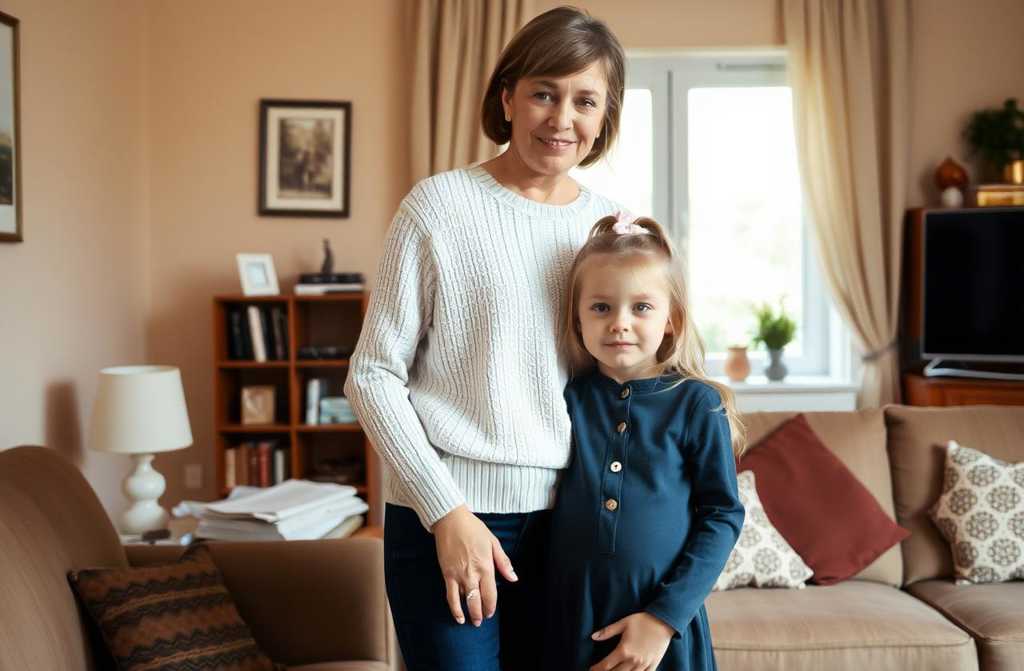
“Why do you bother with that girl? She’s not even yours!”
This is Larissa’s story—one she shared herself and allowed others to pass along. Every word is true. Every detail painfully familiar to many.
I married for the second time. My first husband, Robert, died tragically—coming home on his motorcycle, he lost control. I was twenty-six, my daughter Emily just two. We were only starting out, building our life. A mortgage weighed on me, I was on maternity leave with no job or support. Robert’s parents had passed long before, and mine lived in a village near Manchester—barely scraping by themselves.
Yet, against the odds, someone stayed by my side. It was James—my late husband’s best friend. He visited often, bringing Emily toys and fruit, helping with chores. I kept my distance at first—still grieving. But slowly, I softened. He became family. Some might judge, but a living heart yearns for life. I haven’t forgotten Robert, nor will I ever—he lives on in my daughter. But life moves forward.
A year later, James and I married. His family wasn’t pleased. His mother, Margaret, made it clear: “A woman with a child isn’t what we wanted.” But James stood firm. He insisted we live together—in their large house on the outskirts of town, with its garden and greenhouse. My flat would be rented out for extra income.
I agreed. Naively. I imagined family, support. Instead… From the first weeks, his mother ordered me around. “Wash this, mow that, weed here, cook.” Emily didn’t exist to her—not a greeting, not a glance. My girl was a ghost in that house.
I worked dawn till dusk—indoors and out. My back ached, hands calloused. Still, Margaret found fault. Then one day, I overheard something I’d never forget:
“Why do you fuss over that girl, James?” she hissed. “She’s nothing to you! Just wasting money. Have your own child—that’s what matters.”
“Mum,” he snapped, “enough! This is my family. My choice.”
I pretended not to hear. But those words sliced deep.
Later, our son was born—Ollie, the image of James. Same eyes, nose, even the dimple. Suddenly, Margaret doted. She hovered over her grandson. But Emily? Still shunned. “Don’t touch him.” “Stay away.” One day, she shoved Emily so hard she fell. That’s when I snapped.
“Enough!” I shouted. “She’s not trash, not a mistake! She’s my daughter, and you will treat her with respect!”
We said terrible things that day. Afterwards, Margaret backed off—no more cruelty, but no love either.
Then came the final straw. James lazed on the sofa when the school called: Emily had hurt her leg in PE, taken to hospital. I rushed to him.
“Come on! Emily’s hurt!”
He waved me off.
“She’s not mine. Why waste my day off? She’ll be fine.”
Disgust washed over me. I grabbed Ollie, ran to a neighbour who drove us. Thank God—just a sprain, not a break. Treatment, then home.
But home to my parents. I called my tenants: vacate my flat. We’re leaving in a week.
That evening, James rang.
“Where are you? What’s going on?”
Calmly, I replied, “We’re not coming back. I have two children. If you learn to love them both—you’re welcome. But only in my home.”
Silence. Then the line died.
What he’ll choose, I don’t know. But my choice is made: better alone than with someone who refuses to see my daughter as human.





