
In the winter of 1943, every breath in the ward turned to frost. The ancient oaks that ringed the country hospital split open with loud cracks, their enormous branches shedding heavy clumps of snow onto the rigid ground. The hospital itself was an old manor somewhere on the outskirts of Cambridge, pressed into service for the wounded. Its tall, ornate ceilings, which had once echoed with waltzes beneath the gaze of painted ancestors, now loomed coldly over rows of army cots, the tang of disinfectant, and the muffled sounds of pain.
Arthur William Bramley, the hospitals chief surgeon, stood at his window and watched as a blizzard swept a thin, winding lane that led towards the railway. At fifty-three, he was tall and stooped, his long, gentle fingers seasoned for decades by both piano keys and the desperate demands of wartime medicine. He could have been a lecturer at some university in the north, perhaps Leeds, writing scholarly works, but when war raged, he insisted on serving at the front. He was refused for his age, so he settled here, close enough to the gunfire to feel history breathing down his neck.
The massive door creaked, exhaling a bitter gust as Matron Edith Clarke entered, a sturdy woman of about forty with hands red from carbolic. She seemed carved from the same stone as the manors steps.
Dr Bramley, her voice was hardly more than a sigh, the groundsmen, George and Tom, found a boy at the crossroads, nearly frozen under the snow. Theyve got him in the stores, warming him up.
Arthurs hands tightened on the window frame.
How old?
Looks to be about seven, maybe eight. Keeps mumbling for his mum. He calls for someone named Daisy too, seems to be his sister.
A fog bloomed against the glass as Bramley exhaled, weary-eyed. Without another word, he nodded.
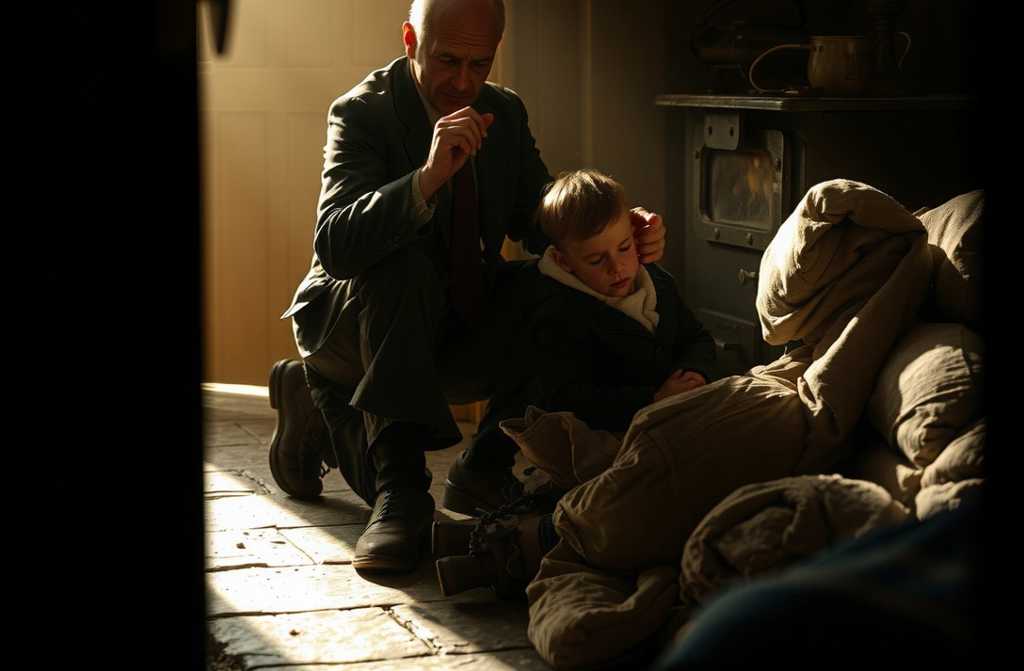
They descended to the service quarters, where once washing women and butlers had busied about. Today, logs were stacked high, the air thick with the scent of damp iron and wood smoke. There on a pile of sacks, close by a crackling stove, was the boy. Swaddled in a tattered coat, so thin that his body seemed no more than a bundle of sticks.
Arthur knelt. The boys face was sharp, pale; his lips blue, with lashes twitching as though he were submerged in nightmarish dreams.
Hello, little one, the doctor muttered, touching the boys icy brow. Can you hear me?
The child shivered, eyes half-fogged but burning beneath with some flicker of life.
Uncle the word rasped, dry as last autumns grass. Im Henry
Henry, is it? Arthur echoed gently. How old are you, Henry?
Seven turning eight The boy tried to rise, but collapsed.
And your family, lad? Where are they?
Henrys eyes squeezed shut, a tear carving a path down his grimy cheek. Words failed him. But Arthur understood them all. His own family were somewhere in York, evacuated, his wife and two daughters writing to him only rarely. And this boythere was no one left to write for him.
Take him to a private room, Edith. Warm it. His toes are frostbitten, and he needs food and rest. Start with a glucose dripslowly. Then bouillon. Small sips.
Part Two: Thaw
For two weeks, Henry teetered between this world and the next. Arthur visited him constantly, checking in even in the darkness between surgeries to tend bandages and encourage life. Henry burned with fever, rambled about his mother, his sister Daisy, or sometimes lay silent, his eyes huge in his tiny, wasted face.
Little by little, the worst passed. Arthur learned, bit by bit, the story: The village was shelled and torched a month earlier. Mother and Daisy were lost to the flames. Only Henry escapedhidden by miracle in a shed. He wandered the woods for weeks, eating what he found, headed east and away from the war.
Arthur listened, feeling the ache of emptiness deepen in his chest. He longed for his family, living on scraps of news. Yet Henrythis boy had no one.
Henry gained strength, smiling shyly at the nurses, fetching water, tidying trays. But the slamming of a door or a sharp voice sent him cowering. War had etched its tremble into his bones.
One sunny March morning, when icicles were at last melting, Arthur brought papers into the tiny isolation ward.
Well, Henry, he began, sitting smartly on a stool. Youve the vitality of a young pony. Youre mending. But we need to think of your future. Theres an orphanage in the next townforty miles. Ill arrange for you to go.
Henry, busying himself patching old linen, froze. The cloth dropped from his hands. He turned to the wall, burying his face. His small shoulders shuddered in silence.
Arthur sighed, dreading this moment.
Dont fret, son. Its not so bad there. Youll be fed. Taught.
Uncle Arthur the boys voice was hollow, cant I stay here? Ill be good. I wont ask for much. Ill help. I can learn to chop wood. I promise!
Arthur hesitated. He looked at the childthe tense neck, the sharp ribs pressing the blanket. All the careful, clinical walls hed built inside himself crumbled.
Nonsense, he replied brusquely, rising to go. Its a hospital, not a charity house. I cant be watching over you. Ive work, day and night.
He left. But nothing fit right all day. His hands were clumsy in theatre. That evening, as snow returned, he kept staring at the door to the isolation room. Edith Clarke passed by and paused.
Hes crying in there, face in his pillow. Been at it for hours. Im scared for him.
Shouldnt have been so official, murmured Arthur, half to himself. The boys heart is already in tatters.
Suddenly resolute, he flung open the door. Inside, only a small lamp flickered. Henry lay utterly still.
Up you get, Arthur said softly but firmly.
The boy jerked, sitting up, wiping tears.
Youre sending me to the orphanage? he whispered.
Youll come with me. To my room in the hospital. For now, youll stay with me. Laterwell, well see. Dress warmly, lad.
Henrys stunned eyes shone, a quiet joy thawing winters grip as he threw his patched boots on and trailed behind the doctor, hand clinging tightthread to lifelineas they slipped out into the corridor together: tall, stooping man, and small, wary boy.
Part Three: Days and Nights
Henry settled into a little room adjoining Arthurs office. The days took on a rhythm. He was clever and quietly diligent. At dawn, he would fetch water, help carry logs, cut bandages, boil instruments. The whole hospital adopted himrecovered soldiers made him toys from scraps, nurses slipped him biscuits, and Arthur would often find him dozing upright on a wooden chair, waiting for him so they might supper together.
The evenings were their own small world. Fire snapped in the grate, a paraffin lamp creaked, and Arthurrubbing weary eyesspoke to Henry of anatomy, the miracle of breath and blood, the thumping, indefatigable heart. Henry watched the surgeons hands as if memorising magic; the first seeds of his own calling quietly sown.
Uncle Arthur, is it hard? Being a doctor, I mean?
Its hard, Henry. Harder than you think. Lives are in your hands, not just scalpels. But when you see someone youve saved smile at you Well, thats what makes it worthwhile.
I want to do that too, said Henry, voice barely above a whisper.
Arthur smiled, sadly, warmly. Youll learn. The nurses will teach you to read. Ill teach you the important partthe part about being human.
That year passed like a strange dream, bright and fleeting. Bramley rediscovered meaning in the sharp focus of the childs companysomeone to protect, to nurture, to pass on the fragile, precious lamp of knowledge. He fretted like any father, and his greatest fear was that war might yet swallow them both.
But fate had other plans.
March 1944 was brutal; battles raged, wounded poured in. Arthur did not leave theatre for two days at a time. He grew gaunt, hollow-eyed, but soldiered on.
On a night of peculiar silence, Henry awoke, heart pounding. The fire was dead. He tiptoed, barefoot, through murk towards the operating block.
A door was ajar, the room flooded with ugly white light. Henry peeked inside
Arthur Bramley lay face down on the tiled floor. His mask had slipped. Those miraculous hands lay astray, clutching at nothing. Edith Clarke knelt by his side, trying for a pulse.
What whats happened?! Henrys shout was raw, wild. Uncle Arthur! Get up!
He hurled himself at the limp form, shaking and pleading, but Arthur did not stir. Ediths tear-soaked face said all that could not be spoken.
Arthur Bramleys heart gave out right there on the cold surgery floor. He died helping others, just as hed lived.
They took Henry away. His despair filled the house, shaking even the steadiest orderlies. He fought, wailed, then fell silent, lost to a distant, noiseless ache.
He was not taken to the funeral; they feared his mind might snap. Instead, Edith took him to her own small room. She fed him warm milk and wrapped him in blankets, sat by him for days and nights as he burned with fever and grief, just as Bramley once had nursed him.
Six months later, the war passed on, and the hospital was disbanded. Edith received wordher husband, presumed lost, was a warden now in a quiet London suburb. She was to join him. She would bring Henry with her, no second thought.
Will you come, Henry? she asked one golden evening on the steps of the now-quiet hospital. Youll be my son.
He watched the sunset, then nodded. I will, Aunt Edith. Theres nothing left here for me. Just his grave. Ill visit. I promise.
Part Four: Homecoming
Ediths new home in a little Hampshire town was peaceful among apple orchards. Her husband, simple and warm-hearted, treated Henry as his own. School was toughfor hunger and loss had left Henry frailand he missed many days, but his stubbornness forged strength. That ever-burning purpose, to be a doctor like the man whod saved him, never faltered.
Edith, noting his late-night studying, could only sigh: Arthur was like thatalways up with his books. Only his were full of Latin, and yours are schoolbooks.
Ill learn everything, Henry would reply. I must.
He did. His health returned in adolescence. He completed school with high marks and, of course, applied to medical schoolfirst in London, then Oxford, determined only to study.
Oxford proved his destiny. First yearfirst examsand he had caused a stir with his knowledge. Those years under Bramleys gaze had taught him more than any textbook. Edith and her husband boasted of their new son.
By 1961, a fully-qualified GPnow Henry Arthur Clarke, after his adoptive fatherhe requested a posting to that old region, to the very grounds where the manor hospital had stood. He wantedneededto see Bramleys grave.
Edith, elderly but indomitable, insisted on joining him.
The place had changed: the old manor was demolished, replaced by a new hospital. Henry began work there. They gave him a small flat; Edith moved in with him.
On his first spare afternoon, he visited the village cemetery, grown dense with new stones. He searched, searched, until at last he found a low mound, a wooden marker with a fading tin plaque: Arthur William Bramley, 18901944. Thank you, Doctor.
Henrys heart flooded. He knelt, sobbing into wet grass. Edith stood silent.
Hello, Uncle Arthur. Its me, Henry. I came. Im a doctor now, like you hoped. I work here, where you once saved me. Thank you.
He stayed a long time, recounting his life, swearing to keep the memory alive. Later he searched for any trace of Bramleys familyletters unanswered, houses gone, old neighbours moved away. Some whispered that Bramleys wife and daughter had returned after the war, failed to find the grave, and left for York, since lost to time.
Henry grieved; it seemed essential that he tell them what their husband and father had been, and what he meant.
Part Five: The Sign
Work consumed Henry. He was quick, patient, kindespecially with children. His colleagues respected his calm; the patients, his warmth. Illness seemed to wilt before his gaze.
One day, while making his rounds in paediatrics, he spotted a three-year-old girl in the corner of a ward. She clung to a battered soft rabbit, blue eyes wide with solemnity, as if she could already see something of the worlds sadness. Henry froze.
And whos this? he asked the nurse, heart unsteady.
Oh, thats Lucy, she replied. Came in from the orphanage. Bad pneumonia, but shes recovering now.
Henry approached. Lucy looked up with calm trust.
Hello, Lucy. How are you feeling?
Rabbits poorly, she whispered, thrusting forward her toy. Please fix him, Doctor.
Henry choked. He examined the rabbit carefully, listening with his stethoscope.
Hmm, a nasty cough. But well mend him in no time, he said gravely, returning the toy.
Later, he found her file: orphaned, no one left. Just like himself, twenty years before.
That evening, Henry sat before his untasted, stone-cold tea. Edith noticed.
Whats the trouble, dear? she asked. Youve been distant for days.
Its Lucy in the childrens ward. No family, nothing. Shes in the bed I once had. Even her eyes so hopeful, so lost. I think its a sign. As though Arthur Bramley whispers to me: Dont pass her by.
Edith rose and squeezed his shoulder. Tomorrow, well visit her together.
They came bearing gifts: a rag doll Edith had stitched, a jar of jelly. At first wary, Lucy smiled at Ediths kindness.
There, sweet, do eat. And be brave.
Watching them, Henry felt something shift. That night, as they walked home, Edith spoke:
Im old, Henry. Id like some life in this house. Youre always busy. Lets adopt her. My hearts gone to the girl. I had no children of my own you know that. She reminds me of you.
Henry embraced her, whispering, Thank you, Mum. Ive thought of little else. Well deal with the orphanage, the rest.
Weve overcome more before.
Part Six: The Thread of Fate
A few days later, as Lucy neared recovery, a young woman arrived at the hospital with a parcel of sweets. Henry met her at the entrance.
Can I help you?
Im from the orphanage, she said. My names Rachel Dawes. Im Lucys keyworker, checking in on her.
They stepped into the office. Rachels hands fidgeted as Henry described his wish to claim Lucy as family.
You mean it? Rachels voice trembled. Most change their minds, you know. They go back on their promises. Children cant bear that.
We mean it, Henry promised. I know how it feels, to be alone and waiting for a miracle.
He began, awkwardly at first, to tell her everything: the snowbound winter of 1943, the Cambridge manor, Arthur Bramleys kindness, his death, and the long path since.
Rachel listened, eyes wide, then tears welled.
Arthur Bramley, she repeated. Did you say Bramley?
Henry frowned. You knew him?
She nodded, eyes wet. He was my father. Arthur William Bramley.
Henry wobbled, stunned. I searched for youyour mother, you. I wanted so much to tell you what Arthur meant.
Her voice was thin, loaded by years. Mother died five years ago. She always wondered about the boy Father spoke of. She said, He called him his son. We thought you long gone.
Its fate, whispered Henry.
It is, Rachel said. My father led you to me. Or us to you.
Now Lucy has not one family, but two, Henry said, at last smiling. Will you visit her? Youll be her real aunt.
Rachel laughedfree, sweet, and new.
Epilogue
That autumn, in the village hall, Henry and Rachel were married. Lucy, in a white dress sewn by Edith, sat clutching her long-suffering bunny, a creature now named Professor, after the grandfather Lucy had never met, but who lived now in family stories.
Edith, radiant in her Sunday best, received the guests as head matriarch. Next to her, Peterher husbandbeamed with medals pinned to his suit.
Remember, Henry, Edith said that evening, after the festivities, the night you declared, Ill be like Uncle Arthur?
I do, Mum, Henry replied, holding his new wife. I always wanted to be like him. Now I think I finally understandits not just curing the sick. It means living so that your light warms the world after youve gone. Like Lucysmall but shining.
Rachel nestled close. You know, Dad saved you that winter. And, years later, youve healed me. And Lucy. The circles complete.
No, Rachel, Henry gazed up at the first stars over the village. Its a thread, not a circlea bright, endless thread stretching from heart to heart: from Arthur, to you, to me, to Lucy. And it will never break.
Lucy smiled in her dreams and mumbled something. Maybe she called for Mummy, for Daddy, for Professor Bunny. But Henry thought she said, Thank you.
Years passed. Dr Henry Arthur Clarke became chief physician of the new hospital. In his office, under glass, always lay Arthur Bramleys old, worn scalpelthe most precious relic of his life.
Lucy grew up, became a music teacher, as shed hoped, visiting her elders every Sunday. At Christmas or Easter, the whole familyHenry, Rachel, Lucy, and her own childrenwalked to Arthur Bramleys grave. There, Henry, now silver-haired, would tell the story to grandchildren:
The story of a wintry night, a lonely hospital, and a man who stopped to help a stranger. How one act of kindness kindled a fire that warmed three generationsnot kin, but true family, hand-picked by fate.
They lived happily, surrounded by love, memory, and gratitude. In their home, a warm glow ever shonethe very light Arthur Bramley once sparked in the heart of a lost boy named Henry.





