
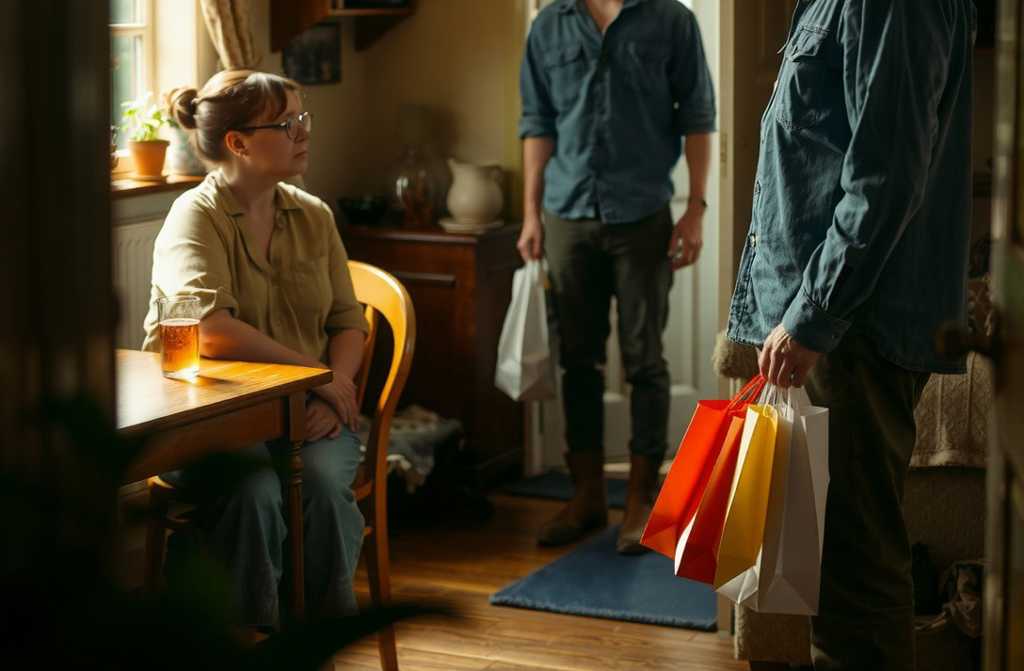
Id come to return my ex-girlfriends belongings, never guessing it would turn out this way. All Id planned was to drop off a cardboard box at her mums house in a small English village, then drive back up the M4 and forget about it. But life likes to upend simple plans, doesnt it?
My names Jack Miller, 31 years old, and I work as a site manager on construction projects. Three weeks ago, I broke it off with Alice Bennett.
No drama, nothing noisy or violent about it. The relationship just leaked out, exhausting itself over four months that felt much longer when two people dont quite fit. There was nothing left but her box sitting in my flat, gathering dust and reminding me every morning that I still hadnt given it back.
Id messaged Alice three times, reminding her she could collect her stuff. Shed always promised shed come, but never showed. So, on a Thursday after work, still in my steel-toe boots and a faded blue shirt, I packed the box into my old van and drove 40 miles to her mums place in Mapleford. Alice had moved back after her flat in Oxford fell through. Shed told me her mums was spacious, with a lovely garden, in a quiet neighbourhood.
I pictured a mum in her fifties, glasses halfway down her nose, making shepherd’s pie or ironing in the kitchen. I knocked once on the front door, heard calm footsteps within, and when the door opened, all my expectations fell away. Margaret Bennett was standing there in a short silk dressing gown and nothing else, auburn hair loose and still damp like shed just showered.
She wasnt embarrassed, just gave me a steady look and smiled. You must be Jack. I managed a Yesor at least I think thats what I said. Margaret opened the door a bit more and told me Alice had gone out shopping and would be an hour. Would you like to wait inside?
Every sensible instinct told me to leave the box on the doormat and drive home. But I stepped inside, and she closed the door gently behind me before walking away down the hall, cool as you like, as if letting someone in while still in a dressing gown was perfectly normal on a Thursday. I stood awkwardly, taking in the warm English homereal plants on the sill, a half-completed jigsaw of British coastal towns on the side table, a bookcase packed impossibly full.
When Margaret came back, shed changed into jeans and a loose, creamy linen top with the sleeves rolled up. Her hair was still slightly wet but brushed back. She handed me a glass of iced teajust assumed Id take itand gestured to the kitchen table, asking me about Alice. I said, Four months. She nodded, like that confirmed something for her.
I asked how much Alice had told her. Margaret glanced into her glass. Enough to know it was mutual, and that youre not the bad guy. Then those brown eyes of hers looked up. The rest Im figuring out myself. I changed the topic to the jigsaw. She told me it was a thousand-piece puzzle, a map of British national parks. Shed been at it for three weeks, with pieces always slipping behind the sofa.
I said I liked puzzles. She gave me a look. Men good at puzzles never claim it first. I couldnt help laughinga real, surprised laugh. She smiled, too.
We lingered at the table for three-quarters of an hour. I learned that Margaret was 53 and divorced two years, after a 20-year marriage she referred to as simply having run its predictable course. She kept the house, started a small garden design consultancy last summer, loved old jazz records and awful action films, and insisted there was only one correct way to make Yorkshire pudding.
I told her about growing up in Harpenden, about falling into construction after a summer job at seventeen. Margaret actually listened, asked proper follow-up questions, remembered what Id said moments before. After almost an hour, Alice called to say shed be another ninety minutesqueues at Sainsburys.
Margaret looked at me. If youre hungry, I can rustle something up. I said I didnt want to be a bother. She just rolled her eyes and laughedYoure sitting at my kitchen table drinking my iced tea, Jack. Too late for that. So I stayed for dinner: chicken and rice, simple and brilliant, served at the little kitchen table while dusk crept down outside, the street quiet and still.
Gradually, I stopped thinking about Alice, her box, or my drive home. I was simply…there. When Alice finally arrived, headlights sweeping across a window, Margaret and I were chatting about city traffic. Margaret declared city driving more stressful because, At least on the motorway everyones pointed the same way. I was still thinking about that when Alices key turned in the door.
Alice saw the box, then me sitting at her mums table, and stopped dead. Did you two have dinner together? Margaret answered calmly, Yes. Are you hungry? Alice put her bags down, taking her time. Jack, how long have you been here? I checked my watch. A little while, I said. Alice stared, glanced at her mum, and after another silent look, picked up her shopping and walked into the kitchen wordless.
I stood, thanked Margaret for dinner. She walked me to the door and leant in the frame, arms folded. No trouble. Outside, the porch lamp above flickered twice. I spotted a loose wire but said nothing, tucking it away in my mind. I looked back onceshe was still there in the doorway, watching without making it obvious. Drive safe, Jack. All the way home, my thoughts circled that kitchen table, her voice, that simple glass of tea, the ease of just being there.
I told myself I wouldnt go back, though nothing had happened, nothing untoward at all. It was just chicken and conversation, and yet I lay in bed, staring at the ceiling, turning over her words: At least on the motorway, everyones headed the same direction. Such an ordinary thing but it clung to me, the way truth sometimes does.
Saturday, I found myself in the hardware shop, gathering bits for a mates decking repair. I passed the lighting aisle and remembered Margarets porch lamp and its dodgy cable. It really was a safety problem, I told myself. I bought the kit for Greg and, after hesitating, picked up what I needed to fix Margarets light. I didnt ring aheadI just set out, toolkit in hand and two flat whites from the café on Chestnut Road, because I was done pretending I needed to justify the visit.
Margaret opened the door in splattered jeans, an old flannel shirt, hair loose, paint on her arm and jaw. She held a paintbrush and, after a seconds pause, nodded, The porch light. I explained, Could be trouble if it rains. She gave me a searching look. And the coffee? I shrugged. She smiled, let me in, and showed me the spare room she was repainting: walls now a soft blue, careful brushwork on the trim.
I asked if she wanted help. I dont need help. I know. But the other wall could use a second coat, if youre going to stand about. I grabbed the roller and pitched in. We painted together, silent but comfortable, moving with a natural rhythm, neither in each others way.
At some point, she asked, How are things really? Not the usual, bland How are you? but honestlyhow was I, truly? I told her about drifting, about solid work and a life that, under the surface, had gone oddly flat. That breaking up with Alice hadnt stung in the way it should, and that bothered me more than the breakup itself.
Margaret let me finish, then said, You know what that is? Thats what happens when you do things that make sense for so long, you never check if they still make you feel anything. I stopped painting and let that land. I asked how she knew. She finally looked at me. Spent over a decade living like that. And it took me several more to actually recognise it.
We finished just before noon. Margaret rinsed brushes, I packed away drop cloths. She stood in the doorway, gazing properly at the newly blue room, a private, satisfied Better. I agreed, A lot better. Then she said, Im making lunch. Stay or dontits up to you. No pressure. The most freeing invitation.
I stayed. Lunch was tinned tomato soup and toast with melted cheddar, at the same kitchen table. She talked about her garden design workthe hard clients, the quiet wins, the purpose shed rediscovered. I shared how that sounded all too familiar. Her phone lit up near the sink. She ignored it, then flipped it facedown. There are things in my life that need sorting out. Before thiswhatever this isgoes further, I want you to know that.
I put my spoon down. Im not in a rush. She studied me. Whatever she needed to see, she saw; she nodded and lapsed back into conversation about day-to-day things. I left that day with paint on my sleeve and the unsettling sense that Id crossed into something far more significant than just a quick repair.
She rang me first. That caught me off guard. Tuesday evening, waiting for my burger in the car outside a drive-thru, the phone vibrated. Margaret Bennett. She simply said her back gate was jammed; she had a client coming in the morning and couldnt shift it. I offered to fix it. She relented.
I arrived near dusk; she was out back in boots and jacket, neatly rearranging potted plants. The wooden gate was warped at the base from the rain. I fetched a hand plane from my van, planed the swollen bit, and she kept tinkering with her pots, methodically, precisely. We got the gate unstuck. She thanked me for my help. I should have left then, I thought, but instead sat with her on the back porch when she offered, because there wasnt anything more important to be doing.
We sat, two wooden chairs side by side, her plants glowing in the kitchen light. She teased me for always saying I was fine. She was the first to call me out for using that word to close emotional doors. After a long pause, I admitted, Im not fine. Havent been for a while. Im better when Im here. Margaret replied, soft as dusk, Me too. Small, but it landed big.
Thats when headlights came down the side drive. Margaret went tense in a way Id seen before. A man about her age appeared, smart shirt, broad-shouldered, clearly not expecting me. Margaret stood. Robert, you could have called. He looked me over: Whos this? A friendhelped with the gate. I shook his hand. He enquired about an account connected to their divorce, but his manner was polished, not warm.
After ten minutes, he left. Margaret stayed silent, then exhaled deeply. That was my ex-husband. I gathered. She twirled her glass. He shows up like this to prove he still can. Used to work. I asked, Does it now? She met my gaze. Less so.
You didnt have to stay, she said. I know. We sat while the evening wrapped softly around us, and when I finally left, she saw me to the door. Hell be trouble, she warned. I can handle complicated, I replied. She considered, then said, Come back Saturday. Ill make dinner. A proper one. Ill be here, I promised, knowing shed be there watching from the doorway, as she always was.
Saturday, I turned up on the dot of six with a carefully chosen bottle of wine and whatever confidence I could assemble. Margaret opened the door in a smart green dress. I stammered something about my shirt, she smiled, then led me in. The house smelled warm and invitingsomething roasting, garlic and herbs. The table was set, candlelit, jazz humming in the background.
We talked over wine as food finishedhow her business was going, how shed picked up extra work after the trouble with the gate, how Robert still tried to control details that werent his anymore, how shed slowly rebuilt, bit by bit. The talk was honest, the pauses easy. Dinner was roast chicken, veg, and crusty bread from the bakers on the high street.
Midway through, her phone lit up. She glanced, jaw set. Robert. He calls in the evenings, assumes Ive nothing better to do. But I do. After dinner, we carried the wine to the porch. Shed strung fairy lights after WednesdayDid it for myself, she said. We sat on the old bench, close, choosing not to sit farther apart. Margaret, looking out at her plants, confided how shed shrunk herself in her old marriage, stopped doing things for herself.
Now she wanted more. I havent let myself want something for years. Feeling safer, not wanting. I asked, And now? She looked at me, the porch light gleaming. Im tired of safe. I reached for her hand, slow and deliberate. She didnt pull away. The kiss was gentle, certainthe kind you know is meant. Afterwards, she murmured, Alice will have a reaction. Probably, I said. Robert will have a bigger one. Let him. She glanced sideways. Youre not frightened off? I just smiled. Not even a bit.
She intertwined her fingers with mine and leaned her head to my shoulder. We sat in the English night, fairy lights glowing, the jazz record still playing low through the kitchen window.
Months later, the back gate still swung true because Id replaced the lot one Sunday with Margaret supervising, tea in hand, satisfaction in her eyes. Alice eventually rang her mum, aired all her thoughts, and then agreed shed never seen Margaret so content. Robert called again, but she let her solicitor do the answering.
On a plain Thursday night, months after a box and a silk dressing gown and a glass of cold tea, I stood in Margaret Bennetts kitchen, laughing as she burnt the grilled cheese because shed been too busy telling a joke. She swore, flung open the window, and I grabbed the spatula, flipped the toast, made us both dinner.
She stood beside me at the hob, watching, and said, Youre less useless than I thought. Happy to prove it, I replied. She smiled, nudged my arm, and said, Me too. Outside, our fixed porch lamp cast a steady pool of light on the stepno flicker, no fuss, just doing what it should. Some things, once you set them right, stay that way.





