
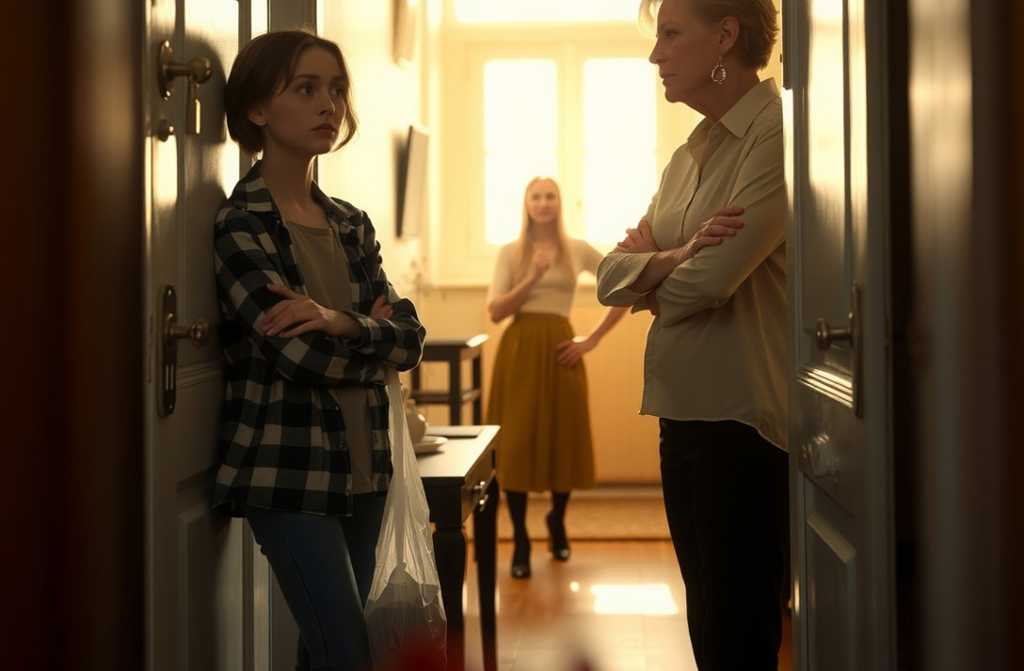
After three years behind bars, I returned to find my father gone and my stepmother in control of the family home. She had no idea that hed hidden a letter and a keyevidence that proved my innocence and exposed the real betrayal.
As I arrived, the pungent aroma of diesel, burnt toast, and chill metal hung in the airunmistakable scents of a coach station at dawn. It all tasted of a world that kept moving while Id been frozen in place. I stepped through the iron gates, carrying a clear plastic bag with all I owned: two flannel shirts, a battered copy of The Count of Monte Cristo with its cracked spine, and the heavy silence that comes after three years of being told your voice doesnt matter.
Still, my first thoughts as my boots touched the cracked pavement werent of prisonnot of the noise, not of the injustice.
They were of only one person.
My father.
Every night in my cell, I rebuilt him in my mind, always in the same spot: in his worn leather armchair by the bay window, bathed in the glow of the streetlights, which highlighted the deep lines of his face. In those memories, he was always waiting. Always alive. Holding on to the version of me that existed before the arrest, before the headlines, before the world decided Ellie Barnes was guilty.
Though my stomach was twisted with hunger, I ignored the café across the road. I didnt call anyone. I didnt even look at the resettlement address folded in my pocket.
I just went home.
The bus left me three streets away. I ran the rest, lungs burning, heart pounding as if it could race against time itself. At first, the street looked familiarcrumbling pavements, the old sycamore leaning at the cornerbut the closer I got, the more wrong it seemed.
The porch railings still stood, but the chipped white paint had been replaced with a silky navy blue. Flowerbeds my father cherished were trimmed and tidy, repopulated with plants I didnt recognise. And where the drive had once stood empty, now there was a gleaming saloon and a polished SUV, both foreign makes, neither cheap.
I slowed, uncertainty prickling at my skin.
Yet I climbed the steps.
The front door was no longer the faded peacock-blue my dad had chosen because it disguises the dirt best. It was now slate grey, complete with a brass knocker. Where a worn brown mat used to be, there was now a pristine coir one that read:
Home Sweet Home
I knocked.
Hard. Unapologetically.
I knocked as someone who had counted each of 1,095 days. Someone desperate to belong again.
The door swung open, but the warmth I hoped for never arrived.
Linda stood before me.
My stepmother.
Her hair perfectly styled, silk blouse sharp, eyes coldthey swept over me as though I were an inconvenient mistake.
For a second, I thought she might falter, or soften, or at least look surprised.
She did not.
You shouldnt be here, she said, flat as steel.
Wheres my dad? My voice startled meraspy, too loud.
Her lips thinned.
Then she said it.
Your father passed away last year.
The words drifted in the air, unreal.
Buried.
A year gone.
I couldnt make sense of it. I waited for some explanation, for a cruel joke.
But she never flinched.
We live here now, she continued. You have to leave.
The hallway behind her was unrecognisable. New furniture. New pictures. No trace of my dads boots, his jacket, the scent of sawdust or coffee.
It was as if hed been wiped away.
And she held the eraser.
I have to see him, I pleaded, chest tight with panic. His room
Theres nothing left, she cut me off, closing the door. Not slamming it. Just shutting it. Slowly. Finally.
The lock clicked.
I stood there, numb.
That was how I learned my father was gone, watching his home as a stranger.
I barely remember leaving. Only that I walked, and walked, until my feet burned and those words stopped echoing in my head.
Ultimately, I arrived at the only place that made sense.
The cemetery.
Tall yew trees loomed like sentinels. The iron gate creaked as I slipped through.
I brought no flowers. I needed proof.
I was nearly to the office when a voice stopped me.
Looking for someone?
An elderly man leant on a rake by the shed, eyes shrewd but kindly.
My father, I said. Thomas Barnes.
He studied me, then shook his head.
Hes not here.
My stomach twisted.
Not buried here?
He introduced himself as Harold, the groundskeeper. He said he knew my dad.
Then he handed me a weathered envelope.
He asked me to give you this. In case you ever came.
Inside was a letter. A note. A key.
UNIT 108WESTRIDGE STORAGE
The letter was dated three months before my release.
My father knew.
In the storage unit I uncovered a world hed protectedfiles, records, proof.
On a screen, my father appeared. Paler, thinner, but certain.
You didnt do this, Ellie, he said.
Linda and her son had framed me. Stolen money. Planted evidence. Used my access.
My father had been ill. Watching. Afraid.
So he collected what he could.
And left it for me.
There was no point confronting anyone. Instead, I turned to a solicitor.
The truth emerged quickly.
Assets frozen. Charges pressed. My conviction overturned.
On the day my name was finally cleared, I didnt celebrate.
I mourned.
Later, I found my fathers real gravein a quiet, hidden spot, a place Linda couldnt control.
I sold the house. Rebuilt the business under a new name. Started a small trust for people wrongfully convicted.
Because some dont just steal money.
They steal time.
And the only way to win is not through revenge.
Its by creating something honest out of what was meant to be erased.
I am not forgotten.
And now the truth isnt buried.
Its alive.
The End.





