
The Wall of Invisible Glass
The Storm of Ten Years Past
That evening, the sky over the city was as leaden as Margaret Brooks face.
“In this house, youll live by my rules or not at all!” Her voice, honed by years of authority in school corridors, rang through the flat.
“Your rules are a noose, Mum!” Twenty-year-old Oliver hurled his gym bag onto the floor. “You dont let me breathe. I dont want to be the rough draft you keep rewriting!”
“Then find yourself some other air!” she said, pointing to the door with unwavering resolve. “Go. And dont come back until youve learned to appreciate whats been done for you.”
Oliver looked at her, his eyes burning with cold fire. Silently, he picked up his bag, stepped over the threshold, and vanished into the pouring rain. Margaret stood by the window, convinced hed cave inwithin an hour perhaps, or by morning at the latestreturning soaked, hungry, and apologetic.
But Oliver didnt come back by morning. Nor after a week. Nor even after ten years.
Oliver Brooks became what hed always dreamed ofan architect. His buildings mirrored himself: glass, concrete and steel; beautiful, functional, and entirely cold.
He had a flat on the 40th floor, a sleek Jaguar in the garage, and a steadfast refusal to look back. Yet, all his luxury couldnt erase the black holea poky council flat on the outskirts, an address he tried hard to forget.
“Mr Brooks, the project deadlines tomorrow,” his assistant reminded lightly. “And on Saturday You marked it in the diary. Your mums birthday.”
Oliver froze, staring out over the city skyline. Ten years. He hadnt called. She hadnt sought him out. Every year hed buy a gift, leave it in the boot of his car, then end up donating it to charity. This year, though, something inside shifted. Perhaps it was the realisation that concrete doesnt ward off loneliness.
Saturday came. The old estate greeted him with blossom-scented air and the groan of rusty swings. Oliver cut the engine. His luxury SUV looked as out of place here as a spaceship marooned on a rubbish tip.
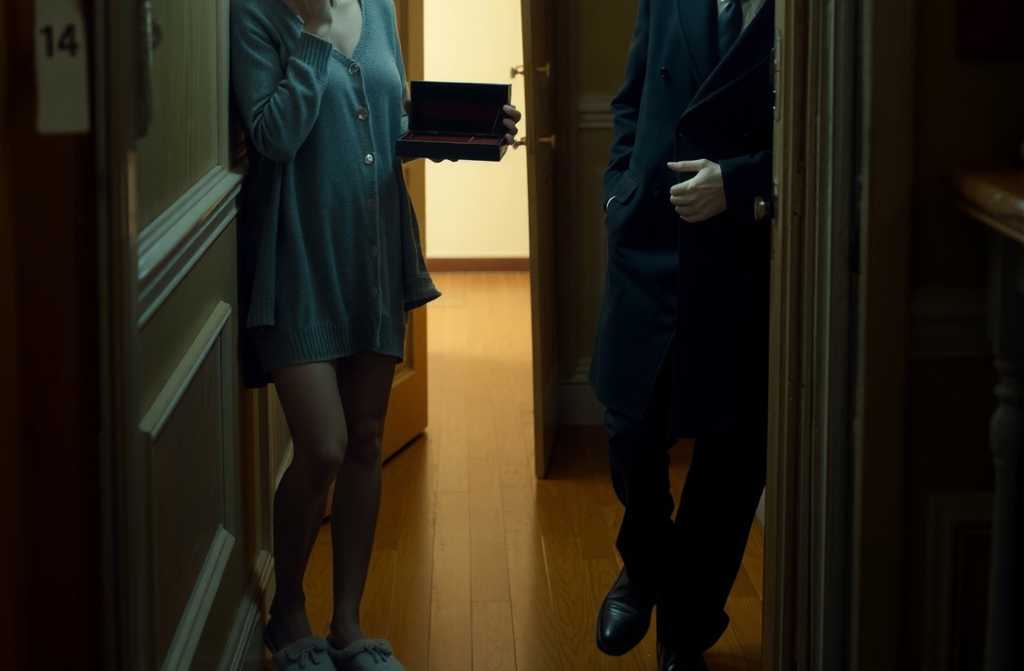
He stepped out. His legs felt heavy, as if shackled. One step. Another. The stairwell smelled of damp and fried onions. Second floor. Door number 14.
Oliver lifted his hand to knock, his knuckles poised an inch from the battered faux-leather.
What will I say? Hi, its been a decade? Or, Sorry I didnt come back by morning? His mind jumbled, stifling his breath.
On the other side of the door, Margaret stood still. Shed spotted him through the window. Her heart, long presumed made of stone, now thudded madly. She stood by the hall mirror, pressing her hands to her lips to suppress a cry.
Through the peephole, she caught a warped reflection. Her boy. All grown up. An expensive coat, a hardened face.
Just open the door, she urged herself. Say the kettles already boiled. Say youve waited every night to hear those footsteps.
But her hand wouldnt move. Pride, cultivated through years alone, whispered: Hes come to gloat, or simply to check youre still alive. He hasnt called in ten years. Why should you be the one to open the door first?
They stood there five minutes, though it felt eternal. Oliver sensed the warmth radiating from the doorhe knew she was there. He could hear her uneven breathing.
“Mum” he whispered, forehead just brushing the cold surface.
Margaret trembled. On the other side of the split-wood door, her sons voice sounded like an echo from another life.
“I never learned how to ask forgiveness,” Oliver went on, speaking to the closed door. “You raised me to be strong, unyielding, proud. Ive built hundreds of homes, Mum. Yet in yours, theres still no place for me.”
Margaret closed her eyes. A tear traced down her wrinkled cheek.
“I built this wall,” she murmured, knowing he wouldn’t hear. “I sent you away, hoping youd crawl back. Instead, you learned to soar. Now I fear if I open the door, youll see just how small and weak I am without all my anger.”
Oliver lifted his hand again. This time, he almost touched the handle. On the other side, Margarets hand was already resting on it, trembling. Only a few inches of wood and metal separated them.
One pushand the wall would crumble. One movementand the decade-long cold would end.
But Oliver suddenly lowered his hand.
Shes not opening. Shes still angry. She doesnt want to see me.
Margaret sensed the hesitation.
Hes going. He didnt even knock. He doesnt care anymore.
Oliver turned away. He drew out a small box from his pocketa gold brooch shaped like a lilac branch. The very gift hed meant to give her with his first earned money.
He placed it gently on the doormat.
“Happy birthday, Mum,” he called a bit louder. “Sorry I turned out just as you wanted.”
He started down the stairs, footsteps echoing in the empty stairwell.
Margaret could wait no longer. She yanked at the lock; keys clattered to the floor as she flung open the door.
“Oliver!” she called into the empty stairwell.
Oliver paused halfway to the ground floor. He turned. In the lit doorway stood a petite, grey-haired womanno longer the formidable headmistress, but fragile, like old china.
She clutched the box hed left. They looked at each other across the landing.
“Leaving again?” her voice trembled. “Will you always go before hearing my answer?”
“You didnt open the door,” Oliver replied, stepping back up one stair.
“And you never knocked,” Margaret moved onto the landing. “You just stood there. I thought you were checking if my pride had finally finished me off.”
Oliver climbed three more steps. Only a few short paces separated them now.
“I was afraid youd ask, Why are you here?”
“And I was afraid youd say, Youre no longer needed.”
They stood in silence. The stale air lightened.
“The brooch is lovely,” Margaret said softly, “but the lilacs outside smell better. The kettles boiled, Oliver. Ten years ago I put it on, and I think it boiled dry. But Ive filled it again.”
He stepped up to her. Taller than her now, strong and successfuland yet, in that moment, he was the boy with the duffle bag. He gently hugged her. She smelled of medicine and lilac blossom.
“Mum, I dont have to come in if youd rather”
“Hush,” she pressed closer to his shoulder. “No more building walls. Lets just have some tea.”
They walked inside. Door number 14 closed behind them. For the first time in ten years, it closed with a soft click, shutting out the cold world.
They never did learn fine words. Both were spiky, complicated people still. But that night, Oliver understood: hed finally finished his hardest project. He rebuilt the home that had started from broken foundations. This time, there were no invisible wallsonly light.





