
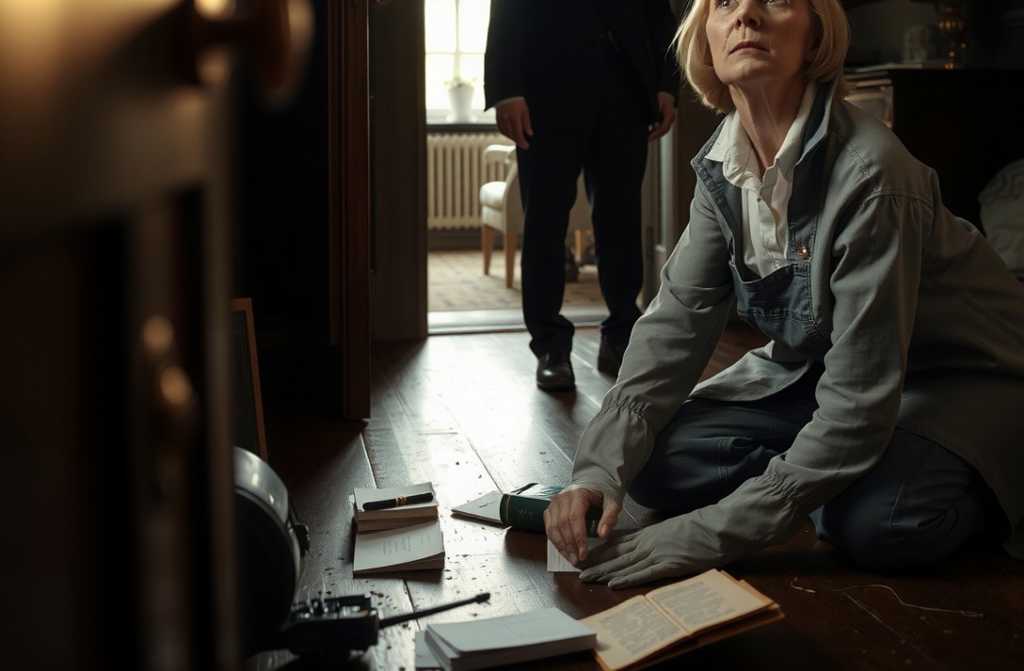
The Perfect Son Paid Her a Kings Ransom to Clean the Luxurious Flat After His Mother Left for the Nursing Home, but When the Cleaner Moved a Heavy Wardrobe, She Found What Would Cost Her Her Peaceful Life Forever
The Illusion of a Spotless Life
Margaret had run her modest cleaning company in Oxford for nearly fifteen years. Those years had taught her an unshakable truth: rubbish never tells lies. Folks might masquerade as devoted spouses, loving children, or upstanding professionals, but their homes always revealed who they truly were. Margaret knew how to get blood out of hardwood floorscold water, hydrogen peroxide. How to banish the ingrained smell of stale tobaccoshed mastered that too. But there still werent any chemicals for scrubbing the nastiness out of a human soul.
That Friday, a job came straight from Richard Greyone of Oxfordshires most prominent property developers, a man whose face adorned bus stops and glossy magazine covers throughout the county. He met Margaret at the door of a grand Georgian flat in the heart of North Oxford. His Italian suit was immaculate, and his voice heavy with sorrow and velvet.
This was my mothers home, Beatrice Grey, he sighed, eyes lingering on the polished oak floors. Sadly, age has caught up with her. Severe dementia. Shed leave the gas on, forget all of us. I had no choice but to place her in a private home with round-the-clock care. It pains me to be here. Please, clear out all the clutter, wrap up the furniture. Prepare the place for sale. Ill pay you three times your usual rate for speed anddiscretion.
Oddities Behind Closed Doors
Though the flat radiated luxury, the air was close, thick with the odour of dust, stale medicines, and something primalalmost like fear. Margaret handed out tasks to her team and chose to tackle the old womans bedroom herself. Thats where things began to puzzle her.
It started with the windows. Thick, old-fashioned sashes, with hidden bolts fitted from the insidebut curiously, set so they could not be opened from within the room. She turned to inspect the heavy mahogany bedroom door: there, at the bottom, was a solid iron bolt, with deep scratches gouged all round the wood. Nobody locks a dementia sufferer from the outside with a barn-door bolt.
The real chill came as Margaret heaved the massive bedside chest aside to dust the skirting. A tiny scrap of paper tumbled outa torn wrapper from a cheap sweet. On the inside, in a shaky yet perfectly legible, almost elegant hand, was written: He slips pills into my tea. I am not insane. Today is 12th October. I remember everything.
Chronicle of a Living Tomb
A cold shiver ran through Margaret. She glanced warily at the door and began searching with care: under the mattress, behind the radiator, inside a pair of old winter boots at the back of the wardrobe. Beatrice Grey had left notes as though she were a silent prisoner, denied a voice.
He made me sign over my shares in the company. I didnt want to. He threatened me. The phones been disconnected for weeks. The carer hits my hands if I approach the door. And then, the most terrifying discovery: an old notebook, deep in the bottom of the laundry basket, tightly wrapped in a plastic bag. A diary.
Margaret perched on the stripped bed and opened it. There wasnt a single rambling of a madwoman. It was a meticulous, chilling chronicle of a woman being driven to madness. Richard wanted full control of his mothers estatemoney, propertythat shed intended for a local childrens hospice. To overturn the will, he had to have her declared incompetent. The diary described months of isolation, covertly administered drugs, and the final acta private home more a gilded prison, from which no one ever returns.
Up Against a Heartless System
Margaret closed the notebook, her hands trembling. She was forty-seven. She had a mortgage, and a daughter, Lily, reading for medicine at Oxford Brookes on a costly course. Richard Greyhe strode straight through the council offices and police station with barely a knock. If Margaret tossed out this clutter as he asked, shed take home a handsome fee, pay for Lilys next year at uni, and sleep soundly. But she remembered her own mothers dying days, clinging to that withered hand through cancers agony. To betray this stranger was to forfeit part of herself.
The next morning, Margaret marched into the nearest police station. The weary detective barely skimmed the diary before shoving it aside with a look of distaste.
Mrs. Palmer, youre a grown woman, he sighed. Theres a formal report from the specialists. The diagnosis is sound. What you describeclassic case of elderly paranoia.
But the windows bolted on the outside! The big bolt on the door Margarets voice cracked.
Standard safety for those with dementia. Keeps them from harm. Id go home if I were you. Best not to meddle with the Greystheyre people who get things done, and youve a business to run.
Unforgiving Consequences
The detectives words proved prophetic. Three days later, Margarets business was hit with a snap inspection. A dozen petty violations turned up, a fine that would bankrupt her. That evening, there came a phone callfrom an unknown number. Richards voice, calm, almost gentle: Mrs. Palmer, I hear youve found some rubbish. Your clever daughter does well, doesnt she? Im told it takes very little to see a student expelled these daysone failed exam, perhaps. Why bother with a strangers rubbish?
That night, Margaret wept for her helplessness, knowing that the system would grind her down. But by morning, her resolve hardened. Realising the laws of her city bent to wealth, she contacted a national investigative journalist in London. Margaret forwarded the diary scans, photos of the hidden locks, and details for previous carers. Within a week, the story exploded across the national press. The uproar reached Parliament. Grey was arrested at Heathrow, trying to flee the country, and his mother rescued from the nursing home.
The Cost of a Clean Conscience
In real life, happy endings are seldom flawless. Justice won out, but Margaret paid dearly. Her business in Oxford was methodically destroyed by the citys elite, who never forgave her betrayal. Her landlord cancelled the lease, clients dropped her, threats came in the post. Margaret had to sell her equipment for next to nothing and move with Lily to a new part of the country, starting from scratch.
Three years on, Margaret was working as a hotel receptionist, and Lily took shifts as a nurse to pay her fees. Life was humblerharder. Then, one spring morning, a heavy parcel arrived at the hotels prosaic address. No return sender. Inside, a limited edition memoir. On the cover, a picture of Beatrice Grey, gaze bright and thoughtful.
On the inside cover, in beautiful handwriting: To my angel with mop and duster. You didnt just clean my flat; you scrubbed the truth free from layers of grime. I am living out my days free. Thank you for not turning aside. Under the cover, a bank cheque; enough to pay for Lilys education right through her medical training.
Clutching the book to her chest, Margaret weptknowing the deepest truth: Sometimes, keeping your humanity costs you everything youve built. But when you can look in the mirror and meet your own eyes, you know the price was right to pay.





