
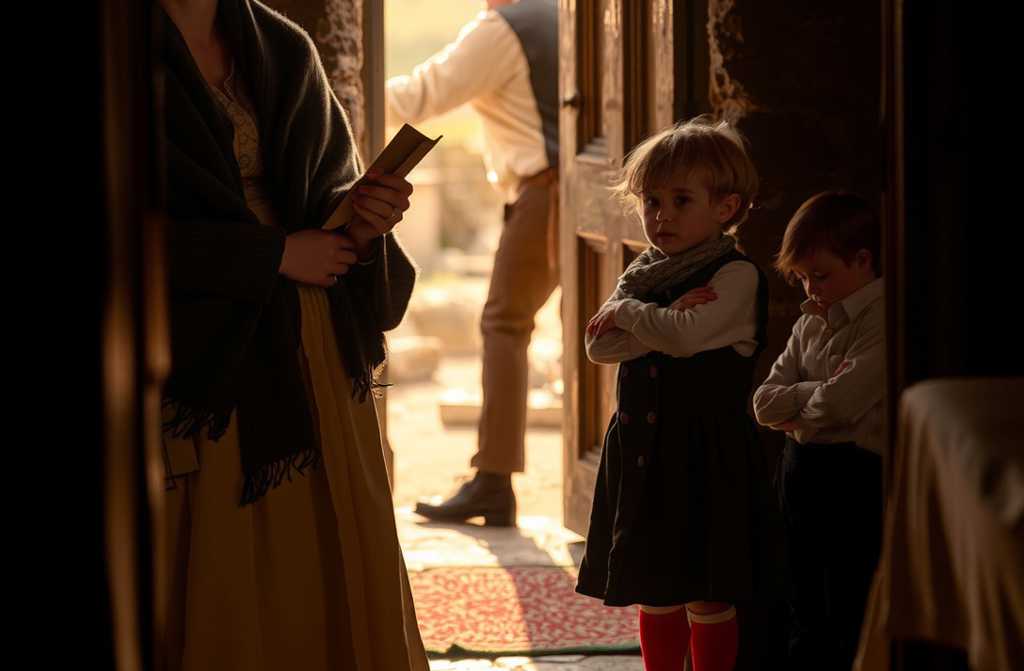
At just eighteen, she was given in marriage to a widower with three children. Everyone assumed that was the end of her youthand her dreams as well.
But time would reveal it wasnt an ending, but the beginning of a quiet miracle.
At eighteen years old, in the winter of 1878, Alice Evans stood on the windswept moors of Yorkshire, promised in marriage to a widower with three children. In those days, in isolated farms scattered across the Dales, a woman’s fate was rarely her own to choose; necessity made decisions where the heart did not.
The chill came down from the heathered hills, swirling round the dry-stone walls. The snow buried the footpaths, erasing every traceas if it longed to erase destinies too.
Alice stood on her uncle Edmunds porch, clutching her late mothers grey shawl to her chest. She didnt cry. Since her mother died six years prior, shed learned tears dont steer a wagons wheel.
Inside, by the hearth, the arrangement was finalised.
Shes untouched, her uncle declared, with no sense of shame. Strong. Knows how to work. Not delicate.
The man listening was tall, broad-shouldered, holding his cap in both hands. William Thorn, a farmer of thirty-six, widowed the past three years. His expression was not hard, just weary.
A small purse of gold sovereigns landed on the table, along with a deed for a chestnut colt.
Were all square.
Alice didnt voice a protest. Women werent askedtheir fates were carried along like parcels.
She climbed into the trap without looking back. The snow began to swallow her footprints before the horse even set off, as though the world itself agreed she no longer belonged there.
The Thorn farm, just outside Richmond, seemed adrift in endless white. The house stood sturdy against the wind, its scars worn with dignity. In the barn, tools that Williams late wife, Mary, once arranged so carefully still hung, untouched.
From the hallway, the children watched.
Little Rosie, just three, peered out from behind her brother Henry. Matthew, the eldest at eight, folded his arms with a scowl born of loss beyond his years.
Good afternoon, Alice murmured.
Matthew turned away.
And thus her new life began.
The first days were a patchwork of blunders. The range wouldnt light. The bread burnt. The water from the pump froze her hands raw. She couldnt braid Rosies hair or calm Henrys midnight tears.
But she did not give up.
And William? He observed.
He never raised his voice. Never praised. Yet each morning, beside the stove, a note would appear:
Use oak logsthey last longer.
Henry prefers beans with mint.
And once, beneath a cracked plate: You dont have to be perfect. Just dont stop trying.
Those words warmed her more than any fire.
Some nights, if she left the washing up, shed find it done at dawn. If she forgot the firewood, a pile appeared as if by magic. No one spoke of these gestures.
Without a sound, the frost began to thaw.
Illness arrived as calamities often do in the countrysidewithout warning.
Rosie lost her appetite. Fever gripped her small frame. In her dreams, she called out for her mother.
Alice didnt waver. She brewed mint tea. Changed cloths. Climbed into bed beside the child to keep her warm. Three nights without sleep. Three nights whispering made-up prayers no one had taught her.
On the third morning, William lingered outside what had been Marys room. He didnt knock, only peered through the misted window.
He saw Alice singing softly, holding his daughter as if shed borne her herself.
He turned away, and made no correction when, at dawn, Rosie murmured, Thank you… Mummy Alice.
That word was not small. It was an earthquake.
Some days later, Alice found Marys modest gravestone behind the house. She hadnt come to replace her memory, but to tend it.
She set wildflowers by the stone and whispered, Im not here to take your place. I only want your children never to be alone again.
That night, Matthew asked quietly, Did you spell her name right?
Yes, Alice replied.
He nodded. It wasnt love yet, but it wasnt rejection anymore.
But pain never truly disappears; it leaves its scars.
One night, Alice heard voices in the barn.
I took her out of necessity, William confessed. Someone had to mind the house. Thats all.
It didnt sting as insult. It stung as truth.
She felt not a woman, but a tool.
And all shed ever wanted, even silently, was to matter.
That dawn, she left a letter on the table:
If Im only a shadow, let me go before the spring arrives.
She wrapped herself in her coat and left. The cold bit at her ankles, the snow crackled underfoot. She never looked behind.
When William found the note, something inside him gave way.
He saddled his horse without thinking, following the half-lost prints through the frozen fields. He found her by the frosted stream, shivering and small, as though the world was much too big for her.
He dropped to his knees.
I dont know how to love well, he admitted. When Mary died, I closed off my heart. I thought silence meant safety. But youve shown me silence can bring pain too.
Alice met his gaze, proud but wounded.
I never expected love; I just wanted to be seen.
A single tear from William darkened the snow.
Youre more important than you know.
It was no grand declaration. It was clumsy, honest, real.
They walked home together.
But forgiveness is not an endingits the start of trial.
What the snow could not break, life would soon test.
When spring came to Thorn Farm, none knew what the new season would bring.
Part 2
Spring remade the landscape. Green shoots pierced earth that had lain cold and silent for months.
But not all new life is painless.
William led Alice to the clearing where Marys ashes rested. The scent of earth mingled with pine sap. There was no blame here, only remembrance.
From his coat, he drew a necklace of old pearls: not shining for wealth but for memory.
They were my mothers, he said, his voice softer than shed heard before. Mary always said it should stay with the woman who raised our children.
Time itself seemed to hold its breath.
His hands trembled as he fastened it. It was not romantic, but surrender.
I see you now.
Not as a shadow.
Not a replacement.
Not as obligation.
He saw her.
And in that moment, Alice allowed herself to exist without apology.
The blow came without warning.
An April gale battered Thorn Farm. The wind struck the windows as if to uproot what little stood.
Matthew dashed outside to the stable before anyone could stop him.
A slip.
A shout.
A small body against hard timber.
Then, blood. And silencenot absence of noise but absence of breath.
Alices heart broke in two at the sight of his bloodied brow.
Matthew! Her voice was stripped of all composurejust fear.
They rushed him to the little surgery in Richmond. The doctor spoke low, as though volume might change fate.
We have to wait.
Wait. The cruelest word there is.
That night, Alice never left his side. She didnt eat, didnt sleep, didnt pray with sweet wordsonly raw desperation.
She told him stories, new and strange.
She promised rising mornings, rides out, warm bread, laughter.
You cant give up now, she whispered, her forehead touching his cold hand. We’re only just learning to be a family. Don’t leave me alone in this.
William watched from the doora large man shrunk by fear. He couldnt save his son, and for the first time, knew he couldnt save himself.
Thenmovement.
A finger. A fluttering blink.
Matthews eyes struggled to openhis voice faint, cracked:
“Did you cry for me… Mum?”
That word fell like lightning.
Mum.
Not Alice. Not Miss.
Mum.
Something brokebut not their hearts: the final barrier.
Alice weptmessy, unashamed. William wept too, openly now.
In that instant, he understood: love hadnt come as a poor substitute.
It had come as deliverance.
They married weeks later.
There were no expensive gowns, nor city musiconly a plain church service beneath a twisted old oak that had weathered more winters than anyone could count.
The village vicar spoke of second chances.
Rosie scattered flowers shed picked herself. Henry nearly dropped the rings, rosy with nerves. Matthew clung to Alices hand, fierce as if hed never let go again.
You look beautiful, Mum.
And this time, no one questioned the word.
The wind, so often a wrathful presence, was gentle that dayas if the sky itself wished for peace.
Yet the story wasnt fully told.
Weeks on, Uncle Edmund appeared, shuffling along the dusty lane. He was smaller, older than Alice remembered. Guilt ages a man faster than years.
I sold you like cattle, he admitted. Thought it best. Didn’t see a future for you.
Alice regarded him a long while. Not with hatredjust memory.
You took away my choice, she answered quietly, calmly. But I chose how to live with what I had.
She never excused what he didbut no longer carried it.
Forgiveness isnt forgetting. Its ending the same wounds bleeding.
Edmund wept, and left lighter than hed arrived.
May brought gentle rain.
No storm.
No destruction.
Rain that nourishes.
That afternoon, as the fields breathed green, Alice took Williams hand and placed it on her softly rounded belly.
She said nothing.
She didnt need to.
He understood.
His eyes fillednot with simple joy, but trembling gratitude.
I lost a good woman, he murmured. God gave me anothernot as a replacement, but to save what remained.
He held her as one holds something precious, and breakable.
And on that patch of Yorkshire where a girl had once been bartered for silver… where shed arrived believing herself a shadow…
Winter did not speak the last word.
For what astonishes the world is not that two souls find each other.
But thatafter betrayal, fear, and griefthey choose to stay.
And to build.
Together.





