
When he was ten, he spoke a single sentenceyet no one took it to heart. Adults, after all, often suppose that children say lovely things and soon forget them.
But Ben didnt forget.
In one of the classrooms of Harrogate, a small town in North Yorkshire, young Ben Morgan sat beside a girl named Daisy Wood. What started as an ordinary friendship held something rather specialif you cared to look closely.
Daisy had been born with Downs syndrome. At school, this sometimes meant people averted their gaze, were lost for words, or just didn’t include hernot in games, nor teams, nor even in the little circles of conversation.
Ben did something quietly rare: he treated Daisy as though she was not a special case, but simply the person next to him.
Hed ask her to join in, save her a seat, and if he noticed Daisy feeling down, hed coax her from her desk for some fresh air and a laughnot as a rescuer, but as a mate who instinctively knew when it was time to cheer up.
This kind of care doesnt come with fanfare. Its in the little thingswho picks whom for teams, who walks together in the corridors, who looks at you and makes you feel important.
Their teacher, Miss Emma Taylor, watched this, day after day. Later, shed say that Ben wasnt just kind to Daisy; he seemed to look out for her. Not out of pity, but from a real sense of fairness: if youre in the classyou belong at the heart of it, not at the edge.
At school, Daisy was called Little Daisy Sunshine. It wasnt just a sweet nickname. Sometimes, children see more clearly than adults: Daisy had a way of lighting up the room. But its easier to shine when someone is there who wont dim your spark.
Near the end of Year 4, after a school disco, Ben and his mother were walking home. Ben suddenly asked:
Mum… do kids like Daisy ever get to go to the leavers dance?
His mother replied simply: Of course they do.
Then, with all the weight of a solemn promise, Ben said, Then Ill take her.
It could have been just a charming childhood vow, one that fades away among schoolwork and summer holidays.
But life, as it does, led them in different directions.
Daisys family moved to another part of Harrogate. They finished primary school in separate places and found new routines. Ben thrived, becoming a popular face in his secondary schoolsomeone people greeted in the corridors, someone others looked up to.
Daisy carried on too, helping out her father with the local Harrogate Town Football Club. There was nothing extraordinary for the headlinesjust everyday life.
The friendship paused, which is only natural. Still, some words stay inside us for years, because they were said from the deepest part of ourselvesnot for show.
One day, their two schools met for a football match.
Crowds cheered, the field buzzed with excitementand from the side-lines, Ben spotted Daisy.
It wasnt some dramatic, film-like encounter. It was the quiet recognition, when your mind suddenly whispers: There she is, and it feels like a piece of a puzzle, long carried in your pocket, finally fits in its place.
Ben knew: it was time.
Not someday. Not later. Now.
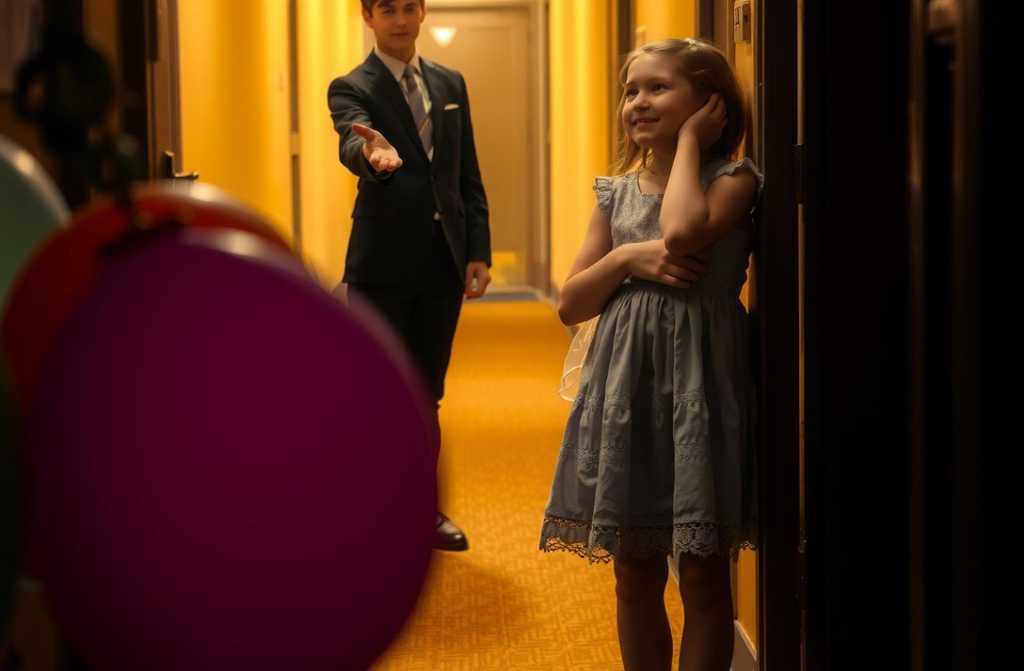
Together with his family, Ben bought some balloons. On them, he wrote in large letters: PROM. He walked up to Daisy and invited her to the leavers dance.
Imagine Daisys face.
Hers was a face that couldnt hide the truthjoy flashed instantly across her features, so radiant it seemed it could brighten up not just the pitch, but every not for me moment she ever felt.
She hesitated at first; after all, she had her own plans, perhaps. But his invitation wasnt about dates in the diary. It was about being seenseen back then and seen now.
She said yes.
And the evening they sharedwell, its something you remember all your life, not because of the dress, but because of the feeling: I wasnt invited from pity. I was invited because I mattered.
Ben wore a suit with a lavender tie. Daisy wore a dress to matcha detail, yes, but one chosen with gentle care. Their old teacher, Miss Taylor, came for a look toosometimes teachers remember the heart, not the grades.
Bens mother wrote, with tears in her eyes, that shed never been prouderher son, now a young man with a truly big heart, knew how to make another’s life feel precious.
Daisys brother summed it up best: plenty of people might have avoided Daisy, but never Ben. He always brought her onto his team.
From there, the story spread like wildfirepicked up by papers and shared by thousands.
People asked Ben, How did you think to do that?
Ben would shrug, as if confused why it was considered a big deal.
Its nothing special, hed say.
And that, I think, is the heart of it: when did a simple act of kindness become a world event, instead of the everyday standard it should be?
It would be easy to focus only on that magical evening. But the real value began much earlierback in Year 2, Year 3, and Year 4, in Bens habit of always making Daisy one of his own.
Because the dance invitation was just the final brushstroke. Before it, there were years full of little choices: sitting together, choosing her for the team, never leaving her out, refusing to let the class pretend she didnt count.
Thats why this story touches us. Its about a promise, grown up and kept. About a boy who declared at ten, Ill take her, and didnt let the years or new schools wash those words away.
Its about Daisy, toohow much it means to be part of the celebration, not simply the project of someones kindness. Not, How good you are for coming, but, How brilliant it is to have you here.
A small promise, so easily overlooked
Too often, adults miss hearing what matters most from children.
Children say it simply, with no drama, no explanation.
Saidand back to playing.
Ill take her to the dance.
At ten, it sounds cute, perhaps even funny. But some words, spoken so young, reveal who a person will become.
Ben became that person.
Daisy, known as Little Daisy Sunshinewhy this isnt just a label
She was called Little Daisy Sunshine. Its a charming phrase. But sometimes, adults hide behind such sweet words; its easy, but it doesnt change anything.
Daisy hadnt needed a nickname. She needed a place among her peers.
Ben gave her that placequietly, every day, out of the spotlight.
Thats why he was looking out for hernot because she was weak, but because she was important.
Theres a world of difference between pity and inclusion.
Pity places someone below you.
Inclusion places someone alongside you.
School as a laboratory of decency
Inclusion is often discussed as policy or law.
But really, its about who sits with you, who invites you, who remembers your name, who makes you feel you belong.
At school, children sense very quickly whether theyre part of things, or leftover.
If a child with Downs syndrome constantly hears, Youre not keeping up, youre not one of us, she can begin to believe its her very nature, not just the way things are.
Ben did the opposite: he showed Daisy (and everyone else) that her true nature was simply being the person beside them.
When life pulls you apart: the test of the heart
Daisys family moving away could have ended everything. So often, childhood friends slip into memory.
But some promises are tied not to daily contact, but to our character.
When he saw Daisy again at that match, Ben didnt pretend not to notice, didnt shy away to avoid awkwardness.
He did the simplest thing: he went over.
And that simplicity is powerful.
We often dont do good things, not from malice, but discomfort.
What will people think?
What if its misunderstood?
What if she doesnt want it?
Ben never hid behind those questions. He simply acted.
The dance invitation: more than a dance
Proms and dances are ritualssymbols: youre included.
Thats why, for so many teens, it isnt about the music; its about belonging.
Children with Downs syndrome often live alongside life, but arent truly invited in. People may care about them, or even love them, but thats not always the same as including them.
So Bens invitation wasnt a nice gesture. It was recognition: you have every right to this evening as anyone.
The PROM balloonsjust a small thing, but they say: I planned this. I was thinking of you. This wasnt randomit was a real decision.
Lavender tie and dress: a language of care
The matching lavender was a tender detail that showed real respectmaking Daisy feel beautiful, welcome, not just a symbol on someones arm.
Their teacher attended, too, and that matteredschool is more than lessons; its memory. When a teacher sees a students heart stay strong, it humbles even the grown-ups.
Bens mothers words were an anchor: shed watched her boy grow into a man with a huge heart. No pretence in her pridejust a mother seeing her hopes come true.
And Daisys brother reminded everyone: Plenty would have turned away. But not Ben.
Why did this story go viraland why thats bittersweet
People share it because its a light in the worlda reason to believe in kindness.
But theres a sad side, too: if a simple act of inclusion seems like news, then theres still not enough everyday goodness in the world.
Ben said, Its nothing special.
Hes right.
It ought to be the normnot leaving people out for being different.
What we can take from it
Not all of us can go viral.
But every one of us can do that one little thing that, for someone else, means life inside the circle:
sitting beside them;
inviting them to join;
saying their name;
holding their gaze with kindness;
being a friend, with no conditions.
And perhaps, if enough of us do, stories like this will stop being news.
They’ll simply be life itself.





