
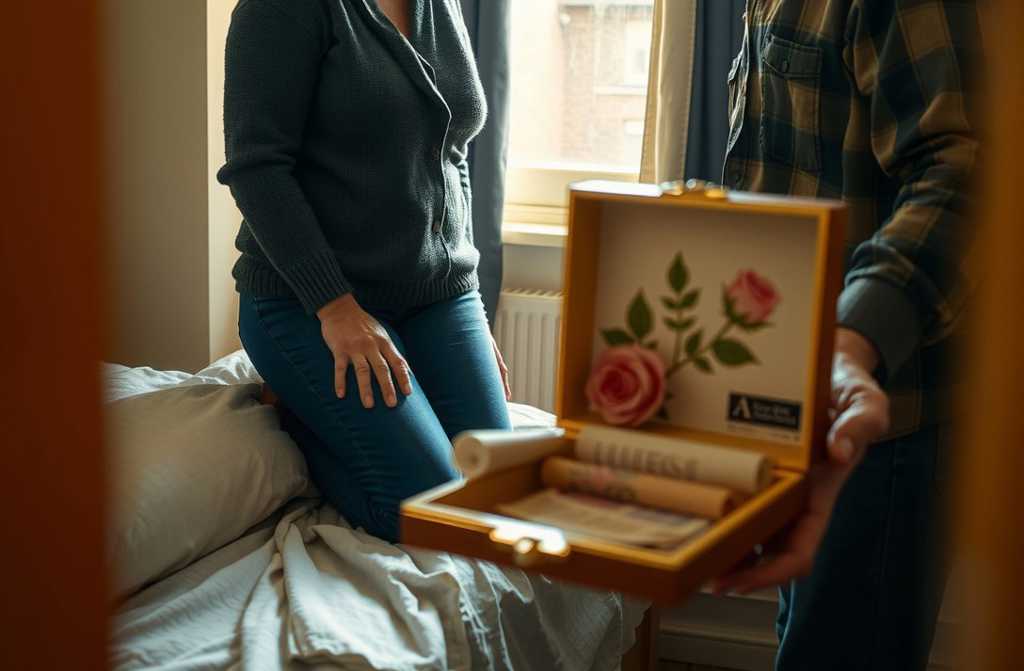
For twelve years, my mother-in-law called me an outsider. And then, at her funeral, my wife opened her jewellery boxand I broke down and wept right there, in her room.
But that came later. Back in 2014, I still believed things would get better.
I was forty-twoa late wedding, as my mum put it. Rachel was forty-four. We married in June, at the registry office on Castle Street in Norwich. I caught the bouquet myself, since I hadnt invited any mates and wanted to avoid fuss. Rachel was the sameshe never liked having more than three people around at once.
Her mum came to the ceremony in a deep navy dress. Margaret Evans. Sixty-six, retired accountant, pensioner. She sat at the table, back straight as a rod, like a string was drawn tight between her shoulder blades. She looked at me with those light grey eyesalmost see-through, ringed with a dark rim. I could never quite work out what was in her gaze. Not anger. Not resentment. Something more like assessmentas though she was deciding how long Id last.
So, youre a vet then, Margaret remarked while Rachel was off to get the cake.
Yes, I replied. Twenty years now.
Twenty years patching up other peoples dogs. And you havent tired of it?
I smiled. I was used to that sort of tone. You learn not to flinch when youre holding frightened cats every day and picking splinters out of dogs paws. My voice stayed low and gentlethe sort that calms animals, and sometimes people as well.
No, I havent tired of it.
Margaret nodded. No smile, no well done, no thats a good job. Just a nodthen she turned away, looking out the window.
On the dresser in her bedroom, where I’d gone to hang up my coat, sat a white porcelain jewellery box, about the size of my palm, with a pale pink rose painted on the lid. The metal clasp was tarnished. I reached for it, just out of curiosityit was a beautiful thing.
Dont touch, Margaret said from the doorway. Not harsh. Not upset. Just a fact. Like mind your head or wipe your feet.
I pulled my hand back.
And thats how it went for twelve years.
Every month, wed drive to her house on the edge of Norwich. Detached place, with a garden and a porch under the eaves. Margaret always baked pies, poured tea, asked Rachel about work at the print works. And to me, shed deliver questions that had no right answer.
Did you salt the soup? shed ask.
Yes.
It shows.
Rachel would sit between us. Always between usat the table, in the car, on the porch. My wifenow fifty-six, then forty-fourtallish, with long arms, but narrower at the shoulders than she looked when she wore her coat. She walked with a slight stoop, like someone used to keeping out of everyones way. It summed up her character. She never wanted to upset either of us, so she never took anyones side.
For the first year, I tried. I brought giftsa scarf, hand cream, a fancy tea set. Margaret accepted them all with the same look. Thank you, then shed put them away in a cupboard. I never saw any of my gifts out on show.
I tried helping in the garden. Shed say, I can manage myself. I offered to clear the table. She replied, Sit down. Youre a guest.
A guest. After a year of marriagea guest.
The next year, Rachel attempted a chat.
Mum, enough. James is making an effort. You do see it.
Im not saying anything. I talk to him politely.
Rachel looked to me. I just shrugged. Technically, Margaret had a point. She never shouted, never made a scene. Just kept a relentless distance. Solid stone, not a crack in it.
By the third year, I stopped trying.
No more gifts. No more offers of help. Id arrive, sit, eat pie, answer her questions, and every time we left, Id take a big jar of crab apple jelly. Margaret always set it on the porch railingsilent, no this is for you. Just the jar, plastic lid. Id take it home, open it, and eat it. It was deliciouswhole little apples in a golden syrup. I figured she just wanted to get rid of the excess. Why else?
In 2016, I won the district veterinary award. Sounds silly, but it meant a lot to me. Twenty-two years working, and finally a certificate, a mention in the Norwich Chronicle, my photo in the local press. I told Rachelshe hugged me, said she was proud. At the weekend, we went to Margarets, and I told her about it at dinner.
A competition, eh? she repeated. Did they give you any prize money?
No. Just a certificate.
A certificate, hmm. She nodded. Well, a certificate is alright. In our family, we dont praise much, but a certificates a useful thing. You can put it in a frame.
She said it without a smile. We dont do praise in our family. Ive never forgotten that line. It felt like a final verdict. In her world, there was no place for affectionate words. She, I thought, was one of those who see praise as a weakness.
Later, in the car, Rachel said, Dont take it to heart. She was brought up that way. No one ever praised her.
I nodded. Fineno praise then.
On that Sunday, I noticed the jewellery box with the rose on the dresser again, passing the bedroom en route to the loo. Same white porcelain, tarnished clasp. Next to it was a stack of newspapersMargaret bought the Norwich Chronicle each day from the newsagent, read it over breakfast, then stacked it neatly on the veranda.
***
The years rolled on. Years arent just numberstheyre a whole life. Years of identical Sundays: pies, tea, silence, and a jar on the porch.
Of course, it wasnt only Sundays.
There was New Years 2018. We visited Margaret because Rachel couldnt leave her mum alone on New Years Eve. The three of us around the tableMargaret set out salad, hot food, bread. At my seat, a plain white plate. For herself and Rachel, the good chinablue flowers around the rim.
I looked at the plate. Looked at Margaret. She caught my eye. I realisedit wasnt forgetfulness. It was purposeful. I was a guest. Not for the family china.
Rachel noticed. She stood up, fetched another blue-rimmed plate from the display cabinet, and put it before me. Margaret said nothing, but addressed all her conversation that evening to her daughter.
Rachels birthday in 2020we invited Margaret over to our flat, on the third floor. She brought a cake, and spent the whole evening reminiscing with Rachel about her childhood. Remember third year at school? Remember going fishing with your dad? I sat and listened. In three hours, Margaret didnt once address me. Not a single question, not even a glance. I was invisible.
After Margaret left, I cleared the table. Rachel stood in the kitchen doorway.
Sorry,” she said.
For what? I asked.
For mum.
Its not your fault.
I know. But still, forgive her.
She stood in the doorway, leaning forward, arms at her sides. Her face bore the marks of all the years shed balanced between her mum and me. Not age, but the weariness of someone holding two ends of a rope, knowing that eventually, one will let go.
Then, sometimemaybe it was 2019, or was it 2021? Time blurs after so many identical years, like beads on a string. But one bead was different.
In winter 2019, I rescued a deer. Sounds ridiculous, but its true. A young deer had wandered into the outskirts of the village, got tangled in a barbed-wire fence, and cut its leg. They rang the surgeryI went. Four hours in the frostpain relief, disentangling, bandaging, waiting for the wildlife trust wagon. The deer survived. Norwich Chronicle wrote it upVet James Randall Rescues Deer at Riverside. Rachel cut out the article and stuck it on the fridge.
Margaret never said a word about it. Week later, we visitednot a question, not a comment. As though it hadnt happened. Id grown used to it.
In 2021, I volunteered at a childrens camp on the edge of the countyvaccinated stray cats and dogs the children had been feeding. Did it free of charge, during my holidays. The camp director sent a thank-you to the clinic, and the Chronicle ran another piece. I didnt bother telling Margaret. What was the point?
Then, in the winter of 2024, Rachel fell seriously ill. Pneumonia. Two weeks in hospital, then another month at home. Margaret arrived on the second day. She came into our flat, took off her coat, hung it up. Then stood in the kitchen awkwardly, not knowing what to do.
I said, Please, have a seat, Margaret. The kettles just boiled.
She sat down. I poured her a cup. There we were, the two of usno Rachel between us, no buffer, no interpreter. First time it had happened in ten years.
How is she? Margaret asked.
Better. The doctors say shes on the mend.
Youre looking after her?
Every day.
She nodded, looked at me. And in her clear eyes, I saw something new. Not warmthMargaret didnt do warmth. Something like acknowledgementa flicker, gone as quickly as it came.
Its good youre here, she said.
I nearly dropped my cup. Those were the first kind words from her in ten years. The firstdirect, with no sting.
But Rachel recovered. And everything slid back. Our next visitpies, silence, a jar on the porch. That phraseits good youre herehung in the air, the only warm night in a winter without end. I tried to hold onto it, but Margaret locked it away again. As if even that was too much.
At work, I often found myself thinking about her. Odd, isnt it? So many years, barely a breakthrough, apart from that one phrase. Colleagues would ask, Hows your mother-in-law? Id say, Alright. Because how can you explain it? Margaret didnt shout, didnt insult, didnt push me outshe did something worse. She ignored me. Thats hard to explain. Try telling someone, My mother-in-law is always perfectly civil, and thats why it hurts. It sounds like complaining for the sake of it.
There was an elderly woman who brought her cat, Tiddles, to my surgery every monthseventeen years old, arthritic, lonely owner. Shed sit, pop Tiddles on her lap, and say, Tiddles, doctor will help you. Wont he, doctor? And each time Id answer, Of course. Although I knew a seventeen-year-old cat with arthritis cant be cured. You just make her comfortable. Patienceyou learn it as a vet.
Maybe thats why I put up with Margaret. I was used to things you couldnt fix. Sometimes its enough just to be there. Turn up each month, eat pie, take the jelly. Not to healjust not to walk away.
Rachel once asked, Does it hurt, visiting her now?
Not anymore, I said.
That was almost true. The pain dulled over time. What was left was more like a nagging soreness. Not sharp, but persistent. Like Tiddless arthritis.
One summer day in 2025, I arrived before Rachelshe was running late at work. I rang the bell. Margaret answered. Behind her, in the hall, I glimpsed her hurriedly tucking something away in the bedroom. A newspaper clipping, no, just a trimmed rectangle. She hid it, then came back as if nothing had happened.
Come in. Rachel wont be long?
Half an hour or so.
Wait in the kitchen. Piell be ready.
I thought nothing of it. Who knows what she was cutting from the papera recipe, maybe. Or an obituary.
***
Margaret passed away in March 2026. She was seventy-eight. Heart stopped in her sleep. The ambulance rang Rachel at four in the morning.
She sat on the bed, listening. Hung up, looked at me, and just said, Mums gone.
Just two words. I hugged her. She didnt cry. Rachel never criedMargaret taught her that too.
We buried Margaret two days later. Norwich cemetery, grey March sky, ground still hard from frost. Neighbours came, a few ladies from her old office. Jeanher neighbour, seventy-two, in a bright turquoise scarf among all the dark overcoats. Shed been friends with Margaret for forty years.
I stood at the edge, feeling strange. Not grief. Not relief. Emptiness. So many years beside someone who never let you nearand now shes gone, and youre left not knowing what to feel. Sadness, perhaps? But for whom? The woman who called you an outsider? Or the one who, just once, said, its good youre hereand never again?
The wake was in Margarets house. The same piesmade by neighbours this time. The same table, only her place was left empty.
Three days later, Rachel and I went to sort her things. It was a Saturday in March. The house smelled as alwaysdry wood, stored apples, something freshly clean, like laundered linen.
Rachel started in the wardrobe. I began with the kitchenboxed up crockery, sorted out the preserves. On the top shelf sat three large jars of crab apple jelly. The last ones. I set them aside.
Then went to the bedroom to help Rachel. She stood by the dresser, the porcelain jewellery box with the rose in her handsthe very same one.
I found this in the top drawer, she told me. She always kept it on the dresser, didnt she? But this last year, she put it away.
I remember, I said. She wouldnt let me touch it.
Rachel turned the old clasp. Opened it.
Insideno rings, no brooches, no cash, no letters from her husband. Instead, a stack of newspaper clippings, carefully trimmed, neatened into a pile. The paper was yellowing at the corners.
Rachel picked out the first. Unfolded it.
Norwich Chronicle, 2016. James Randall named District Veterinary Champion. My photo.
The second.
Norwich Chronicle, 2019. Vet James Randall Rescues Deer by Riverside. Photome kneeling in snow beside a deer.
A third.
Norwich Chronicle, 2021. Thanks from Childrens Camp: Vet Runs Free Vaccination for Strays.
A fourthsmall note, barely recalled. 2017. Cat Clinic on King Street: Twenty Years Caring for Pets. Group photo, I was in the back row.
Fifth, sixthseven clippings. All about me.
Rachel stared at me; her hands shook a little.
Jamesall these, theyre all about you.
I stood in the middle of the room. My fingers rough, knuckles dry from a lifetime of hand-washing after treating animals. These hands had cared for patients for twenty years, reaching out to a mother-in-law who refused to take them.
Except, she had taken them. In her own way. Cutting out clippings and folding them in a box with a rose.
I sat on Margarets bed. Picked up the cuttings, one after another. They smelt of old newsprint, and something elsemaybe Margarets perfume, or the wood of the drawer where theyd lain.
Rachel sat beside me.
I didnt know, she whispered. I swear, I had no idea.
Nor did I.
She never said a word.
Not once.
We sat in silence. Outside, March sunlight streamed through the window, dust motes dancing in the beam. The house was empty. Margaret was gone. Her secret rested on my lapseven yellow rectangles, each one chosen, handled, and saved by her.
I sifted through them again. On the first, from the vet award, a note in pencil on the margin: James, 1st place. Margarets handsmall, neat, accountants script, as straight as a ledger line. She wrote it not to forget. Seven clippingsnot one lost or creased or tossed away. Each one kept like a treasure.
Rachel held the one with the handwriting, rubbing her finger over the soft pencil marks. Then she turned toward the window.
My dad died when I was twenty, she said softly. Mum never cried. Not at the funeral, not after. I thoughtshe didnt care. Then, years later, I found a box in the loft, full of his shirts. All clean, ironed. Shed been washing them for twenty years. Empty shirts.
I looked at her. She gazed outside.
She put everything in boxes, she said. Feelings, shirts, cuttings.
But why? Why keep clippings of a person you never accepted? Why hide them away if you could just say, Im proud of you? Why stay silent for so many years?
***
I got my answer that evening. Wed nearly finished packing when the door knocked. Jean, in her coat over her house jumper, turquoise scarf bright as ever. She brought a pot of stew.
Eat up, she said. Margaret would turn in her grave if you went hungry here.
We sat at the kitchen table. Jean served up stew. Rachel ate. I just fiddled with my spoon.
Jean, I said, may I ask something?
Go ahead, love.
Did you know Margaret kept all those clippings? About me? From the papers.
Jean set down her spoon. She looked at me, then at Rachel. She just shook her head in a way that signaled shed expected this conversation for years.
I knew. I saw her with the scissors, cutting them out when Id pop round for tea. Id ask, What are you up to? Shed say, My son-in-laws in the paper again. Then shed tuck them away in her box.
Rachel put her spoon down.
Did Mum ever say anything about James to you?
She did. More than once. Shed say, My son-in-laws a treasure. Saved a deer, got in the paper. Im proud of him. Just dont know how to say it.
I felt something heavy rising in my chest. Not quite tears yetjust pressure.
Why? I asked. Why couldnt she say it?
Jean was quiet.
I knew Margaret forty years. Neighbours since she moved in with her late husband. Shes always been like that. Her mum never gave her a kind word. Brought up in a house where praise was spoiling, where well done meant youll get too big for your boots. Where Im proud of you was never spoken. Margaret couldnt do things another way. I told hertell your son-in-law, make him happy. Shed say, No, Jean, thats my business. Dont interfere.
Buttwelve years! I said. My voice, normally steady from years of soothing animals, trembled.
Twelve years, Jean agreed. Her mum was like that for sixtyuntil the end. Margaret was actually quite warm by comparison.
Rachel said softly, What was Mum afraid of?
Jean studied her. She was frightened. She said to me, If I praise him, my daughter will think she doesnt need me anymore. That James has taken my place. So I stay quiet. Otherwise Rachel might see hes better than me, and what would she need her mum for then?
Silence settled so thick, I could hear the tap dripping in the bath. Margaret always meant to fix that.
Thats not true, Rachel said. I never would.
Shed never believe it, Jean replied. Fear doesnt listen to reason. You say, Its alright. But your fear tells you, No, its not. And you end up listening to fear, because its inside you, so close.
I put down my spoon, got up, and stepped onto the porch. March evening, the air sharp, smelling of wet snow. The sun was setting, and the sky was mauve-grey. On the porch railingnot a thing. For years, there had always been a jar of jelly.
All those years. It wasnt hate after all. It was fear. The fear of a woman who loved her daughter so much she was afraid to love anyone else near her. Afraid shed be replaced, lose her place. So she chose the only way she knewsilence. Distance. A stone wall, behind which she hid a rose-covered box, filled with proof of what she couldnt admit aloud.
In our family, we dont do praise. Now I understood. Not dontcant. Her mother hadnt, she couldnt, and if not for that box, no one would ever have known.
I remembered the day Rachel was ill. Its good youre here. The one crack in the wall in all those years. Margaret was frightened for her daughter, and that fear was greater than her fear of losing her. For just one phrase. One day. Then the wall was back.
And the day Id come early and found her hiding a clippinga story about merushing to tuck it away.
Rachel slipped out onto the porch.
You alright?
No, I said. But I will be.
She stood beside me. No hugjust shoulder to shoulder, as wed stood for all those years.
She did love you, she said. In her own way. Awkward, silent, through a jewellery box. But she loved you.
I know now, I said. I finally know.
Back inside, Jean had done the washing up and was about to leave. She paused at the door, looked me in the eye and said, James. Dont think she didnt care. She did. Its just, that bridge from her heart to her mouththat was broken since childhood. And she never managed to mend it. Didnt have the time.
Jean left, the turquoise scarf flashing in the dusk.
Rachel and I packed the last boxes. I took the jewellery box. And the last three jars of jelly.
At home, in the kitchen, I set the box on the window ledge. Opened it, took out the clippings, laid them all on the tableseven in total. Seven yellowed bits of local paper. Seven times Margaret had cut out a story about me, clipped it, tucked it away in her box. Seven times shed done what she couldnt say.
I sat for a long while. Then got up, fetched a jar of jellythe last one. Pulled off the lid. Amber syrup, apples whole inside. I scooped some into a little dish. Set it in front of me. And then another dishacross from me, at the empty place.
For twelve years, she looked at me as an outsider. And I ended upin her jewellery box. The place she held most dear.
Margaret didnt know how to love out loud. She loved in silencein trimming, folding, hiding away. In making jelly and setting it on the porch railing, never saying a word.
Maybe thats love, too. Awkward, silent, hidden behind a wall. The kind you only find once the person is gone. Its all the more bitter for thatbut no less real.
I ate a spoonful of jelly. Tart apples, amber syrup, the taste of anothers garden. And I thought: next time I want to say something kind to someoneIll say it. There and then. Out loud. I wont put it in a box.
Because boxes can be opened. Or left shut forever.
A kind wordit lives. Its heard.





