
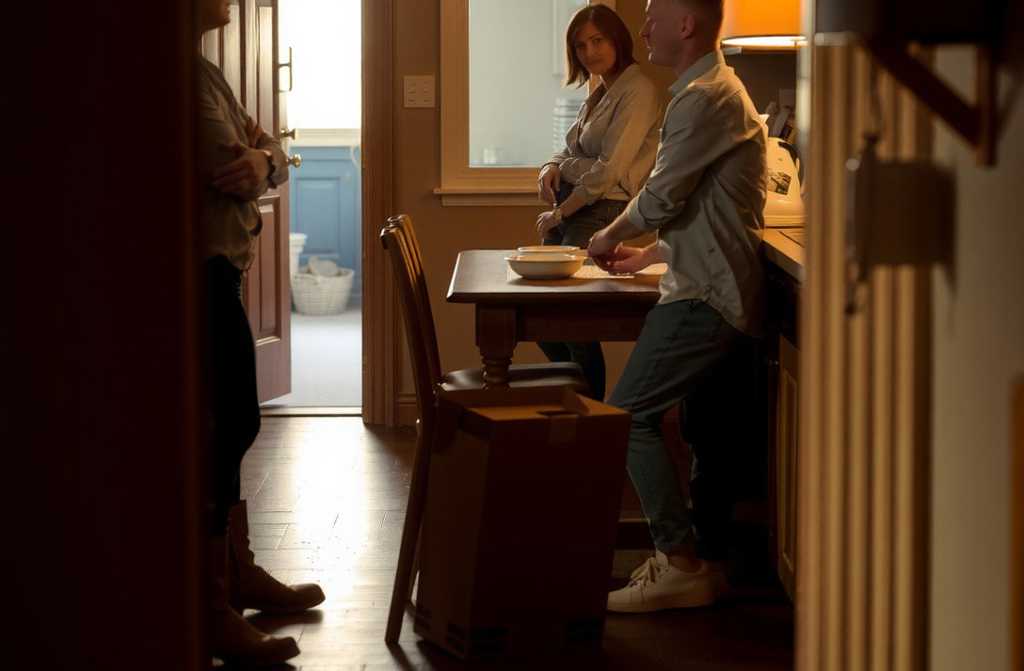
I went to return some belongings to my ex-girlfriend, and her mum opened the front door wearing little more than a housecoat. I certainly wasnt planning to stay long at all; my only intention was to hand back a box of things and make a clean exit. Of course, real life rarely sticks to what we plan. My names Jack Archer. I’m 31 and I manage construction projects for a living. Its been three weeks since I broke things off with Emily Drake.
There was no shouting, no grand dramajust a feeling that ran out of steam, quietly and slowly, like a flat tyre you barely notice until the cars running on the rim. We were together four months, which is both brief and somehow painfully long when two people arent quite right for each other. No argumentsjust an uncollected box of her books, a scarf, a cardigan, and some photos sitting in my hallway, nagging at me each time I passed it.
I messaged Emily three times in two weeks about collecting her stuff. She kept promising shed pop over soon, but never did. So, one Thursday, straight after work, boots still muddy and shirt streaked with plaster, I loaded the box into my van and drove the forty-five minutes north to Willowbank, to her mums house. Emily had moved back in when her flats contract fell through; shed said her mum had a big house, nice garden, peaceful spot.
I pictured a woman in her late fifties, glasses perched on her nose, maybe something bubbling away on the hob. When I rang the doorbell, the footsteps coming down the hall werent hurried. And then the door swung wide and, wellI genuinely forgot my own name. Louise Drake, Emilys mum, stood there in a short satin dressing gown, nothing underneath by the looks. Her auburn hair was still damp, curling softly at her shoulders, as if shed just stepped out of the shower.
She wasnt the least bit embarrassed. She just looked at me, level and calm, her brown eyes assessing, then simply said, You must be Jack. I think I managed a yesmy brain cant quite confirm how coherent it was. She gave a half-smile, widened the door, and explained that Emily had popped out for milk and would be back in about an hour. She offered to let me wait inside.
I stared at the box, stared at her, and weighed up all the sensible choices. I should have said thank you, left everything on the doormat, and gone straight home. Instead, I stepped inside. She closed the door behind meutterly relaxed, as if letting a stranger into the house in pyjamas was a Thursday evening tradition. The hallway was warm, not just by temperature but by how evidently lived-in and cared for it was.
Pots of growing herbs crowded the windowsill. A big jigsaw puzzle sprawled across the coffee table in the lounge, half-completed. A bookshelf, absolutely jam-packed with paperbacks in double rows, lined the wall. When Louise reappeared, she was dressed in jeans and a loose, linen blousestill casual, but a step up from the dressing gown. Her hair had dried a bit and she had that kind of unselfconscious presence that made the room feel cosier.
She handed me a cup of strong builders teawithout asking, just assuming, like it was obviousand nodded towards the kitchen table. Sit down, she said, matter-of-fact. I did. She asked how long Id seen Emily, and I told her four months. She nodded as if that confirmed something shed already figured out.
I asked how much Emily had told her about me. Louise took a sip of her tea, eyes down, and replied, Enough to know you broke up mutually and youre not awful. Then she looked up. “The rest, Ill work out for myself.” Unsure what to say, I asked her about the puzzle by the sofa. She told me it was a thousand-piece map of all the National Trust estates, and shed been at it for weeks, always losing bits beneath the settee.
I said I was good at puzzles. She arched an eyebrow, amused, and told me, Men whore good at puzzles rarely say soat least not straight off. I laughed, unexpectedly and genuinely. She smiled into her mug. We ended up sitting there for the best part of an hour. I learnt Louise was fifty-threeshe said it as if reading a train time, just a factnot long divorced after two decades of a marriage she politely described as having run its course. Not bitter, just matter-of-fact, like closing a chapter in a decent but rather uneventful novel. Shed kept the house, and now ran her own gardening consultancy, enjoyed old Miles Davis LPs and the odd trashy crime drama. Had very strong views on how scones should be made.
I told her about my job, growing up in Wycombe, how a cash-in-hand summer job at seventeen turned into a proper trade that, weirdly, Ive never grown to loathe. She listened, truly listened. She remembered small things I said and circled back to them in conversation, not in a forced way, but because she was evidently paying attention. At exactly forty-seven minutes in, Emily rangsaid shed been ambushed by a queue at the supermarket and would be late.
Louise shrugged and asked if I fancied some food reheated. Youre sat at my kitchen table drinking my tea, she said, so the unfussy ship has sailed. I stayed for tea. It was roast chicken and mixed rice, nothing fancy but delicious, shared over increasingly familiar conversation as the light faded in the kitchen and the estate outside turned quiet.
At some point the box and any awkwardness about Emily faded from my mind. I was simply content, in that kitchen, sitting with a remarkable stranger. When Emily finally arrived, announced by car lights sweeping across the window, Louise and I were locked in spirited debate about whether London driving or motorway driving is worse. She insisted the former: At least on the motorway, everyones heading the same way.
I was still turning that over when Emily walked in, saw the box, then caught sight of me at her mothers table. She faltered. Emily glanced at Louise, then me, then at the pair of empty plates by the sink. Did you two have dinner? she asked. Louise, as calm as before, replied, Yesare you hungry? Emily put her shopping down as if to buy herself some time. Jack, how long have you been here? In my head: two hours, eleven minutes. Aloud, I settled for: A little while. Emily fixed me with a long look, glanced at her mum, and something unsaid passed between thema kind of silent, lifelong shorthand mothers and daughters have. Then she sighed and headed off to the kitchen.
I stood and thanked Louise for dinner. She walked me to the door, arms crossed lightly, insisting it was no bother. Outside, the evening air was cool. The porch light above flickered. I noticed a loose wire by the fitting, made a quick mental note, and sauntered away. I looked back onceshe was still at the doorway, not quite watching but not quite doing anything else. Take care, Jack, she said.
All the way home, I kept thinking about a woman I had no right to be thinking about, andheres the uncensored truthI didnt want to stop. I repeated to myself I wouldnt return. I hadnt done anything wrongjust dinner and talkbut something about that warm kitchen and Louises steady, direct attention lingered, as did her throwaway motorway remark: At least everyones going the same way. The right kind of statement, the sort that sticks.
Back at work, I busied myself with plans for a new build in east Harrowford, wrangled with a pair of subcontractors, and ate lunch at my desk. I absolutely, definitely did not think about Louise. Except for four times that morning, each time actively choosing to refocus on my spreadsheet.
Then, Saturday, I was at B&Q looking for bits to mend my mate Bens decking, and passed a display of outside lights. I remembered Louises porch lightthe one with the dodgy wiring. It was a genuine hazard, especially with rain. Thats what I told myself: aloud, in fact, in the lighting aisle. A woman nearby gave me a look and moved on. I bought what Ben neededplus a new outdoor light fitting, for no other reason than to fix Louises porch light. Didnt ring ahead. That was a choiceI just wasnt being honest about my reasons.
Pulled up late morning with my tools and two cups of takeaway coffee from the bakery on Hawthorn Road. Why two? Id given up lying to myself. Louise opened the door in paint-splattered jeans and a baggy checked shirt. There was a streak of blue paint on her arm, a matching fleck near her chin. She held a paintbrush and eyed me standing there with a toolkit and coffee.
The porch light? she asked. Saw the wiring Thursdayfigured best to sort it before the rain gets in. She levelled her gaze. And the spare coffee? No excuse, I admitted. She allowed me inside. She was mid-paint-job in the spare room, base layers of sky blue already fresh on the wall. Shed cleared the room, laid dustsheets, and was methodically cutting in.
I peered through the doorway as she worked. Finally tackling it this weekend? She shrugged. Just got tired of staring at it unfinished. The porch light took all of twenty minutes. She brought my coffee and sat on the step while I worked, quietly sipping her drink. We didnt fill the silence with pointless chat; the quiet between us was just thateasy. After, I washed up at the kitchen, and on a whim offered to help paint. Im alright, she said, but the far wall needs a second coat if youre determined to lurk about. I grabbed the spare roller.
We painted in that same gentle, wordless rhythm wed stumbled into over kitchen tea. She moved around the room as if wed done this before, neither of us getting in the way. At one point, Louise asked, not how I was, but how things really were. I hesitated, but then gave her the real version: that I felt perpetually in motion, yet stuck; that something in me had gone quiet without me noticing. That the break up with Emily hadnt really hurt, and that bothered me more than the split itself. Louise was thoughtful, then said, Thats what happens when youre sensible so long, you stop asking if youre happy. That landed, real and heavy.
I asked how she knew that. Because I was there twelve years, she said, and spent another three figuring out what to call it. We finished painting just before noon. She washed brushes at the utility sink while I bundled up the dustsheets. We stood together in the doorway admiring the freshly blue room, quiet pride curling between us. Better, she murmured. Much, I agreed. She turned to the kitchen, offered to make lunch, and left it at thatno pressure. I stayed.
Lunch was tinned tomato soup and thick toast with sharp Cheddar. We chatted about her businessdifficult clients, the maddening joy of starting from scratch. I told her I often felt adrift myself. She smiled like she understood, genuinely understood, and a new sense of ease settled between us. Twice during lunch, her phone lit up on the counter; the second time, she simply turned it over, unspoken boundaries. Then, she said, There are parts of my life Im still working through. I wanted to say that before thiswhatever it isgoes further. She didn’t look up. I put my spoon down. Im in no rush, I told her. She finally met my eyes, searching for something. Then nodded, apparently satisfied.
I drove home with a smear of blue paint on my arm and the knowledge that I was deep in something bigger than Id expected. Louise called first, which surprised me. It was a Tuesday evening, about seven-thirty, and I was sat in my van on the high street, half-listening to the radio, when my phone buzzed. It was Louise. I answered, and she launched into, Back fence gates stuck. Ive got a client coming tomorrow and need to sort out the garden displaycould do with a hand. I suggested she try lifting while sliding. Already tried. She then realisedI didnt consider the rain swelling the wood. I assured her itd be an easy fix, and arrived just after eight.
Louise was in the garden, boots on, moving potted plants about. The gate was jammed by a swollen, warped boardI could see it straight away. I grabbed my plane from the van, planed down the bottom, and twenty minutes later, the gate swung free. Louise arranged her planters, precise and focused. I moved a heavy stone pot where she wanted, joked that I was nearly spot on. Close only counts in horseshoes, she replied. We stood out in the fresh evening, both quietly proud of the garden setup. I told her it looked brilliantshe accepted the compliment without brushing it off.
She invited me for a cuppa on the back porch, and I couldnt think of a single reason to refuse. We sat there, her with a glass of water, me empty-handed, crickets loud and a distant dog barking. She looked at me sideways. You say youre fine a lot, you know. I asked, What should I say instead? She shrugged. Whatever is actually true. After a pause, I told her, honestly: Ive not been fine for a while. But I am better here. Louise was quiet, then, Me too.
A little while later, headlights swept the side fence. Car pulled up, and a solid manlate fifties, shirt still tuckedstrode through the side gate. He stopped dead at the sight of me. Louise stood, calm as anything. Robert, you should call before coming. Roberts face was careful, polite, voice a touch too smooth: Saw the light on, thought Id drop by. He wanted to discuss some divorce account, apparently urgent. His handshake was the sort designed to signal something; I matched it just enough. He left after ten minutes of posturing. Louise exhaled slowly afterwards. My ex-husband, she said, unnecessarily. So I assumed. She looked at her water. He likes to drop in and remind me he can. It used to work. Not so much now. I just sat beside her, silent solidarity.
Before I left, she leaned against the frame as before, this time with a different decision in her eyes. Hell be a complication, she said. I can handle complicated, I answered. She nodded. Come round Saturday, Ill cook. Proper dinner. I promised Id be there, and for the first time in a long while, I wanted to keep that promise.
Saturday, I turned up just before six, bottle of red wine in hand, probably overthinking my outfit. Louise opened the door in a simple green dress, barefoot, candle lit on the table, and the air scented with roast and rosemary. She noticed the wine and quietly teased, Dressed up, are you? I sheepishly denied it. She smiled, Good shirt. The table was neatly set, record playing low in the background. She handed me a glassdinner was twenty minutes away, she said. We stood in the kitchen chatting about her client success that week, the confidence earned more than boasted. I told her I was impressedshe said she was getting there.
We discussed Roberthis lawyer had been in touch about the account hed barged in about. Louise explained, simply, Thats his wayhe prefers to do things on his terms, not always his to set now. I didnt try to reassure her or tell her not to blame herself for putting up with it before. Just listened.
Dinner was roast chicken and vegetables, with freshly baked bread from the local bakeryno fuss, just satisfying. We talked about my work, her next projects, the odd honesty of not always loving what you do every day. When her phone buzzed, she checked the screen, then simply said, He can wait. A small moment but important, not lost on me.
Afterwards, we moved outside to the back porch with our wine, now softly lit with a new string of fairy lights shed put up herself. We sat side by side on the old wooden bench, close but not quite touching. Louise talked, richer detail this timesmaller stories about her marriage, how habit had shrunk her, made her quieter, less herself. How shed woken up one morning and couldnt recall the last thing shed done just for her own pleasure. She was surprised by how easily it spilled out. Youre annoyingly easy to talk to, she said. Ill try to make that harder then, I answered. She laugheda proper laugh. Then turned serious, looking out at the garden. I havent let myself want things for a long whilefelt safer not to. A pause. Now? I asked. She looked at me. Now Im tired of safe. I reached for her hand, slowly, and she let me. I kissed her, gently, honestlyno rush, only certainty.
She smiled, but with a hint of nervousness. Emily will have opinions about this. I said, No doubt. My ex-husband will have more. I smiled, Let him. Youre not scared off by all this? she pressed. I looked at hera woman who welcomed me in, whod let herself be seen, whod pieced a life back together out of love and hard-won freedom. Not in the least. She laced her fingers through mine and rested her head on my shoulder. The night felt good and true, as if itd been waiting for us all along.
Months later, Id fixed the garden gate for goodan entire new frame, built one bright Sunday. Emily had her opinions, naturally, voiced them at length, but I think in the end she saw her mum happier than ever and left it at that. Robert rang twice, both times sent to voicemail. Lawyers and time handled the rest.
On a Thursday months after that first awkward visit, I found myself cooking in Louises kitchen while she claimed the title of worlds worst grilled cheese cook, too distracted making me laugh to watch the pan. The fire alarm chirped, we howled with laughter, and I took over, finishing supper while she snuggled against my side at the stove, telling me I wasnt as limp at painting and cooking as shed suspected. I told her I was just glad for the chance to prove it. She bumped my shoulder and agreed.
Outside under the porch lightthe one wed fixed together, shining now without a single flickerI realised this: some things, once youve taken the time to mend them, are even better than before. And when life hands you a complicated second chance, the real wisdom is not in saying no, but in showing up anyway, muddy boots and all.





