
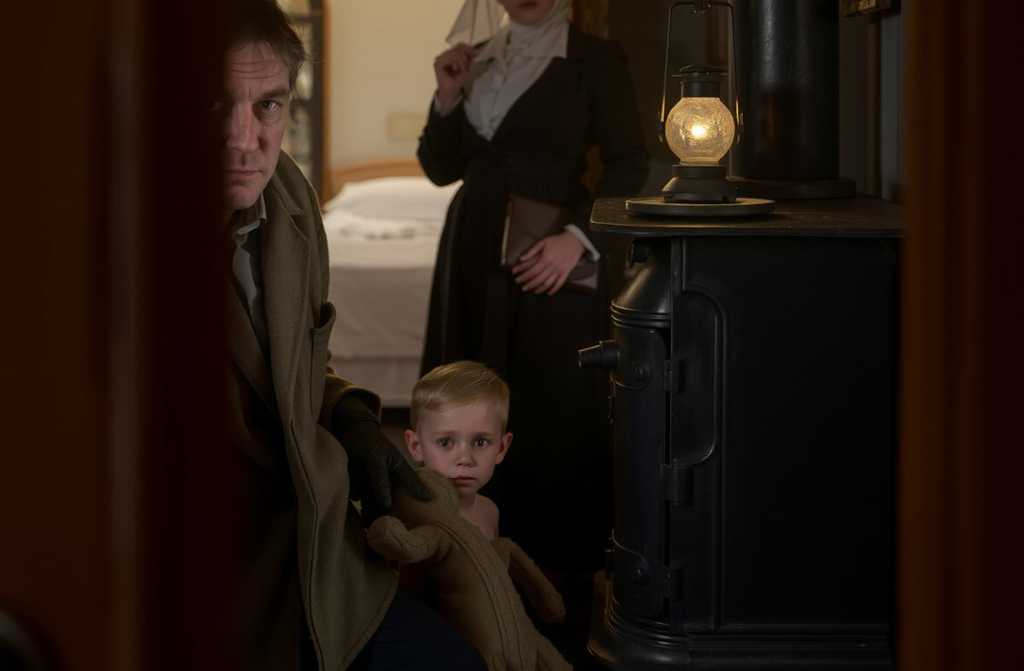
Winter, 1943. On the edge of a freezing night in a draughty military hospital in rural Derbyshire, the chief surgeonone Dr Arthur Blackwelldiscovered a half-frozen, barely alive boy just outside under the snow. The child had no parents and clutched only an ancient, moth-eaten stuffed rabbit. Dr Blackwell was not in the business of heroicshe simply asked someone to bring the boy some soup and let him stay. He could not have imagined this simple act of kindness would set off a chain of events, which, some twenty years later, would circle back in the most astonishing way.
The winter of 1943 was so cold that even the proud old oaks and beeches surrounding the converted manor-turned-hospital seemed ready to crack in two from the frost. The hospital, once a stately home where young ladies curtsied at balls and gentlemen danced the quadrille, now watched stoically over rows of military cots, the sharp tang of disinfectant, and the muted groans of wounded soldiers rising each night towards deeply grooved ceilings.
Dr Arthur Blackwell, the hospital’s lead surgeon, stood at his office window and watched the snowstorm fill in the narrow track leading to the train depot. He was fifty-threea tall, slightly stooped figure, with the long, sensitive fingers one expects of a pianist, or perhaps a very good pickpocket. Only, in his case, these hands had cut more bandages and sutured more wounds than could ever be counted. Were it not for the war, he could have been in Oxford, heading a department, writing papers. But when the call went out, heprofessor and allhad begged to be sent to the front. Theyd refused, citing his age. So he had taken up this post on the borderlands, where ambulance trains dropped off the most desperate cases.
The door squeaked open, sending in a cloud of icy fog and Sister Constance Briggs. She was about forty, built like a bulldog, with hands red and raw from endless scrubbing with carbolic.
Yes, Sister? Dr Blackwell did not turn around.
Theres a thing, Doctor. The night porters found a boy at the crossroads. Nearly dead, covered in snow. Theyve got him in the storeroom, trying to warm him up.
Arthurs grip tightened on the windowsill.
How old?
About seven, maybe eight. Talks in his sleep. Keeps calling for his mum, and someone called ElsieI think a sister.
For a moment, Blackwells breath fogged the glass. His lined face, worn down by years of night shifts, did not betray much, except a sharp furrow at the corner of his mouth.
Take me to him.
Down in the old servants wingnow mostly for firewood and cleaning suppliesthey found the boy nested on some burlap sacks by the iron stove. He was so thin he seemed like nothing but a bundle of twigs inside his moth-eaten coat.
Blackwell knelt beside him. The boys face was pinched and pale, lips blue, long lashes trembling as if lost in a nightmare.
Hello? Blackwell gently touched the shockingly cold brow. Can you hear me?
The boy flinched and cracked open his eyes. For a second there was nothingnot sense, not thoughtbut then a faint spark flickered.
Mister? His voice was the sound of dry grass. Im Tommy. Tommy Barnes.
Is that so? How old are you, Tommy?
Eight His effort to sit up failed.
Wheres your mum? Wheres home?
Tommy squeezed shut his eyes. A single tear slipped down his filthy cheek, cutting a clean line. He said nothing. But Blackwell understood enough.
Get him to the smallest ward, Blackwell said, straightening up as his back reminded him unkindly of the hour. Stoke the fire. His feet are frostbitten, hes nearly starved. Start with a drip and plenty of hot broth, small sips.
Part Two: The Thaw
For a fortnight, Tommy teetered on the line between life and whatever was on the other side. Blackwell came by five or six times a daysometimes in the dead of night, when he could slip away from the theatre. He saw to the dressings himself, checked the boys temperature himself. Tommy raved in fever, called for his mother, for Elsie; then, as he rallied, would lie staring silently at cracks in the plaster high above.
The boys story came in hesitant fragments. His cottage had burned in a raid some weeks earlier. His mother and little sister, Elsie, were killed. Hed escaped the barn as it fell in, then spent weeks wandering the woods, living on what he could scavenge, instinctively stumbling east, away from the fighting. He kept moving until, finally, he could move no more.
Blackwell listened, heart heavy with a dull, familiar ache. His own family were evacuees in Harrogatewife and two daughters. He received their rare, triangle-folded letters, but missed them fiercely. This child, Tommy, had no one left to write at all.
As he improved, Tommy grew helpful. He smiled at the nurses, fetched this and that, tried to make himself useful. But sharp voices or slamming doors would send him cowering into the corner of his bed.
One morning, as the first proper sunshine trickled from the gutters, Blackwell came into the isolation room with a sheaf of papers.
Well, young man, your wounds are healing, and youre bouncing back better than most foals in the spring. Its time to think about your future. Theres a childrens home in Buxton, not too far. Ill make the arrangements.
The words seemed to turn Tommy to stone. The bit of old bandage hed been darning with a borrowed needle slid from his hands. He turned his face to the wall, shoulders shaking silently.
Blackwell knew this would be the difficult part.
Its not so bad, the childrens home. Other children, meals, lessons.
The boys reply was muffled, desperate: DoctorDoctor Arthurcouldnt I stay with you? I promise, I wont be any trouble. I dont eat much. I can helpIll learn to chop wood, I swear!
Blackwell tried to harden himself. Nonsense, he said briskly, standing. I live in the theatre, lad. No time for children. This is a hospital, not a foundling hospital.
He left, closing the door just a shade too loudly.
The rest of the day passed in a fog. A slip of the sutures in his last operation earned himself a silent tongue-lashing. That evening, as the snow returned, he found himself staring at the door to isolation. Constance Briggs, bustling by, paused.
Hes crying in there. Quiet as a mouse, but hasnt stopped in hours.
Blackwell answered as if talking to himself, Hes been battered enough already.
He squared his shoulders, went in. The lamplight flickered, and Tommy lay face down, rigid with misery.
Get dressed, Blackwell said, voice soft but certain.
Is it to the home? Tommy asked, hollow.
To me. In my office, for now. Well see what the future brings. Up with you before you freeze.
Tommy could not believe it. He scrambled to pull on his boots (well, more like slippers, really), grabbed his patched-up coat, and dashed to take Dr Blackwells hand. So they left: one bent, lanky man, and one tiny boy, gripping that big hand as if it were the worlds last thread.
Part Three: Days and Nights
Tommy settled into the little room attached to the doctors office. He astonished everyone with his bright mind and bottomless industry. Up at dawn for water, later chopping wood for the fire, slicing bandages, boiling instruments. The whole hospital took to him. The soldiers whittled toys, nurses snuck him biscuits. Blackwell, coming home late after twelve-hour shifts, often found Tommy dozing on a chair, waiting to share supper.
Their evenings were their own. The fire crackled, the oil lamp purred, and Blackwell would explain anatomy to his young lodgerhow the heart beats, the lungs breath, how fragile life is. Tommy drank in every word, his eyes on those hands: large, deft hands with always-clean nails. In his small soul, something like a calling began to grow.
Doctor, is it hard, what you do? Tommy asked one night, watching Blackwell clean his scalpel.
It is, Tommy. Very hard. You dont just wield a knifeyou hold someone elses life in your hands. But when you see a man who was dying yesterday, today say thank you it makes it all worth it.
One day, I want to do that, Tommy said softly. Determinedly.
Blackwell smiled for the first time in weeksa gentle, sad smile.
Well see, lad. First, youll learn your letters from the nurses. And Ill teach you the restif you want to be a true healer.
The year zipped by. The two became inseparable. Blackwell, whod given thirty years to medicine, discovered that this lost boy rekindled some long-dormant purpose. Someone to raise, to pass on knowledge, to protect. The war crawled along, but in his battered world, Blackwell found something to hope for. He feared, of coursethat war could take it all away in a heartbeat.
But fate had other ideas.
March 1944 was relentlessly grim. Casualties poured in as the Allies pushed up through the continent, and the hospital never quieted. Blackwell was on his feet days at a time, gaunt and grey.
One silent night, Tommy awokesomething wasnt right. The fire was dead, corridors cold and eerily quiet. Heart pounding, he padded barefoot to the surgical ward.
The door was ajar, lights blazing. There, on the floor, lay Dr Blackwell, face down beside the operating table. His mask had slid off; his remarkable hands lay open as though clutching at stray fragments of air. Sister Briggs knelt at his side, fumbling for a pulse.
Whats happened? Doctor! Tommy cried, his voice ragged, frantic. He tried to shake the man awake, but there was no response. Constance, her face wet with tears, shook her head.
Blackwells heartafter years of overwork and tensionhad finally given out. He died not in his bed but in his own theatre, trying to save another.
They had to drag Tommy from the room. He howled so violently that even the seasoned orderlies flinched. When the exhaustion hit, he went utterly silent.
He was not allowed at the funeralWith the boy so fragile, no one dared risk it. Constance took him to her own room, stayed by his sideshe, too, was lost without Blackwell, but for Tommys sake, kept on. She nursed him back to healthmilk, blankets, soft words. It took days. Three, to be precise.
In the autumn, as the hospital was finally closed, Constance received a letterher husband, miraculously alive and now a station master in a Cotswold village. She packed to join him, and, of course, decided to bring Tommy.
Will you come, Tommy? she asked, as they sat on the steps of the now-deserted hospital. Ill treat you as my own.
Tommy nodded, gazing at the crimson sunset. Ill come, Aunt Connie. Theres nothing left here now. Just his grave. But Ill come backsomeday, I promise.
Part Four: Homecoming
The Cotswold village greeted them with apple orchards and a silence that was almost healing. Connienow officially Mrs Briggs, wife to Henryproved an excellent mother. Her husband, an amiable chap, welcomed Tommy as a son. Tommy started school, lagging at firstillness and war had done their worstbut he was stubbornly industrious. That burning desire to one day heal, like the doctor whod saved him, kept him going.
Connie, watching him study into the night (nose to Grays Anatomy), would sigh, Youre just like Dr Blackwell. He used to read all hours, too. Only his were big clever books, yours are just schoolbooks.
Ill learn. Ill be the best. I must, insisted Tommy.
And he did. In time, his health caught up. He left school with excellent marks and, to no ones surprise, chose to study medicine. Not Oxford, as fate would have it, but Londona new world all its own.
1961: qualified, now Dr Barnes to all, Tommy requested a position back near Derbyshire. He wanted to find Blackwells grave.
Connie, older but full of spirit, insisted on coming. The village that had grown up around the former hospital was familiar but changed. The manor was gone, replaced by a new clinic. Dr Barnes started work therereceived a humble room in the staff house. Connie moved in, too. First thing on his day off, Barnes went to the local churchyard. It had grown cluttered with new stones and iron fences, but at last he found a simple mound with a weathered wooden marker. A tin plate, presumably nailed on by someone whod known, read: Dr Arthur Blackwell 18901944. Thank You, Doctor.
Barnes knelt, throat tight as a drum. Connie gave him space.
Hello, Doctor, he murmured. Its me, Tommy. I made it. Im a doctor now, just as you wished. I work here, where you once did. Thank you.
He stayed there, recounting everythingtraining, Connie, his promises. He pledged to care for the grave, keep the name remembered.
He searched for any sign of Blackwells surviving familywalked the streets, asked old neighbours. The pre-war house was destroyed. Some said his wife and daughters had called after the war, but found nothing left and returned to Yorkshire, never seen again.
Barnes grieved. Hed always felt a debt to themneeded them to know what kind of man their husband and father was.
Part Five: Signs
The hospital work absorbed Dr Barnes. He was gifted, diligent, and children especially seemed to be healed by his gentle, almost uncanny touch. His colleagues respected him. He had the knack of seeing right through illnessa mix of diagnosis and magic, some said.
One day, as he made his morning rounds in paediatrics, he stopped abruptlya little girl, three years old, sat in the corner cot. Her ash-blonde curls were a tumble, and her enormous blue eyes looked out on the world with an odd sadness for one so small. She hugged a battered old stuffed rabbit to her chest. Dr Barnes stopped dead.
Whos this Little Miss? he asked the nurse, heart doing a nasty skip.
Thats Lucy, the nurse replied with a sigh. From the local orphanage. Pneumonia. Shes on the mend now.
Dr Barnes approached. She wasnt afraid, just returned his gaze with cool seriousness.
Hello, Lucy, he said. How are you?
My bunnys poorly, she whispered, holding up the battered rabbit. Can you make him better, Doctor?
Barnes nearly choked. He gave the rabbit a thorough imaginary examination with his stethoscope.
Oh yesjust a nasty cold. Well see him right, he promised, returning it.
He checked her file: orphan, no known relatives. The parallel to his own story was so obvious he ached.
That evening, he sat in the staff kitchen, tea gone stone-cold and untouched. Connie, limping a littleold war woundsat opposite.
Youve been a ghost for three days. Spill.
Barnes looked up, eyes haunted. Mum I mean, Connie. Theres a girl on my ward. Lucy. Orphan, all alone. Same cot, same room as me, all those years ago. Same eyesscared and hopeful. I cant shake the feeling that its a sign. Like Blackwells up there saying: Dont walk past this time.
Connie nodded slowly, then brightened. Well visit together tomorrow, bring something. You leave the paperwork to me.
Next day, they arrived: Connie with a home-sewn doll and a jar of orange jelly. At first, Lucy shrank back, but the sight of the doll coaxed a tiny smile.
Eat up, love, Connie crooned, feeding her. Cant be brave on an empty stomach.
Something warmed in Barness heart. On the walk home Connie was matter of fact: Im old and bored. Youre never home. Why not bring her to us? Ive never had my own. Shes no ones child, just as you once were.
Barnes hugged her tight. Thank you, Mum. I thought the same. Well, weve done harder things.
Part Six: The Thread
Shortly after Lucys recovery, a young woman arrived at the hospitalmodest, dignified, balancing a parcel of treats in hand.
Can I help? Barnes asked.
From the childrens home, she answered. Im Miss Eleanor Harris, Lucys current carer. Our previous matrons taken ill, so Ive come to check on her.
Of course. Lucys doing wellnearly ready for discharge. But… can I speak to you privately?
Barnes, a bit awkward, explained his wish to adopt Lucy. A home, stability, a loving motherConnieand all the trappings of a real family. As he spoke, Eleanors eyes filled with tears.
You you truly want this? she asked, trembling.
Yes. Why so surprised? Are you all right?
Yes, forgive me, its justIm deeply fond of Lucy myself, but I cant have her. I live in digs, care for my elderly mother Have you any idea how often people change their minds? Promise the world, then vanish. Its a heartbreak.
Were not turning back, Barnes promised. I know what it is to be on your own. Ill never forget Dr Blackwells kindness.
There was a pause; then, stumbling, he told her the whole tale. The snowbound hospital, Dr Blackwells mercy, and his own journey. When he finished, Eleanor was staring at him, shocked.
Dr Arthur Blackwell? she gasped. That was my father.
Barnes felt the ground tip. Butyour names Harris
Married name. Maiden nameBlackwell. My given names Eleanor.
They sat, stunned. For a moment, the air filled with a sense of sudden, improbable connectionlike invisible hands shaking theirs.
I searched for you, Barnes blurted. For yearsI wanted to tell someone about what he did those last months, how he saved me.
Mum died five years ago, Eleanor whispered. She looked for you, tooshe always said, Father called him son. We thought youd died, or gone missing forever. But here you are.
Fate, Barnes said, voice hoarse. Unbelievable.
Eleanor nodded. Fate, indeed. So now Lucy will have not just one familybut two.
Shell be the only child in Derbyshire with a real aunt and two doting grandmothers, Barnes said, grinning despite himself.
Eleanor burst out laughing through her tears. To say shed never felt so happy might’ve been an English understatement.
Epilogue
That autumn, the village hall played host to the grandest wedding since the warDr Tommy Barnes and Eleanor Blackwell, at last. Lucy, in a white dress sewn by Connie, took pride of place, with her newly washed and officially-named Bunny Professor under one arm.
Connie, resplendent, was congratulated as the family matriarch, with Henry beside her, medals pinned to his coat.
Do you remember, said Connie that evening, as the last guests waved goodbye and the new couple strolled to the lake, back in the hospital, when you told Dr Blackwell Ill be like you one day?
I do, Mum, Tommy answered quietly, arms around Eleanor as she rested her head on his shoulder. And now, I think I know what it means. Its not just about fixing broken bits. Its about making sure you leave behind a light. It might be a small light, but it warms the world.
Eleanor squeezed his hand. Father saved you that night in 43, she said softly. And you saved me, and Lucy. Thats the circle, isnt it?
No, love, Barnes replied, gazing up at the scattered stars. It isnt a circle. Its a thread. A long, shining thread that runs from heart to heart, from him, to you, to me, to Lucyand it never really ends.
And as Lucy, asleep in his arms, muttered somethingmaybe mummy, or daddy, or possibly BunnyBarnes imagined she, too, was saying a tiny, heartfelt Thank you.
Years went by. Dr Barnes became head of that same hospitalnow a proper NHS powerhouse. On his desk he kept, under glass, an ancient, tarnished scalpelthe very one hed found after Blackwells death. His greatest relic.
Lucy grew up to be a music teacher, as she always dreamed. She visited every Sunday for tea with her Nana Connie and Granddad Tommy. And every special holiday, the whole familyTommy, Eleanor, their children and grandchildrenwould gather by Arthur Blackwells grave.
And every year, Dr Barnes, now silver-haired but with the same kind hands, retold the story. The story of a winter when one person refused to look away, and in that moment, set off a chain of kindness that warmed and mended lives, again and again.
They all lived long and contented lives, surrounded by family and flashes of gratitudesome loud as brass bands, others quiet as a whispered thank you at bedtime. And there was always a cheerful lamp burning in their window. That very same light, first sparked by Dr Blackwell, back in a freezing hospital, in the smallest, coldest room, for the smallest, shivering boy named Tommy.





