
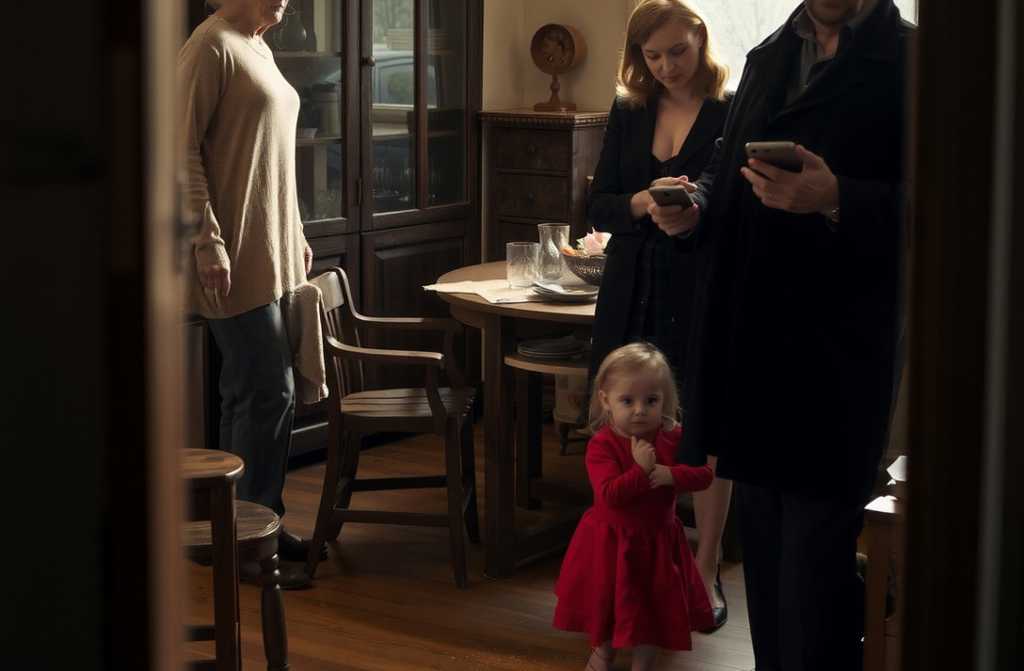
Mum, wheres the £2,000 that Emily sends you every month? after those words, not only silence fell, but the foundations of my kitchen seemed to shake.
Emily didnt move.
She only squeezed her phone tighter in her hand.
For a split second, I heard everything at once.
The idle bubbling of barley in the saucepan.
The tick of the clock over the fridge.
A discreet sniff from one of the grandkids in the hallway.
James didnt raise his voice.
That only made it more frightening.
I said: open your banking app.
Emily stared at him as though hed broken some sacred code.
Not domesticity.
Not trust.
Not a years worth of dishonesty.
Just basic decency.
Dont make a scene in front of the children, she said quietly.
Then you shouldnt have involved my mother, James countered.
I stood by the table, suddenly aware that I didnt know where to put my hands.
My savings book sat next to the pot, like a piece of evidence from a strangers life.
As if it wasnt me.
As if I hadnt spent this whole year counting out change in front of the pharmacy.
As if I hadnt warmed my hands on a mug because turning on the heater felt too extravagant.
As if I hadnt pretended not to be hungry.
Emily shifted her gaze to me.
And for the first time, there was no politeness there, no irritation.
Just the cold calculation of someone cornered but still hoping for a clever escape.
Mrs. Bennett, perhaps you dont understand everything, she said.
At first, I didnt even comprehend the words.
I heard the tone.
That one.
The one you hear before someone explains your own life to you.
James took a step towards the table.
Emily.
I dont have to account for myself like this, not in these circumstances, she said, voice harder now. Besides, its our money.
He looked as if those words stung more than anything else.
He blinked then, finally.
Ours? he echoed.
Yes, ours, she snapped. Or do you think our family budget is only made up of your say-so? You said your mother never asked for anything. That she needs little. That shes proud. That she wont take more than she has to.
I wanted to sit down.
But I didnt.
Sometimes a persons dignity keeps them on their feet longer than their strength.
James looked at his wife as if facing a stranger, yet her voice was still familiar.
It happens, I suppose, when you live beside someone for years and only see the comfortable version of the truth.
I told you to send her the money, he insisted.
You said to help, Emily cut in. I did help. We paid for the kids activities, the mortgage, the driver, private school fees. Do you know what your grand gestures really cost? £2,000 a month isnt a nice little act of charity, its a black hole in the budget.
He straightened slowly.
It wasnt charity, he said. Shes my mother.
Emily gave a weary smile.
Not malicious.
Worse.
The smile of someone who has excused herself many times before.
Your mother always lived like this, James. Dont pretend its only my fault you came round twice a year and never saw how she really lived.
The kitchen was completely still.
Because that, too, was true.
Not the whole truth.
A cutting truth.
But truth, all the same.
I saw Jamess cheek twitch.
Not from anger.
But from the blow struck in a place he, himself, was afraid to look.
He turned to me.
Mum
I raised my hand.
Not to stop him.
To keep him from apologising too soon.
There are words you cant say before the whole truth comes out.
Otherwise, theyre just a way to cover pain up quickly.
Let her show you first, I said.
Emily lowered her eyes to her phone.
Still uncertain.
Then, making her choice, she unlocked the screen.
Her fingersso elegant, so carefully keptwere trembling now.
She opened her banking app.
Pushed the phone towards her husband.
The numbers swam together for me, but the dates were clear.
Every month.
Every one.
The same sum left his account.
Then, almost immediatelyanother transfer to a different account.
Sometimes not the full amount.
Sometimes in parts.
Sometimes marked repairs, childrens presents, savings.
One point simply read: reserve.
James scrolled in silence.
And with each transaction, the air grew heavier.
Whats all this? he asked at last.
Emily seemed almost relieved at the question.
I was putting money aside, she said.
For what?
For us.
At my mothers expense?
At the familys expense, she snapped. Because someone in this family has to think about the future.
The future? he repeated. She ate handouts from the parish hall last winter.
Emily lifted her chin.
Dont exaggerate. She wasnt on the street.
That was when something inside me, previously soft, grew hard.
Up until then, Id felt hurt.
Ashamed.
Weighed down.
But in that moment, it all became clear.
There are people who stumble.
And there are people who learn to justify why someone elses hardship is perfectly ordinary.
And you cant pity them, not anymore.
A little sob broke from the doorway.
My youngest granddaughter.
The same one Id saved sardines for.
She was in her red jumper with a reindeer on the front, big frightened eyes fixed on us.
Her brother stood beside her, seeming to take in even more.
James turned.
And for the first time all day, he realised the children heard everything.
Go on, into the other room, he whispered.
They didnt move.
So I went over.
Stroked her hair.
It smelled of expensive kids’ shampoo and that clear, frosty air.
Come on, I said gently. Grandma has sweets in her room.
There were three left.
Little caramels from St. Stephen’s Sunday table.
But children rarely need the whole box.
Sometimes all they need is for grown-ups to stop being so frightening.
I led them in, sat them on the sofa, put on a tired old cartoon.
The telly flickered to life on the third try.
The boy said nothing.
His sister whispered suddenly:
Grandma, is Mummy bad?
That question hit me harder than any number on a bank statement.
Because children always search for the questions grown-ups dont have ready answers for.
I knelt in front of her.
My knees protested with pain.
Mums doing something very wrong right now, I said gently, but that doesnt mean you have to choose who you love.
She nodded though she probably didnt understand.
I adjusted her sleeve and stepped out.
Everything in the kitchen had changed.
James had taken off his coat.
Somehow, that felt important.
Like hed finally chosen not to run from this scene to his easier life.
Emilys phone was on the table.
My old savings book next to it.
Two truths.
One digital.
One in ink.
Both against her.
How much? James asked.
What do you mean?
How much havent you sent?
Emily stayed silent.
He did the maths quickly.
The sum made my head spin.
Id never seen so much money, not even in my mind.
It wouldve been enough for new windows.
Medical bills.
A heated floor in the kitchen.
Home help after one of my arthritic spells.
To not wait for someone elses charity.
To make old age feel less like a punishment.
James slowly lowered himself onto the battered stool.
The same one his father once sat on, peeling clementines in December.
I remember those hands.
They smelled of citrus and pipe tobacco.
Hed always peel mine first, then our son’s, then his own.
And all at once, missing my husband became a sharp pain; I gripped the seat to stay grounded.
The kitchen would still be poor with him, but not so lonely.
Why? James asked.
There was no anger, only weariness.
It was no longer about an action, but the person behind it.
Emily stared out the window for a long moment.
Beyond the glass, the dull winter light hung over the garden.
Finally she spoke:
Because Im tired of being the only adult.
He looked up.
She continued, as if pouring out a kept-in truth.
You want to be the good one for everyone. For the kids, your mates at work, me, your mother. You promise and smile. But counting up the minuses and coping with the fallout? Thats always landed on me. I knew the minute you started talking about all that money, soon youd want to buy her a house, then move her in, then pay for a nurse, for treatments But who exactly is supposed to live with all that?
He listened in silence.
So did I.
Because this was not just frosty, but cowardly.
Fear of someone elses old age.
The terror that one day you might end up living with a weak person who reminds you that youth and comfortable control arent forever.
You chose to save money at my mothers expense, James said at last.
I chose to protect our lives, Emily replied.
From what?
She had no answer.
Because the true reply was too dreadful.
From age.
From duty.
From that day when love means paying not in words but sacrifice.
I walked over to the stove and switched off the gas.
The barley had long since turned to mush.
The steam was thinning out.
The kitchen smelled of nothing fancy just plain cooking, and something else.
The end of illusions.
Enough, I said softly.
They both looked at me.
For the first time that morning, I wasnt just the background.
I was the reason for this whole confrontation.
Dont turn this into some philosophy in front of me, I said. The money was either sent, or it wasnt. Someone either helped, or they lied. Anything else is just language to butter over shame.
Emily paled.
James rose to his feet.
Were going, he said to her.
James
No. Ill take the children first. Well talk after.
She watched him carefullyperhaps understanding, at last, that the usual order had truly cracked.
Not over money.
But because he wouldnt shield her any longer.
Youd really break up the family over this? she asked.
I didnt do this, he answered.
It was quiet, but final.
Emily grabbed her bag.
Then she turned to me.
I braced for excuses.
Or anger.
Or another little jab.
What she actually said was different:
You never accepted me anyway.
I looked at her, but felt no triumph, no satisfaction.
Just a deep exhaustion.
Because people always call it not being accepted the first time theyre told they cant trample on anothers dignity.
I accepted you the day my son brought you home, I said quietly. Its you who never really saw me.
She dropped her eyes first.
That mattered, too.
James went to fetch the children.
I heard whispers, jackets rustling, a stubborn zip.
Then my granddaughter ran to me and hugged my waist.
Grandma, can we come back? she asked.
My throat tightened.
If you want to, you can.
She pressed a caramel sweet into my palm.
The same I gave her.
You need it more, she said with grave seriousness.
That was when I nearly cried.
Not for Emily.
Not for the money.
But for that small childs effort to restore fairness faster than the grown-ups ever could.
When they left, the house swelled with emptiness.
Colder, barer.
But somehow, it was easier to breathe.
I was left alone in the kitchen.
There was the savings book, a crumpled napkin, and a forgotten mitten.
I put the mitten on the windowsill.
Then I sat still, for ages.
Waiting for that relief you hear about from other peoples stories.
But it didnt come.
Just a heavy, old tiredness.
The kind that doesnt come on in a day.
Close to dusk, a car pulled into the drive.
Just one this time.
No children.
No Emily.
James came in quietly.
No coat scented with parties.
None of the hurrying Id grown used to.
Just a bag from Sainsburys and the awkwardness of a boy after a fight.
He set the bag on the table.
Oranges.
A loaf of bread.
A roast chicken.
Joint pain tablets.
A new, warm blanket.
And an envelope.
My eyes fell on the oranges, not the envelope.
Again, I thought of my husband.
Mum, James said.
I said nothing.
He didnt rush it.
It was the right thing.
I dropped the kids with Emilys sister, he said. With Emilywell, I dont know what happens next. But todaytoday was my fault, too.
I wanted to tell him everyones guilt is their own.
But I stayed silent.
He needed his own words.
I found it easier to pretend everything was fine, he went on, that if money was going through, then help was there. If you kept quiet, you were coping. I didnt ask because I was afraid youd need menot my money, mefor real.
There it was.
The barest truth of the day.
Not about Emily.
About him.
About so many other sons and daughters, willing to buy support but not to face their parents lonelinesswithout the transaction, without the rush.
He slid the envelope towards me.
Its cash. And Ive done a direct transfer, from my account to yours. No more middlemen. Ill pay for the new windows. Ill arrange for someone to check on you. And if youll let me, Id like to visit more. Not out of duty. Because today I saw how long its been.
I stroked the faded roses on the oilcloth.
As if they’d been wiped too many times.
Ill take the money, I said, as for the restwell see.
He nodded.
Didnt argue.
And in that nod was more respect than in a thousand promises.
I stood, opened the bag, took out the oranges.
Handed him one.
He smiled slightly.
Sat on the stool.
Peeled it, awkwardly.
In one long, uneven spiral.
Like when he was a boy.
We didnt talk about divorce.
Or the courts.
Or how much a marriage can bear.
Some decisions dont ripen in the middle of a row.
But later.
In an empty house.
At night.
When you have no one left to perform for.
So we sat in the kitchen.
He ate the barley.
Cold now.
With no meat.
As though, for the first time, he understood what restraint smells like.
I poured the tea.
The blanket lay on the chair, still wrapped.
The envelope beside the sugar bowl.
Darkness pressed against the windows.
The frosted pattern fading away, slow as breath.
It struck me then: forgiveness isnt a single moment after an apology.
First comes truth.
Then silence.
Then, maybe, a path back.
Or maybe not.
But that night, it was enough.
For the first time, my son didnt look away.
When he left, the kitchen smelled of oranges and tea.
I put the savings book away in my husbands file.
Placed the envelope next to it.
Then walked to the window, dug out my old shawl from the gap.
It was still icy outside.
But I no longer wanted to block every draught with silence.
On the table, my mug stood with cold tea.
And a strand of orange peel.
Long and uneven.
Like a conversation that began too late
But still began.





