
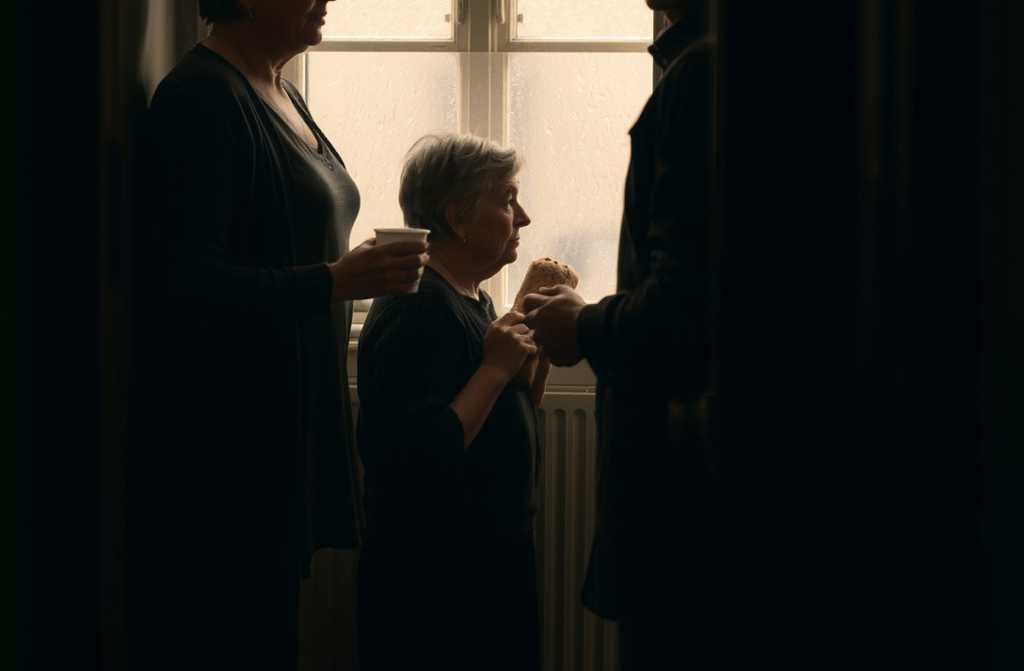
When My Husband Wasn’t Himself
“Did you get a loaf?”
He looked at me as if Id spoken in Old Norseno confusion, just a pause. That long, awkward pause which simply didnt fit the rhythm of our normal life.
“What loaf,” he said at lastnot a question, but a flat statement, without the lilt of inquiry.
“Just the usual. Brown, from Bakers at the bottom of Cherry Laneyou always get it there.”
He set his bag on the kitchen floor, glanced around as if he was seeing this kitchen for the first time.
“I didnt go to the shop.”
I nodded and turned back to the cooker. Nothing remarkable, I told myself. He was tired. Hed been away a weekconference in Birmingham, hotel room, different food, strange air. Of course he was tired.
But hed always fetched the bread. For seventeen years, every time he came backeven from the shortest triphed nip into Bakers and bring home a brown loaf. Not a rule, not a necessary habitjust part of who he was. Part of how he came home.
I stirred the soup and said nothing.
His name is Richard. Rich, sometimes. Im fifty-eight, hes sixty-one. We live in York, in a modest two-bedroom flat on the fourth floor, bought back in 99 when Lucy was little. Shes long grown up, moved to London, rings me on Sundays. Ive my job at the school library; Richard retired three years ago but keeps himself busy with some teachinga few lectures on building regulations at the College. Ours is a quiet life, measured, almost argument-free. Thats important to understandnothing stirred the pot before he came back.
We ate supper in silence. He ate neat, eyes on his plate. Usually, hed look up and recount a funny storysomething about the trip, colleagues, the lift at the hotel that never worked, how he missed a proper home-cooked stew. Always a tale or a memory over supper.
“So, hows Birmingham?” I asked.
“Fine.”
“Did the seminar go well?”
“Yes.”
I set down my spoon.
“Are you alright, Richard?”
He looked at me, his eyes the same grey, just tired.
“Im alright. Just worn out.”
I cleared away. He took his phone to the bedroom and lay down, as if all was perfectly ordinary, as if nothing had happened. Only there was no bread. And no conversation. And something else I couldnt name.
The first night, I blamed tiredness. The second, too.
On the third morningFridayI noticed something truly odd.
I was having coffee at the window, watching the street below. He came out of the bathroom, wandered into the kitchen, poured himself some water. Then he took a jar of barley off the shelf and opened it, sniffed, then put it back. I said nothing. But Richard has never eaten barley in his life. From the earliest days, hed jested, “Barleys the dullest thing on earthfood for the unimaginative,” and wed always laughed about it. Id make rice, oats, anything else. He never touched barley.
Yet there he was, sniffing as if to try it.
“Are you fancying barley?” I asked, careful to keep my voice neutral.
“No,” he replied, and wandered back to the front room.
I stared long at the jar.
Saturday, Lucy rang.
“Is Dad home?” she said, straight off.
“He got back Wednesday.”
“How is he?”
I paused, a brief moment.
“Bit tired, thats all. Otherwise fine.”
“Alright. Mum, Ill come in October, with Sam. Weve a bit of leave.”
“Lovely, Ill look forward.”
I didnt say more. What could I possibly say? Dad forgot the bread and sniffed barleyhardly the stuff of worry, barely odd at all.
But I already knew something was wrongnot in my mind, not in logic, but somewhere low in my belly, under my ribsa kind of signal, impossible to explain.
On Sunday, I suggested a walk. Sometimes, on Sundays, wed stroll to St Georges Parknot always, but often. He liked the bench by the pond, hed buy us cups of ginger beer from a little cart if it was open, grumble about his aching back, Id nag him to get more exercise, hed wave me off, and wed laugh. Just one of our many tiny rituals.
“Shall we go to the park?” I asked.
He glanced up from his phone.
“Which park?”
“St Georges. Its a lovely day.”
He considered. That was oddusually, hed just say, “Why not?” or “Let me grab my jacket”. No need to think.
“Alright,” he said at last.
We walked in silence. I didnt push conversation; I simply watched. He looked about evenly, not with the gentle ease of our Sunday strolls, nor any real interestlike someone tracing a new route, keen to remember the way.
By the park gates stood that old man with his doga golden spaniel, chubbier than ever.
“Look, Daisy,” I said. Thats what we called every portly spaniel after Mrs Hawkins in the old flat had one just like iteight years ago. An in-joke, our little code.
He gave the dog a glance. Nothing more.
“Daisy,” I repeated, more quietly.
“Shes a nice dog,” he said politely, nothing in his voice.
Later, I paused by a rosehip bush, feigning interest in the berries. My heart racedtoo fast for a calm walk.
He didnt remember Daisy. Or pretended not to. But why pretend?
By the pond, the ginger beer cart had gonepacked up till summers return. Richard sat on our bench, staring out over the water.
“Its lovely here,” he said.
“We come here all the time.”
“Do we?”
I turned to him.
“Richard, weve been coming here ten years, at least.”
He noddedno confusion, just calm acceptance.
“Right. Im only sayingits nice, thats all.”
Something in me twisted and didnt quite untwist. Much later that night, I realised what it waslying awake while he breathed steadily. He hadnt said, “I remember,” or “of course”. Hed only said, “Right,” the way you agree with a fact you cant place.
Sleep didnt come easy. I kept thinking about what its called, that feeling when the person next to you is simply gone, somehow. Id read somewherein some psychology articlethat people can change after stress, after shocks; as if a different person replaces them. Theres a word for it, but Id forgotten. Only, as far as I knew, thered been no stress. A week in Birmingham, a conference on building codesthats not the making of a stranger.
Up at three, I drank water and stared out the window. The street below looked empty; the lamp flickered between bursts. I thought, alright. Lets give it time. Perhaps something happened; perhaps a quarrel he wont speak of, or a bad turn of health, or just a wave of something inexplicable. It happens, especially after sixty, after a lifes worth of demands and still more ahead.
I went back to bed. He lay on his side, facing the wall. I placed a hand on his back, as Id always donejust softly. He didnt stir.
In the morning, I rang my friend Anne. Weve known each other since universityshe works at the doctors surgery on the other end of town, as a receptionist. Annes as straight-talking as they come, and thats always mattered to me.
“Anne, is it alright if I pop over?”
“Is something wrong?”
“Im not sure. Maybe nothing. I just want a chat.”
“Come at fiveIll be home.”
Annes house always smells like pies, even when shes not baked a thing. We sat in her kitchen; she poured tea. I told herabout the bread, the barley, Daisy, “Right” at the pondall of it.
Anne listened closely, didnt interrupt. Then she paused.
“Mary,” she said, “Could just be depression. Or maybe the start of something memory-related. Neither of you is young anymore.”
“Anne, hes only sixty-one.”
“And? Old Jim upstairs started showing signs at sixty-twohappens to the best of us.”
“He was the organised one, always remembered everythingdates, names, you name it.”
“Everything changes, sooner or later.”
I gazed into my mug.
“Its not just forgetfulness, Anne. Sometimes he looks at me as if hes being polite to a stranger.”
Anne broke off a bit of her still-warm pie.
“Have you slept?”
“Not much.”
“There you go. Mary, youre working yourself up. Hes worn out. Probably something at workhes a man; theyd rather die than admit it. Give him a week.”
I nodded. Perhaps she was right. Most likely, she was right.
But on the drive home, the image of him picking up that barley jar and smelling it wouldnt leave me. It was such a tiny, meaningless act, and yet so out of character it still caught in my throat.
He was in when I got backat the kitchen table, sorting papers. I clicked the kettle on and started unloading the shopping. He didnt look up.
“Ive been at Annes.”
“Mm.”
“Brought you pie.”
He looked over, eyeing the pie.
“Whats in it?”
“Cabbage. Your favourite.”
“I dont really like cabbage.”
I set the bag downslowly, very slowly.
“Richard?”
“What?”
“Youve loved cabbage pie since childhood. You told me yourselfyour mum baked it.”
He met my gaze steadily.
“Mum baked with apples.”
Silence.
His mother, Anne, died twelve years ago. I got on well with her. Id seen her bake pies, sat in her warm, tiny kitchen dozens of timesher pride and joy was always cabbage and egg pie.
“Richard, your mum made cabbage pies,” I said quietly. “I remember.”
“Perhaps she did. It was a long time ago,” he replied, shrugging, returning to his papers.
I went into the front room and stared out at the streetpeople hurrying, cars splashing by, a perfect autumn afternoon.
Anne baked with cabbage. I remember the smell of her pie, the faded flowered oilcloth on her table. Richard remembered better than meand he told the story tenderly, with warmth. One does not forget the scent of ones mothers kitchen.
I pulled out my phone and rang his sisterEleanor, who lives in Leeds. She and Richard arent close, see each other once a year but keep in touch. I called.
“Mary!” she greeted, as always, loud and sunny. “How are you?”
“Eleanor, Im well. Quick questiondo you remember what your mum used to bake?”
A brief hesitation.
“Oh she baked, of course. Always pies. Cabbage and egg. Why?”
“No reasonjust trying to remember a recipe. Thank you.”
I put down the phone; my legs felt like water. Silly, shaky over a cabbage pie. But there I stood, unable to move.
Memory, I told myselfperhaps its just something memory-related. Could be neurology, age, anything. He needs to see a doctor. We need to talksquarely.
Over supper, I asked, “Richard, have you had any headaches lately?”
“No.”
“Sleeping alright?”
“Fine.”
“Would you see the doctor, just to get checked?”
He put down his fork.
“What for?”
“Well, blood pressure, just in case. Its been a while.”
“I keep an eye on it. All normal.”
“Im just worried, thats all.”
He studied me for a momentcalm, considering.
“Are you thinking somethings wrong with me?”
“I just worry, Richard.”
“Mary, Im fine. Please.”
He resumed eating. Conversation overRichard always had a way of closing off a line, setting a boundary, no need to raise his voice. I knew that and didnt usually push.
But now I couldnt help watching himhow he ate, how he held his fork, the angle of his head. Something in me played over each detail. Did he always sit like this? Wasnt his posture straighter? And the forkyes, right hand, hes always been a righty.
I washed up and went to the bathroom. There in the mirror was a tired woman with cropped grey hair that shed stopped dyeing long ago, her smile-wrinkles at the eyes that Richard once called “the laughing kind”, because they’d come from laughter, not age. I gazed and told myself: Mary, youre inventing thingsyou dont really remember how he holds his fork. Youre just frightened by all this strangeness. People change. Especially after after things we never see.
I washed and went to bed.
That night, I woke to a hushnot a sound, but a silence so pure it seemed to crowd the room. I reachedthe sheets on his side were cold.
I got up. The kitchen was lit. He was at the table, writing in a notebookby hand, which was odd, as Richard hadnt written anything by hand in ages, except to sign forms.
“Richard?”
He glanced up, not startledalmost expectant.
“Couldnt sleep,” he said.
“Whatre you writing?”
“Nothing much. Just thoughts.”
“Can I see?”
A pause.
“Its personal.”
I looked at him. He didnt shy away.
Richard had never told me anything was “personal” like this. In seventeen years, I could ask anything. Of course we had our own spacesbut hed never responded like that.
“Alright,” I said and headed back to the bedroom.
I lay there. Heard his pen scratch, then his careful steps, the kitchen light switch. He returned, lay down, took longer to settle.
In the morning the notebook was gone.
I looked for itI cant say why, just that I needed to. I checked the kitchen drawers, nothing. Finally, his bedside tablea boundary Id never crossedbut all I found was an old pair of specs, a shilling, some notes. The notebook was with him.
I went to work. At the library, I put away books, helped young Emily with the magazine files. The usual daythe comforting smell of old paper, the hush of shelves.
On my break, I ponderedhow do you know when someones changed? Not just in little waysnot just ageing. Fully changed. What do you call it, when after seventeen years, knowing his laugh and his fears, the scent of him, you look up and something fundamental isnt there?
“Psychological replacement,” the word surfaced. Id read about itwhen a loved one changes so utterly, it feels as though theyve been swapped. Sometimes its a symptom, sometimes simply life. People shift after fifty, after sixty. Children grown, work behind or nearly, you find yourselves, just you twoand one day see a stranger.
But I knew Richard. I was sure of it.
He was in before me that night, standing at the kitchen window, just looking out.
“What are you doing?” I asked.
“Watching.”
“Watching what?”
“Just watching.”
Odd, thathe was never one for waiting, for quiet gazing. He was practical, always with a purpose, a note, a chart, a mutter. Standing with nothing to dothat wasn’t Richard.
“How was the day?” I asked.
“Fine. Usual lectures.”
“Howre the students?”
“Typical.”
I pulled a chicken from the fridge and started to cook.
“Richard, tell me about Birmingham,” I said, knife in hand.
“What about it?”
“Anythingthe hotel, what you saw. You were away a week.”
A pause.
“Usual hotel. Seminar in the university conference suite. Bit of a tour, showed us some fancy new estate, thats all.”
“Who was there? Colleagues from your place?”
“A few. Some from other towns.”
“Was Michael Thompson there?”
Michael Thompsonhead of department, Richards friend for three years. Theyd gone fishing last summer; Id heard plenty about Michael.
“Thompson? No, not this time.”
“He never misses those things.”
“Missed it this once.”
I turned to my cooking. Perhaps it was nothing, after all.
Later, after hed gone to bed, I texted Michaels wife: “Jean, eveningdid Michael get back well from Birmingham?” She replied almost instantly: “Evening, Mary. Michael wasnt in Birmingham, wasnt picked this year, home all week. All alright?”
I wrote, “Oh, I seemust be muddled. Thanks.”
I lay for a long time in the dark.
Either he didnt know, or or he did, and lied. But why lie?
I toyed with every explanationmaybe theyd fallen out; maybe something else had happened. Maybe maybe he wasnt in Birmingham. Maybe the week was somewhere else.
Too far. Too much, Mary.
But the thought circled, wouldnt go.
Next day, Wednesday, I made an excusesome new curtains for the bedroom, said we should go to Home Comfort, the big haberdashery on Regent Street. An ordinary errand. There, he always floundered, said “Get what you like, Ive no idea”, then wed get fresh-baked buns at the café next doora tiny tradition.
“Shall we go today?” I asked.
“Where?”
“Home Comfort. For curtains.”
“Do we need new ones?”
“These are worn out.”
He shrugged. “Okay.”
We went. I dragged things out, fussed over fabrics, asked his views, got distracted responses. Then, “Shall we get buns next door?”
“Where?”
“The café right herewe always do.”
He looked at me.
“Dont know it.”
I smiled, on purposehad to seem unfazed.
“Youve just forgotten. Come on, Ill show you.”
The little café with yellow signjust around the corner, always the smell of freshly baked dough, called Cosy Corner, been there twenty years.
“There you are.”
He stared at it.
“Oh,” he said. “Never noticed.”
We bought our buns. He ate quietly, watched the passers-by, checked if I was coldjust normal, so normal.
Only once, as he chewed, he stared for a little too long at that yellow sign, as if trying to force a memory, or maybe note it down inside.
“Richard,” I said gently. “Do you remember me?”
He turnedsurprised.
“What do you mean? Youre Marymy wife.”
“I know that. I meanus. What we were.”
“Whats this about?”
“Nothing. Youve just seemed different these days.”
“People change,” he said at last.
“Thats exactly what I was thinking, two days ago. But you always say, ‘People dont change.'”
He said nothing, finished his bun.
“Maybe Im changing, too,” he said finally.
We rode homeward, me staring out the window at autumn puddles, realising, for the first time, that the fear of not recognising your ownyour dearestwas real, not paranoia. It happens. Usually theres something unspoken at the heart of it all.
Thursday, once hed gone to lecture, I went to his studyreally just a cramped half-room since we split the big lounge years ago, his desk, shelves, some files.
I didnt want to rummage. I didnt. But I sat there, opened the top drawer.
There it wasthe notebook.
I opened it. Blank first pages, then, further in, page after page of tiny neat writingnothing like Richards hasty scrawl, nothing like the doctor’s hand he himself joked about.
Lists. “Marywife. 58. School librarian. Daughter Lucy, London. Takes coffee no sugar. Wants new curtains. Anne, friend, doctors surgery.” Then, “Cabbage piesupposedly favourite. Sunday walks in St Georges Park. Spaniel called Daisyjoke.” Later, “Anne (Richards mother)cabbage or apples? Confirm.”
I gulped.
It was like someone was studying us. Making a map. Noting details for reference.
I closed the book and slipped it back. Went to the kitchen, poured a glass of water, drank it standing there. And again.
My thoughts were orderly, for oncetoo much has a sharp clarity in moments like that.
Who is this man?
He lives here, looks like Richard, speaks with his voice, knows my name and our daughters and my exact habits. But he makes notesin somebody elses hand. He learns us.
I called into work, said I was unwell. Sat in the living room, staring, searching for a rational explanation.
Memory loss. Dissociative statesyou read about it; people lose themselves, try to patch reality back together, step by step, in secret. Maybe something happened on his trip, or somewhere else. Maybe a trauma, an illness. Maybe it shamed him, or frightened him, enough to hide it.
It could be. That would make sensealmost.
But the handwriting that wasnt his. And that, I couldnt file away.
People can change their writing style, I reasoned. After a stroke, sometimes. But hed had no strokehed have shown it. He wouldve needed help.
I rubbed my face.
He came back at seven. Id made supper, set the table, put myself togethernot sure why, just routine.
“Tired?” he asked. “Didnt you go into work?”
“Headache. Its gone now.”
He nodded, put his bag away, washed up, all so ordinary.
At supper, I looked at him and wondered, what does grief look like, when the person is still in front of you, only something essential inside them has vanished?
“Richard,” I began.
“Mmm?”
“Tell me how we met. Your way.”
He set down his fork, considered.
“We met through friends,” he said after a while. “At a birthday. You wore a blue dress.”
He was rightit was Lucy Palmers do, September 97, blue dress, that’s true.
“We met a couple of times after; started going out together. Then married. Lucy was born. Bought this flat.”
I stared.
“When you proposed, where did we go?” I pressed.
“Mary”
“Please.”
He waited.
“I dont recall exact details,” he said finally. “Its a long time ago.”
“You used to remember every bit. You told the story at our silver anniversaryproudly.”
Silence.
“Richard. Where?”
He met my eyes. No annoyance, no shamesomething else, faint, tired, perhaps calculating.
“Mary, why does it matter?”
“Because I want to know if you remember.”
He hesitated. “Im tired. It was ages ago. People cant remember everything.”
“Its not everything.”
“For me, it is.”
I got up, cleared the still-full plates. He said nothing.
We went to the Ousea small river near York. We caught the train and then a bus; it poured with rain, I had my best shoes ruined in the mud, he carried me across a flooded bit of path, then proposed, absolutely sodden and laughing. We retold that story for yearshe loved it.
But the man at my table doesnt know it.
That night, I messaged Anne, the whole taleabout the notebook, the handwriting, the Ouse.
She replied after midnight: “Mary. Doctorboth of you. It could be anythingon his part or yours. Call me tomorrow.”
I put my phone away and lay in the dark. He breathed evenly beside me. I stared upward.
Sometimes people dont leavethey disappear while still with you. Its far harder than leaving.
Friday morning, I resolved to say it allabout the notebook, calling Eleanor, messaging Jean, piecing it together. I needed honestyfrom both of us.
He was at the kettle when I got up.
“Richard,” I said.
“Hmm?”
“We need to talk.”
He turned, level gaze.
“I know,” he said.
I stopped dead.
“You know what?”
“I know you found something. Youve been in my study.”
Silence. I waited.
“Sit,” he said.
We sat. He cupped his mug. Stared.
“Its hard to explain,” he began.
“Please try.”
“What youre thinkingits not all wrong. Not all right, either.”
“How do you mean?”
“I cant remember everything. Not in the way youd hope. Its big pieces, missing. Huge, important bits.”
“The Ouse,” I said.
He looked at me.
“Sorry?”
“Where you proposed. The Ouse. Do you remember?”
A change, a flicker.
“No,” he said.
“Daisy the spaniel?”
“No.”
“Your mother? Anne?”
“I remember her face, perhaps the sound of her voice. But detailsno.”
I looked at him; he stared into his mug.
“When did this start?”
“Im not sure. It crept up.”
“And you said nothing.”
“I didnt know how.”
“You kept notes to avoid mistakes.”
“Yes.”
“Your handwritings different.”
He set the mug down, paused.
“I know,” he said.
“Whats the reason?”
He didnt answer. Just stared at the wood grain. I waited.
“Richard. Look at me.”
He didsteady grey eyes.
“Are you Richard? My Richard?”
And for the first time something moved in his gazea shadow, pain, maybe bewilderment or something unnamed.
“Mary,” he said, quiet and honest, “I dont know how to answer that.”
I looked at him. At the hands cupping that mug, the shape of his mouth, the grey at his temples.
“Is that true?” I asked.
“The truest thing I have.”
Rain dribbled outside, tapping on the silla perfectly ordinary English rain.
“What should I do with that?” I said to the room.
“I dont know,” he replied. Honest, again.
I poured coffee. Drank, facing the drizzle.
He stepped behind me, stopped a pace away.
“Mary.”
“What?”
“I remember your voice. From the start. How you speak. That, I remember.”
I didnt turn.
“It isnt enough.”
“I know.”
Rain fell. A horn sounded below, then the citys hush returned.
“I need time,” I said at last.
“Of course.”
“I dont know what comes next.”
“I understand.”
I turned. He starednot with hope or despair, but an urge to say more; held back.
“One thing,” I said.
“What?”
“Do you want to be here?”
A beat. The rain beat on.
“Yes,” he said. “I want to be here.”
I looked at himthat someone in my home, bearing Richards face, his voice, noting my life in neat script, not remembering the Ouse, yet cupping his mug with the familiar gesture.
“Then go buy the bread,” I said. “Brown loaf. From Bakers, bottom of Cherry Lane.”
He nodded, took his coat, went to the door, turned.
“Mary.”
“Yes?”
“The Ouse. Will you tell me, one day?”
I watched him.
“Well see,” I replied.
He left. I stood with my cup at the window, listening as his steps echoed down the stairwellsixteen steps to the ground, Id always counted.
He crossed the courtyard belowpulled his collar higher against the rain. Just a man on a wet English morning.
At the corner, he vanished righttoward Bakers.
I held my cup, not sure what I feltsomething like the quiet after turmoil, not relief, not peace, just a silence where answers dont yet live, but at least theres no more pretending not to need them.
My phone buzzedAnne.
“So, how are you?” she asked, straight off.
“I dont know.”
“Did you talk?”
“Yes.”
“And?”
I watched the wet street, that empty corner.
“Anne, could you live with someone who didnt remember themself?”
A pause.
“Did he say that?”
“Something like.”
“Mary, doctor. Seriously. Some things talk cant solve.”
“I know.”
“So, what will you do?”
I placed the cup on the sill.
“Not sure yet. Hes gone for bread.”
“What bread?”
“Brown, from Bakers.”
She paused.
“Mary, youre scaring me.”
“Its alright, Anne. Ill ring later.”
I put the phone away. Sipped my now-cool coffeestill good.
Sixteen stepsId always counted.
Twenty minutes later, the door banged downstairs, steps ascendedsixteen of them.
I didnt move.
The key turned. Door opened.
“Here,” he called from the hall. “Brown. Last one left.”
I glanced over. He stood in the kitchen doorway, loaf in hand, hair wet, fringe stuck to his brow.
“Put it on the table,” I said.
He did.
We looked at each other.
“Will you have tea?” I asked.
“Yes.”
I put the kettle on. He hung his coat, took his seat. I stood with my back to him, heard his silencenot heavy, not awkward. Just silence.
“Mary,” he said, gently. “Will you tell me about the Ouse?”
The kettle began to murmur, soft at first, then louder and louder.
I stood and thought.
“Not now,” I said, at last. “Maybe later.”
“Alright,” he replied.
The kettle boiled.





