
June 12th
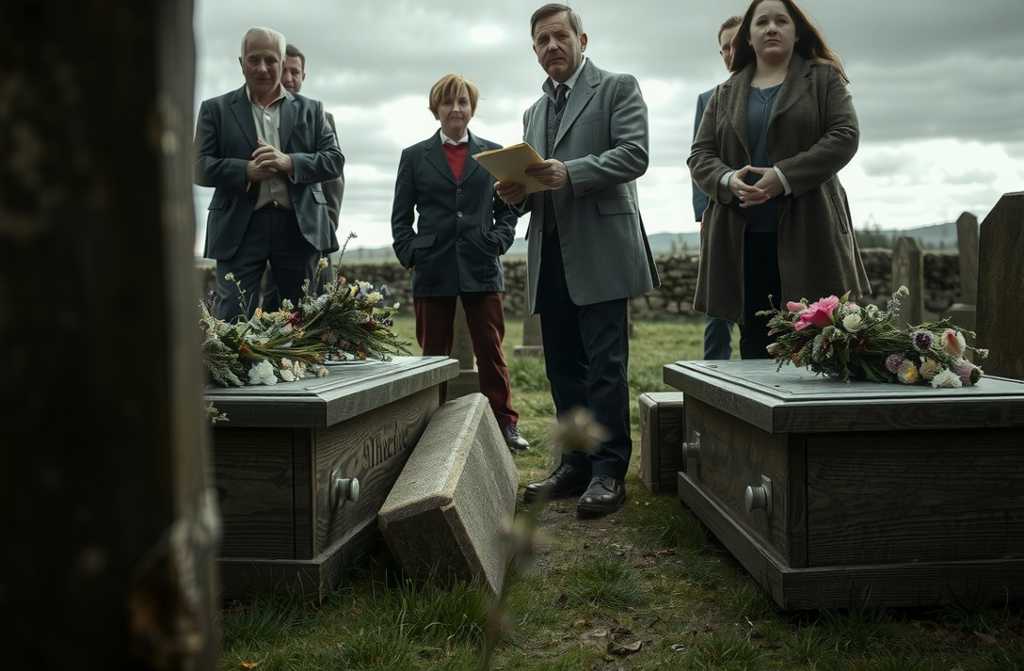
I stood there at the funeral, my arms crossed, a twisted grin plastered across my lips as if Id taken the wrong cue on what was supposed to be an occasion for grief. The wind across the North Yorkshire moors stung my face and scattered grit into my expensive brogues, but I refused to glance away from the cheap, unfinished pine coffins. Thirty or so villagers in black huddled around, silent as tombstones. Among them, the women with their mourning scarves, the men clutching their caps or hats to their chests, the children confused about why the adults wept. And then there was meRupert Wooddressed in a sharp grey three-piece suit, Swiss watch flashing beneath the midday sun, and that smile on my face which no one could quite believe.
This is the best coffin you could get? I barked, pointing at the one on the left, tone laced with bitter sarcasm. Looks more like a bloody apple crate from the market. No one replied. The women exchanged glances; I caught Mr. Shepherd, the local joiner who had spent the early hours crafting the coffins, ball his fists angrily, but he said nothing. I stalked around the boxes as if I was vetting stock for defects. And the flowers? Where did you pick them up, from the roadside? Honestly, Ive seen better for a dead dog. And then I said it, what needed never to be said: Even after death, you manage to embarrass me.
The hush changed. It wasnt silent out of respect, but out of simmering rage. Harriet, on her knees by the coffin, eyes red from tears, lifted her head and glared at me with a trembling fury. For heaven’s sake, Rupert. They were your parents.
I didnt even look at her. I pulled out my phone, checked the time, and gave a heavy sigh as if all of this were wasting my precious day.
Thats when the black car, understated and spotless, rolled up and stopped at the edge of the track. The door opened, and a young woman emergedtall, willowy, with a leather briefcase, and a manila envelope clutched in her hand. She wove through the gravestones with cool determination, stopping beside Father Thomas, whispering something to him. He nodded gravely, and for the first time that day, my smile faltered. Something about the way she grasped the envelope chilled me, if only for a moment. But I straightened up, arms folded, staring at the brassy sky as if nothing in this world could touch me. That envelope, though, would tear apart everything I thought I knew about my family.
But before I tell how it all unfolded, I need to look back. To a muddy cottage perched on the edge of the Yorkshire Dales, where a barefoot boy harboured only one dreamto escape from the only place hed ever known love.
The Wood family cottage was at the end of a lane too rough for most cars, omitted from every decent map. A stone-and-mud structure with a tin roof, rimmed by wild brambles and nettles, with a wooden door that never truly shut, and a window perpetually draped with one of Mums hand-stitched curtains. Inside, earth packed hard underfoot, only three mismatched chairs around a battered table, a shelf with a faded Madonna, and a log-burning stove where my mother, Edith, made stews, bread, andon lucky daysa slice or two of ham. For Edith and my father, George, this was home. More than theyd ever had.
George built every wall with his own hands, mixed the mortar with straw, dragged the roof sheets two miles on his back. To him, the cottage was everything life had denied him as a child and everything hed promised himself hed one day achievea place he couldnt be driven out of, a shelter for his family. Edith loved him for itand taught herself to see dignity where others muttered poverty.
Not me. Not Rupert. From as early as I can remember, I felt cheated. Id see the other village lads arrive at the primary school with polished shoes, sparkling lunch tins, their rucksacks new from the High Street. Id trudge up in Dads patched boots, an old plastic bag for a satchel, and sandwiches of dripping and bread wrapped in a cloth. The others laughed. Here he comes, Old Georges boy! Id grit my teeth, catching rot twisting quietly inside me.
Ill never forget the day Miss Partridge asked every child to bring a gift in for Mothers Day. The others produced potted flowers, boxes with shiny wrap, bright cards tied with curly ribbons. I brought a napkin Mum had embroidered, wrapped in paper wed saved from the grocer. When I took it to the front, one voice crowed from the back, Thats a tea towel for cleaning the loo! The whole class burst out. I took my seat, numb, clutching that napkin, my stomach scorched with shame.
That afternoon, Mum asked how it went. Fine, I lied, refusing to meet her glance, slipping out the back to stare at the moors, biting my lip to keep from weeping. What I didnt know was shed sat three nights by candlelight, squinting and prickling her fingers to embroider that napkin, pouring silent love into every stitch. I chucked it into the dustbin on the way to school the next day. Years later, Id still remember.
I was about ten when it happened again. There was a school trip to London£50 to go. A kings ransom for us. I stood before Dad, gulping out, Dad, please, I need money for the school trip. Everyone else is going. George just set aside the chair he was mending and said, Weve no money, son, but youll learn more watching the sheep on these hills than you ever will on a bus to London. That night, I lay on my creaking bed beside the leaking roof and made myself a vow. I would get out. Id have money. Id never be like him.
The shame soured into anger, the anger curdled into contempt. Each time I was told no money, I heaped another stone onto the wall between us. I had no idea that a world away in a Leeds solicitors office, a young lawyer managed investments, properties, and savings in the name of a trust belonging solely to one George Wood. The same George who mended chairs in a moth-eaten coat and insisted, time after time, there was no money.
I never knew my father was never really poorand this secret would come back to confront me when it was too late.
I left our village one morning in March at 19. No hugs, no farewell, just an old rucksack, my birth certificate, and a one-way ticket to London, bought with what Id scrimped from sweeping up at the local grocer. Mum saw me with my bag; she wiped her hands on her apron, stood in the doorway, and watched me go, saying only God go with you, my love. I didnt look back.
Dad was in the garden. He heard the door. He felt the silence I left behind. Mum went to him later. Hes gone. All he said was, Hell come back when hes ready. But I didnt come back.
In London, rage drove me further. I took any jobmover, builders mate, flyer-passer. I shared a room with three other blokes, ate once a day, repeating, I will not end up like my father. Within five years, by sheer ruthlessness and cunning, Id started a small construction business. After a decade, I had a Mayfair office, three vans with my name on the side, and a flat over the Thames with mortgage payments eating the last of my money.
On the outside, I was a roaring success. Inside, my world was built on debts, loans, and arrogance, cards stacked high as the Shard. Every rung climbed felt one more nail in the coffin of the country boy Id once been. I liked forgetting. The first year, I phoned Mum once: Im fine, Mum. Im working. She wept for joy. The second year, I called twice. By the third, I didnt ring at all.
Mum never stopped trying. Every Sunday at 7 sharp, shed ring from Father Thomass phone. Five rings, then voicemail. Always a messageRupert, its Mum. Just want to hear your voice. Love you, always here. Id listen to them while dining out with investors and women whod never know the truth about me. Sometimes I laughed, mostly I deleted them unread.
Dad, on his part, wrote letters, neat but wobbling on school paper, posted to my London office. Hed write about the weather, the lambs, the hedge growing over the lane. Never an accusation, never a pleajust small, stubborn reminders that he was waiting. Id see the envelopes, bin them unopened.
Eight years passeda chasm of missed calls, unopened letters, unsaid words and hopes held together with candle wax and prayers. When the miracle finally came round and I returned, it would be too late for her ever to see it.
The illness crept in without warning. Like all things in villages without doctors, it began as tirednessthen came the cough, then the pain that even Harriets herbal teas couldnt dull. The diagnosis was blunt. Her lungs were shot. She needed medicine and timeand she lacked both.
Harriet moved in, helping Mum wash, bathe, eat. Her own teens managed at home; she worked day and night, caring for Edith as if for her own mother. Every dusk, Mum would sit in her creaking chair, staring out at the lane as if waiting for a silhouette to come striding up. Maybe today, Harriet? Maybe today, love, the gentle lie.
Dad did his part as he couldfetching water, chopping wood, walking to get what medicine there was, but a deep break showed in his eyesher illness, and my absence. Father Thomas rang me three times that week. First to voicemail. Then my secretary answered. The third time, I picked up, and when he started to plead, I cut him short: With respect, Father, Ive no ties there any more. If you need money, find someone else. I hung up. That ended it.
Mum worsened. Harriet slept by her side, waking at every pained breath. One night, Mum awoke: Hes here, isnt he? My boys here. Harriet choked, Yes, Edith, hes here. Rest now. Mum smiled, closed her eyes. Harriet stayed, tears sliding silently down her cheeks.
One cold dawn, with a rasped whisper, Mum pressed Harriets palm and said, Youre the daughter God sent, when mine left. Harriet just wept. The last night, Mum clung to the faded photograph of me aged six, clutching it to her chest. My boy she whispered as the last of her breath left. Harriet closed her eyes, wrapped her shawl around her, and went out to find Father Thomas on those black lanes.
Mum died waiting for me. I was too wrapped up in becoming a man shed never recognise.
Mums funeral was simple. Pine coffin, wildflowers picked by village children, a mass in the chapel led by a trembling Father Thomas. The whole village came. Except me. Dad stood throughout, not crying, not moving, as though seeing something no one else did when Mum was lowered. Harriet touched his shoulder, urged him to come home. He shook his head. I’ll stay a while. And he did, standing by her grave into the stars.
That night, he walked the lane to the cottage, closed the door that never quite shut, sat in Mums chairthe one she used for sewing, praying, waiting for her boyand never got up.
Harriet brought food, finding it untouched. On the third day, she found him, eyes closed, Mums wedding photo on his chest, an expression of peace finally on his face. The local GP wrote heart failure. The village all knew better. George hadn’t died of illnesshe died of heartbreak, once Edith was gone.
Father Thomas found a thick envelope under Georges pillow, marked for when the time comes. He kept it for the solicitor and rang me, leaving a brief message: Your parents are dead. The funerals on Friday.
Thats how I found myself back in that village, stepping out from a rented black Mercedes in a suit worth more than most earned in a year, Italian shoes gathering mud and dust within moments.
The small graveyard perched above the village, the pine coffins side by side, wildflowers fluttering in the breeze, candles lit against the wind, and dozens of silent villagers freezing as I drew near, not bothering to disguise their distaste. I didnt greet any of them, just strode directly to the graves. Took off my sunglasses with a theatrical flourish. Inspected the coffins, rapped on one briskly. Not even varnished. This really is the best they could do? Mr Shepherd the joiner looked ready to say something, but his wife caught his arm: Leave him, she muttered, God will sort him out.
I grumbled about the cold, the mud, the wasted business meeting. I sneered at Dads patched shirt in his coffin, comparing it to a rag. And I laughed at it all.
No one laughed. Someone spat in the grass, another old lady murmured to the children, Edith prayed every night her boy would come home. Look what good it did. Several nodded. I ignored them, fixed my tie, checked my watch, and planned how fast I could get out.
Then Harriet stood. Shed spent weeks at their bedside, her hands raw from the work, her eyes rimmed with tears. She faced me, small but unwavering, and said, Have you finished, Rupert? Had your fun?
I tried to sneer. And who are you?
Im the one who closed your mothers eyes when she died, still waiting for you. The one who fed your father when he gave up living. Im the one who was here, every bleeding day, while you were living it up in London in your smart suit, acting Lord of the Manor.
Her voice quivered, but she kept going. Your mother went with your name on her lips; your father with your picture in his hands. Now you stand here and mock their coffins. The silence after was thunderous. My mouth opened, but nothing came out.
As if the world had been waiting, the black Mercedes drew up once more, and the young solicitor, Miss Claire Neville, emerged, envelope in hand. No shrugs, no glancesjust neat words for Father Thomas, then, Good afternoon, everyone. Im Claire Neville, solicitor and executor for the estate of George Wood. Mr George left specific instructions that his will be read here, in the presence of his family and community.
Arms folded, a smirk. The word estate. Just what Id come to hear. Maybe a dodgy plot of land, a couple thousand poundsenough for expenses, perhaps to help with my business debts. I was tallying the sum before the list began.
Claire produced the paperwork. I, George Wood, being of sound mind, declare my last will: I own she read, precise, clearone thousand acres of farmland in North Yorkshire, three properties in central Leeds, financial investments of £820,000, and a savings account totalling £430,000.
I uncrossed my arms. The smirk faded. A thousand acres. City properties. Over a million pounds in assets. My head spun. My debt-ridden business, the mortgage, the loansall saved by one signature, everything Id ever neededsalvation at last. I let out a new smile, greedy this time, waiting for the words to arise that would transform my life.
But Claires voice continued. I declare that all my assets are to be donated to the St. Josephs Orphanage, whom I owe everything. This decision is sealed and irrevocable as of September 14 this year.
My grin didnt drain out at once. It died brittlely, inch by inch, until nothing was left but the hollowest of silences. What? I managed to stutter.
Claire explained, All your fathers assets have been legally transferred. The donation was completed in his lifetime; its final. I stared at her. I looked around at those watching me, not with anger but with something far colderpity. I stared down at the coffins, the field flowers, and for the first time in my life, had no words left.
ButI am his son! I protested, thinly. Claires gaze was steady. Your father knew. He left you a letter, addressed to you. Shall I read it aloud or would you rather My pride puffed up. Read it.
She opened the manila envelope and began. I recognised the handwriting, the same hed used on those letters Id thrown away.
Rupert, my son. If you hear these words, Im gone. I only leave because your mother left first, and without her, I cant bear this world. Theres something you never knew. I was left as a child at St. Josephsno mother, no father, nothing but a blanket and the name given by the nuns. Everything I am, I learnt from them. Love is not measured by things, but by what you give.
I never wanted you to go without, but I knewtrue wealth isnt for hoarding. The money was always for the children who slept where I once sleptso theyd never know what it felt like to be unwanted. I may have failed you, sonI thought if I gave you love, an example, that would be enough. Maybe it wasnt, or maybe you wouldnt see.
But love, son, is presence, not just feeling it. And you were never there. So the money will go to those who need it, to those who value a meal and a kind hand. I write not with anger but the deepest sadness, for I always loved you, Rupert, and always will. But love is being there. Farewell. Your father, George.
She folded the letter. Handed it to me. I took it with fingers trembling. Around me, men swiped at their eyes. Harriet wept into a neighbours shoulder. Father Thomas prayed quietly. I stood unmoving in my costly suit, holding a scrap of paper worth more than my entire fortune and realising, finally, its true value.
The villagers departed, slow and quiet, leaving their farewells and wildflowers. Harriet was the last to go. I hope one day you understand what you had, she murmured softly, and left without waiting for a reply.
I was alone thenalone with the coffins, the wind flinging grit at my face and stinging my eyesor so I told myself. I sank to the ground by my mothers grave, dust caking my suit and shoes. My phone rang. Bank managerurgent about my business loan. Againthe van lease company. Then the buildings agent. My business was a house of cards; without that inheritance, everything would collapse.
I turned it off. Looked at the coffins. Saw the marks of Mr. Shepherds hands, the wildflowers the village children picked, the candles guttering in the wind. My fathers patched clothesmocked only moments beforenow making perfect sense. Hed worn them because things didnt matter. Hed never been poor, just rich in the ways Id never understood.
I pulled out the keys to the hired Mercedes, squeezed them, and dropped them in the soil. Heard steps behindFather Thomas. He sat beside me, silent. After a while, he handed me an old photo, faded, water-stained. Your father wanted you to have this. Its all he left for you.
It was me, aged six, smiling, barefoot in front of the old cottage, Mum and Dad beaming behind me as if I were the moon and stars. I clutched the picture to my chest and sobbedsobbed for every call I ignored, every letter thrown away, every sandwich of dripping Id scorned, for the school trip I missed, for the lost napkin, for the cold nights Mum coughed away, for Dad dying alone in a silent house.
I wept for everything I had and never saw. Above me, the moorland wind swept the dust, the withered flowers, and the echoes of a laughter no one would ever hear again. I had chased riches all my life, and only at the end realised that the richest man of all had been right beside me.
I cant undo what was done. But today, I finally learned: real wealth cant be measured in pounds or property. Its measured by love given, and by being presentsomething I never was, until it was far, far too late.





