
There was a girl living in the neighbouring village of Willowbrook, right by the river, all on her own. Her name was Edith. She was so quiet and unassuming you could almost forget she was there. You know the typesomeone you pass every day but never really notice. Her eyes always fixed to the ground, a thin, ashen-blonde braid trailing down her back, an old faded headscarf knotted beneath her chin. She worked at the post office, sorting letters and delivering pensions.
No one paid Edith much mind. The lads around heretypical country boyswanted a girl who was lively, with a sharp wit and infectious laugh, someone who stood out in a crowd. Edith was not that at all.
That spring, though, we got a new mechanic at the farm. His name was John. Tall, broad-shouldered, with unruly black hair and a mischievous sparkle in his eyes. He played the accordion, toowhich, of course, sent every girls heart fluttering when he played outside the village hall in the evenings. Even Edith couldnt help herself; her heart faltered for him, and, by the looks of her, her senses took flight as well.
But how could a plain, mousy girl like her ever have a chance with a man like that? The prettiest girls circled around him, laughing and glowing, while she stood at a distance, watching and sighing so deeply it made my own heart ache to look at her.
Then, lovelies, something odd started to happen in the village.
Letters began arriving for Edith. From London, no lessbeautiful envelopes, thick and embossed, the writing bold and unmistakably male. Working at the post office, she was always the first to see them. Still, secrets dont last long here. Our head postmistress, Mrs. Whitakersharp as a tack and twice as nosysaw to that.
Our Ediths found herself a bit of romance! she crowed. City gentleman, writes her all the time! You watch, shell be off to marry before summers out!
Edith walked round with a mysterious glint in her eye those days. Her cheeks flushed pink, her eyes shone with a light wed never seen. She even held herself differentlyher back straight, her once limp plait now tied with a neat satin ribbon. She strolled down the lane clutching her latest letter like a badge of honour.
Even John began to notice. I suppose men are funny like thatany sign that a woman might be valued, and their interest is piqued.
Poor Edithshe fell headlong. Youd find her perching on the post office steps in the evening, reading a letter and smiling to herself, while the villagers murmured, Our plain little Edith has all the luck.
Then, suddenly, everything unravelledlike a storm coming out of nowhere.
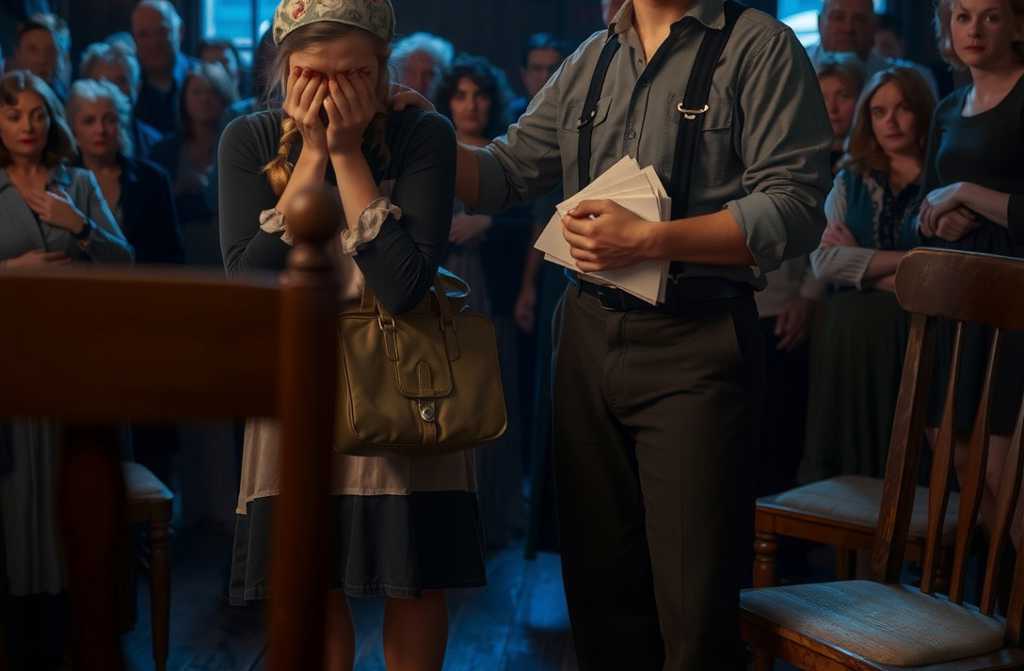
There was a fête, the whole of Willowbrook was out near the village hall. John played his accordion, everyone was dancing, and Edith arrived in a new cotton frock, looking the best Id ever seen her. She wore her worn satchel across her shoulder.
Thats when the local troublemakers, the Miller brothers, half-drunk, swooped over. Fancying a laugh, they tugged at her bag. The strap, old and frayed, snapped, and everything tumbled to the ground. Including a bundle of those famous letters, tied with a blue ribbon.
One of the brothers, Billy, snatched up the letters, shouting, Oi, everyone! Lets see what her city fellow has to say for himself!
Edith lunged at him, white as a sheet. Please! Give them back!
But she was no match for them. Billy darted away, pulled a letter from an envelope and began reading aloud, his voice carrying over the hush:
Dearest Edith! Your eyes are the colour of the summer sky
The crowd quieted, listening. It was beautifully written. Then Billy hesitated, rifled through the bundle, pulling out a more crumpled sheet. He squinted at it beneath the gas lamp by the hall door.
Hang onthis is odd, he bawled. Even the accordion fell silent. Look hereshes crossed it all out! First it says Dearest Edith, then thats struck through, replaced with My only darling, and thats crossed out too! These are drafts! She wrote them herself!
Then came the laughterloud, cruel, echoing across the square.
She writes letters to herself!
Shes invented a fiancé!
Edith stood at the centre of it all, hands over her face, shoulders shaking. The shame was overwhelming. I was young then, rooted to the spot, not knowing how to help, just gasping in horror.
Suddenly, all was quiet.
John, whod been watching from the steps with his accordion across his knees, put it aside and rose. He descended, heavy and slow, his expression hard as granite. The crowd parted before himthere was something commanding in the way he moved.
He walked up to Billy, silently took the letters from his handsBilly didnt make a soundand gathered Ediths things from the ground.
He leaned gently but firmly and took Edith by the elbow, then spoke loud enough for everyone to hear: Whats so funny? Never seen a person before?
Then, turning to her, much softer: Come on, Edith. Ill see you home. Its nearly dark.
And through the hush, they walkedhe, head held high, one arm holding her battered satchel and the other steadying her. The shame clung to us all; nothing stings quite like the sudden silence of gossip.
From that night, everything changed between them. It wasnt quick. Edith avoided peoples eyes for a long while, but John didnt give up. He walked her home from work, brought small treats, waited on her. Six months later, they were married.
They were happy, truly, beyond what anyone expected. John adored her, never letting a speck of dust settle where she walked. Edith blossomed, made a fine home, and bore him three sons. No one in Willowbrook ever mentioned the letter business againJohn had a way of looking at people that made them swallow their words.
Years passed. Johns heart gave out three years ago. Edithnow Mrs. Edith Johnsonhas faded since. I visit her often: check her blood pressure, share a cuppa.
One rainy autumn afternoon, we sat in her warm sitting room, the fire crackling, the patter of rain on the roof. Edith was sorting through her belongings in an old oak dresser. Out came a carved wooden boxJohn made it himself, she told me once.
She opened it, hands trembling. Inside those very same letters, yellowed and frayed.
Do you know, Mary, she said, voice wavering, I always thought he threw them away. Or burnt them, maybe. I was ashamed to ask, really. Always so ashamed of that lie.
She picked up the top envelope and beneath it, a leaf of fresh lined papernot yellowed at all. It must have been written just before John died.
Edith put on her spectacles and read, tears coursing down the lines of her face.
She handed the letter to me. Read it, would you? My eyes can hardly see.
Taking it, I recognised his shaky handwriting:
My dearest Edith. Found this old box while tidying. Forgive me for keeping quiet all these years. I always saw how you carried the burden of that day, and I never wanted to make it harder for you. But now I wish Id told you sooner, to spare you the heartache. I knew then outside the hall youd written those letters yourselfId seen your handwriting a thousand times in the accounts. Do you know why I never laughed? Because my heart broke for you. I realised how lonely you must have been to write such gentle words to yourself. And we, the men around you, so blind, never seeing the heart you had. Thank you for those letters, Edith. If it werent for them, I might have overlooked my own happiness. You were always the loveliest to me. Your John.
We sat there quietly, both crying. The room smelled of sweet tea, apples, and a bitter, aching love you seldom see these days.
Its funny, isnt it? She lied out of desperation just to be noticed. And he noticednot the lie, but the hurt behind it. Then he cherished her, for the rest of their days.
Now, when I glance at that wooden box, I think: Go gently, friends, with those who stumble. Who knows what longing for love pushes them to such foolishness?





