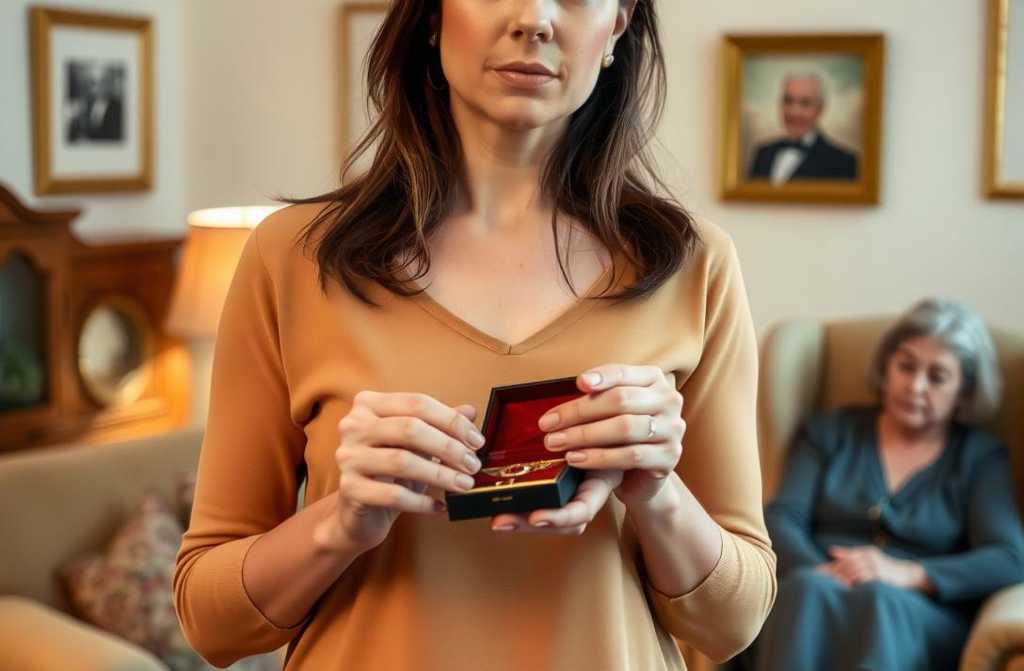
“Mom, you always said I was selfish,” smiled the daughter. “So, I gave your tea set to Aunt Ruth.”
Emma grew up accustomed to the idea that toys didn’t last long in their home. It was because her mom, Patricia Robins, loved visiting friends and occasionally gave Emma’s toys to their children.
“Mom, why did you take my doll?” Emma asked cautiously.
“Emma, dear, I know how much you love this doll, but the little girl across from us is sick, and she’s feeling quite sad. I thought your doll could cheer her up and make her a little happier. We can always buy another doll, but the chance to do a kind deed doesn’t come along every day,” explained her mom, gently stroking Emma’s hair.
Emma looked thoughtfully at the doll, then at her mother, and tears welled up. She didn’t want to part with her beloved toy.
But Patricia valued others’ approval more than her daughter’s tears.
“Don’t sulk; you can’t be so selfish,” her mom said irritably and sent Emma off to do her homework.
As Emma grew, books and clothes joined the list of items given to others.
Initially, she complied, thinking her mom was acting out of kindness and that she was truly selfish.
However, Emma gradually realized her mom’s actions were not motivated by pure intentions, fostering feelings of resentment and bewilderment in her heart.
“I’m going to Aunt June’s, I’ll be back late,” Patricia said, lifting Emma’s coat from the hanger.
“Are you planning to wear my coat?” Emma laughed, seeing her mom holding her clothes.
“No, of course not. It wouldn’t fit me; you’re much slimmer,” Patricia replied awkwardly with a grin.
“Then why did you take it off the hanger?” Emma asked seriously.
“I promised it to June’s daughter. Hers ripped, and they don’t want to buy a new one since it’s almost spring,” Patricia fumbled for an excuse.
“And what am I supposed to wear? Should I wear her torn one?” Emma exclaimed in amazement.
“I’m telling you, spring is just around the corner; you won’t need it soon. Wear mine if it gets cold,” Patricia suggested nervously.
Emma continued to stare at her mom in disbelief, feeling her frustration grow.
“Why does she always give away my things? Why does she think it’s okay?” Emma wondered.
For the first time, Emma boldly approached her mom and snatched her coat back.
“Mom, I don’t understand why you keep giving my things away. It’s not right!” Emma said through clenched teeth.
“You’re too selfish, dear. You should learn to share with others,” Patricia frowned.
“But why always my things? My toys, books, or clothes?” Emma protested. “I’m not against sharing, but why is it always mine? Why don’t you give her your coat?”
Her mom looked at her in bewilderment, as though she couldn’t comprehend.
Then, pursing her lips with hurt, Patricia left the house wordlessly. Emma felt triumphant as she put the coat back on the hanger.
She spent the day feeling proud, but the next day it all happened again.
This time, no one asked Emma’s permission or gave any explanation.
Patricia silently took the coat from the hanger and quickly left the house.
Seeing it gone, Emma cried in frustration. It was then she realized she could only protect her belongings by living separately.
When Patricia returned, she saw her daughter’s disappointed look and felt a vague sense of guilt.
However, her pride and belief in her actions drowned out this feeling. Emma’s internal discontent turned into determination to change her situation.
She worked hard to graduate with good marks and apply to college with financial aid.
Once Emma moved into student accommodation, she felt a sense of relief.
Even sharing a room with three other students, she worried less about her possessions than when she lived at home.
Years passed; Emma graduated from college and found a job. She rented her own place and started building her life.
Despite past grievances, Emma called her mom regularly and occasionally visited.
One day, Patricia was visiting Emma and, out of habit, decided to give her new jeans to a relative.
“Emma, I’m going to give these trousers to Jane; they’ll fit her perfectly,” Patricia said nonchalantly.
“Mom, not again? Those are my jeans; I bought them myself, and I’m not giving them away,” Emma reacted angrily.
Patricia looked at her, surprised by Emma’s resistance.
“Is it really such a big deal? How did you end up like this? You’ve been selfish since you were a child,” her mom grumbled unhappily.
“It’s easy to be generous with someone else’s belongings. Start giving away your things,” Emma suggested.
Patricia frowned but said nothing. She dressed and left in silence.
That day, Emma came up with a plan to teach her mom a lesson and settle past scores.
Emma knew she’d be invited to the birthday of her father’s sister. Aunt Ruth had always been kind to Emma, unlike with Patricia, whom she could scarcely tolerate.
The day before Aunt Ruth’s birthday, Emma visited Patricia and discreetly took the antique tea set under the guise of collecting her belongings.
Despite its age, it looked splendid and was a worthy gift.
Her aunt was genuinely thrilled with the present, but Patricia, noticing its absence, was furious.
“Where did my tea set go? I took care of it for my whole life; it was like new,” Patricia demanded.
“Mom, you always said we should share and do good deeds,” Emma smiled. “So, I gave the set to Aunt Ruth, and she was delighted.”
Patricia was taken aback by Emma’s response, staring silently at her triumphant daughter.
“You should have asked first if I wanted to give it away,” Patricia finally found words.
“And did you ever ask me before taking my things?” Emma retorted.
“Don’t try to teach me a lesson! Remember, I bought them for you, so I had the right to do with them as I pleased!” Patricia angrily shouted.
“That tea set was purchased by Dad, so consider it as me giving away my inheritance,” Emma replied sarcastically.
Unable to tolerate her daughter’s defiance, Patricia threw her out.
Over a year passed with no communication between them; Patricia was deeply hurt.
However, by Christmas, she reconsidered their relationship and made the first move to reconnect.