**Diary Entry**
Greed disguised as concern often leads to betrayal. If anyone believes family bonds guarantee love and loyalty, this story will shatter such naïve hopes.
Margaret Whitmore was always a humble and kind woman. Life hadn’t been easy—widowed young, she raised two children alone: her daughter, Eleanor, and son, James. She worked as a hospital cleaner, never complaining, never asking for help. Everything she had, she gave to them, trusting they’d make her old age peaceful and bright.
At 73, Margaret’s health began to fail—her heart troubled her, her legs grew weak, her blood pressure spiked. Eleanor suggested her mother sell the old cottage in the countryside and move into her flat in London.
“Mum, you can’t live alone out there. With us, it’s warm, the grandchildren will see you every day,” Eleanor said, forcing a smile.
Margaret believed her. She sold the cottage, handed the money to her daughter—for renovations, for their “shared future.” And she moved in.
At first, it seemed idyllic: cosy evenings, grandchildren, family dinners. But soon, everything about Margaret became a nuisance—her old-fashioned ways, her advice, even the sound of the telly. Every word felt like an intrusion.
“Mum, you must understand—you’re elderly now. You need proper care. I’ve found a lovely care home. There’s doctors, activities… and no one will resent you there.”
So off Margaret went. No tears, no explanations. Paperwork signed for “temporary stay”—and then, no one returned.
But Margaret had a son—James. He lived in Manchester, rarely visited, yet she always spoke of him fondly: “Jamie has a good heart. He won’t forget me.” And she was right.
One day, James arrived unannounced—hoping to surprise her. But she wasn’t there. Neighbours told him everything: how Eleanor had taken her away, sold the cottage, pocketed the money.
James stormed to the care home. There, he saw his mother—once lively, now hunched on a bench, her eyes empty. His heart shattered.
“Mum… how could this happen?” He dropped to his knees. “You don’t deserve this.”
They wept. She, from shame and pain. He, from guilt and rage. And then James made a decision—he’d take her home with him.
A month later, Margaret stepped into a new house—a neat, warm cottage on the outskirts of Manchester. It was modest but snug, smelling of apple pie and fresh linen. Flowers bloomed in the garden, lace curtains swayed by the door.
“Mum, this is your home now. You’re the lady of the house. And we’re right here.”
James’s wife embraced her, whispering, “You’re like a second mother to us. We’ll take care of you.”
It might have ended happily—if not for Eleanor’s next visit. She’d gone to the care home for Margaret’s “allowance”—the pitiful pension she stole under the guise of “struggles.”
But they told her Margaret was gone. Panicked, Eleanor tracked down the new address, arriving with fake tears and whines:
“Mum, we’re in trouble. No money. My husband might lose his job. You’re still my mother—”
But instead of a frail old woman, she faced James’s steel voice:
“Eleanor, don’t you dare come here again. The house is mine. Mum stays with us. If life’s so hard—go back to the countryside. Start over. Need help? Try the care home—you said yourself it’s all about ‘care.'”
“How dare you! I’m her daughter too!”
“You? The one who dumped her when she needed you most? Stay away. If I see you near this house again—you’ll regret it.”
Eleanor turned and left. No tears. No remorse. Just a burning glare.
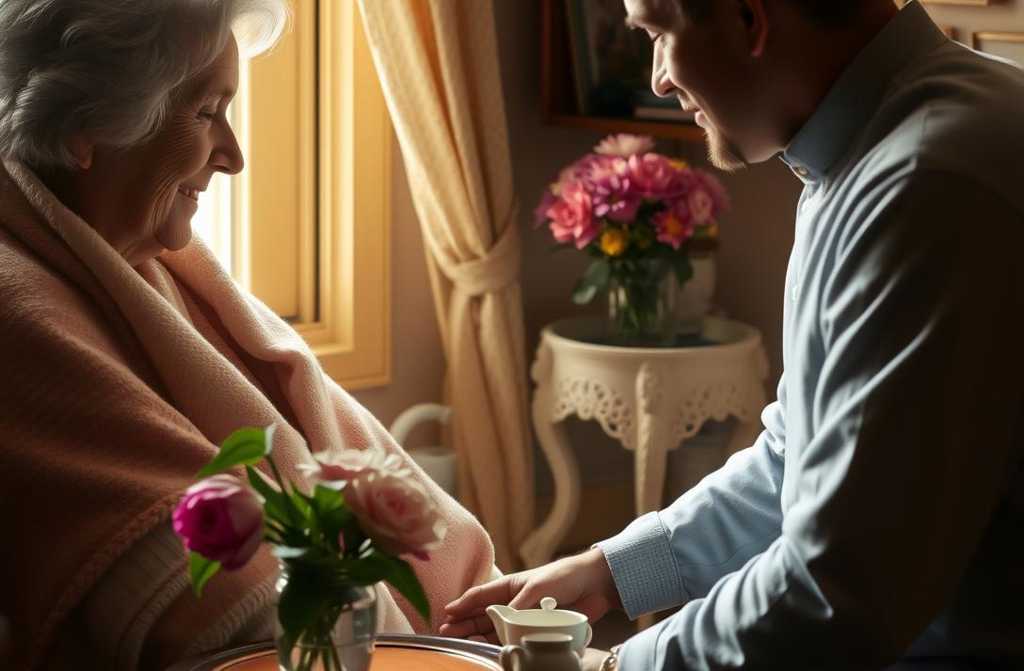
That evening, Margaret sat by the window, cradling a teacup. For the first time in years, she didn’t feel like a burden—she felt wanted. Loved.
James draped a blanket over her shoulders, kissed her head.
“It’s alright, Mum. Things will be different now. I promise.”