
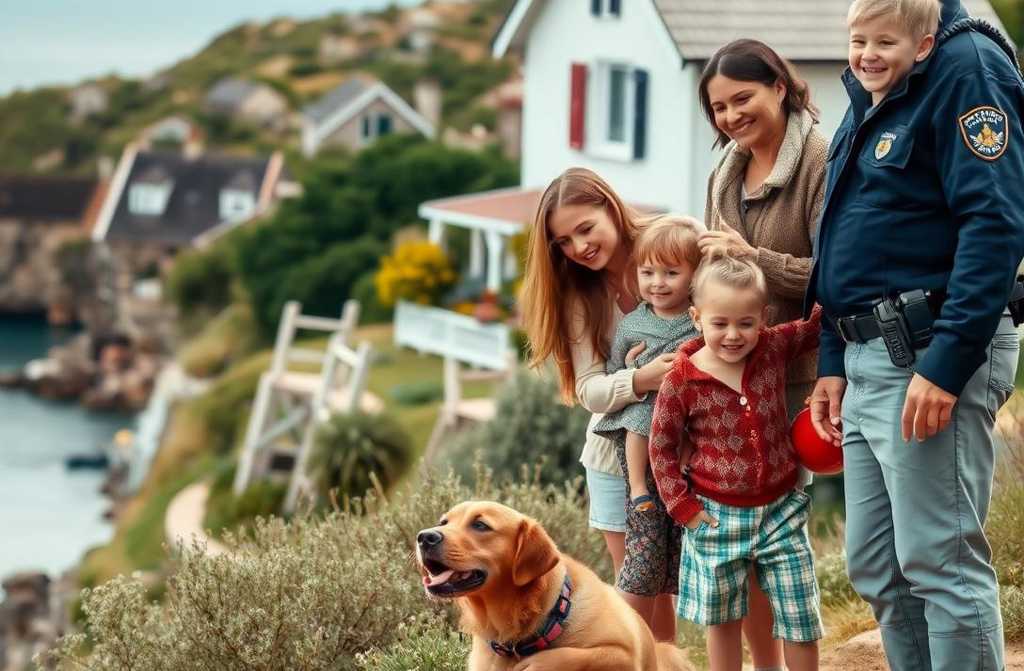
Wilfred was an old bachelor, set in his ways and untroubled by solitude. He worked like a carthorse, though he loved his labour, taking pride in doing everything just so. A proper order to things—that was his way. Over the years, he’d met many women, but not one had ever seemed quite right.
That July, worn thin from toil, he packed for a holiday, longing to escape the bustle. He took to the internet and placed an advert.
A reply came from a woman with two children, living in a quiet southern village—twenty minutes’ walk from the sea, far from resorts and towns. A private room, she offered, and in return for his groceries, home-cooked meals. Tempted, he agreed.
The journey passed without trouble, the satnav true as ever. The house was old but tidy, his room snug, the landlady kind. A little terrier, Matilda, scampered about the yard. The garden brimmed with ripening fruit, while the children—a boy and girl of nine or ten—busied themselves with chores. The woman, Anne, never pestered him, only asked what he’d like for supper, served strawberries with a smile.
Wilfred spent his days at the sea—swimming, clambering over rocks, taking photographs, writing to an old mate on some forgotten social site. Now and then, he wondered how a woman of fifty had such young children. At last, he asked.
“Anne, are they your grandchildren?”
“No,” she replied. “Mine—late in life. Never married, never settled. But I wanted children all the same. And I’m not so old—forty-eight.”
As they talked, he studied her—soft-spoken, pleasant, with a name that tugged at him. Anne. Nance. Like his mother. She smelled of strawberries and fresh butter. The homemade wine was sweet, the evenings cool, the sky thick with stars. Neither played games—they were past that. By day, all was proper. By night, he stole to her room, then back before the children woke.
The little dog, clever as anything, never barked at him—just watched with sly eyes. A good creature, frugal too. A few spoonfuls of food, yet she guarded the yard well. Matilda began to follow him to the sea, even swimming, then shaking off and trotting home ahead of him.
Until one day she didn’t return.
Wilfred searched, called, wrote a dozen notices, and stuck them up. Where had the dog gone? An elderly neighbour muttered about outsiders renting at the far end of the village—might they have taken her?
He marched there. Gone, they told him—left an hour ago, headed for the motorway, a little dog with them. Wilfred turned, gunned his car, and gave chase. Eighty miles on, he cut them off—a jeep, two brash young women inside.
“Move your car!” one shrieked. “We’ll call the police!”
“Call them,” he said. “After you return my dog.”
“Yours?” The taller one laughed. “She was stray—we rescued her.”
“She’s not stray. She has a family. Give her back.”
“Piss off!” the other snapped. “Move, or we’ll smash your windows!”
He circled the jeep. “Matilda!”
A yapping, a scramble—Matilda pawing at the window. The women grabbed at him, swearing, swinging fists. He hesitated—what could he do? Strike a woman?
Then a patrol car arrived—a red-faced sergeant, panting, plugging his ears against their shrieks. He lifted Matilda.
“Quiet! Whoever she goes to keeps her. No papers, no proof.”
“Button! Sweet pea!” The women waved sausages. “Come, darling!”
“Time to go home, Matilda,” Wilfred said.
The sergeant set her down. She bolted to Wilfred, tail wagging, barking madly.
“Seems settled,” the sergeant wheezed.
“No! She’s ours!” they screeched. “We’ll report you! She was roaming—we saved her!”
The sergeant flushed. “Listen, ‘saviours.’ Leave now, or I’ll check your insurance, fire extinguisher, warning triangle, first-aid kit—count every pill in it. Your car’s filthy. Might even run the plates, see if it’s stolen. The database is back at the station…”
The jeep vanished.
Wilfred shook the man’s hand. “Thank you, officer.”
“Don’t mention it. Got a terrier myself—Barker, the little blighter. Wears a jumper in winter, soft as anything. Good breed, loyal. Handy size, too. Safe trip—mind the speed.”
Back in the car, Matilda curled on his lap—warm, velvety. A rare contentment settled over him. The road smooth, the engine purring, the dog snug. And yet, beneath it, a pang—soon he’d leave. No one waited in his empty flat.
A thought flickered: turn around. Take her. What were a few shirts, some trousers? He marked the idea, sighed, and drove back to Anne.
The last week brought rain, but he swam anyway. Matilda followed. Nights, he crept to Nance’s room; mornings, he lingered, heavy-hearted.
On his last day, the sun returned. He packed, gave Anne a gift, left his number, and drove off. The holiday was over, the fling done. Back to routine.
As the car hit the tarmac, he saw Matilda chasing. He sped up—so did she. Faster, faster—until she vanished.
He stopped. Got out. Lit a cigarette—hands shaking. Smoked it down, stubbed it out, and squinted at the road. A tiny speck, moving. He ran—praying no cars came—like he hadn’t run in years.
Matilda raced toward him, dust-coated, tongue lolling, even her ears full of grit. Her tail wagged; she tried to bark but only sneezed. He scooped her up, wiped her clean, let her sip from his cupped palm. Then he called Anne.
“Your dog’s with me. She chased the car. Don’t worry—I’ll bring her back.”
“Keep her, if you like. I found her days before you came—tossed from a van near the shop.”
“Truly?”
“Truly.”
So he kept her.
Six months later, at the university, he overheard gossiping colleagues.
“Did you hear? The dean’s remarried.”
“Some countrywoman, they say. Seen her?”
“Plain, middle-aged—two children and a dog.”
“At least she didn’t bring hens. What’s her trick, d’you think? Love potion?”
Wilfred stepped into view. The women simpered.
“Oh, Professor Wilfred! Do tell—how did she charm you? Was there witchcraft?”
He laughed. “There was indeed—the strongest kind.”
“Won’t she share her secret?”
“Afraid not. Quite impossible.”
Still smiling, he walked home—to Anne, the children, and Matilda.
✍ Elena Andriyash.





