*”This Is Why My Son Told Me I Wasn’t Invited to His Wedding”*: He tried to comfort me, promising they’d visit the next day with his wife and bring a cake.
When Oliver was just six years old, his father vanished from our lives without a word—gone in the blink of an eye. I was left alone with a small child and a hollow silence where family warmth should have been. With no one to lean on, I became both mother and father, provider and protector, all in one. I worked double shifts, took odd jobs, pulled overnight stints, and never allowed myself to fall ill. The only thing that mattered was making sure my son never felt lesser than children who had both parents.
I never thought of myself—not once did I put my own happiness first. There were men, of course. Some even offered me a shared future. But I couldn’t. I feared Oliver would feel replaced, that someone else might take my place in his heart. His love was enough for me—every bit of warmth, every ounce of attention, my whole heart, was his. I lived for his dreams, his triumphs, his laughter.
Oliver grew into a handsome, brilliant, and remarkably kind young man. He got into university, graduated with honours, and built a career that filled him with quiet confidence. Then, one day, he introduced me to Sophie. He’d been seeing her for six months by then. She seemed polite, well-mannered, but distant. Too distant.
A fortnight later, Oliver announced they were engaged. I was overjoyed, already imagining the dress I’d wear, the smiling guests, the proud embrace outside the registry office, the toasts and photographs—every mother’s dream for her child’s wedding day.
Yet Oliver kept putting off the details. I asked constantly—when was the date? Where would it be? What should I wear? Finally, he sighed and said:
*”Mum, there won’t be a wedding. We’re just signing the papers at the registry office. No guests. No celebration. Just us two. Sophie’s decision.”*
At first, I didn’t understand. No wedding? No place for me? He explained Sophie didn’t want to spend money on a ceremony—better to save for a house. If they invited anyone, her whole family would expect an invite, and that meant crowds, costs, complications. If it was just me, it would *”look odd.”* So, they decided to keep it private.
Then came the words that shattered me:
*”Mum… you’re not invited. If you show up, there’ll be questions. We don’t want to upset Sophie’s side. So please… just stay home.”*
I stood there, silent. A knife twisted inside me. How could this be? *My* son. The child I raised, sacrificed for, loved with every fibre of my being—and on the most important day of his life, I wasn’t welcome?
I offered to pay—even just for a small reception, my gift to them. They refused.
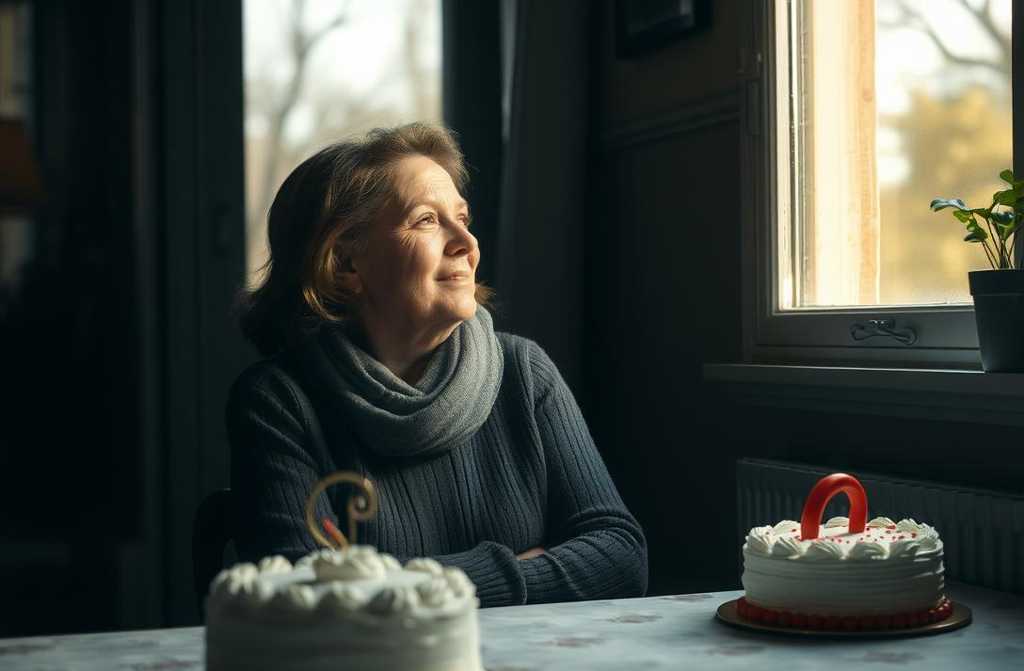
*”We’ll come by the next day,”* Oliver added softly. *”Bring a cake. Keep it simple.”*
Simple? *This* was family now? Cutting out the mother who spent years sleepless, scrimping, sacrificing—just to smooth things over with his wife? Where did *my* years fit into this new life of his?
I don’t blame Oliver. He isn’t cruel. He chose peace. Chose not to rock the boat, not to argue, not to sour things with his new family. The old one—the one that gave him life—could wait.
My heart aches. And no, I don’t know how I’ll face them with that cake. I don’t know whether to smile or let the hurt show. Because inside, there’s only tears, bitterness, and an empty seat at a wedding table—where a mother should have been.
Sometimes love means letting go, even when it breaks you. And that’s the hardest lesson of all.