
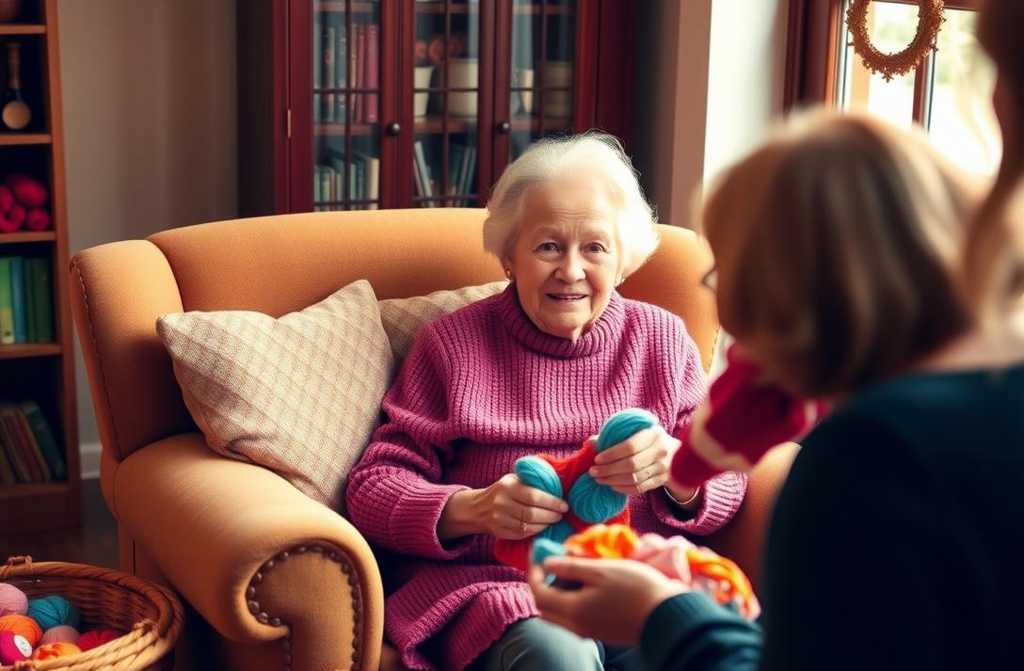
The daughter-in-law was handing out items lovingly knitted by her mother-in-law for the grandchildren.
“What’s wrong with these socks? They’re warm, neatly made, such a gentle, cosy colour. Autumn’s coming, the cold’s setting in—perfect timing for them,” I asked Katie, holding up the pair of woollen socks she’d just passed me.
“The pattern’s a bit old-fashioned,” Katie waved it off, tucking a strand of hair behind her ear. “I’ve got a son—he’d never wear this. And my mother-in-law’s already knitted so much, the wardrobes are bursting. No way he’d get through it all.”
“Fine, give them here,” I sighed, taking the socks and adding them to the knitted jumper Katie had gifted me for my birthday.
Margaret Whitmore, my friend’s mother-in-law, had recently retired. She lived in a little cottage in York and was an absolute wizard with knitting needles. Her hands worked magic—hats, jumpers, socks, all so lovely you couldn’t look away. But her thrifty nature sometimes played tricks on her.
Margaret might unravel an old cardigan just to knit something new for the grandkids. Those pieces often looked a bit rough, with knots and frayed bits—hardly what you’d call stylish. And colours? She wasn’t fussy, grabbing whatever was handy. So Katie, the daughter-in-law, either binned them or handed them off to friends without even unwrapping them.
But for her grandchildren, Margaret gave it everything. She’d spend her modest pension on good-quality yarn, sitting for hours, pouring love into every stitch. These socks Katie had given me were a proper work of art—soft, warm, with a delicate pattern. Holding them, I could feel the warmth she’d meant for her grandson.
Once, I glanced out the window and froze: the neighbour’s boy was running about in a hat Katie had tried foisting on me just days before. Same story with a waistcoat and scarf—everything Margaret had knitted with heart, Katie gave away without even trying them on her son. I couldn’t fathom it. These weren’t just clothes—they carried a piece of an old woman’s heart, hoping to give her grandkids a little joy.
The socks fit my daughter perfectly. She pranced around the house, chuffed about how comfy they were. I’d have happily bought their like in a shop, but where do you even find them? I suggested Katie talk to Margaret, explain what she didn’t like, so she wouldn’t waste her time. But Katie just shrugged.
“Oh, why bother? Easier to pass them on than argue. She wouldn’t get it anyway.”
Watching her, I felt a simmering frustration—not for myself, but for Margaret. That woman, with her worn hands and kind heart, had spent hours on each loop, thinking of her grandson. And her effort got tossed out or given away without so much as a thank-you.
Katie kept griping about her mother-in-law—always interfering, always giving unsolicited advice. But all I saw was indifference. Margaret wasn’t just knitting—she was trying to stay close to the family, to the grandson she saw once a month. And Katie, instead of appreciating it, brushed her off like a bothersome fly.
One day, I’d had enough. We were at Katie’s, and she was doling out yet another of Margaret’s gifts—a little cardigan for her boy. I took it in my hands—soft wool, delicate design, flawless stitching. I pictured Margaret in her old armchair, counting stitches to get it just right. And I snapped.
“Katie, do you have any idea how much work went into this? She’s doing it for your son, and you won’t even look at it!”
Katie rolled her eyes.
“Oh, come off it. It’s easier to give it away than tell her it’s out of style. She’d only get upset.”
I bit my tongue, but inside, I was fuming. It hurt, seeing this woman’s effort go unappreciated. I wondered how Margaret would feel if she knew her gifts were being handed off to strangers. Maybe she already suspected but stayed quiet to keep the peace?
Now I’m stuck: do I take what Katie offers, or refuse? If I take it, it’s like endorsing her indifference. If I refuse, she’ll take offence, and our friendship might crack. But every time my daughter wears those socks, I feel guilty toward Margaret. Her work deserves respect—not to gather dust in someone else’s drawer.
What should I do?





