
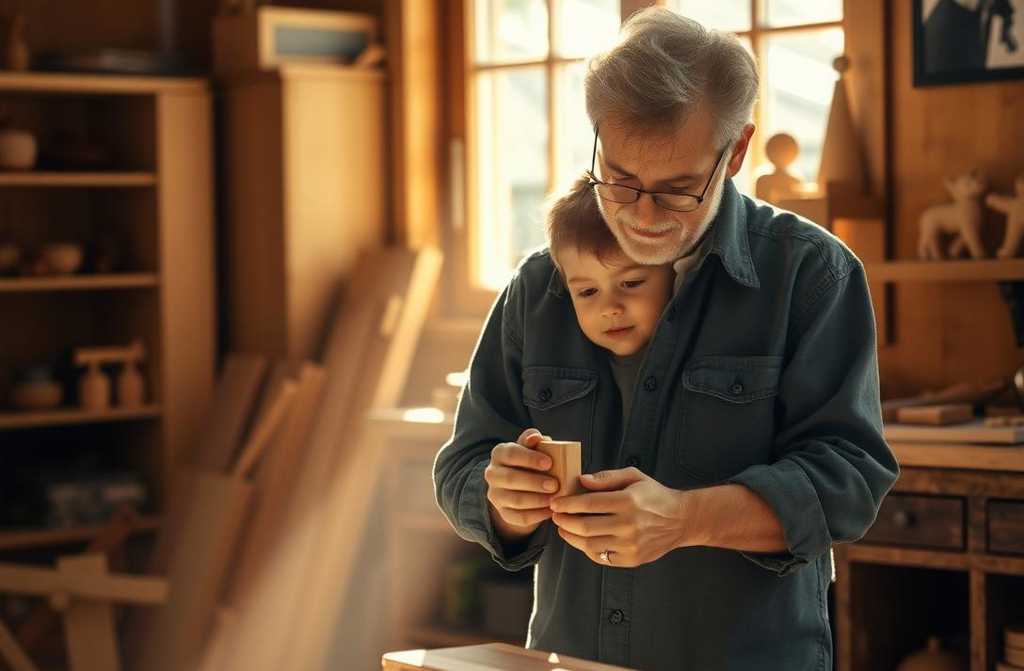
Edward Whitmore had been a widower for six months. The raw, searing grief had dulled, burrowing deep beneath his ribs like a shard of ice—melting only at the most inconvenient moments. When a neighbour would ask, “How are you holding up, Edward?” his eyes would glisten, betraying the pain he carried.
“Getting weak in my old age,” he’d think. “Never used to be like this.” Then, almost as quickly, he’d answer himself, “Then again, never had sorrow like this before.”
He’d lived in the countryside since his youth. Retirement had promised time—so much of it. Yet after losing Margaret, time seemed to stand still, meaningless. Only the quiet prayers in the village church offered any solace.
His daughter, Charlotte, had married a city man. Their boy, Oliver, was nearly school-aged. That summer, Charlotte arrived with her husband, Thomas, and the lad in tow.
“Dad,” she said, nudging Oliver forward, “thought you could use a project. Mum spoiled him rotten, but now it’s your turn—time to make a proper lad of him.”
“And his father? Doesn’t he teach him anything?” Edward grunted.
“Thomas?” Charlotte laughed. “Bless him, he’s never held a hammer in his life. You know he’s all about his piano. Come autumn, Oliver starts music lessons with him. But a boy needs balance—strength, skill. I want him to be like you.”
Edward smirked, eyeing the boy. “Right then, Charlotte. Suppose I’ll teach him what I know. While I still can.”
“None of that talk,” she chided. “You’ve got years ahead. Just help me with him. That’s all I ask.”
That afternoon, Edward led Oliver to the shed. They surveyed the workbench, the shelves of tools, then set about carving out a corner for the boy.
Edward repurposed an old desk, sawing down the legs and lining the top with sheet metal. Small hands needed small tools—tiny hammers, child-sized pliers, a little saw. He hung a shelf above Oliver’s bench, stocked with nails sorted into tins that once held peppermints, relics from Edward’s own boyhood.
Oliver was fascinated, dogging his grandfather’s steps, pestering him with questions. Charlotte barely dragged them in for supper before they vanished again, lost in their “men’s work.”
“There,” Edward declared by dusk. “That’s a start. Pack it in for today—fishing at dawn. Need to sort the gear and get some shut-eye.”
Summer days slipped by, golden and full. Charlotte and Thomas noticed the change—Edward stood taller, his eyes brighter.
“Who’d have thought?” Thomas murmured privately. “You, a schoolteacher, fixing everything—for Oliver, for him.”
“Everyone needs purpose,” Charlotte said softly. “I won’t let him fade. We’ll visit more often. Thank God for Oliver—better than any tonic.” She sighed, turning to the garden, tending it just as her mother had. The roses must still bloom, the hedges stay tidy. Life, despite loss, must go on.
When summer ended, Charlotte returned to the city, but Thomas and Oliver lingered, helping Edward with chores.
But autumn came, and Oliver’s first day of school loomed. Edward was summoned to the city for the occasion. Dressed in a suit and tie he hadn’t worn in a decade, he stood stiffly at the school gates, gripping Oliver’s hand as the national anthem played, his chest tight with pride.
In that moment, Edward vowed to stay strong—to pour himself into Oliver, into Charlotte, into whatever time remained.
Back home, that evening, he sat at the kitchen table, pen hovering over blank paper. Like a schoolboy himself, he began to write—a list of projects for next summer. A play area. Swings. A climbing frame. A sandpit by the old oak. And the footbridge by the brook needed mending.
The list grew daily, as did the “accounts”—costs of timber, paint, rope, sand. So much to do. He had to beat winter, stockpile materials, make ready.
Now Edward rose early, scribbling daily tasks, ticking them off one by one. Oliver visited often—holidays, weekends, half-terms. The house hummed with life again; Charlotte scrubbed floors, baked pies, while Edward, Thomas, and Oliver hammered and sawed, their laughter ringing through the frosty air.
On his birthday, Charlotte presented them all with camouflage jackets. The joy was palpable. Then, as Mother’s Day neared, Edward pressed her: “What’d you like, love?”
“Go on, name it,” Thomas chimed in. “You’re our only girl—spoiled rotten.”
“Am I?” Charlotte’s smile turned sly. “Well then… surprise. There’ll be another Whitmore soon. Don’t know if it’s a girl or boy yet, but—”
Silence. Then—cheers. Thomas swept her into a spin, Oliver whooped, and Edward, wiping his eyes, murmured, “Margaret always wanted a granddaughter… though another lad’d be just fine.”
Later, over tea, Edward raised his cup. “No more moping. Double the grandchildren, double the work.”
“What if it’s another boy?” he teased. “Where’ll I find enough tools?”
Oliver piped up, “I’ll share mine, Grandad. Won’t mind a bit. That’s what brothers do.”





