For them I was the embarrassment, the son with tanned skin and calloused hands that reminded them of the mud they’d worked so hard to climb out of. My brother Richard was the golden child – fair‑skinned, straight‑haired, with a grin that, according to Mum, could “open any door”. I was the shadow trailing behind him, the stubborn reminder of our modest roots.
We grew up under the same roof, but in completely different worlds. While Richard was whisked off to English lessons and computer classes in Leeds, I stayed back to help Dad on the little plot of land that put food on our table. “You’re built for the field, Matthew. Strong as an ox,” Dad would say, trying to sound like a compliment but always landing like a verdict. I wasn’t the clever one, not the polished one; I was brute strength, just a pair of extra arms.
Mum, Eleanor, could be even harsher. When I came home from the fields, dirt caked to my clothes and sweat plastered to my forehead, she’d twist her lips. “Look at you, covered in earth. You’re nothing but a farm‑hand, not the son of a gentleman,” she’d whisper, making sure I heard. “Go wash up before you dirty the floor that Richard just swept.” Richard never swept. He’d be on the sofa with a book, while I stood in the cold water, scrubbing both the grime and the humiliation away.
The only person who ever met my gaze straight was Uncle Rob, Dad’s older brother. He was the black sheep, a carpenter who never chased the “progress” Mum bragged about. One scorching afternoon, as I was fixing a fence, he plopped down beside me.
“Do you know why your mum favours your brother?” he asked, no beating around the bush.
I shook my head, a lump tightening my throat.
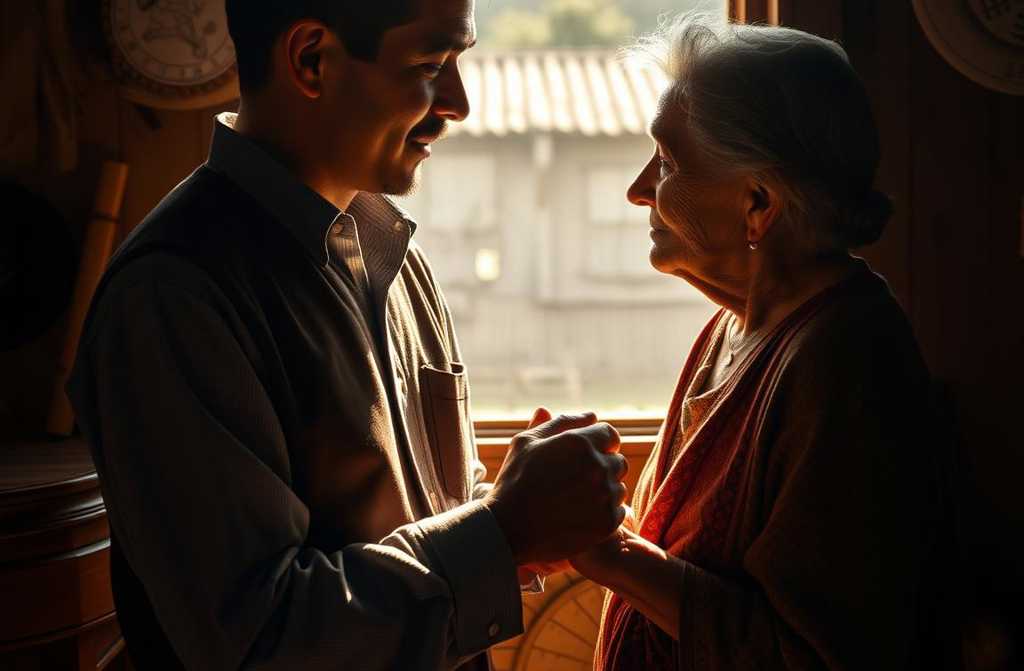
“Because he looks like the man she’d have liked to marry. And you… you look like us, the ones that smell of work, not expensive perfume. Don’t let that poison you, lad. A man’s worth isn’t in his titles, it’s in what he builds with his hands.” He squeezed my rough, calloused palms, just like my own.
The final break came on my eighteenth birthday. Dad gathered us around the kitchen table. Richard had just been accepted into a private university in London. Mum was weeping with pride.
“Richard is the future of this family, Matthew,” Dad said, not even looking at me. “He thinks, not just sweats. That’s why we’ve decided the farm will be put in his name. When he finishes his studies, he’ll have capital to start his own business.”
It felt like the ground vanished beneath my boots. The fields I’d tended since I could lift a hoe – the only place my sweat ever seemed to matter – were being stripped away to fund my brother’s dreams.
“And me?” I asked, voice barely a whisper.
Mum shot me the coldest stare I’d ever seen. “You already have a trade. There’ll always be someone who needs a strong labourer. Don’t be ungrateful; this is for the good of the family.”
I didn’t sleep that night. Before dawn, I packed a couple of shirts into a bag and slipped off to Uncle Rob’s cottage. I didn’t say goodbye – why bother? To them, I’d already left long ago. Rob welcomed me without question, gave me a roof, a plate of tea, and a spot in his workshop. “Here you start from the bottom, sweeping the sawdust,” he told him. So I swept – angry, hurt, until my hands bled. I learned the craft, the dignity of timber, the precision of a clean cut. Years later the workshop grew. I wasn’t just his apprentice; I became his partner. We founded a modest building firm. First we did renovations, then tiny houses, and eventually small housing estates. Rob was the heart; I was the engine.
Meanwhile, news from my own family arrived like distant echoes. Richard graduated with honours, but his “business” never took off. He blew the cash from selling a slice of the farm on a flashy car and holidays. He mortgaged the rest for a dodgy scheme. He lived on appearances, drowning in debt. Mum and Dad, old and weary, kept up the charade, insisting their “successful son” was merely in a rough patch.
Rob died two years ago, leaving everything to me, after making me promise never to forget where I came from. His death left a massive hole, but also a fortune I’d helped build with my own hands.
A month ago, Dad called. His once‑authoritative voice trembled. The bank was about to repossess the house and the remaining acres. Richard had fled, leaving an unpay, debt they couldn’t cover.
“Matthew, son… we need help. You’re our only hope,” he stammered.
Yesterday we all sat at that same worn kitchen table – the one where they’d condemned me. Mum never lifted her eyes from the threadbare cloth. Dad looked like a centenarian. Richard was nowhere, cowardly absent.
“I know we have no right to ask anything,” Mum whispered, tears tracing her lined cheeks. “I was a bad mother to you. Pride blinded me. But this is your house, Matthew. The land belonged to your grandfather.”
I stared at her, and for the first time I saw not the woman who’d despised me, but a defeated stranger. Her words, her coldness, the loneliness of my childhood all flashed back. I rose, walked to the window, and looked at the earth that had once been my world.
“I’ll pay off the debt,” I said finally. A sigh of relief settled over the room. Mum burst into sobs, “Thank you, my son, thank you.”
I turned back to them, voice steady, no tremor.
“I’ll buy the debt and take the land, but don’t get the wrong idea.” I paused, letting the weight of it sink in. “This isn’t to save you. It’s to honour the memory of the only man who ever saw me as a son, not a pack‑horse.”
I bought back the farm they’d denied me, not to return home, but to make sure they’d never have a place to come back to.