
Where the Light Doesnt Reach
In the bleakest winter, in the freezing, hungry heart of the East End ghetto of London, a young Jewish mother made a choice that would seal her sons fate forever. Hunger gnawed nonstop. The streets reeked of illness and dread. Deportations arrived like clockworkeach train a oneway ticket. The walls seemed to close in.
Yet in that choking darkness she spotted one last cracka way out, not for herself but for her newborn.
I. Cold and Terror
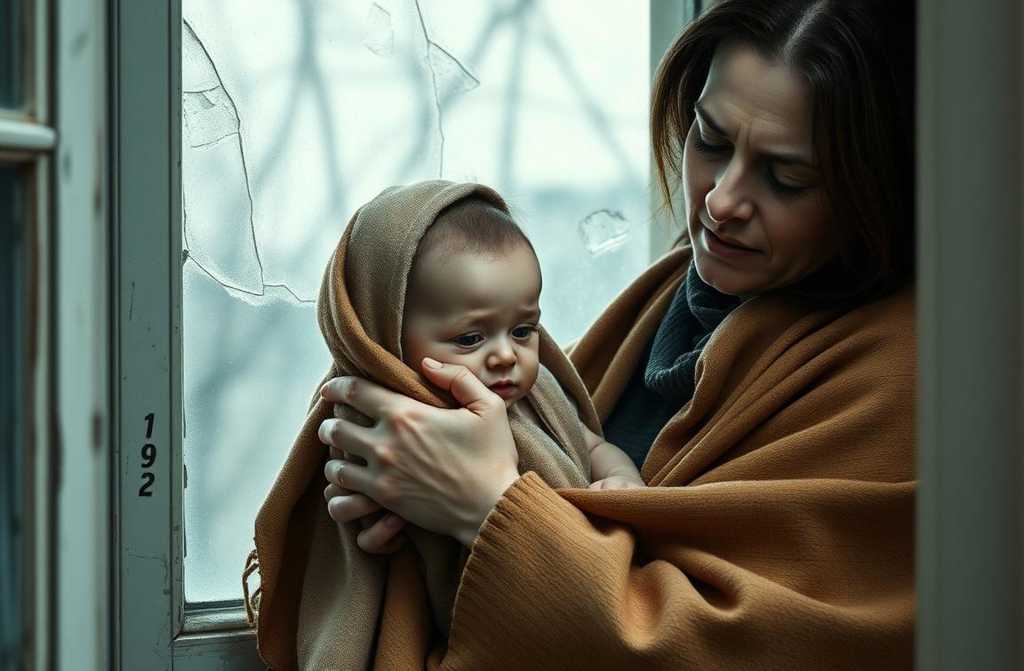
The wind sliced like knives as snow piled up over rubble and bodies. Sarah stared through the broken window of her tiny room, clutching baby James to her chest. The infant was only a few months old and had already learned from the ghetto that crying could be fatal.
Sarah recalled better days: her parents laughter, the smell of fresh bread, Saturday music. All that had vanished, replaced by hunger, sickness and the constant fear of boots echoing through the night. Rumours of fresh raids and fresh lists of names spread by word of mouth. No one knew when it would be their turn. Sarahs husband, David, had been taken in one of the early deportations, leaving her to survive on James alone.
The ghetto was a trap. Walls once built to protect now resembled barbed cages. Bread grew scarcer each day, water dirtier, hope farther away. Sarah shared a cramped room with three other women and their children, all aware that the end was near.
One night, as the cold made the panes shiver, Sarah heard a whisper in the gloom. It was Miriam, the neighbour, her eyes swollen from endless crying.
There are Polish lads, she hissed. They work in the sewers. They can get families out for a price.
A spark of hope and terror lit Sarahs heart. Could it be true? Was it a trap? She had nothing left to lose. The next daybreak she set out to find the men Miriam mentioned.
II. The Deal
They met in a damp cellar beneath a cobblers shop, the air thick with leather and mildew. There she met Jan and Peter, two sewer workers whose faces bore the marks of hard labour and guilt.
We cant take everyone, Jan warned, his voice gravelly. Patrols are everywhere, eyes in every shadow.
Only my boy, Sarah whispered. I ask nothing for myself. Just save him.
Peter gave her a sympathetic look.
A baby? The risk is massive.
I know. If he stays, hell die.
Jan nodded. Theyd helped others before, never a child so tiny. They sketched a plan: on a night when the patrol changed shift, Sarah would bring James to a rendezvous point, slip him down a manhole in a metal bucket wrapped in blankets.
Sarah returned to the ghetto with a heavy heart. That night she lay awake, staring at her sons fragile face, tears silent on her cheeks. Could she really let him go?
III. The Farewell
The chosen night arrived with a frost that made stone groan. Sarah wrapped James in her warmest of shawlsthe last gift from her own motherand kissed his forehead.
Grow where I cannot, she murmured, voice breaking.
She slipped through deserted lanes, dodging shadows and soldiers. At the meeting spot Jan and Peter waited, silent as graves. Jan lifted the manhole cover; the stench was overwhelming, but Sarah did not falter.
She placed James in the bucket, making sure he was snug. Her hands trembled, not from cold but from the weight of what she was doing. Leaning close, she whispered into his ear,
I love you. Never forget.
Peter lowered the bucket slowly. Sarah held her breath until the child vanished into darkness. She did not weepshe simply could not, for tears would have made staying impossible. She remained behind, accepting the grim fate awaiting her, comforted by the thought that James now had a chance.
IV. Beneath the Streets
The bucket slid into blackness. James did not cry, as if sensing the gravity of the moment. Peter cradled him, shielding him from chill and fear.
The sewers were a maze of shadows and foul smells. Peter felt his way by memory and instinct, every step a gamble: German patrols, collaborators, the danger of getting lost forever. Jan caught up later, and together they pressed on through tunnels that seemed endless. Icy water rose to their knees, the echo of their footsteps the only sound beside their racing hearts.
After hours they emerged at a hidden exit beyond the ghetto walls, where a Polish family waiteda first link in a resistance chain.
Take care of him, Peter whispered, handing over James wrapped in the shawl. His mother couldnt get out.
The woman, Margaret, nodded through tears. From that moment James became her son as well.
V. A Borrowed Life
James grew in secrecy. Margaret and her husband, Mark, raised him as their own, renaming him Jack to hide his origins. The shawl from his biological mother was his sole heirloom, treasured like a relic.
War raged on, relentless. Bombings, rationed meals, endless fear. Yet there were moments of tenderness: a lullaby, the scent of fresh bread, a warm embrace.
Jack learned to read from books Mark salvaged from abandoned houses. Margaret taught him to pray in whispers, to keep his voice low, to hide when strange footsteps echoed.
Years passed. The war ended, a sigh of relief tinged with mourning. Many never came home; the names of the missing floated like ghostly whispers.
When Jack turned ten, Margaret revealed the truth.
You werent born here, love. Your mother was a brave woman. She saved you by giving you to us.
Jack wept for a mother he never knew, for a past he could only imagine. Yet in his heart he recognised that Margaret and Marks love was as real as the sacrifice of the woman who let him go.
VI. Roots in Shadow
The postwar years brought fresh trials. AntiJewish sentiment lingered after the occupation. Margaret and Mark shielded Jack from gossip, staring, dangerous questions.
The shawl became his talisman. Occasionally he would slip it out, run his fingers over the worn cloth, picturing the face of the woman who had wrapped him in it.
Jack studied, worked, married, and had children of his own. He never forgot his origin story, though he kept it secret for decades. Fear lingered like an unshakable shadow.
Only when his own children grew and the world shifted did he feel safe enough to tell them. He spoke of the mother who saved him, of the men who whisked him through the sewers, of the family that took him in. His children listened in solemn silence, grasping that their very existence was a miracle stitched together by strangers courage.
VII. The Return
Decades later, now an old man, Jack felt the pull to return to the East End. The neighbourhood had been renamed and rebuilt, yet in his heart it remained the place where everything began.
He travelled alone, the shawl packed in his suitcase. He walked the nowmodern streets, searching for a spot that no longer existed. The ghetto had been replaced by sleek apartments, but Jack recognised the alley where, according to Margarets letters, the manhole lay.
He stopped before a rusted cover, the threshold between life and death. From his coat he produced a red rose and laid it gently on the metal.
This is where my life started, he whispered. And where yours ended, Mum.
Tears rolled down his cheeks. There was no grave, no photograph, no stonecarved nameonly the memory of a love so fierce it defied oblivion. He lingered, letting the cold wind brush his face, finally feeling he could let the past go.
VIII.
He returned home lighterhearted, recounting his tale to his grandchildren, ensuring his mothers memory would not fade. He spoke of bravery, sacrifice, hope that can sprout even in the darkest night.
True love needs no label, he told them. It lives in deeds, in silence, in the lives that follow.
Each year on the anniversary of his rescue, Jack placed a red rose on his mothers shawl, his way of honouring her and thanking her for the greatest gift: life.
The story of Sarah, the mother without a tomb or picture, lived on in her sons words, in his grandchildrens eyes, in the echo of a love that crossed generations.
Epilogue
In the heart of the former East End, beneath a rusted manhole cover, a red rose appears every winter. No one knows who leaves it or why. Yet those who see it sense that where the light never reaches, a love stronger than death once blossomed.
And so the anonymous mothers sacrifice becomes legend, reminding us that even in the deepest darkness, love can still find a way.





